Log Burners: Your Complete Guide
A log burner adds warmth, character, and value to your home. But there are rules to follow - DEFRA approval, HETAS installation, Building Regulations, and chimney requirements. This guide covers everything you need to know before getting one fitted.
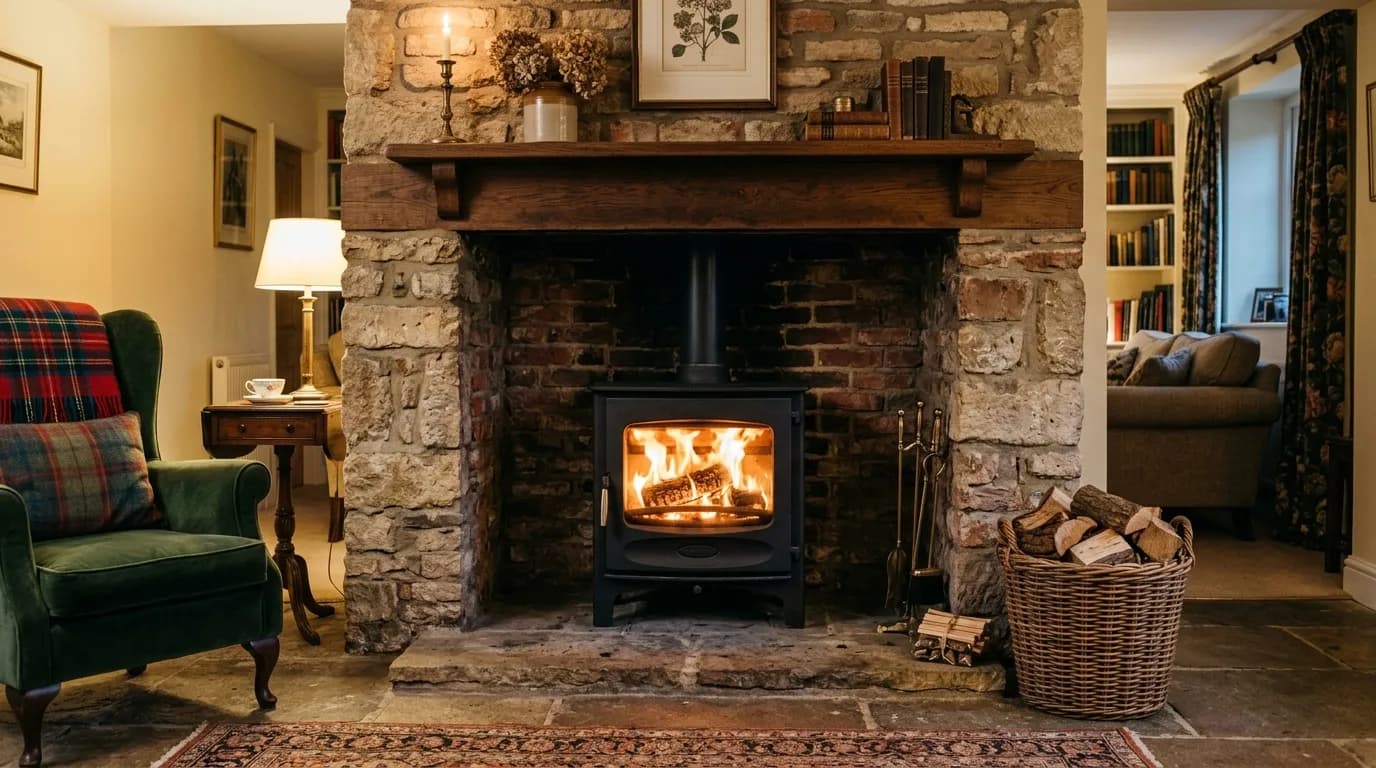
Types of log burner
Wood burning stove
Burns only wood. Simpler design, fewer parts, and generally cleaner burning. The most popular choice for homeowners who want a proper fire experience. Must use seasoned or kiln-dried wood with moisture below 20%.
Multi-fuel stove
Burns wood and smokeless coal. Offers more fuel flexibility, which is useful in rural areas where wood supply can vary. Has a riddling grate to remove ash from solid fuel. Slightly more complex but very versatile.
Inset stove
Fits into an existing fireplace opening for a sleek, built-in look. Less projection into the room than a freestanding stove. Good for smaller living rooms where floor space is limited.
Freestanding stove
Stands on a hearth with the flue pipe visible. The classic look, and also the most efficient because heat radiates from all sides. Available in a huge range of sizes and styles.
What you need to know before installing
Smoke control areas
Most UK towns and cities are smoke control areas. If yours is, you must use a DEFRA-exempt stove that has been tested and approved for use in these areas. You can check whether a stove is exempt on the Defra approved appliances list at smokecontrol.defra.gov.uk. In England, letting your chimney give off smoke in a smoke control area can bring a penalty of up to £300, and buying unauthorised fuel for a non-exempt appliance can be fined up to £1,000.
Building Regulations
Every log burner installation must comply with Building Regulations (Approved Document J). This covers the stove, flue, hearth, ventilation, and distances from combustible materials. A HETAS registered installer can self-certify compliance.
Chimney requirements
If you have an existing chimney, it will almost certainly need a stainless steel liner. If there is no chimney, a twin-wall flue system can be installed through the roof or out through a wall. Either way, the flue must be the right diameter and height to create a good draw.
Ventilation
Stoves over 5kW usually need a permanent air vent in the room. Even smaller stoves need adequate airflow. Your installer will assess this during the survey and advise whether a vent needs to be fitted. In airtight modern homes, a direct air supply to the stove is often the best solution.
Get three quotes from HETAS installers
Installation prices vary considerably between HETAS registered fitters. Get at least three written quotes that each cover the stove, flue or liner, hearth, ventilation, and Building Regulations sign-off. Comparing like for like is the only way to tell whether a quote is genuinely competitive or just leaving things out.
Log burner guides
Log burner cost guide
Stove prices, installation costs, chimney liner prices, and total project estimates for 2026.
Installation guide
What happens on installation day, flue options, hearth requirements, and how to prepare.
Log burner regulations UK
Ecodesign rules, smoke control areas, Building Regs, and HETAS requirements.
Electric log burner guide
No chimney needed. Electric stove costs, running expenses, and whether they're worth it.
Chimney removal cost guide
Breast removal and full stack removal prices for UK homes.
Log burner rules 2026 (blog)
DEFRA approval, smoke control areas, and the latest regulation changes.
Common questions
Do I need a DEFRA approved stove?
If you live in a smoke control area - which covers most UK towns and cities - yes. DEFRA-exempt stoves burn wood cleanly enough to meet smoke control rules. Even outside smoke control areas, a DEFRA stove is worth choosing because they are more efficient and produce fewer emissions.
What size log burner do I need?
As a rule of thumb, you need 1kW of heat output per 14 cubic metres of room volume. A typical 4m x 5m living room with 2.4m ceilings is about 48 cubic metres, so a 3.5 to 5kW stove is usually about right. An oversized stove will overheat the room and run inefficiently on a low setting.
Can I install a log burner without a chimney?
Yes. A twin-wall flue system can be fitted through the roof or out through a wall. This adds £1,000 to £2,500 to the cost but makes a log burner possible in any room. The flue must meet clearance requirements and extend to the correct height above the roof ridge.
What wood should I burn?
Seasoned hardwood with a moisture content below 20%. Kiln-dried logs are ideal because they are guaranteed to be dry enough. Avoid burning unseasoned (green) wood - it produces more smoke, creates more soot in the flue, and generates far less heat. Never burn treated timber, painted wood, or household waste.