Electric Log Burner Cost & Guide 2026
Electric log burners cost from £200 for a freestanding model to £2,000 for a premium inset fire. Running costs are around 25 to 49p per hour on the heat setting, or 1 to 3p per hour for the flame effect alone. No flue, no chimney, no regulations, just plug in and go.
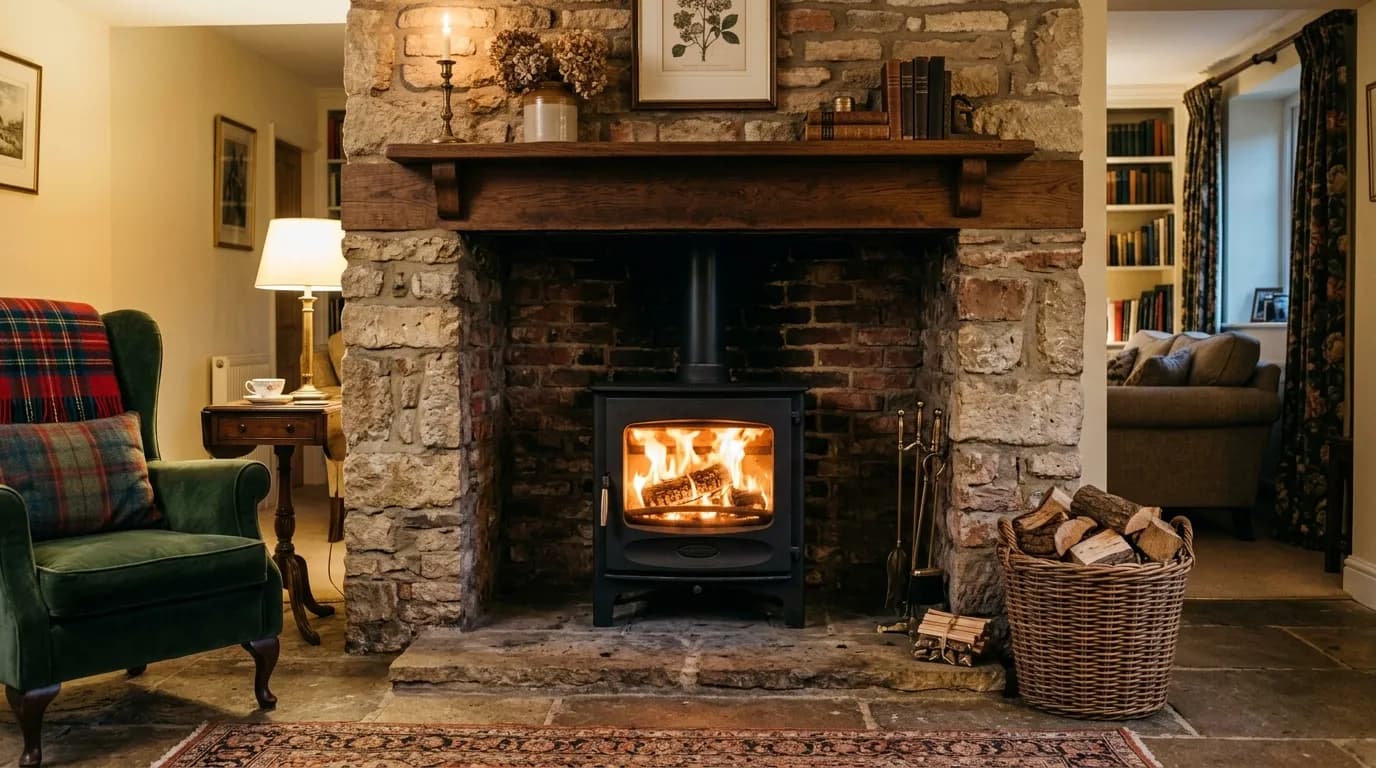
£200
Freestanding from
25 to 49p
Running cost/hr
No
Flue needed
Plug in
Installation
No regulations or restrictions. Electric log burners do not produce emissions, so they are fine in smoke control areas, do not need Building Regulations approval, and do not require a chimney or flue. Just plug into a standard 13A socket.
Electric Log Burner Prices at a Glance
Electric stove fires and electric log burner effect fires vary widely in price depending on the type, size, and how realistic the flame looks.
| Type | Average Cost | Price Range |
|---|---|---|
| Freestanding electric stove | £450 | £200 to £800 |
| Wall-mounted electric fire | £650 | £300 to £1,200 |
| Inset electric fire (built-in) | £1,000 | £500 to £2,000 |
| Fireplace suite with surround | £800 | £400 to £1,500 |
| Installation (if needed) | £150 | £100 to £300 |
Freestanding models need no installation, just plug in. Wall-mounted and inset models may need professional fitting.
Types of Electric Log Burner
There are four main types, each suited to different rooms and budgets.
Freestanding electric stove, £200 to £800
Looks like a traditional cast-iron stove but runs on electricity. Sits on the floor, plugs into any socket, and can be moved between rooms. The most affordable option and the easiest to set up, literally unbox and plug in. Popular brands include Dimplex, Warmlite, and Be Modern.
Wall-mounted electric fire, £300 to £1,200
A flat-screen style fire that hangs on the wall, often with a long landscape flame bed. Modern and contemporary looking. Most popular in new builds and homes without a chimney breast. Needs fixing to the wall (usually a straightforward job) and a nearby socket.
Inset electric fire, £500 to £2,000
Built into the wall or an existing fireplace opening for a flush, integrated look. The most realistic option because the fire sits recessed like a real hearth. Professional installation is usually needed to create or adapt the opening, expect to pay £100 to £300 for fitting.
Fireplace suite with surround, £400 to £1,500
A complete package with the electric fire, a mantelpiece surround, and a back panel. Gives the look of a traditional fireplace without any building work. Ideal for rooms that have never had a fireplace or where the original has been removed. Most are freestanding and need no installation.
Electric Log Burner Running Costs
One of the biggest advantages of electric fires is how cheap they are to run , especially when you just want the flame effect without the heat.
| Mode | Wattage | Cost per Hour | Monthly (4hrs/day) |
|---|---|---|---|
| Flame effect only (no heat) | 50 to 100W | 1 to 3p | £2 to £5 |
| Low heat setting | 1kW | 25p | £25 to £30 |
| High heat setting | 2kW | 49p | £50 to £60 |
Based on electricity at 24.5p/kWh (April 2026 Ofgem price cap). Running 4 hours per evening, 30 days per month.
Electric vs Real Log Burner, Full Comparison
Wondering whether to go electric or real? Here is an honest side-by-side comparison of cost, practicality, and performance.
| Feature | Electric | Real Wood Burner |
|---|---|---|
| Purchase cost | £200 to £2,000 | £1,000 to £3,000 |
| Installation cost | £0 to £300 | £1,500 to £3,000 |
| Total upfront cost | £200 to £2,300 | £2,500 to £6,000 |
| Running cost per evening | £1 to £2 | £2 to £5 (logs) |
| Flue/chimney needed | No | Yes |
| Building regs approval | No | Yes |
| Annual maintenance | None | £50 to £80 (sweep) |
| Heat output | 1 to 2kW | 5 to 12kW |
| Smoke control area safe | Yes | DEFRA exempt only |
How to Get Your Electric Log Burner for Less
Electric fires are already one of the most affordable heating options, but here is how to reduce both the purchase price and the running costs further.
Use the flame effect without heat
The flame effect on its own uses just 50 to 100W, costing 1 to 3p per hour. On mild evenings when you do not need the extra warmth, run the flame effect alone for the ambience. Most people vastly overestimate the cost of running the visual effect, it is roughly the same as a light bulb.
Choose a freestanding model, no installation cost
A freestanding electric stove just plugs into a standard socket. No electrician, no builder, no installation cost at all. Wall-mounted and inset models may need professional fitting (£100 to £300), so going freestanding saves that entirely.
Look for ex-display and end-of-line models
Fireplace showrooms update their displays regularly, and ex-display models are typically sold at 30 to 50% off. End-of-line models from previous seasons are equally discounted. The technology in electric fires has not changed dramatically in recent years, so a last-season model performs just as well.
Skip the thermostat and use a timer plug
Rather than paying extra for a model with a built-in thermostat, buy a standard model and use a £10 smart plug with a timer. Set it to turn off after 2 to 3 hours, most people fall asleep or leave the room by then anyway. This prevents accidental overnight running, which is the main source of unnecessarily high bills.
Useful resources
- Energy Saving Trust, Running costs and efficiency of electric heating
- Ofgem, Compare energy tariffs to minimise running costs
Frequently Asked Questions
How much does an electric log burner cost?
A freestanding electric log burner costs £200 to £800, wall-mounted models cost £300 to £1,200, and inset (built-in) electric fires cost £500 to £2,000. A fireplace suite with surround typically costs £400 to £1,500. Running costs are 25 to 49p per hour on the heat setting depending on the wattage and your electricity tariff.
How much does an electric log burner cost to run?
An electric log burner typically costs 25 to 49p per hour to run on the heat setting, based on a 1 to 2kW heater at current electricity prices (approximately 24.5p per kWh as of April 2026). The flame effect alone (without heat) costs just 1 to 3p per hour as it only uses LED lights. Running it 4 hours per evening costs roughly £30 to £60 per month on the heat setting.
Do electric log burners need a flue or chimney?
No. Electric log burners do not produce any combustion gases, so they do not need a flue, chimney, or any form of ventilation. This is one of their biggest advantages, you can place them anywhere with a standard 13A plug socket. No building regulations approval is needed, and there are no restrictions in smoke control areas.
Are electric log burners any good for heating?
Electric log burners are effective at heating a single room. Most models have a 1 to 2kW heater, which is enough to heat a room of 15 to 25 square metres. However, they are not a replacement for central heating, they are supplementary heating with the added benefit of a realistic flame effect. A real log burner produces significantly more heat (5 to 12kW) but costs far more to buy, install, and maintain.
Do electric log burners look realistic?
Modern electric log burners have improved enormously. Premium models use LED technology with holographic flames, real log beds, and adjustable flame colours that are surprisingly convincing, particularly in the evening. Budget models are less convincing and can look obviously artificial. If realism matters to you, spending £400 to £800 on a mid-range model is worth it over a £150 budget unit.
Electric log burner vs real log burner, which is cheaper?
An electric log burner is dramatically cheaper to buy and install. A freestanding electric model costs £200 to £800 with no installation needed beyond plugging it in. A real wood-burning stove costs £1,000 to £3,000 for the stove plus £1,500 to £3,000 for installation (flue liner, hearth, fire surround, building regulations sign-off). Running costs are comparable, wood typically costs £2 to £5 per evening in logs depending on your supplier, while electric costs £1 to £2 per evening on the heat setting.
Can I put an electric log burner in an existing fireplace?
Yes, and it is one of the most popular uses. An inset electric fire or freestanding electric stove can sit inside an existing fireplace opening, giving you the look of a real fire without any of the maintenance. You do not need to line the chimney or keep the chimney swept. If you want to block off the chimney above (to stop draughts), you can do so safely since there are no combustion gases to vent.
Are electric log burners safe?
Electric log burners are one of the safest forms of heating. There is no real flame, no combustion gases (so no carbon monoxide risk), and most models stay cool to the touch on the outside. They have built-in overheat protection and automatic shut-off. They are safe to use in homes with children and pets, and in bedrooms, unlike real log burners, which produce carbon monoxide and require a CO alarm.

Written by Chris Kervin, Co-Founder, Less.co.uk
Last updated: · Pricing based on industry data · Methodology
Want more money-saving home improvement tips?
Sign up to our newsletter for weekly tips on getting home improvements done for less. No spam, no nonsense, just practical advice.
Join the NewsletterFree · Weekly · Unsubscribe anytime