Log Burner Installation: What to Expect
Log burner installation costs £800 to £1,500 labour with an existing chimney, or £1,500 to £3,500 for a new twin-wall flue system. The job usually takes one day. Here is what actually happens, what you need to prepare, and how to make sure it goes smoothly.
£800
Installation from
£1,500
Twin-wall flue from
1 to 2 days
Typical duration
HETAS
Recommended
Prices updated April 2026 · Labour costs only, stove supplied separately unless agreed with installer.
Always use a HETAS-registered installer. Log burner installation is notifiable building work under Building Regulations Approved Document J. A HETAS-registered installer self-certifies the work, so you avoid a separate Building Control application. A carbon monoxide alarm is legally required in the room.
The Three Installation Scenarios
What type of installation you need depends almost entirely on whether your property already has a chimney. Here are the three most common setups.
Existing chimney
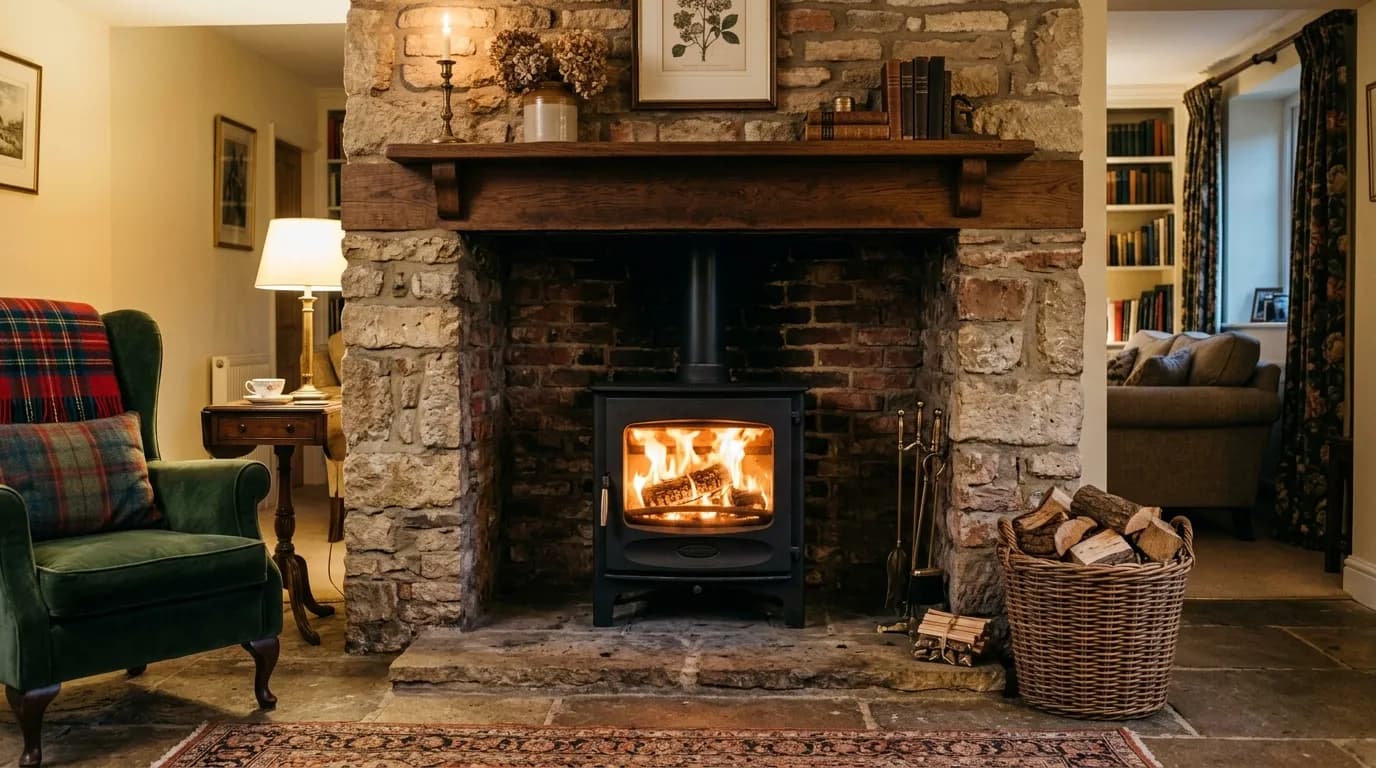
You have a working chimney breast and flue. The installer lines it, fits a register plate, positions the stove on the hearth, and connects the flue pipe.
Labour and liner only. Add stove cost on top.
£800 to £1,500
Labour estimate
New twin-wall flue (no chimney)
A twin-wall insulated flue system runs up from the stove, through the ceiling, and out through the roof or wall. More work, more materials.
Flue system and labour. Stove cost extra.
£1,500 to £3,500
Labour estimate
Through-wall installation
The flue exits through an external wall and runs up outside the property. Common in rooms where a roof exit is not practical.
Through-wall flue and labour. Stove cost extra.
£1,200 to £2,500
Labour estimate
These are labour costs only. Add the stove price on top, £500 to £2,500 depending on the model. See the full log burner cost guide for combined totals.
What Happens on Installation Day
Here is how the day typically runs, in order. A standard existing-chimney installation follows these steps from start to finish.
- 1
Delivery and preparation
The installer arrives with the liner, register plate, and any other materials not supplied by you. Floors get covered up. The fireplace opening is cleared. If you are having a hearth laid, that happens before the stove goes in.
- 2
Chimney swept and checked
The chimney is swept and inspected before anything goes in. If there are cracks, blockages, or serious deterioration, the installer flags them now. It is much easier to deal with problems before the liner is in place.
- 3
Chimney liner dropped
A flexible stainless steel liner is lowered down from the chimney pot to the fireplace opening. The top gets a cowl or rain cap to stop birds nesting and rain getting in. This is often the most time-consuming part of the day.
- 4
Register plate fitted
A steel register plate is cut to fit the chimney opening above the stove. It seals off the gap so all flue gases go up the liner, and stops warm air escaping up the chimney when the stove is not in use.
- 5
Stove positioned and connected
The stove is moved onto the hearth and connected to the liner via a flue pipe. The installer checks all joints are sealed, the stove sits level, and the clearances from combustible surfaces meet Building Regs and the manufacturer's requirements.
- 6
Test draw
A smoke test or draught test confirms the flue is drawing correctly. If there is a draw problem, common in very tightly sealed modern homes, the installer will discuss adding a permanent air vent to the room.
- 7
CO detector fitted
An audible carbon monoxide alarm is fitted in the room. This is a legal requirement and your installer includes it as standard. If you already have one, they will check the position and whether it is still within its service life.
- 8
First fire
A small first fire burns off the paint and seals, which produces some fumes and smell the first time, normal, and nothing to worry about. Keep the room ventilated. The installer talks you through controlling the air vents and setting the burn rate.
- 9
HETAS certificate issued
The installer issues a HETAS commissioning certificate and registers the installation with Building Control on your behalf. Keep this safe, you will need it when you sell the house. Your insurer will also want to see it.
How to Prepare Before the Installer Arrives
A bit of preparation makes the day run faster and reduces the chance of damage to your home.
Clear the room
Move furniture at least 1.5 metres back from the fireplace. The installer will cover floors and the hearth area, but they need clear access to the chimney breast and space to manoeuvre the stove. Heavy stoves can scuff flooring if they are dragged, putting down extra sheets yourself is worth doing.
Sort out the hearth in advance
If you need a new hearth, it should ideally be laid before installation day. The concrete or tiled surface needs to be fully cured before the stove sits on it. If you are leaving the installer to sort the hearth, confirm this is included in the quote, it can add £150 to £500 to the price.
Think about log storage
You will need somewhere to store seasoned wood that keeps it dry but allows air circulation. A log store outside against the house is ideal, wood needs 12 to 18 months to season properly if you are buying green. Kiln-dried logs are ready to burn immediately and are worth paying extra for the first season.
Have the right wood ready
Your installer will light a test fire on the day, so it is worth having a small amount of dry kindling and some seasoned or kiln-dried logs ready. Moisture content should be below 20%, anything higher produces more smoke and deposits tar in the flue faster. A cheap moisture meter from a DIY shop is a good long-term investment.
Choosing the Right Stove Size
Bigger is not better when it comes to log burners. Getting the output right for the room saves money up front and makes the stove more efficient to run.
Quick sizing guide
Allow roughly 1kW of output per 14m³ of room volume. For a typical UK living room, say 4m × 5m with a 2.4m ceiling, that is around 48m³, which means a 3.5kW to 4kW stove is usually enough. Most people end up choosing a 5kW model, which still works well and gives a bit of extra capacity for colder nights.
Why oversized stoves cause problems
A stove that is too large for the room needs to be run with the air vents almost closed to avoid overheating the space. Running a stove on a very low setting produces incomplete combustion, more smoke, more tar in the liner, and a dirtier glass. It also puts the stove under more thermal stress and can shorten its life. If in doubt, go smaller.
Multi-fuel stoves vs wood-only
A multi-fuel stove burns both wood logs and smokeless coal (also called smokeless solid fuel). They have a raised grate so air can circulate under the fuel. A wood-only stove burns logs on the base of the firebox. Most people in the UK never actually burn coal, so a wood-only stove is usually the better choice, they tend to burn slightly cleaner and the base keeps wood fires burning more evenly.
DEFRA-exempt stoves
If your property is in a smoke control area (likely if you live in a town or city), you need a DEFRA-exempt appliance. These are approved to burn ordinary wood in areas with smoke restrictions. All new stoves sold since January 2022 must also meet Ecodesign standards. In practice, any modern stove you buy from a UK showroom or reputable online retailer will meet both requirements, but it is worth double-checking before you buy.
Ongoing Costs After Installation
Installation is a one-off cost, but a log burner has running costs too. Here is what to budget for each year.
| Item | Typical Cost |
|---|---|
| Annual chimney sweep | £50 to £80 |
| Seasoned hardwood logs | £200 to £500/year |
| Kindling and firelighters | £30 to £60/year |
| CO alarm replacement | £20 to £40 |
| Stove glass cleaner | £5 to £10/year |
| Service and flue inspection | £80 to £150 |
The chimney sweep is the one cost that is non-negotiable. Most home insurance policies require evidence the chimney has been swept within the past 12 months for any solid-fuel fire claim to be valid.
How to Get Your Log Burner Installed for Less
There is real money to save on installation, mostly by shopping around and timing the job well.
Get at least three quotes before you book anyone
Installation prices vary a lot between HETAS installers, not just the labour rate, but how they price the liner, register plate, and sign-off. Getting three quotes for the same job often reveals a £300 to £600 difference. All three should be HETAS registered, otherwise you are comparing apples and oranges on compliance too.
Book in spring or summer for a better rate
Demand for log burner installations spikes in September and October when people suddenly want a fire for winter. Installers are busier, prices creep up, and lead times stretch out. If you book the job for May or June, you can often negotiate a better price and get a more convenient slot. The installation is identical, you just wait a few months to use it.
Buy the stove separately
Some installers mark up the stove price by 20 to 30%. Buying your own from a showroom sale or online retailer, and asking the installer to fit it, can save £200 to £400. Check before you order: most HETAS installers are happy to fit a customer-supplied stove, though a few add a small surcharge. Also confirm the stove is DEFRA-exempt if you are in a smoke control area.
Choose the right size stove from the start
Oversizing is one of the most common, and costly, mistakes. A stove that is too big for the room runs on a low setting most of the time, producing more soot and tar and wearing out the stove faster. Stick to roughly 1kW per 14m³ of room volume. A 4kW or 5kW stove heats most UK living rooms perfectly well, costs less to buy, and burns more efficiently.
Buy seasoned logs and check the moisture yourself
Kiln-dried logs cost around 20 to 40% more than seasoned ones, yet seasoned wood burns just as efficiently as long as it is under 20% moisture. A moisture meter costs about £10 to £15 and pays for itself quickly. Wet wood wastes up to a third of its heat boiling off water and coats the flue in tar, so you get through more logs and pay for extra sweeps. Any firewood sold in volumes under 2m³ must now be certified Ready to Burn, meaning it is already below 20%.
Frequently Asked Questions
How long does log burner installation take?
Most log burner installations take one full day. If you have an existing chimney in good condition, a HETAS installer can usually complete the job, liner, register plate, hearth, stove, CO alarm, and sign-off, in 6 to 8 hours. Installing a twin-wall flue from scratch typically takes a day and a half to two days depending on the route the flue takes through the property.
What is a register plate and do I need one?
A register plate is a non-combustible plate (usually steel) that seals off the chimney opening above the stove. It stops warm room air being drawn up the chimney when the stove is not in use, and directs all the flue gases into the liner. Almost every installation needs one. Without it, you lose heat, and you may get cold draughts in the room.
What size log burner do I need for my room?
A rough guide is 1kW of output for every 14 cubic metres of room volume. For a standard living room of around 4m x 5m with a normal ceiling, a 4kW or 5kW stove is usually plenty. Most people overestimate the size they need, running an oversized stove on a low setting is inefficient and produces more smoke. It is better to go a size smaller than you think you need than a size bigger.
Can I use any wood in a log burner?
Only seasoned or kiln-dried wood with a moisture content below 20%. Burning wet or green wood produces far more smoke and tar, which coats the flue liner and increases the risk of a chimney fire. Buy from a supplier with the Woodsure Ready to Burn logo, or check moisture with an inexpensive meter. Hardwoods like oak, ash, and beech burn longer and hotter than softwoods.
What clearances does a log burner need from walls?
The minimum clearances are set out in Building Regulations Approved Document J and in the stove manufacturer's installation manual, always check both, as they can vary. As a general rule, the stove body should be at least 150mm from any combustible surface (timber frame, plasterboard, etc.). The hearth must extend at least 300mm in front of the stove door and 150mm to each side. Your HETAS installer will confirm the exact distances before fitting.
Do I need a carbon monoxide alarm with a log burner?
Yes, it is a legal requirement in England (since October 2022) and similar rules apply in Scotland and Wales. The alarm must be audible and placed in the same room as the stove. Your HETAS installer will fit one as part of the installation. A CO alarm costs £20 to £40 and needs replacing every 5 to 10 years depending on the model. Do not treat it as optional.
Useful Resources
HETAS
The official register for solid fuel heating appliances and installers. Find a registered installer, check their current status, and understand what certification you will receive.
Building Regulations Approved Document J
The full technical requirements for combustion appliances in UK homes. Covers hearth sizes, flue heights, clearances, and CO alarm requirements.
National Association of Chimney Sweeps (NACS)
Find a trained chimney sweep near you and understand how often your flue needs sweeping to stay safe and keep your insurance valid.

Written by Chris Kervin, Co-Founder, Less.co.uk
Last updated: April 2026 · Installation guidance verified against HETAS, Building Regulations Doc J, and NACS · Methodology
Ready to get your log burner sorted for less?
There is nothing quite like a real fire on a cold evening. Compare quotes from HETAS installers and get the best price.
Compare Free QuotesFree, no obligation · HETAS registered · Compare up to 3 quotes