How Much Does Chimney Removal Cost in 2026?
Chimney breast removal cost is £1,500 to £5,000 depending on how many floors are involved. Chimney stack removal cost adds £1,000 to £2,500 on top, bringing full chimney removal to £3,000 to £6,000. Budget for a structural engineer, Building Control, and Party Wall surveyor fees on top.
£1,500+
Breast (1 floor)
£3,000+
Full removal
£300+
Engineer report
3 to 5 days
Typical duration
Prices updated April 2026 · Based on industry data and contractor submissions.
Structural work - professional support required.Chimney removal requires a structural engineer's report, Building Control approval, and (for shared walls) a Party Wall agreement. Never remove a chimney breast without professional guidance - unsupported chimney breasts above can collapse through the ceiling.
Chimney Breast Removal Cost and Stack Removal Prices
What does chimney removal cost? These are the building work costs - professional fees (structural engineer, Building Control, Party Wall) are listed separately below.
Chimney breast removal (one floor)
Ground floor or first floor, including support
£2,250
£1,500 to £3,000
Chimney breast removal (two floors)
Both floors, including support steelwork
£3,750
£2,500 to £5,000
Chimney stack removal (from roof)
Stack taken down, roof tiled over
£1,750
£1,000 to £2,500
Full removal (breast + stack)
Complete chimney removed from property
£4,500
£3,000 to £6,000
Prices based on industry data. Actual costs depend on chimney size, access, structural complexity, and your location.
Get Free Chimney Removal Quotes
Compare prices from trusted local builders near you. Fill in a few details and receive up to 4 free, no-obligation quotes.
Structural Engineer and Professional Fees
Chimney removal involves mandatory professional fees on top of the building work. These are not optional - you need all of them before work can start.
| Fee | Typical Cost |
|---|---|
| Structural engineer report | £300 to £600 |
| Building Control application | £250 to £400 |
| Party Wall surveyor | £700 to £1,500 |
| Party Wall Award (agreed) | £0 |
For a chimney on a party wall, the total professional fees can add £1,250 to £2,500 to the project (engineer + Building Control + Party Wall surveyor). If the chimney is not on a shared wall, you save the Party Wall costs entirely.
Additional Costs to Budget For
Beyond the removal work and professional fees, here are the extras that can affect your final bill.
| Item | Typical Cost |
|---|---|
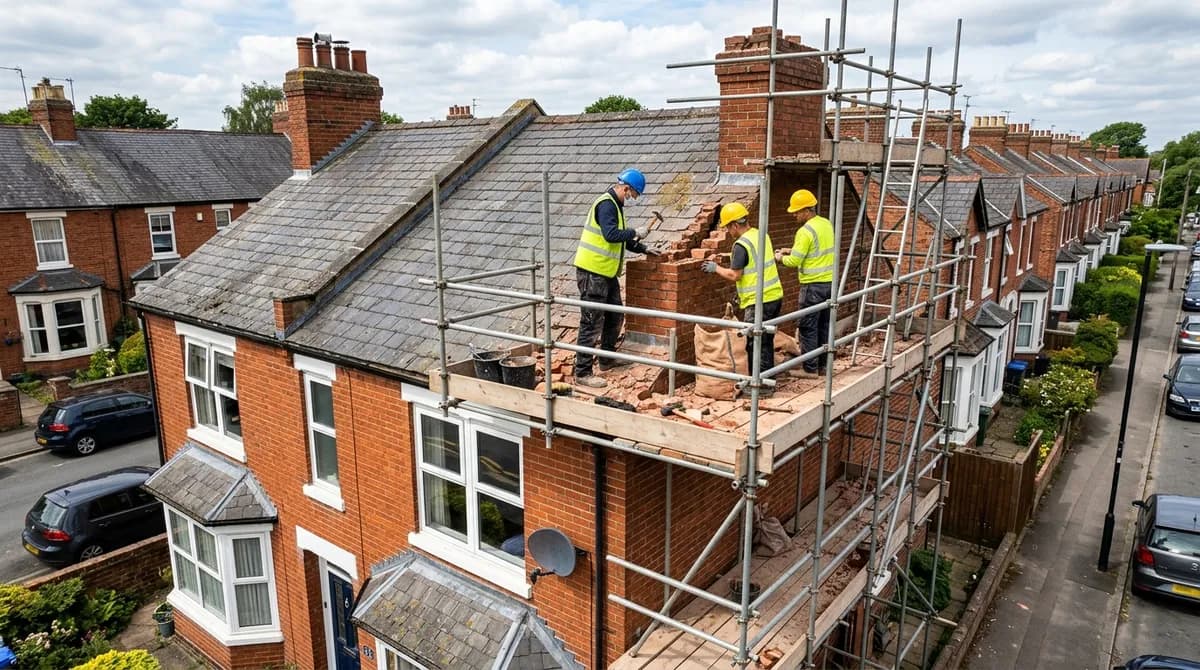
| Scaffolding (stack removal) | £500 to £1,000 |
| Making good (per room) | £300 to £800 |
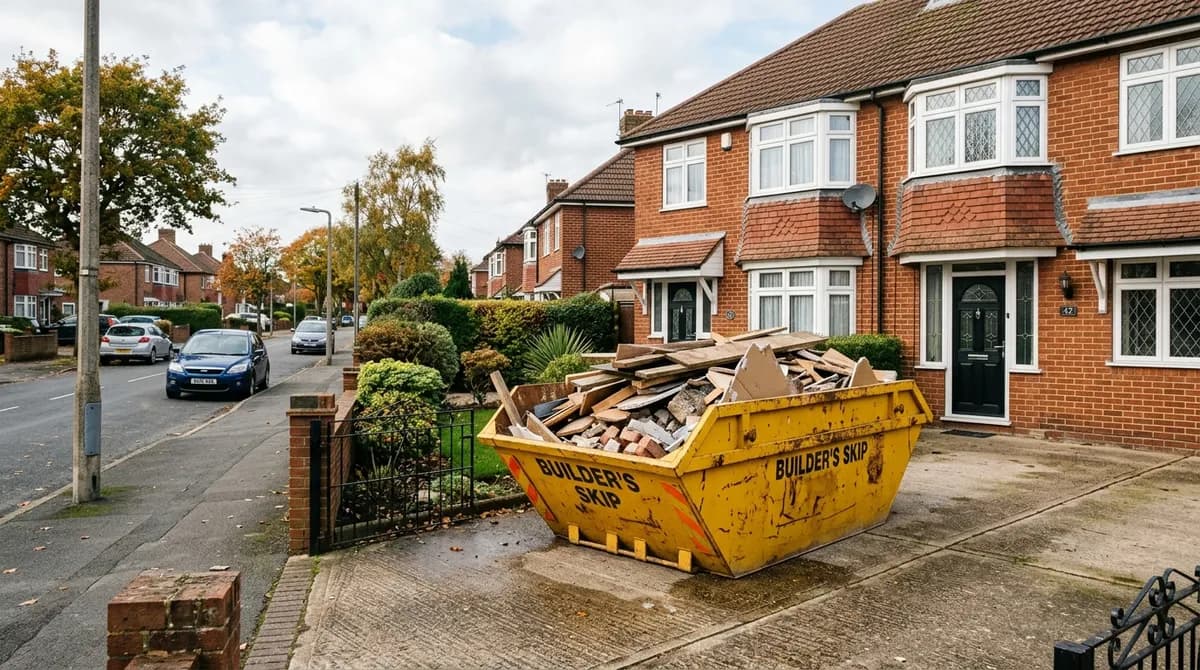
| Skip hire (rubble removal) | £180 to £350 |
| Asbestos survey (if suspected) | £150 to £300 |
| Asbestos removal (if found) | £500 to £2,000 |
Chimney Removal Costs by Region
Chimney removal prices vary by region, driven by labour costs and local demand. These are average prices for a typical chimney removal project (building work only, excluding professional fees) by area.
| Region | Average Cost | vs National |
|---|---|---|
| London | £4,200 | +24% |
| South East | £3,700 | +9% |
| East of England | £3,600 | +6% |
| South West | £3,500 | +3% |
| Midlands | £3,400 | Average |
| Yorkshire | £3,000 | -12% |
| North West | £3,100 | -9% |
| North East | £2,800 | -18% |
| Scotland | £3,000 | -12% |
| Wales | £2,900 | -15% |
Based on industry data. Typical chimney removal project, building work only. Professional fees are additional.
How to Get Your Chimney Removal for Less
Chimney removal is not cheap, but there are ways to keep the total cost down without cutting corners.
Get at least 3 quotes from structural demolition specialists
Chimney removal is specialist work that varies hugely in price depending on the contractor. Getting three quotes lets you compare not just the price but what each one includes, some will factor in scaffolding, skip hire, and structural support, while others leave those as extras. Written quotes also protect you if costs creep up during the job.
Combine chimney removal with a loft conversion to share scaffolding costs
If you are planning a loft conversion and the chimney runs through the loft space, removing it at the same time saves on scaffolding (£500 to £1,000) and means the builder only needs to set up once. The structural engineer can design the chimney support and the loft conversion steelwork in one report, which may also save on fees.
Talk to your neighbour early to avoid Party Wall costs
If the chimney is on a party wall, your neighbour can agree to the work informally with a simple letter. If they do not agree, you both need surveyors - which costs £700-£1,500 per neighbour, at your expense. The Party Wall etc. Act 1996 sets out the full process. A friendly conversation and a clear explanation of the work before you serve the formal notice can save you a significant amount.
Remove the breast only and leave the stack if budget is tight
If your main goal is to free up room space, you can remove the chimney breast and leave the stack on the roof. This is cheaper (£1,500 to £3,000 vs £3,000 to £6,000 for full removal) and avoids the cost of scaffolding and roof work. The stack can be removed later if needed.
Get the structural engineer report before getting builder quotes
Having the structural engineer's report in hand before you approach builders means every builder is quoting on the same specification. Without it, builders have to estimate the structural work, which leads to vague quotes and surprise costs. The £300 to £600 spent on the report upfront gives you accurate, comparable quotes.
Check for asbestos before the builder starts
Older chimney flues can contain asbestos liners. If the builder finds asbestos during demolition, work stops until a licensed asbestos removal contractor clears it - which delays the job and costs £500 to £2,000 extra. Getting an asbestos survey done beforehand (£150 to £300) avoids nasty surprises and keeps the project on schedule.
Renovating a long-empty property? Ask for the 5% VAT rate
If the home has stood empty for two years or more before work starts, a VAT-registered builder can charge 5% VAT on the job instead of the standard 20%, which is worth several hundred pounds on a full chimney removal. The same reduced rate applies when the work forms part of converting the building into a different number of flats or houses. The rules are set out in VAT Notice 708, so ask your builder to apply it before you pay.
Put the deposit on a credit card for Section 75 cover
Pay at least part of the bill by credit card and Section 75 of the Consumer Credit Act makes your card provider equally liable if the builder takes your money and disappears or leaves the work defective. It covers any job priced over £100 and up to £30,000, which almost every chimney removal falls inside, and the full amount is protected even if you only paid part of it on the card. Never hand over a large cash deposit up front.
Comparing quotes is the simplest way to pay less
Getting three or four quotes and comparing them is how most homeowners avoid overpaying. It takes a couple of minutes, with no obligation.
Get my free quotesWhat to Expect: The Chimney Removal Process
From first survey to finished room, here is how a typical chimney removal works.
- 1
Structural engineer survey
A structural engineer inspects the chimney, checks the walls, and produces a report specifying the support needed - usually gallows brackets or a steel beam. This report is submitted to Building Control and given to your builder. You will need listed building consent if your property is listed, and you may need planning permission to remove an external stack in a conservation area. Allow 1 to 2 weeks for the report.
- 2
Building Control and Party Wall
Submit your Building Regulations application. If the chimney is on a party wall, serve the Party Wall notice on your neighbour. Your neighbour has 14 days to respond. If they agree, work can proceed. If not, surveyors are appointed. Allow 2 to 8 weeks for this step.
- 3
Preparation
The builder clears and protects the room. If the stack is being removed, scaffolding goes up. Dust sheets go down, and the builder checks for any hidden services (gas pipes, electrical cables) inside the chimney breast.
- 4
Removal and structural support
The chimney breast is taken down carefully, working from the top. The structural support is installed exactly as specified by the engineer. Building Control inspects the steelwork before it is covered up. This is the critical stage - get it wrong and the chimney above can drop.
- 5
Making good and sign-off
The ceiling, walls, and floor are repaired. Plastering, patching, and redecorating bring the room back to a finished state. Building Control does a final inspection and issues a completion certificate. Keep this - you will need it when you sell.
Frequently Asked Questions
How much does it cost to remove a chimney breast?
Removing a chimney breast on one floor costs £1,500 to £3,000. Removing it on two floors costs £2,500 to £5,000. These prices include the structural support (gallows brackets or steel beam), rubble removal, and making good the ceiling and floor. They do not include the structural engineer's report (£300 to £600), Building Control fee (£250 to £400), or Party Wall surveyor costs if applicable.
How much does it cost to remove a chimney stack?
Removing a chimney stack from the roofline costs £1,000 to £2,500 including scaffolding, taking down the brickwork, and tiling over the gap. If the stack is large or in poor condition, the price is at the higher end. This is often done at the same time as breast removal - combining the two saves on scaffolding costs.
Do I need a structural engineer for chimney removal?
Yes. A structural engineer must design the support that holds up the remaining chimney structure once the breast is removed. The engineer produces calculations and drawings that Building Control will inspect against. The report costs £300 to £600 and is a legal requirement - not optional. Never start chimney removal without this report.
How long does chimney removal take?
A single-floor chimney breast removal takes 2 to 3 days. Two-floor removal takes 3 to 5 days. Full removal including the stack adds 1 to 2 days. Making good (plastering, flooring, decorating) adds another 1 to 3 days depending on the scope. The structural engineer's report and Building Control application need to be in place before work starts, which adds 2 to 4 weeks of lead time.
What is a gallows bracket?
A gallows bracket is a steel support fitted in the ceiling void to hold up the chimney breast on the floor above once the breast below has been removed. It transfers the weight of the remaining chimney to the party wall or structural walls. The bracket is specified by the structural engineer and must be installed exactly as designed. It is hidden inside the ceiling, so you will not see it once the work is finished.
Can I remove a chimney breast without my neighbour's permission?
If the chimney is on or near a shared party wall, you must serve a Party Wall notice on your neighbour before starting work. Your neighbour does not have the right to stop the work, but they can require a Party Wall Award - a formal agreement that protects both properties. If you skip this step, your neighbour can seek an injunction to stop the work and you may be liable for any damage.

Written by Chris Kervin, Co-Founder, Less.co.uk
Last updated: · Pricing based on industry data and verified contractor submissions · Methodology