How Much Does New Flooring Cost in 2026?
New flooring costs anywhere from £8 per m² for budget carpet up to £100+ per m² for premium solid hardwood, fully fitted. A typical bedroom costs £250 to £900 depending on the flooring type. For a whole house, most homeowners spend between £2,000 and £6,000. Below you will find wooden flooring cost, laminate flooring cost, LVT flooring cost, and every other option compared.
£20/m²
Carpet from
£15/m²
Laminate from
£30/m²
Engineered wood from
£150 to £300
Fitter day rate
Prices updated April 2026 · Based on industry data and contractor submissions.
Flooring Cost Per m² at a Glance
What does each type of flooring actually cost? The table below shows material-only prices and fully fitted prices including labour and underlay where applicable. Whether you are looking at laminate flooring cost, wood flooring cost, or LVT flooring cost, these are typical UK prices for mid-range products in 2026.
| Flooring Type | Materials | Fitted Price |
|---|---|---|
| Carpet (budget to mid-range) | £8 to £30/m² | £20 to £45/m² |
| Laminate | £10 to £25/m² | £15 to £40/m² |
| Engineered wood | £25 to £55/m² | £30 to £70/m² |
| Vinyl / LVT | £15 to £35/m² | £20 to £50/m² |
| Solid hardwood | £35 to £80/m² | £40 to £100+/m² |
| Tile (ceramic / porcelain) | £20 to £50/m² | £30 to £80/m² |
Fitted prices include labour, materials, and underlay where applicable. Subfloor preparation and old flooring removal are priced separately.
Get Free Flooring Quotes
Compare prices from trusted local flooring fitters near you. Fill in a few details and receive up to 4 free, no-obligation quotes.
Flooring Cost by Room
How much should you expect to pay for each room? These figures cover materials, underlay, and professional fitting. Budget covers carpet or basic laminate, mid-range covers engineered wood or quality LVT, and premium covers solid hardwood or high-end tile.
| Room | Budget | Mid-Range | Premium |
|---|---|---|---|
| Single bedroom | £200 to £450 | £400 to £750 | £600 to £1,200 |
| Double bedroom | £250 to £550 | £500 to £950 | £750 to £1,600 |
| Living room | £350 to £750 | £650 to £1,300 | £1,000 to £2,200 |
| Kitchen | £250 to £550 | £450 to £900 | £700 to £1,500 |
| Hallway + stairs + landing | £300 to £650 | £550 to £1,100 | £800 to £1,800 |
| Whole house (3-bed semi) | £1,500 to £3,000 | £2,500 to £5,500 | £4,500 to £10,000+ |
Budget: carpet or basic laminate. Mid-range: engineered wood or quality LVT. Premium: solid hardwood or high-end tile. All prices fully fitted.
Flooring Fitting and Labour Costs
Labour makes up a significant chunk of the total flooring bill. Laminate flooring fitting cost, for instance, is typically £8 to £15 per m², while laminate flooring installation cost including underlay runs slightly higher. Most fitters quote per m² rather than a day rate, but day rates give you a useful benchmark for larger jobs.
| Service | Typical Cost |
|---|---|
| Carpet fitting (per m²) | £5 to £10/m² |
| Laminate / engineered wood fitting (per m²) | £8 to £15/m² |
| LVT / vinyl fitting (per m²) | £8 to £15/m² |
| Tile fitting (per m²) | £20 to £40/m² |
| Solid hardwood fitting (per m²) | £15 to £25/m² |
| Fitter day rate (general) | £150 to £300/day |
| Old flooring removal and disposal | £3 to £8/m² |
| Subfloor levelling (self-levelling compound) | £8 to £15/m² |
| Underlay supply and fit | £3 to £10/m² |
Tip: Tile fitting is the most expensive labour because it requires more skill, preparation, and drying time. If budget is tight, consider LVT in tile-effect patterns for kitchens and bathrooms. It looks convincing, costs less to fit, and is warmer underfoot.
Flooring Cost Breakdown by Type (Including Specialist Options)
Carpet cost: £20 to £45 per m² fitted
Carpet remains the most popular choice for bedrooms and living rooms in UK homes. Budget polypropylene carpet starts at £8/m² for materials, while mid-range wool-blend runs £15 to £25/m². Premium pure wool carpets can reach £30 to £50/m². Add £3 to £8/m² for underlay and £5 to £10/m² for fitting. A standard bedroom typically costs £250 to £500 all in. Carpet is warm, quiet, and comfortable, but it stains, wears, and needs replacing every 5 to 15 years depending on quality and traffic.
Laminate flooring cost: £15 to £40 per m² fitted
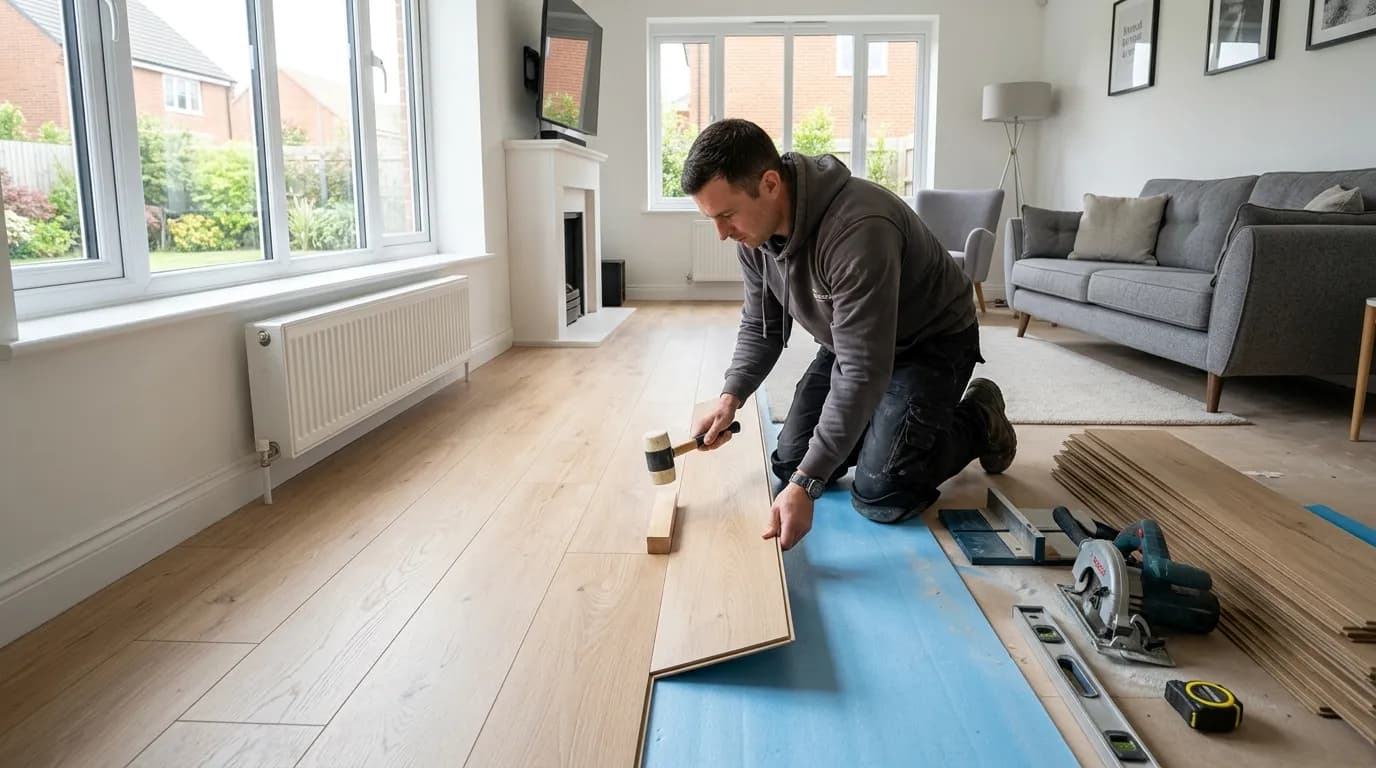
Laminate is a hard-wearing, affordable alternative to real wood. Budget laminate starts at £8/m² for materials, while quality brands like Quick-Step run £15 to £22/m². Water-resistant grades suitable for kitchens cost slightly more. Fitting is £8 to £15/m², or you can save by laying it yourself since click-fit laminate is one of the easier DIY flooring jobs. Laminate lasts 10 to 20 years and handles family life well.
Engineered wood cost: £30 to £70 per m² fitted
Engineered wood offers a genuine timber surface bonded to a stable plywood or HDF core. Oak is by far the most popular choice. Entry-level engineered oak starts at £25/m², while premium wide-plank options reach £50 to £60/m². It can be glued, nailed, or floated over underlay. It works with underfloor heating, can be sanded once or twice, and lasts 20 to 30 years. It is the sweet spot between the look of real wood and the practicality of a manufactured product.
Vinyl / LVT cost: £20 to £50 per m² fitted
Luxury vinyl tile is one of the fastest-growing flooring categories in the UK. It is completely waterproof, comfortable underfoot, and available in realistic wood and stone effects. Click-fit LVT (£15 to £30/m² for materials) can be a DIY project. Glue-down LVT (£20 to £40/m²) needs professional fitting but gives a more solid feel. LVT is the go-to choice for kitchens and bathrooms. It lasts 15 to 25 years with proper care.
Solid hardwood cost: £40 to £100+ per m² fitted
Solid hardwood is the premium choice. Oak, walnut, and ash are the most popular species in UK homes. Material costs start at £35/m² for narrow-plank oak and rise to £80/m²+ for wide walnut or reclaimed timber. Fitting is £15 to £25/m² because it must be nailed or glued to a timber subfloor. It does not suit underfloor heating or rooms with moisture. But solid hardwood can be sanded and refinished many times and lasts 30 to 50+ years. It adds genuine value to a property.
Tile flooring cost: £30 to £80 per m² fitted
Porcelain and ceramic tiles are waterproof, extremely hard-wearing, and low maintenance. Ceramic tiles start at £15/m² for materials, while large-format porcelain runs £25 to £45/m². Natural stone (slate, limestone, travertine) costs £30 to £60/m². Fitting is the expensive part at £20 to £40/m², plus adhesive, grout, and potentially a self-levelling screed. Tiling is best left to professionals, find a TrustMark-registered fitter. A poor tile job is obvious and expensive to fix. Tiles last 20 to 40+ years.
Specialist flooring: Amtico, resin, epoxy, and parquet
Amtico flooring cost starts at around £40/m² for materials plus £10 to £15/m² for fitting, a premium LVT with a 20-year commercial warranty. Parquet flooring cost runs £50 to £100/m² fitted for genuine solid or engineered wood in herringbone or chevron patterns. Resin flooring cost is £50 to £150/m² for a seamless poured finish, popular in modern kitchens and utility rooms. Epoxy flooring cost is similar at £40 to £120/m² and suits garages and workshops. These specialist options cost more upfront but deliver a distinctive look.
What Affects the Cost of New Flooring?
Room size and shape
Larger rooms cost more in total but less per m² because the setup and cutting time is proportionally smaller. Awkward shapes with lots of cuts around fireplaces, bay windows, and doorways take longer to fit and create more waste. Stairs are particularly time-consuming and many fitters charge a per-step rate rather than per m².
Subfloor condition
If the subfloor is uneven, damp, or in poor condition, it needs sorting before any new flooring goes down. Self-levelling compound for concrete costs £8 to £15/m². Loose or squeaky floorboards need screwing down. A damp concrete floor may need a DPM (damp-proof membrane). The Contract Flooring Association recommends a moisture test on all concrete subfloors before laying. Subfloor prep is the step that separates a professional result from one that develops problems within a year.
Underlay choice
Underlay sits under carpet, laminate, and engineered wood. It cushions, insulates, and extends the life of the flooring above. Budget underlay costs £3/m², premium options run £8 to £10/m². For carpet, spending more on underlay makes a bigger difference to comfort than spending more on the carpet itself. Vinyl and tile do not use underlay.
Old flooring removal
Old carpet is straightforward to remove and costs £3 to £5/m² if a fitter does it. Old vinyl that is glued down can be more difficult, especially on concrete. Old tiles are expensive to remove (£10 to £20/m²) so are often left in place with new flooring laid over the top. Budget £3 to £8/m² for standard removal and disposal. Check building regulations if you are changing floor levels, especially around fire doors or escape routes.
Pattern and waste
Herringbone and chevron patterns use 15 to 20% more material than straight-lay due to the cutting required. Even a standard straight lay produces around 10% waste. Factor this into your material order. Running short mid-job often means a different batch of the same product, which may not colour-match perfectly.
Accessories and finishing
Door bars, threshold strips, skirting boards, and beading all add to the total cost. A set of door bars for a 3-bedroom house typically costs £40 to £80. New skirting boards add £3 to £8 per metre. Scotia beading to cover expansion gaps costs £1 to £2 per metre. These are small amounts individually but add up across a whole house.
Flooring Prices by Region
Flooring costs vary across the UK, mainly driven by labour rates. Material prices are broadly similar everywhere, but fitting costs in London and the South East are noticeably higher. These averages are for mid-range flooring fully fitted.
| Region | Average Fitted | vs National |
|---|---|---|
| London | £45/m² | +28% |
| South East | £40/m² | +14% |
| East of England | £38/m² | +9% |
| South West | £37/m² | +6% |
| Midlands | £35/m² | Average |
| Yorkshire | £32/m² | -9% |
| North West | £33/m² | -6% |
| North East | £30/m² | -14% |
| Scotland | £32/m² | -9% |
| Wales | £31/m² | -11% |
Based on industry data. Average fully fitted price per m² for mid-range flooring (engineered wood or quality LVT).
How to Get Your Flooring for Less
Flooring is one of the easier home improvement jobs to save money on. Smart timing, some DIY effort, and knowing where to buy make a real difference to the final bill.
Get at least three quotes
Prices for the same flooring job can vary by 30% or more between flooring fitters in the same area. Get at least three written quotes so you can compare like for like, making sure each quote separates material and labour costs. The cheapest is not always the best, check reviews, ask for references, and make sure the quote includes everything.
Buy materials yourself from a trade supplier
Flooring fitters often mark up materials by 15 to 30%. If you buy carpet, laminate, or LVT directly from a trade supplier or during a sale, you keep the saving. Measure carefully (add 10% for waste) and confirm the product with your fitter before purchasing. Most fitters are happy to fit customer-supplied materials.
Time your purchase around sales
Flooring retailers run heavy promotions in January, Black Friday, and bank holiday weekends. Carpet and laminate retailers like Carpetright and ScS regularly offer 50% off or free fitting deals. Buying during these periods can save hundreds on a whole-house job. Sign up for retailer newsletters to catch the best offers.
DIY the easy types yourself
Click-fit laminate and click-fit LVT are genuinely achievable DIY projects if you are reasonably handy. You need a saw, tape measure, spacers, and a rubber mallet. Watch a couple of YouTube tutorials first. Laying a 15m² room takes most people a full day. The labour saving on a bedroom is typically £120 to £200.
Do not skimp on underlay
It sounds counterintuitive on a cost-saving page, but cheap underlay is a false economy. For carpet, spending an extra £2 to £3 per m² on underlay makes a bigger difference to comfort and longevity than spending the same amount extra on the carpet itself. Good underlay extends the life of every flooring type it sits under.
Book the whole house at once
If you are replacing flooring throughout the house, booking one fitter for the entire job gets a better rate than room by room. Fitters price in travel time and setup costs, so doing everything in one visit saves them time and you money. Expect a 10 to 20% discount on larger jobs compared to individual room pricing.
Prepare the rooms beforehand
Clear furniture, remove old flooring if you can, and make sure the subfloor is clean and accessible before the fitter arrives. Fitters charge for their time from the moment they walk in. If they spend half a day moving furniture and pulling up old carpet, that is half a day of labour you are paying for that is not actually fitting new flooring.
Ask for remnants and roll ends on small rooms
Carpet and vinyl shops always have a pile of remnants and roll ends left over from larger jobs. These are full-quality offcuts, often big enough for a bedroom, hallway or landing, sold at a fraction of the price of a fresh cut off the roll. For any room under about 12m² it is worth asking what is in the remnant bin before you order. Savings of 40 to 60 per cent on the carpet itself are common.
A sole trader fitter may not charge VAT
Fitters trading below the £90,000 VAT threshold, which covers a lot of one-person outfits, are not VAT registered and so do not add 20 per cent VAT to their bill. On a labour-heavy flooring job that is a real saving next to a larger VAT-registered firm that has to charge it. Just make sure you compare quotes on the total price so you are comparing like for like.
Comparing quotes is the simplest way to pay less
Getting three or four quotes and comparing them is how most homeowners avoid overpaying. It takes a couple of minutes, with no obligation.
Get my free quotesWhat to Expect: The Flooring Installation Process
Whether you are having carpet laid in one room or engineered wood throughout the house, a professional flooring job follows the same basic steps.
- 1
Room survey and measurement
A flooring fitter visits to measure the rooms, check subfloor condition, and discuss your requirements. They will note any issues such as uneven floors, damp, or awkward areas around doorways and radiator pipes. A good fitter will advise on whether your subfloor needs work before the new flooring goes down.
- 2
Subfloor preparation
Old flooring is removed and the subfloor is prepared. This may involve levelling with self-levelling compound, repairing damaged floorboards, or laying plywood over uneven timber floors. Skipping this step is the most common cause of flooring problems later on.
- 3
Underlay or membrane installation
The appropriate underlay or damp-proof membrane is laid depending on the flooring type and subfloor. Carpet underlay, foam underlay for laminate, or a moisture barrier for concrete subfloors. This step makes a real difference to how the floor feels and sounds underfoot.
- 4
Laying the flooring
The flooring is fitted starting from one corner or wall. Click-fit laminate and LVT are laid in rows with expansion gaps. Carpet is stretched and gripped. Tiles are set with adhesive and grouted. A standard bedroom takes a few hours; a whole house typically takes one to three days.
- 5
Finishing and transitions
Skirting boards are refitted or beading is added around the edges. Transition strips are fitted between rooms where different flooring types meet. The fitter cleans up and removes all waste. You should be able to walk on most flooring straight away, though tile grout needs 24 hours to cure.
Frequently Asked Questions
How much does it cost to floor a room?
The cost to floor a standard bedroom (12 to 15m²) ranges from £250 to £500 for budget carpet or laminate, £450 to £900 for mid-range engineered wood or LVT, and £700 to £1,500+ for solid hardwood or premium tile. These prices include materials, underlay where needed, and professional fitting.
What is the cheapest flooring to have fitted?
Budget carpet and basic laminate are the cheapest options, both coming in at around £20 to £35 per m² fully fitted including underlay. For a 15m² bedroom, that works out at roughly £300 to £525. Sheet vinyl is another affordable choice at £15 to £30 per m² fitted.
How much do floor fitters charge per day?
Most flooring fitters charge £150 to £300 per day depending on the type of flooring and your location. Carpet fitters tend to charge £150 to £220 per day, while specialist hardwood or tiling professionals charge £200 to £300. London rates are typically 20 to 30% higher than the national average.
Is engineered wood flooring worth the extra cost over laminate?
Engineered wood costs roughly double the price of laminate but offers a genuine timber surface that looks and feels like real wood. It can be sanded and refinished once or twice, lasts 20 to 30 years, and works with underfloor heating. Good laminate is very convincing and perfectly fine for most rooms, but engineered wood holds its value better and adds more to your home's appeal if you plan to sell.
How much does it cost to floor a whole house?
For a typical 3-bedroom semi with roughly 65 to 80m² of floor space, expect to pay £1,500 to £3,000 for carpet throughout, £2,000 to £4,500 for laminate, £3,500 to £6,000 for a mix of engineered wood and LVT, or £5,000 to £10,000+ for premium options. Most homeowners use different flooring in different rooms to balance cost and practicality.
Does underlay make a big difference?
Yes, and more than most people expect. For carpet, decent underlay (£4 to £8/m²) makes a bigger difference to how the carpet feels underfoot than spending more on the carpet itself. For laminate and engineered wood, underlay provides cushioning, reduces noise, and smooths out minor subfloor imperfections. Always use the underlay recommended by the flooring manufacturer rather than the cheapest option available.
What flooring works best with underfloor heating?
Tile and stone are the most efficient conductors of heat from underfloor heating systems. Engineered wood works well provided the top layer is not too thick. LVT is also compatible. Laminate can work if the manufacturer rates it for underfloor heating. Solid hardwood is generally not recommended because it can warp and crack from the heat cycling. Thick carpet and underlay act as insulators and reduce the effectiveness of underfloor heating significantly.
Can I lay new flooring over old flooring?
It depends on the type. Old carpet should always be removed. Laminate or engineered wood can be laid over old vinyl if it is flat and well-bonded, but removing it gives a better result. Old tiles can be left in place if they are solid and level. Floorboards in good condition can be covered or sanded and used as the finished floor. Most fitters charge £3 to £8 per m² for removing and disposing of old flooring.

Reviewed by Chris Kervin, Less.co.uk Home Improvement Costs Specialist
Last updated: · Pricing based on industry data and verified contractor submissions · Methodology