How Much Does a New Porch Cost in the UK in 2026?
The new porch cost typically sits between £2,500 and £15,000 depending on size, materials, and style. How much does a uPVC porch cost? From around £2,000. A brick porch costs £4,000 to £10,000, and a premium oak frame porch costs £8,000 to £20,000+. Here is the full breakdown including how much it costs to build a porch from scratch.
£2,000
uPVC porch from
£4,000
Brick porch from
£8,000
Oak frame from
3 to 14 days
Build time
Prices updated April 2026 · Based on industry data and contractor submissions.
Planning permission. Most porches under 3m² ground area, under 3m high, and at least 2m from a highway boundary fall under permitted development and do not need planning permission. Listed buildings and conservation areas are exceptions. Check on the Planning Portal.
Porch Cost UK: Prices at a Glance
What does a new porch actually cost? These are typical UK prices in 2026 for the most common types of porch, including materials, labour, foundations, and basic finishing.
| Porch Type | Average Cost | Price Range |
|---|---|---|
| uPVC porch (small, lean-to) | £3,000 | £2,000 to £5,000 |
| uPVC porch (fully enclosed) | £4,500 | £3,000 to £6,000 |
| Brick porch (small) | £6,000 | £4,000 to £8,000 |
| Brick porch (larger, with tiled roof) | £10,000 | £7,000 to £15,000 |
| Oak frame porch | £12,000 | £8,000 to £20,000+ |
| Rear porch (enclosed) | £6,500 | £3,000 to £10,000 |
Prices include foundations, construction, roof, door, and basic finishing. Electrics and drainage adjustments may be additional.
uPVC, Brick, and Oak: How Much Does Each Porch Cost?
uPVC porch: £2,000 to £6,000
The most affordable option. A uPVC porch uses the same double-glazed frames as modern windows and doors. It is lightweight, maintenance-free, and quick to install (typically 2 to 4 days). A small lean-to uPVC porch starts at around £2,000, while a fully enclosed porch with a proper roof and composite door costs £3,000 to £6,000. uPVC works well on newer builds but can look out of place on older brick properties.
Brick porch: £4,000 to £15,000
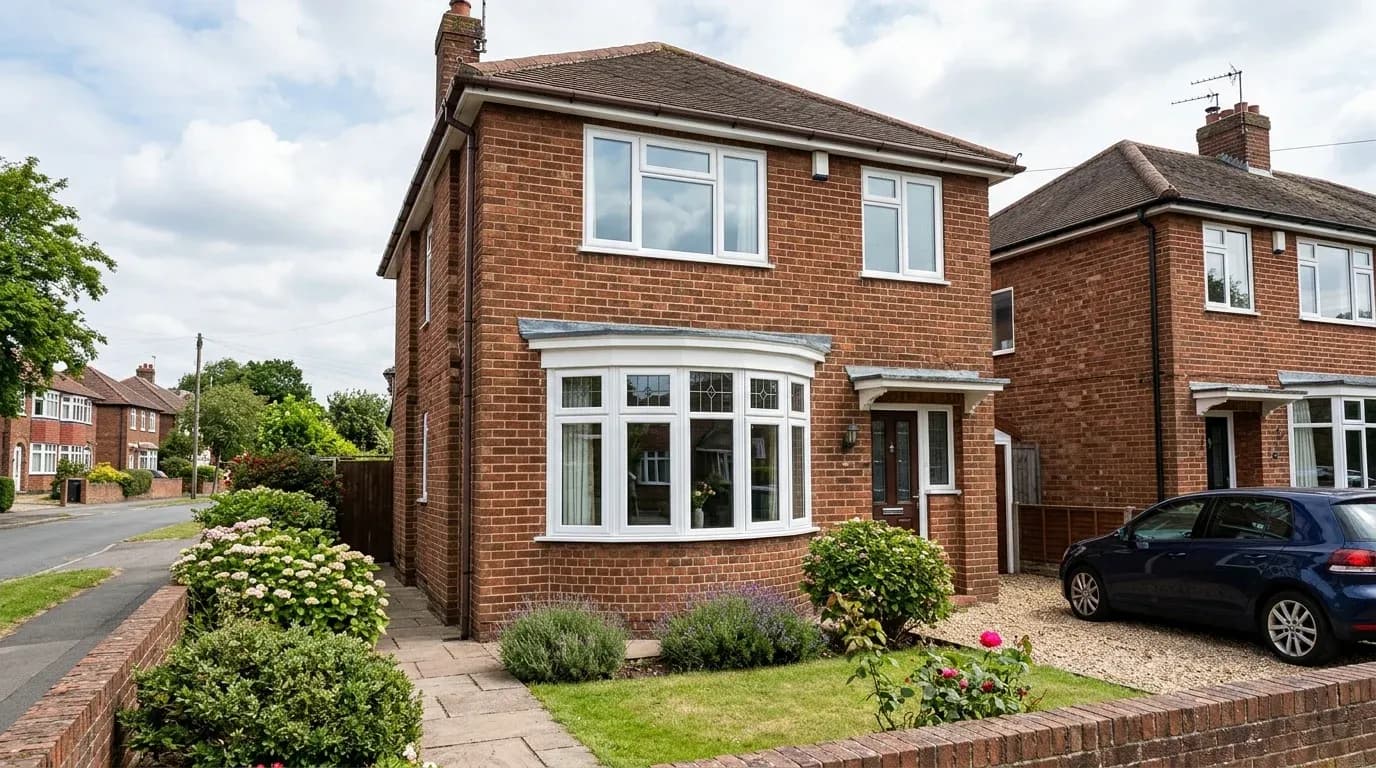
A brick porch matches most UK houses and adds the most kerb appeal. A small front porch with matching brickwork, a tiled roof, and a composite door typically costs £4,000 to £8,000. A larger porch with more glazing, electrics, and interior finishing runs £7,000 to £15,000. Brick porches need proper foundations (strip or trench fill), which adds to the cost and build time. Expect 1 to 2 weeks for the full build.
Oak frame porch: £8,000 to £20,000+
The premium choice. Green oak frame porches have a distinctive character that suits period and country properties. The oak frame is usually made off-site by a specialist joiner, then assembled on location. Prices start at £8,000 for a simple open porch with oak pillars and a tiled roof, rising to £15,000 to £20,000+ for a fully enclosed porch with infill panels and glazing. Oak porches take 2 to 3 weeks to complete.
Enclosed vs open porch
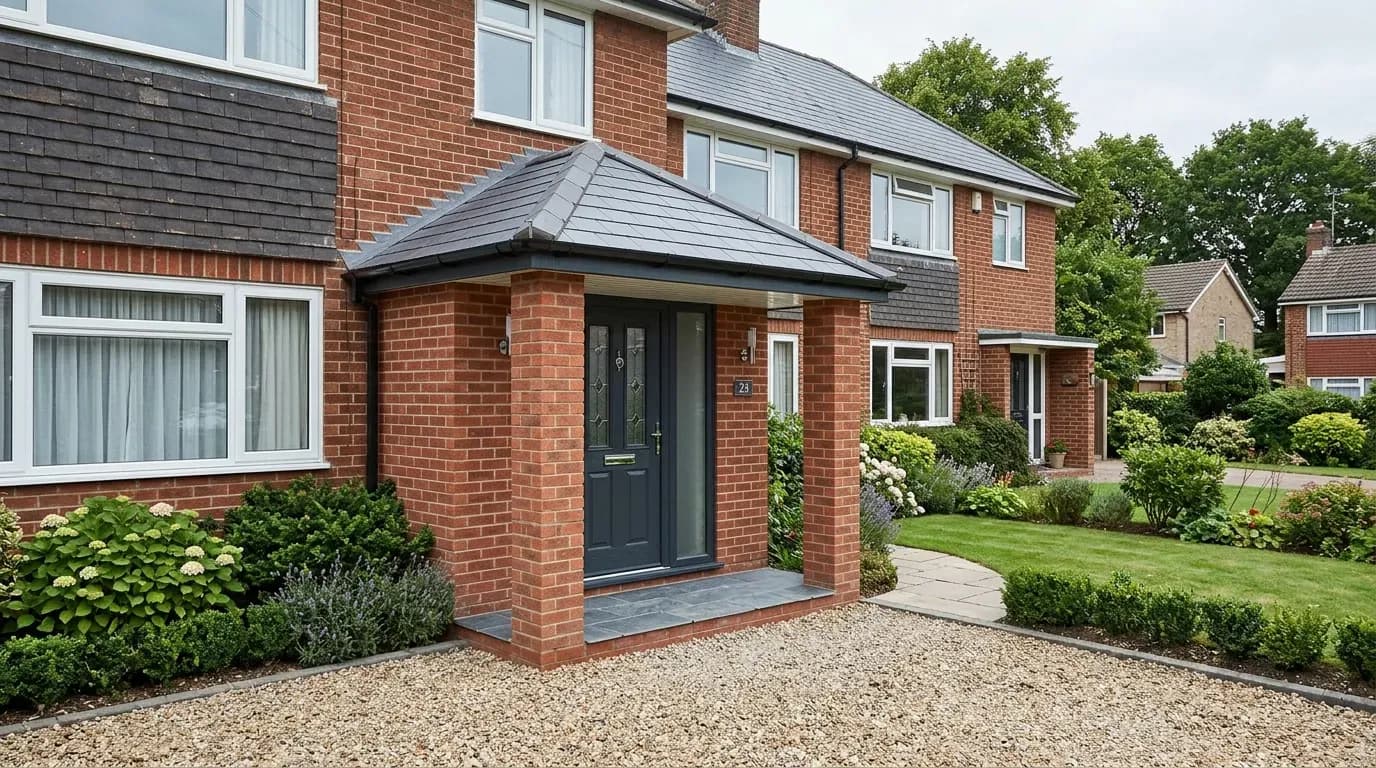
An enclosed porch has walls, a door, and windows, creating a fully weatherproof room. An open porch has a roof supported by pillars or columns but no walls. Enclosed porches cost more but provide usable storage space and an airlock that reduces heat loss. Open porches are cheaper (typically £2,000 to £5,000 for brick pillars and a tiled roof) and give the visual benefit without the full cost.
Front porch vs rear porch
Front porches are the most common and are primarily about kerb appeal, weather protection, and creating a welcoming entrance. Rear porches tend to be more practical, used as a mudroom, boot room, or utility space. Rear porches cost slightly more on average (£3,000 to £10,000) because they often connect to kitchens or utility rooms and may need more drainage and structural work.
Porch Cost Breakdown
Where does the money actually go when building a porch? Here is a typical breakdown for a mid-range brick porch. The exact split depends on the design, but this gives you a good idea of what to expect in each quote.
| Item | Typical Cost |
|---|---|
| Foundations and groundwork | £500 to £2,000 |
| Brickwork / frame construction | £1,500 to £6,000 |
| Roof (tiles, lead flashing, felt) | £800 to £3,000 |
| Door (composite or uPVC) | £500 to £1,500 |
| Windows / glazing | £400 to £2,000 |
| Floor (tiles or concrete) | £300 to £800 |
| Electrics (light, socket) | £200 to £500 |
| Plastering and decoration | £200 to £600 |
| Drainage adjustments | £200 to £800 |
Costs for a typical mid-range brick porch. uPVC porches will be lower across most categories. Oak frame porches will be higher for the frame construction element.
Planning Permission and Building Regulations
One of the reasons porches are such a popular home improvement is that most of them do not need planning permission. But there are rules you need to know.
Permitted development (no planning needed)
Your porch qualifies for permitted development if the ground floor area does not exceed 3 square metres, the height does not exceed 3 metres, and no part of the porch is within 2 metres of a boundary that fronts a highway. Most standard front porches fall within these limits.
When you do need planning permission
You will need to apply for planning permission if the porch exceeds any of the PD limits above, if your property is listed or in a conservation area, if your home is a flat or maisonette, or if your permitted development rights have been removed by a planning condition. A householder planning application costs £548 and typically takes 8 weeks.
Building Regulations
A porch is exempt from Building Regulations if the floor area is under 30 square metres, it is at ground level, and there is a wall and door between the porch and the rest of the house. However, any glazing must comply with Building Regulations regardless of the porch size. If the porch involves structural alterations to the house or new drainage, Building Regulations will apply.
What Affects the Cost of a Porch?
Size
A small porch of 2 to 3m² costs significantly less than a larger 4 to 6m² porch. The bigger the porch, the more materials, deeper foundations, and more labour required. Most front porches stay under 3m² to avoid planning permission, which also keeps costs down.
Materials
uPVC is the cheapest, brick is mid-range, and oak frame is premium. The choice of roofing (felt, tile, slate, lead) also affects the price. Matching your existing house bricks, roof tiles, and finishes costs more but gives a far better-looking result.
Foundations
Every porch needs foundations unless it is a lightweight uPVC structure on an existing concrete base. Strip foundations for a brick porch typically cost £500 to £1,500. Ground conditions, tree roots, and drainage can all increase foundation costs. If the ground is poor, you may need deeper or wider foundations.
Door and glazing quality
A basic uPVC door costs £300 to £600, while a quality composite door costs £800 to £1,500. Feature glazing such as stained glass, leaded lights, or large fixed panels all add to the price. The door is what people notice first, so it is worth spending a bit more here.
Electrics and finishing
Adding a light, sensor light, or power socket to a porch requires a qualified electrician (Part P registered). Expect £200 to £500 for basic electrics. Interior plastering and painting add another £200 to £600. A fully finished porch with tiled floor, plastered walls, and painted ceiling costs more than a basic shell.
Access and site conditions
If the porch location has awkward access, steep ground, or nearby drainage runs that need moving, costs increase. Porches on the side of a house with narrow access for materials can take longer to build. Properties on slopes may need more extensive groundwork.
Front Porch Cost by Region
Like most building work, porch prices vary across the UK. Labour rates drive most of the regional difference, since materials cost roughly the same everywhere. These are averages for a mid-range brick porch.
| Region | Average Cost | vs National |
|---|---|---|
| London | £8,500 | +30% |
| South East | £7,500 | +15% |
| East of England | £7,000 | +8% |
| South West | £6,800 | +5% |
| Midlands | £6,500 | Average |
| Yorkshire | £5,800 | -11% |
| North West | £6,000 | -8% |
| North East | £5,500 | -15% |
| Scotland | £5,800 | -11% |
| Wales | £5,600 | -14% |
Based on industry data. Average cost for a mid-range brick porch with tiled roof and composite door.
How to Get Your Porch for Less
A porch is a relatively small building project, which means the choices you make around materials, timing, and design have a big impact on the final price.
Keep it under 3m² to avoid planning permission
If you design the porch to stay within 3 square metres of ground floor area, under 3 metres high, and at least 2 metres from a highway boundary, you will not need planning permission under permitted development. This saves the planning application fee (currently £548) and avoids waiting 8 weeks for a decision. It also keeps the build simpler and cheaper.
Book the work in winter
Builders are quieter from November to February. You are more likely to get competitive quotes and faster start dates during these months. A porch is a quick job that most builders can squeeze in between larger projects, so they may offer a sharper price to keep their team busy. Spring and summer are peak season, and you will pay more.
Use matching bricks from a reclamation yard
New bricks that match your house can be surprisingly expensive, especially for older properties. Reclamation yards sell matching period bricks for a fraction of the price of new specials. Your bricklayer can help identify the right match. Reclaimed bricks also weather in naturally and look like they have always been there.
Consider an open porch canopy instead
If your main goal is weather protection rather than extra enclosed space, a porch canopy or open porch with pillars costs significantly less than a fully enclosed porch. A simple GRP (fibreglass) door canopy costs £300 to £800. A brick pillared open porch with a tiled roof costs £2,000 to £5,000. Both improve kerb appeal without the cost of walls, windows, and a door.
Get three or more quotes and compare properly
Porch prices vary hugely between builders. Some see it as a small job and price accordingly, while others treat it as a mini extension and charge accordingly. Get at least three written quotes, check what is included (foundations, electrics, decoration, skip), and compare like-for-like. The cheapest quote is not always the best, but the differences can be significant.
Useful resources
- Planning Portal: Porches, Porch permitted development rules
- Building Regulations Part A, When a porch needs structural approval
What to Expect: The Porch Build Process
A straightforward porch build typically takes 1 to 2 weeks. Here's what happens at each stage.
- 1
Check permitted development rules
Most porches under 3 square metres with a height below 3 metres fall within permitted development. Your builder or architect confirms whether planning permission is needed based on your property type and location.
- 2
Lay the foundations
A shallow concrete foundation is dug and poured (typically 450mm deep). For a brick porch, a damp-proof course is laid on top of the foundation before building begins.
- 3
Build the walls
Walls are constructed from brick, block, uPVC, or hardwood framing depending on the porch style. A brick porch has cavity walls with insulation; a uPVC porch uses a pre-fabricated frame system.
- 4
Fit the roof
A pitched, flat, or lean-to roof is constructed and covered with tiles, lead, or polycarbonate sheeting. Lead flashings are dressed where the porch roof meets the house wall.
- 5
Install the door and glazing
The new front door is hung and any side or top glazing panels are fitted and sealed. If the porch encloses an existing front door, a new external door is added to the porch entrance.
- 6
Finish the interior
The floor is tiled or paved, internal walls are plastered or clad, and a light fitting is wired in. A letterbox, doorbell, and any security features are fitted to complete the porch.
Frequently Asked Questions
How much does a front porch cost?
A small front porch costs £2,500 to £8,000, while a larger front porch runs £5,000 to £15,000. The price depends on materials (uPVC is cheapest, oak frame is most expensive), size, and whether it needs foundations. A basic uPVC lean-to porch starts at around £2,000, while a fully enclosed brick porch with tiled roof and electrics typically costs £6,000 to £12,000.
Do I need planning permission for a porch?
Most porches do not need planning permission under permitted development rights, provided the ground floor area does not exceed 3 square metres, the height does not exceed 3 metres, and no part of the porch is within 2 metres of a boundary that fronts a highway. If your property is listed, in a conservation area, or has had its permitted development rights removed, you will need to apply. Check with your local council planning department before starting work.
Does a porch add value to a house?
A well-built porch can add £5,000 to £15,000 to a property's value, though the exact figure depends on the property type and local market. Beyond the monetary value, a porch improves kerb appeal, provides practical storage for shoes and coats, and creates an airlock that reduces heat loss through the front door. Estate agents consistently list a porch as one of the most cost-effective external improvements.
How long does it take to build a porch?
A uPVC porch typically takes 2 to 4 days to install. A brick porch takes 1 to 2 weeks including foundations, brickwork, roof, and finishing. An oak frame porch takes 2 to 3 weeks because the frame is often made off-site and assembled on location. Weather can extend these timescales, particularly for brickwork and roofing.
What is the cheapest type of porch?
A uPVC porch is the cheapest option, starting from around £2,000 for a small lean-to style and £3,000 to £5,000 for a fully enclosed front porch. uPVC is lightweight, maintenance-free, and quick to install. It does not have the same visual appeal as brick or oak, but it is functional, weatherproof, and a fraction of the cost of traditional materials.
Does a porch need Building Regulations approval?
A porch is exempt from Building Regulations if the floor area is less than 30 square metres, it is at ground level, and it is separated from the rest of the house by a wall with a door. If the porch replaces or alters the external wall of the house, or if it involves new electrical or drainage work, Building Regulations will apply. Glazing in a porch must meet Building Regulations regardless of size.
Is a brick porch or uPVC porch better?
Brick porches look more substantial, match most UK house styles, last longer, and add more value. uPVC porches are cheaper, quicker to install, and maintenance-free but can look like an afterthought on a brick property. For most homeowners, a brick porch with a tiled roof is the better long-term investment. uPVC makes more sense on a tight budget or on a property where it matches the existing windows and doors.
Can I build a porch myself?
A simple uPVC porch kit can be a DIY project if you have building experience. However, most porches need foundations, and brickwork requires a skilled bricklayer to look right. Roofing, electrics, and glazing also need professional skills. A poorly built porch is highly visible and will hurt rather than help your property's kerb appeal. Getting the foundations and DPC (damp-proof course) wrong can cause damp problems in the main house.

Written by Chris Kervin, Co-Founder of Less.co.uk
Last updated: · Pricing based on industry data and verified contractor submissions · Methodology
Compare real quotes for your job
Prices move a lot with your postcode, the access on site and the spec you choose. Get up to 3 free quotes from vetted local tradespeople and see what yours actually comes to, with no obligation to book.