How Much Does a Garage Conversion Cost in 2026?
Most UK homeowners pay between £8,000 and £20,000 to convert a single garage into a habitable room. It is one of the most cost-effective ways to add living space - considerably cheaper than an extension and with less disruption. The final cost depends on the garage type, the room you want, and whether you need plumbing.
£14,000
Average cost
£6,000+
Basic conversion
£25,000+
Premium conversion
2 to 4 weeks
Project duration
Prices updated April 2026 · Based on published trade rates and UK market data.
Building Regulations approval is required for all garage conversions. This covers insulation (Part L), fire safety (Part B), electrical work (Part P), and ventilation (Part F). Most garage conversions do not need planning permission under permitted development rights, but always check with your local planning authority first.
Garage Conversion Prices at a Glance
Prices below cover the full conversion cost - structural work, insulation, electrics, plastering, flooring, and finishing. Plumbing is included where stated.
Single garage (basic)
Home office, playroom, or gym - no plumbing
£10,000
£6,000 to £15,000
Single garage (with bathroom)
Bedroom, studio flat, or annexe with en suite or shower room
£18,000
£12,000 to £25,000
Double garage
Open-plan living space, kitchen-diner, or two separate rooms
£22,000
£15,000 to £30,000
Integral garage
Already attached and within the house structure - simpler conversion
£12,000
£8,000 to £18,000
Detached garage
Separate building - may need additional drainage and services
£20,000
£12,000 to £30,000
Labour Cost Breakdown
| Trade | Cost |
|---|---|
| Builder / general contractor | £1,500 to £3,500 |
| Electrician (Part P certified) | £400 to £800 |
| Plumber (if required) | £400 to £1,200 |
| Plasterer | £500 to £1,000 |
| Window/door installer | £300 to £600 |
| Flooring specialist | £300 to £600 |
Labour costs only - materials (insulation, plasterboard, flooring, windows) are additional. Many builders quote a single price covering both labour and materials.
Get Free Garage Conversion Quotes
Tell us about the job and local garage conversion builders will get in touch with prices. Free, with no obligation to book.
Your details go to our quote partner, Leads.work, who pass them to a few local firms that cover your area. They'll contact you about the job, which may include a phone call. It's free for you, and we're paid a referral fee. How your details are used
Full Cost Breakdown
Here is what each part of a garage conversion typically costs. Not every job needs every item - a dry conversion without plumbing skips the plumbing line entirely.
| Work Item | Typical Cost |
|---|---|
| Removing garage door and building new front wall | £1,500 to £3,000 |
| Floor insulation and damp-proof membrane | £1,000 to £2,500 |
| Wall insulation (internal) | £800 to £1,500 |
| Ceiling insulation | £400 to £800 |
| Electrics (new circuits, lighting, sockets) | £800 to £1,500 |
| Plumbing (if adding bathroom/kitchen) | £1,500 to £4,000 |
| Plastering (walls and ceiling) | £1,000 to £2,000 |
| Flooring | £500 to £1,500 |
| Windows and doors | £800 to £2,500 |
| Decoration (painting, skirting, architrave) | £400 to £800 |
Building Regulations & Planning Permission
Every garage conversion needs Building Regulations approval. Planning permission is a separate matter - most do not need it, but there are exceptions.
Regulatory Costs
| Item | Cost |
|---|---|
| Building Regulations application (full plans) | £400 to £800 |
| Building Regulations (building notice) | £300 to £600 |
| Structural engineer report (if needed) | £300 to £600 |
| Planning permission application (if required) | £548 |
| Party wall agreement (if applicable) | £700 to £1,500 |
Which Building Regulations Apply?
Part L - Thermal insulation
Walls, floor, and roof must meet minimum U-value standards. This usually means 75 to 100mm of rigid insulation on walls, 100mm+ on the floor, and adequate roof insulation. This is the most significant cost implication of Building Regs for garage conversions.
Part B - Fire safety
If the garage is integral (attached to the house), you will need a fire-resistant door (FD30 rated, 30-minute fire door) between the converted room and the rest of the house. Fire detection (interconnected smoke alarms) is also required.
Part P - Electrical safety
All new electrical work must be carried out by a Part P registered electrician or notified to Building Control. New circuits, consumer unit modifications, and lighting all fall under this.
Part F - Ventilation
Habitable rooms need adequate ventilation. This typically means openable windows providing background ventilation plus rapid ventilation (a window that opens to at least 1/20th of the floor area). Bathrooms need mechanical extract ventilation.
Part E - Sound insulation
Only applies if the garage shares a party wall with a neighbouring property. The converted wall must meet minimum sound insulation standards.
When you DO need planning permission: You will need planning permission if your property is in a conservation area, is listed, has a condition requiring the garage to be kept for parking, or if the external appearance is being substantially changed (e.g., adding a new storey above). Leasehold properties may also need freeholder consent. Always check with your local planning authority before starting work.
What Affects the Cost of a Garage Conversion?
Garage type and size
A standard single garage is roughly 2.4m x 4.8m internally - about 11.5 square metres. A double garage gives you roughly 23 square metres. Integral garages are usually cheaper to convert because they are already part of the house structure and share walls, a roof, and services. Detached garages cost more because you may need to run drainage, water, and electricity from the main house.
What you are converting it into
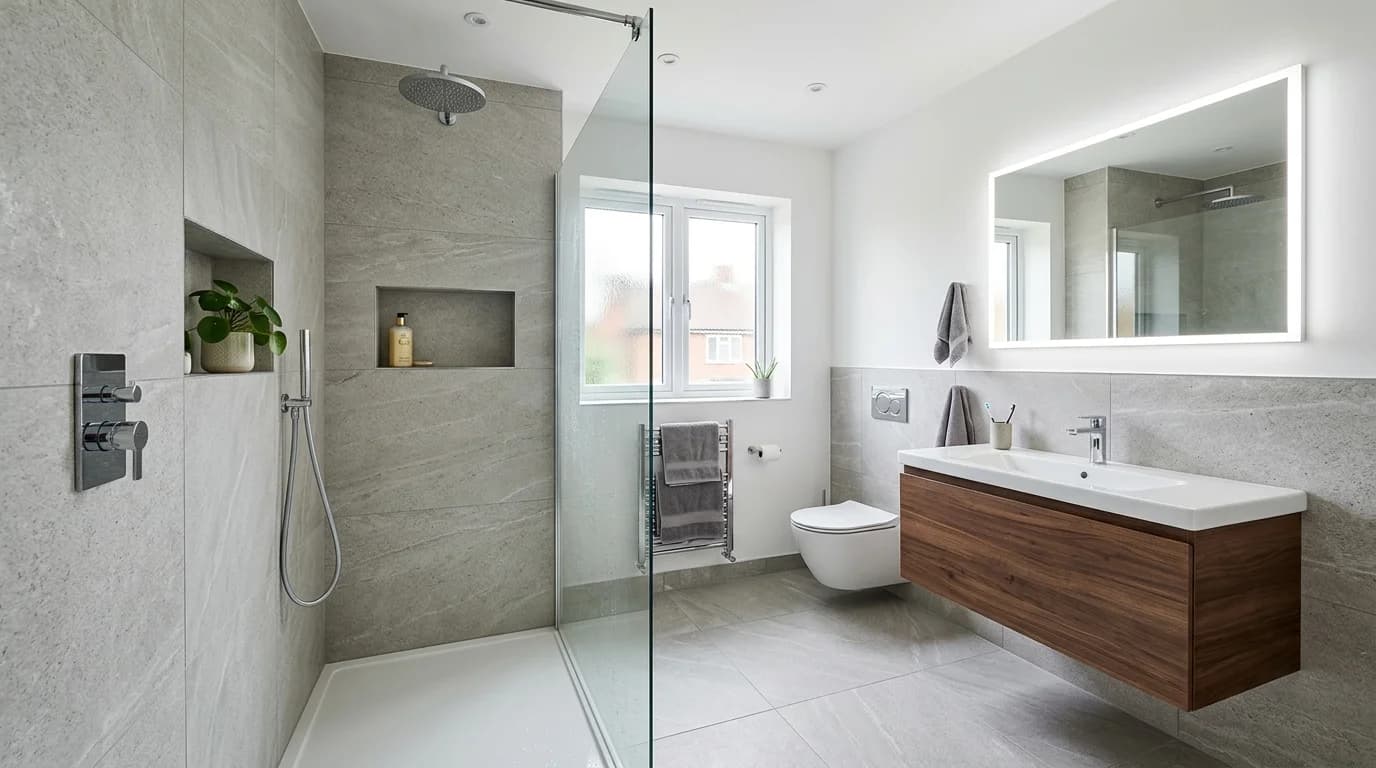
A home office or playroom with no plumbing is the cheapest type of conversion. Adding a shower room or bathroom adds £2,000 to £5,000 for plumbing, drainage, and fittings. A kitchen or kitchenette adds £3,000 to £8,000 depending on specification. A fully self-contained annexe with kitchen and bathroom is the most expensive option.
Floor condition
Most garage floors are a simple concrete slab with no insulation and no damp-proof membrane. You will need to either dig out the existing floor and relay it with insulation and a DPM, or build a raised timber floor on top. The raised floor option is cheaper but raises the floor level, which can create an awkward step.
Roof condition and type
A flat roof in poor condition may need replacing entirely before insulation can be added. A pitched roof in good condition only needs insulation added between or below the rafters. If the garage has very low headroom (below 2.3m), raising or replacing the roof is a major expense - expect £5,000 to £10,000 for a new pitched roof.
Replacing the garage door
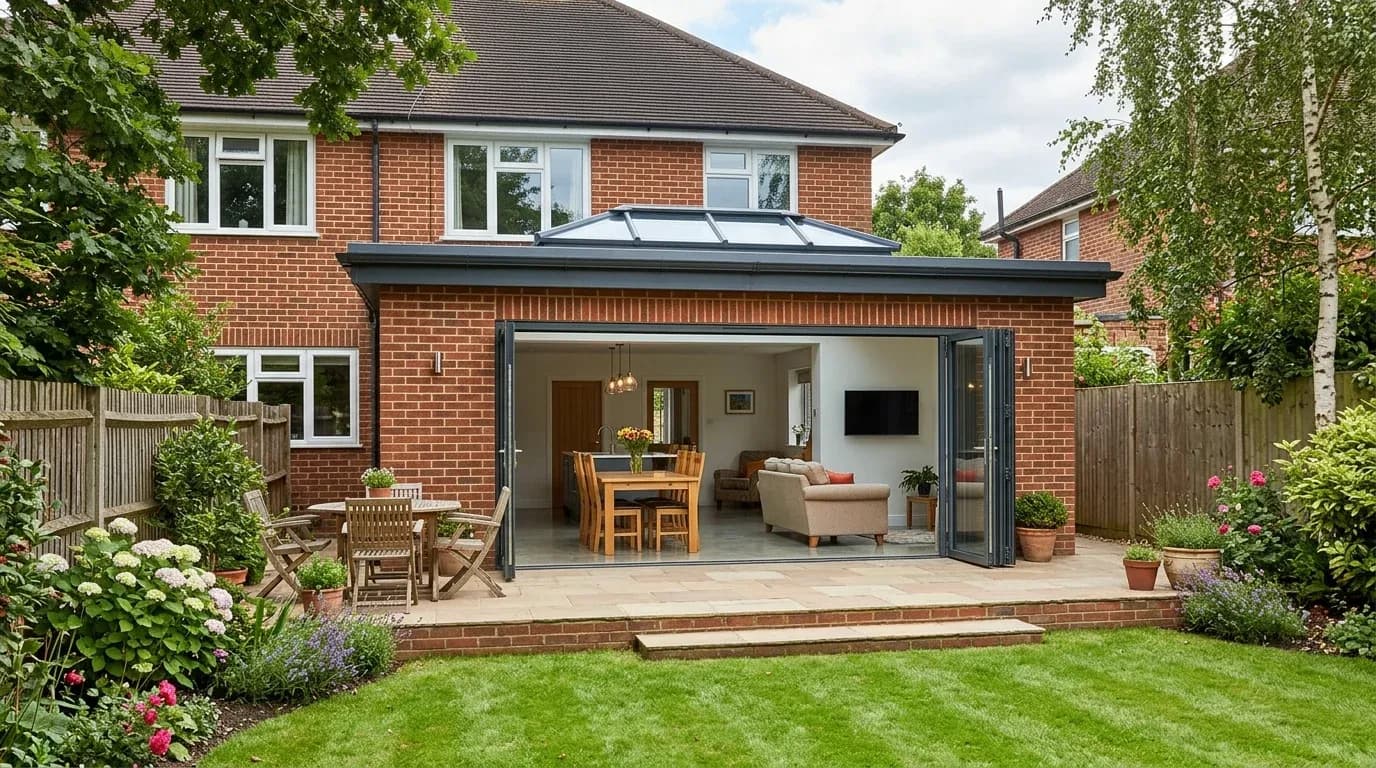
The most visible part of any garage conversion is what goes where the garage door used to be. A new brick wall with a window costs £1,500 to £2,500. French doors or bi-fold doors cost £2,000 to £4,000 including the supporting structure. The wall needs to match the existing brickwork as closely as possible.
Your location
Labour rates vary considerably across the UK. London and the South East are 20 to 35% more expensive than the national average. The North East and Wales tend to be 10 to 17% below average. Materials cost roughly the same everywhere - it is the labour that makes the difference.
Popular Garage Conversion Uses & Their Costs
The type of room you create has a big impact on the overall cost. Here are the most common uses and what they typically cost for a single garage conversion.
Home office
No plumbing needed. Good insulation, plenty of sockets, data cabling, and decent lighting are the main requirements.
£8,000 to £15,000
Extra bedroom
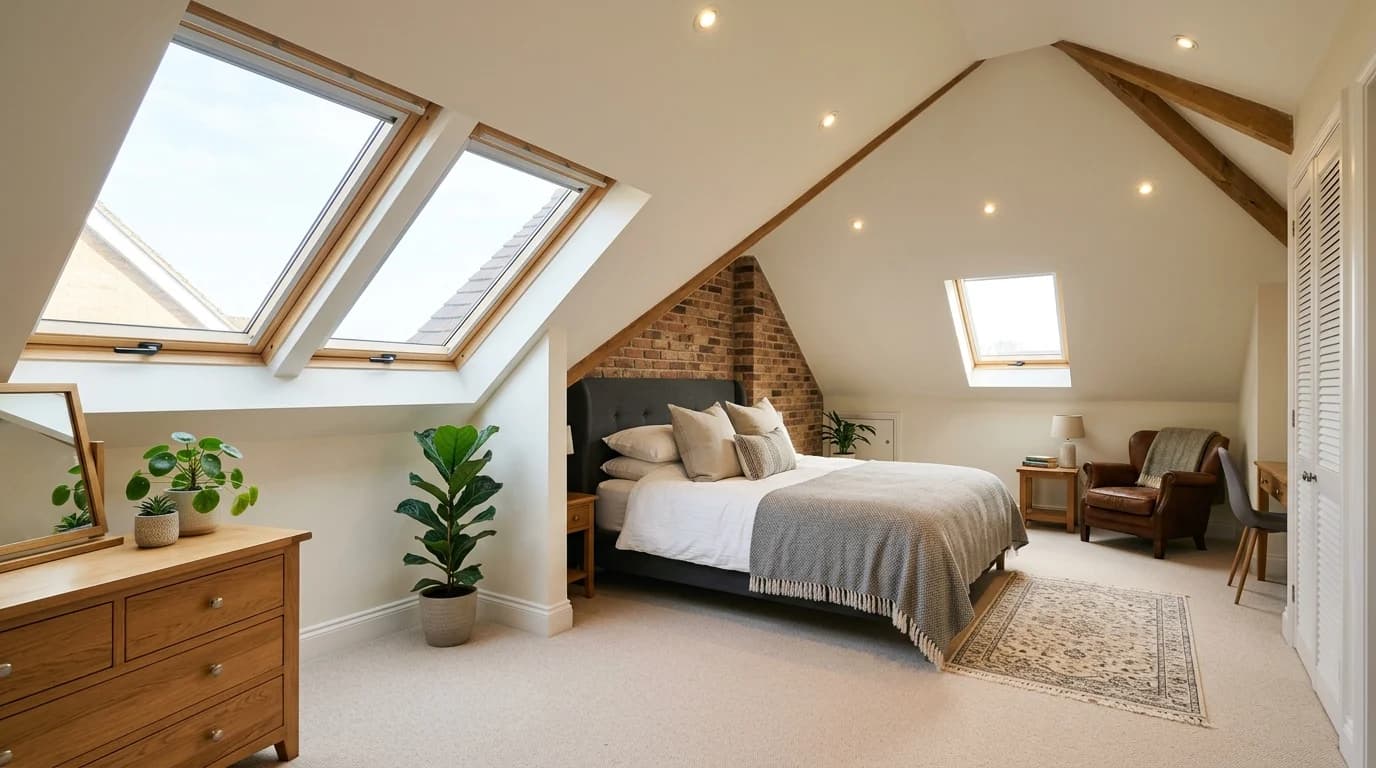
Needs to meet Building Regs for a habitable room. Adding an en suite pushes costs towards the upper end.
£10,000 to £18,000
Playroom / games room
Similar to a home office. Consider soundproofing if the conversion shares a wall with neighbours.
£8,000 to £14,000
Home gym
Reinforced flooring may be needed for heavy equipment. Good ventilation is important.
£8,000 to £15,000
Kitchen-diner extension
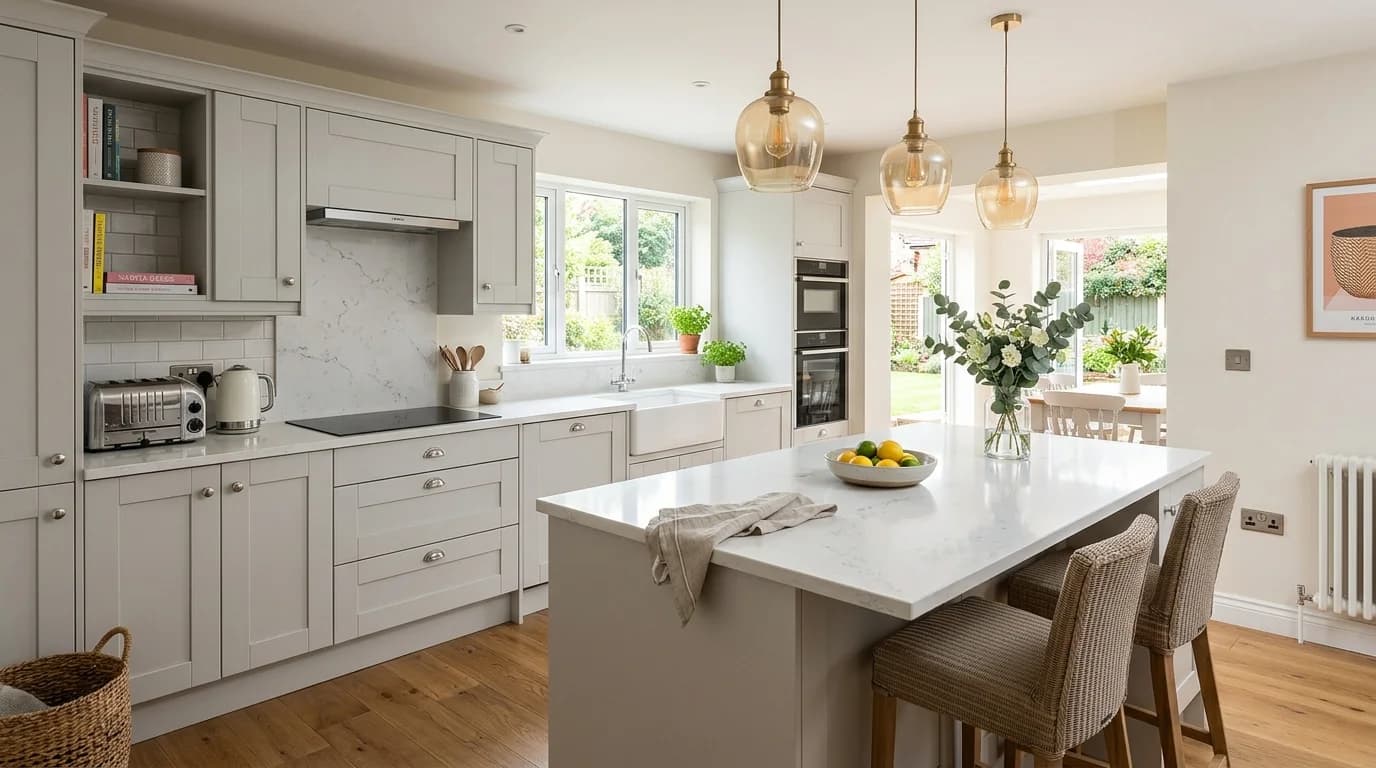
Opening up between the garage and existing kitchen creates a large living space. Structural work for the opening adds cost.
£15,000 to £25,000
Self-contained annexe
Kitchen, bathroom, and living space. May need planning permission depending on intended use.
£20,000 to £40,000
Looking for design inspiration? See our garage conversion ideas guide.
Garage Conversion Costs by Region
Average prices for a mid-range single garage conversion (new front wall, full insulation, electrics, plastering, flooring, decoration) by UK region.
| Region | Average Cost | vs National |
|---|---|---|
| London | £18,000 | +30% |
| South East | £16,000 | +15% |
| East of England | £15,000 | +8% |
| South West | £14,500 | +4% |
| Midlands | £14,000 | Average |
| Yorkshire | £12,500 | -10% |
| North West | £13,000 | -7% |
| North East | £11,500 | -17% |
| Scotland | £12,500 | -10% |
| Wales | £12,000 | -14% |
Based on industry data for a mid-range single garage conversion, fully installed including Building Regulations fees.
How to Get Your Garage Conversion for Less
A garage conversion is already one of the cheapest ways to add living space, but there are still ways to bring the cost down further without cutting corners on quality.
Get three quotes and compare scope, not just price
Garage conversion quotes vary wildly - the same job can differ by £5,000 between builders. Make sure each quote covers the same scope: structural work, insulation specification, electrics, plastering, and Building Regs fees. A cheap quote that excludes the floor or electrics is not actually cheap. The Federation of Master Builders has a find-a-builder tool that only lists vetted, insured tradespeople.
Skip the plumbing if you do not need it
Adding a bathroom or kitchenette to a garage conversion is the single biggest cost escalator. If you are building a home office, gym, or playroom, you do not need plumbing. A basic dry conversion without plumbing can save £2,000 to £5,000 compared to one with a bathroom.
Creating a separate annexe can drop VAT to 5%
If the conversion turns the garage into a self-contained annexe or flat with its own kitchen and bathroom, so the property gains an extra dwelling, the building work can qualify for a reduced 5% VAT rate instead of the standard 20%. This only applies where the number of dwellings actually changes, not for a simple extra room, so ask the builder to price it at 5% and check the rules in HMRC VAT Notice 708. On a £20,000 job that is roughly £2,500 off the bill.
Put the deposit on a credit card
Pay the deposit with a credit card and Section 75 of the Consumer Credit Act makes the card provider jointly liable if the builder takes your money and then goes bust or disappears mid-job. It applies when the job costs between £100 and £30,000, and you are covered even if only part of the deposit goes on the card. Never hand over a large cash deposit up front, and stage the rest of the payments against work that is actually finished.
Use a builder who handles the Building Regs application
An experienced garage conversion builder will submit the Building Regulations application, manage the inspections, and deal with Building Control throughout the project. This saves you time and often avoids mistakes that lead to failed inspections and costly rework. Look for builders registered with TrustMark, the government-endorsed quality scheme for tradespeople.
Choose a raised timber floor over a concrete screed
A raised timber floor with insulation between the joists is quicker to install and often cheaper than digging out and re-laying a concrete floor with underfloor insulation. It also creates a void for running services. The main downside is a slightly raised floor level - check the step up from the house is acceptable.
Keep the existing roof if it is sound
If the garage roof is in good condition, insulating it from the inside is far cheaper than replacing it. Adding insulation between and below the rafters, then plasterboarding over, can save thousands compared to stripping the roof and re-covering it. Only replace the roof if it is leaking or structurally inadequate.
Do the decorating yourself
Painting, fitting skirting boards, and laying click-together flooring are jobs most competent DIYers can handle. Doing the finishing work yourself can save £500 to £1,000 on a single garage conversion. Just make sure the plastering is done by a professional - badly skimmed walls are obvious and painful to fix.
Comparing quotes is the simplest way to pay less
Getting at least three quotes and comparing them is how most homeowners avoid overpaying. It takes a couple of minutes, with no obligation.
Get my free quotesGarage Conversion vs Extension: Which Is Better Value?
Both options add living space, but the costs are very different. Here is a direct comparison for similar floor areas.
| Factor | Garage Conversion | Single-Storey Extension |
|---|---|---|
| Typical cost | £8,000 to £20,000 | £25,000 to £50,000 |
| Cost per m² | £700 to £1,700 | £1,800 to £3,000 |
| Duration | 2 to 4 weeks | 8 to 16 weeks |
| Planning permission | Usually not needed | Often required |
| Disruption | Low-moderate | High |
| Value added | 10 to 15% | 10 to 20% |
The Royal Institution of Chartered Surveyors (RICS) estimates that a well-finished garage conversion can add 10-15% to a property's value - strong returns given the relatively low outlay. Want to compare extension costs in more detail? See our full house extension cost guide.
What to Expect: The Garage Conversion Process
A typical single garage conversion takes 2 to 4 weeks. Here is the usual sequence of work.
- 1
Survey and Building Regs application
Your builder surveys the garage, confirms what work is needed, and submits the Building Regulations application. This should happen before any work starts. Some builders also arrange a structural engineer visit at this stage if load-bearing walls are involved.
- 2
Structural work and garage door removal
The garage door is removed, the opening is bricked up (with a window, door, or French doors fitted), and any internal structural changes are made. If the floor needs digging out, this happens now.
- 3
Insulation and damp proofing
Rigid insulation is fitted to walls, a damp-proof membrane and insulation go on the floor, and the ceiling or roof is insulated. This is the stage that makes the room warm and dry - cutting corners here shows up within the first winter.
- 4
First fix electrics and plumbing
Electrical circuits are run for sockets, lighting, and any appliances. If the room includes a bathroom or kitchen, plumbing is roughed in at this stage. All electrical work must be done by a Part P registered electrician.
- 5
Plastering and second fix
Walls and ceiling are plasterboarded and skimmed. Once the plaster is dry, second-fix electrics (sockets, switches, light fittings) and second-fix plumbing (taps, toilet, basin) are completed.
- 6
Flooring, decoration, and Building Control sign-off
Flooring is laid, walls are painted, skirting boards and architrave are fitted. Building Control carries out a final inspection and issues a completion certificate. Keep this certificate - you will need it when you sell the property.
Frequently Asked Questions
How much does a garage conversion cost in the UK?
A single garage conversion in the UK typically costs between £8,000 and £20,000, depending on the spec and what you are converting it into. A basic conversion with minimal plumbing runs £8,000 to £12,000. A mid-range conversion with a bathroom or kitchenette costs £12,000 to £18,000. A high-spec conversion with underfloor heating and premium finishes can reach £20,000 to £30,000.
Do I need planning permission for a garage conversion?
Most garage conversions fall under permitted development and do not require planning permission, provided the work is internal and does not substantially alter the external appearance of the building. However, you will need planning permission if your property is in a conservation area, if the property is listed, or if there is a condition on the original planning consent requiring the garage to remain as parking. Leaseholders may also need their freeholder's consent, which is separate from planning permission. You will always need Building Regulations approval.
Does a garage conversion add value to a house?
A well-executed garage conversion can add 10 to 15% to the value of a property, according to estimates from the Royal Institution of Chartered Surveyors (RICS). The key word is well-executed - a poorly finished conversion with inadequate insulation or damp problems can actually reduce value. The extra habitable space needs to look and feel like a proper room, not a converted garage.
How long does a garage conversion take?
A straightforward single garage conversion typically takes 2 to 4 weeks from start to finish. More complex projects involving plumbing (adding a bathroom or kitchen), structural alterations, or high-spec finishes can take 4 to 6 weeks. The building regulations inspection process runs alongside the build and does not add significant time if your builder submits the application early.
What building regulations apply to a garage conversion?
Garage conversions must comply with several parts of the Building Regulations: Part L (thermal insulation - walls, floor, and roof must meet current U-value standards), Part B (fire safety - fire-resistant doors and escape routes), Part P (electrical safety - new circuits must be installed by a registered electrician or notified to Building Control), Part F (ventilation - adequate ventilation for habitable rooms), and Part E (sound insulation if the conversion shares a wall with a neighbouring property). A Building Regulations application costs £400 to £800 depending on your local authority.
What is the cheapest way to convert a garage?
The cheapest approach is a simple conversion to a home office or playroom - no plumbing, no structural changes, just insulation, a new floor, electrics, plastering, and a replacement front wall where the garage door was. This type of basic conversion can cost as little as £6,000 to £10,000. Avoiding plumbing saves the most money, as adding a bathroom or kitchen significantly increases both materials and labour costs.
Is it cheaper to convert a garage or build an extension?
Converting a garage is significantly cheaper than building an extension. A single garage conversion costs £8,000 to £20,000 on average, while a single-storey rear extension of similar floor area costs £25,000 to £50,000 or more. The garage already has foundations, walls, and a roof - you are essentially finishing an existing space rather than building from scratch.
Do I lose parking if I convert my garage?
Yes, unless you have a double garage and only convert half of it. Losing a garage parking space is one of the main trade-offs. In areas where on-street parking is difficult, this can affect property value. Before committing, check whether your local planning authority has minimum parking requirements - some councils may object if the conversion reduces parking provision below their standards.
Free, with no obligation to book.

Written by Chris Kervin, Co-Founder of Less.co.uk
Last updated: · Pricing based on published trade rates and UK market data · Methodology