Chimney Removal: Your Complete Guide
Removing a chimney breast is one of the best ways to reclaim space in an older property. That awkward alcove or wasted corner in the bedroom can become usable floor area. But it is structural work, which means structural engineers, Building Control, and - if you share a wall - the Party Wall Act. This guide explains the different types of removal, when it makes sense, and what you need to get right.
Types of chimney removal
Chimney breast removal (internal only)
The chimney breast is the section that projects into the room. Removing it on one or more floors frees up significant floor space - often 0.5 to 1 square metre per room. The chimney stack above the roofline stays in place, supported by gallows brackets or a steel beam in the ceiling void. This is the most common chimney job.
Full chimney stack removal (from the roof)
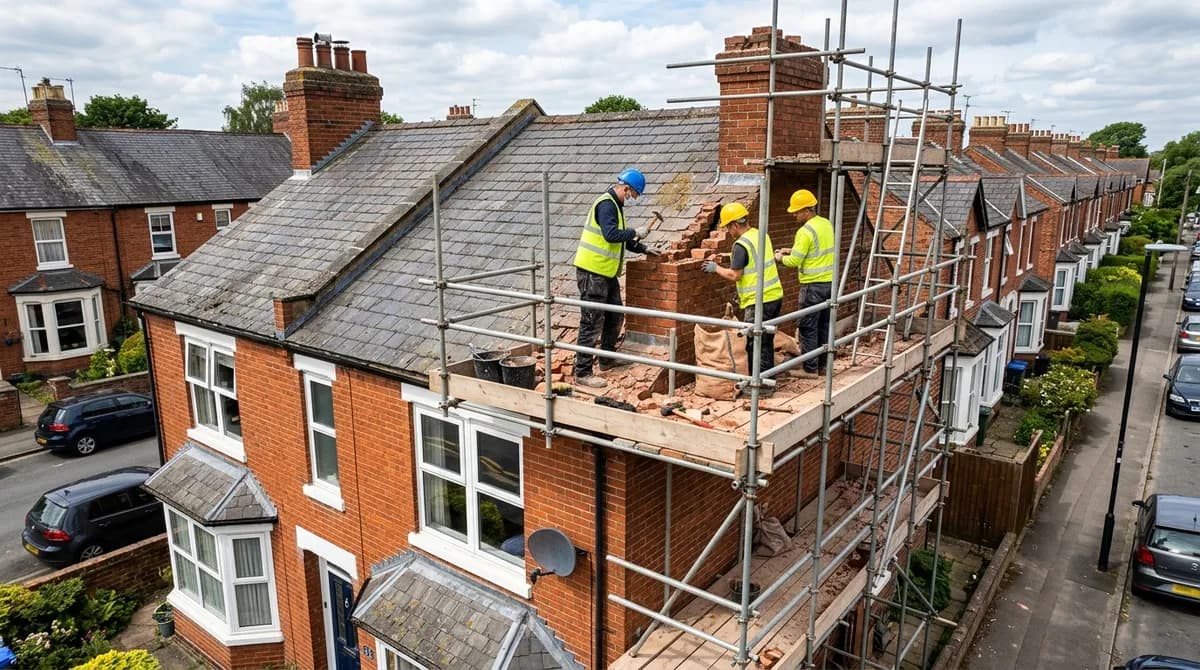
The stack is the part you see above the roofline. Removing it eliminates a potential source of water ingress and reduces the load on the structure. The roof is then tiled over where the stack sat. This is often done alongside chimney breast removal for a complete clearance, or on its own when the stack is in poor condition.
Partial removal
Sometimes only part of the breast is removed - for example, reducing the projection so it sits flush with the wall rather than taking the whole thing out. This is less disruptive, may avoid the need for heavy structural support, and still gives back some room space.
Full removal (breast + stack)
The complete job - chimney breast removed on every floor and the stack taken off the roof. This gives maximum space and removes the chimney entirely. It is the most expensive option and involves the most structural work, but it clears the chimney from the property altogether.
Structural work - professional support required. Chimney removal is not a DIY job. You will need a structural engineer's report, Building Regulations approval, and - for shared walls - a Party Wall agreement. Always use a builder experienced in chimney removal, and never start work without the structural engineer's design in hand.
Building Regulations and Party Wall Act
Structural survey
A structural engineer inspects the chimney and designs the support (gallows brackets or steel beam) needed to hold up the remaining structure once the breast is removed. This report is essential - Building Control will not approve the work without it. Expect to pay £300 to £600.
Building Control notification
You must notify your local council's Building Control department before starting work. They will inspect at key stages - typically when the support steelwork is in place and again when the work is complete. The application fee is usually £250 to £400.
Party Wall Act
If the chimney is on or near a shared wall (semi-detached or terraced houses), you almost certainly need to serve a Party Wall notice on your neighbour. If they agree in writing, the process is straightforward. If they do not, both sides appoint a surveyor to produce a Party Wall Award. Budget £700 to £1,500 per neighbour.
Completion certificate
Once Building Control is satisfied, they issue a completion certificate. Keep this - you will need it when you sell the property. If work was done without Building Control approval, you may need an indemnity insurance policy or retrospective approval, both of which cost money and delay a sale.
When to remove a chimney - and when not to
Good reasons to remove
- Creating more usable space in a room
- Part of a loft conversion (chimney runs through the loft)
- Chimney breast is damp and causing problems
- Stack is in poor structural condition
- Opening up a room layout as part of a renovation
Think twice if...
- The property is listed - you will need listed building consent
- You have a working fireplace you might want to use again
- The chimney is on a party wall and your neighbour is likely to object
- You are planning to sell soon (buyers may prefer a working fireplace)
- The cost outweighs the space gained (small breasts in large rooms)
Chimney removal guides
Common questions
Do I need Building Regulations approval to remove a chimney?
Yes. Chimney removal is structural work and requires a structural engineer's report, Building Control notification, and inspections. You cannot legally remove a chimney breast without Building Control approval.
What is the Party Wall Act and does it apply?
If the chimney is on or near a shared wall (terraced or semi-detached houses), you need to serve a Party Wall notice on your neighbour. If they agree, the process is simple. If not, both sides appoint a surveyor - at your expense - to produce a formal agreement.
Can I remove a chimney breast on one floor but keep it on another?
Yes, this is the most common approach. The breast is removed on one floor, and the remaining chimney above is supported by gallows brackets or a steel beam specified by a structural engineer.
Should I remove my chimney during a loft conversion?
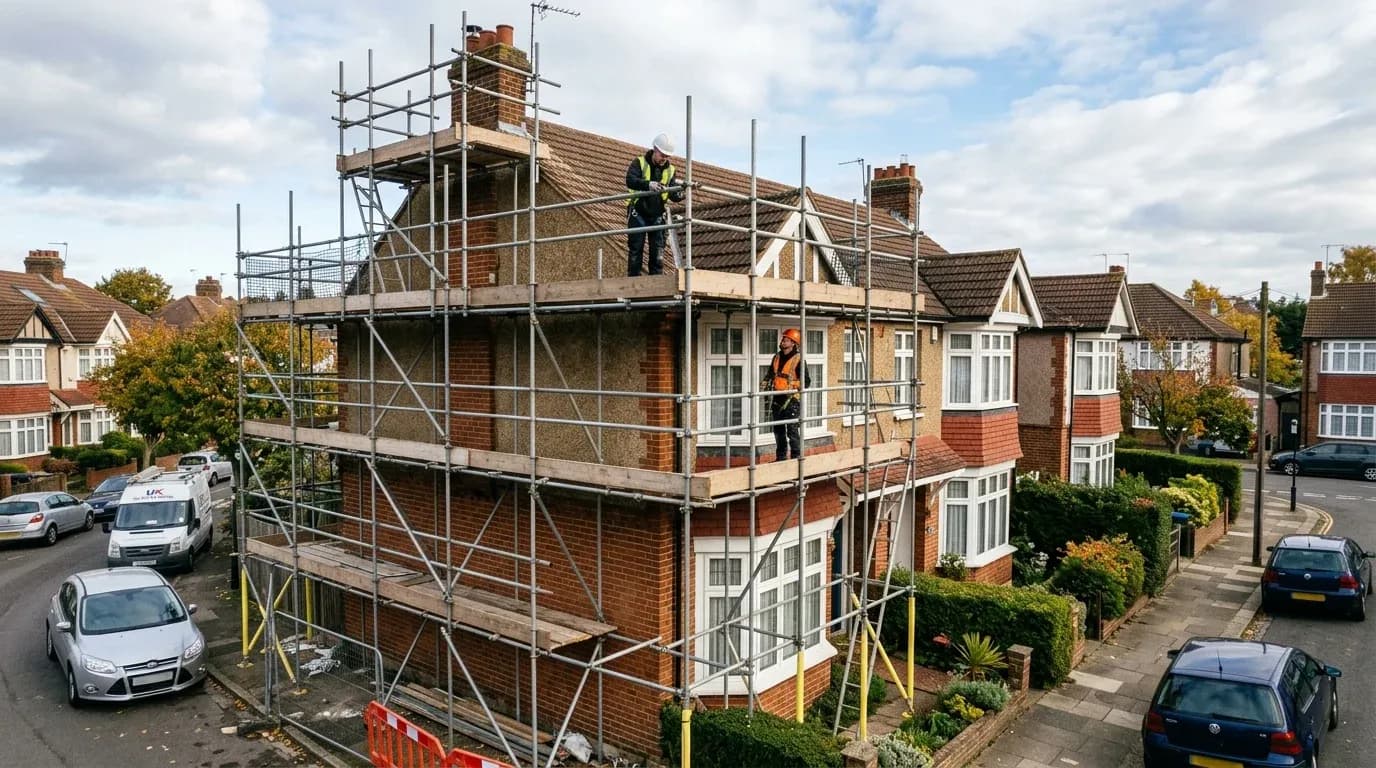
If the chimney runs through the loft and the fireplace is not used, removing it during the conversion makes sense. The scaffolding is already up, and it frees up floor area in the new room.
Getting the best deal on chimney removal
Get at least three written quotes
Chimney removal quotes can vary by thousands of pounds depending on the builder, the structural approach, and what is included. Some quotes cover only the physical removal, while others bundle in the structural engineer, Building Control fees, and making good. Always get at least three written quotes and make sure each one spells out what is included, the structural support method, skip hire, scaffolding, plastering, and whether the builder handles the Building Control application. Comparing like for like is the only way to spot what is missing from a cheap quote.
Compare chimney removal quotes