New Bathroom Cost & Renovation Guide 2026
How much does a new bathroom cost? A full bathroom renovation in the UK typically runs between £3,000 and £10,000, depending on the spec and the size of the room. Get it right and it transforms your daily routine. Get the waterproofing wrong and you could be dealing with damp and damage within a couple of years. Here is what you need to know.
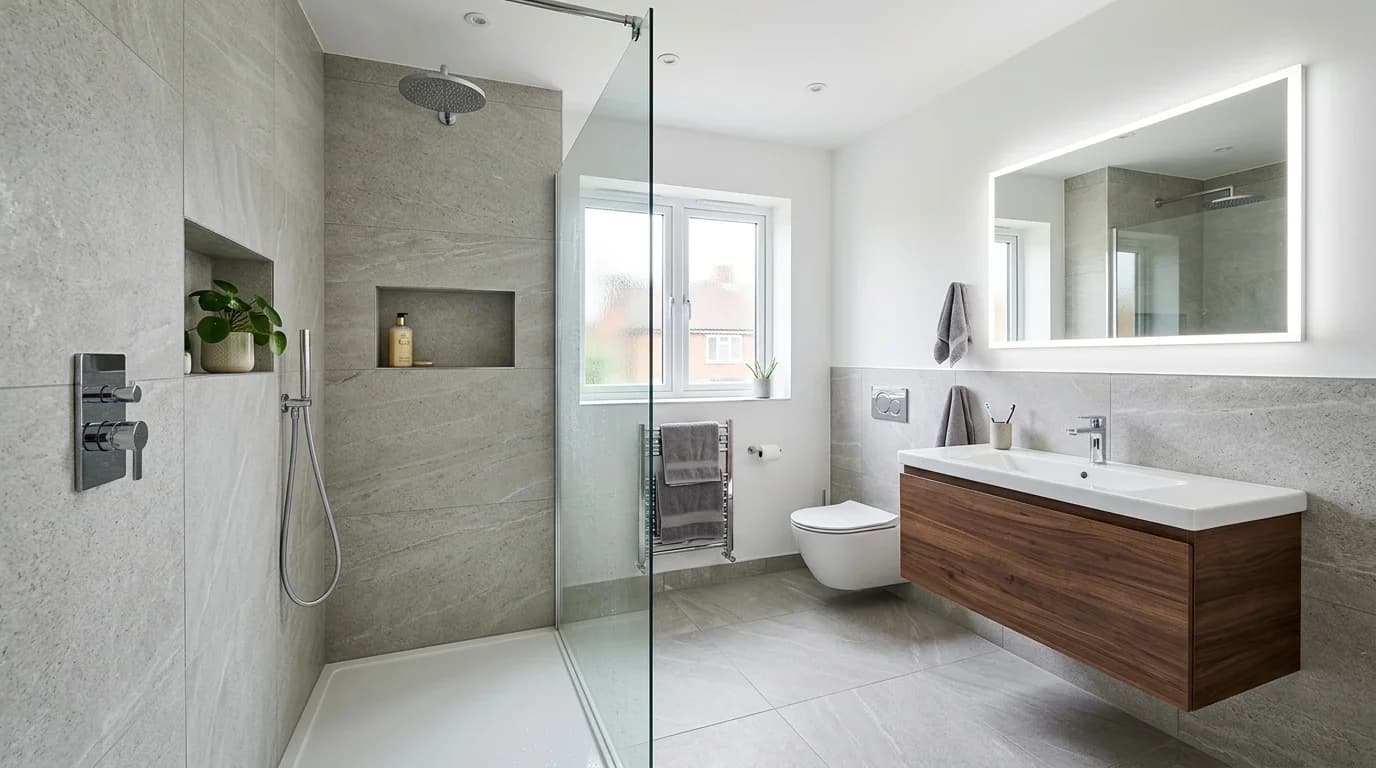
Bathroom work involves multiple regulations. Electrical work near water requires a Part P registered electrician under Approved Document P. Shower valves must comply with BS EN 1111. New sanitary fittings must meet Part G water efficiency requirements. Your fitter should be aware of all of these. Read our full guide to building regulations for bathrooms.
Quick answer
How much does a bathroom renovation cost?
A full strip-out and refit in a standard UK bathroom costs between £3,000 and £10,000. A budget job with basic sanitary ware and ceramic tiles runs around £3,000 to £4,500. A mid-range bathroom with a walk-in shower, quality tiling, and good storage sits at £6,000 to £8,000. Premium bathrooms with heated floors, bespoke cabinetry, and stone tiles can cost considerably more.
View the full bathroom cost guideWhat does a bathroom renovation involve?
A bathroom renovation covers plumbing, electrics, waterproofing, and tiling in a confined space. The sequence matters - doing things in the wrong order creates problems that are expensive to fix later.
Old fittings stripped out, walls checked for damp or damage before anything new goes in
First-fix plumbing and electrical work done (moving soil pipes, repositioning waste runs, wiring for extractor and lighting)
Waterproofing (tanking) applied to shower area or wet room floor, then tiling
Sanitary ware and fittings installed, silicone joints finished, extractor fan and lighting connected and signed off
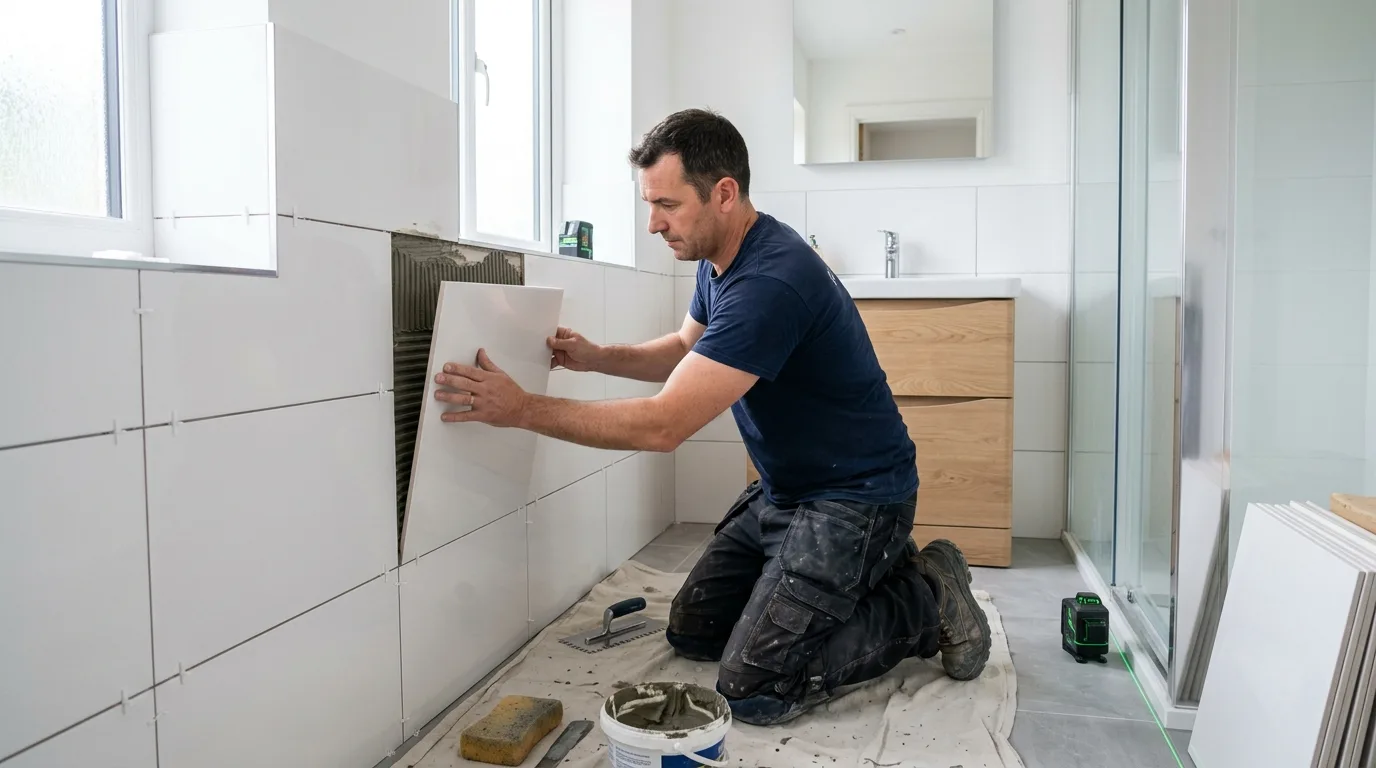
Things to think about before you hire
Shower tray or wet room?
A shower tray is cheaper and easier to install - a good quality tray with a solid waste connection is perfectly reliable. A wet room (fully tiled floor sloping to a drain) looks better but costs more and requires more careful waterproofing. If the floor is timber rather than concrete, wet rooms are a higher-risk option - make sure your fitter has done them on timber floors before.
Bath or shower-only?
Removing the bath and going shower-only can free up significant space in a small bathroom, but it can reduce appeal if you plan to sell. Families with young children tend to want a bath. If you are staying long-term and rarely use the bath, a large walk-in shower is a better use of the space.
Storage
Bathrooms that feel cluttered usually have a storage problem, not a size problem. Wall-hung vanity units and mirrored cabinets above the basin do a lot of work in a small space. Decide on storage before you finalise the layout - adding it as an afterthought often means cutting into tiles.
Ventilation
An extractor fan that meets Building Regulations Part F is not optional in a bathroom without an opening window. Inadequate ventilation in a tiled room leads to mould growth very quickly, often behind the silicone where you cannot see it. Specify a fan with a timer function and make sure it is wired correctly.
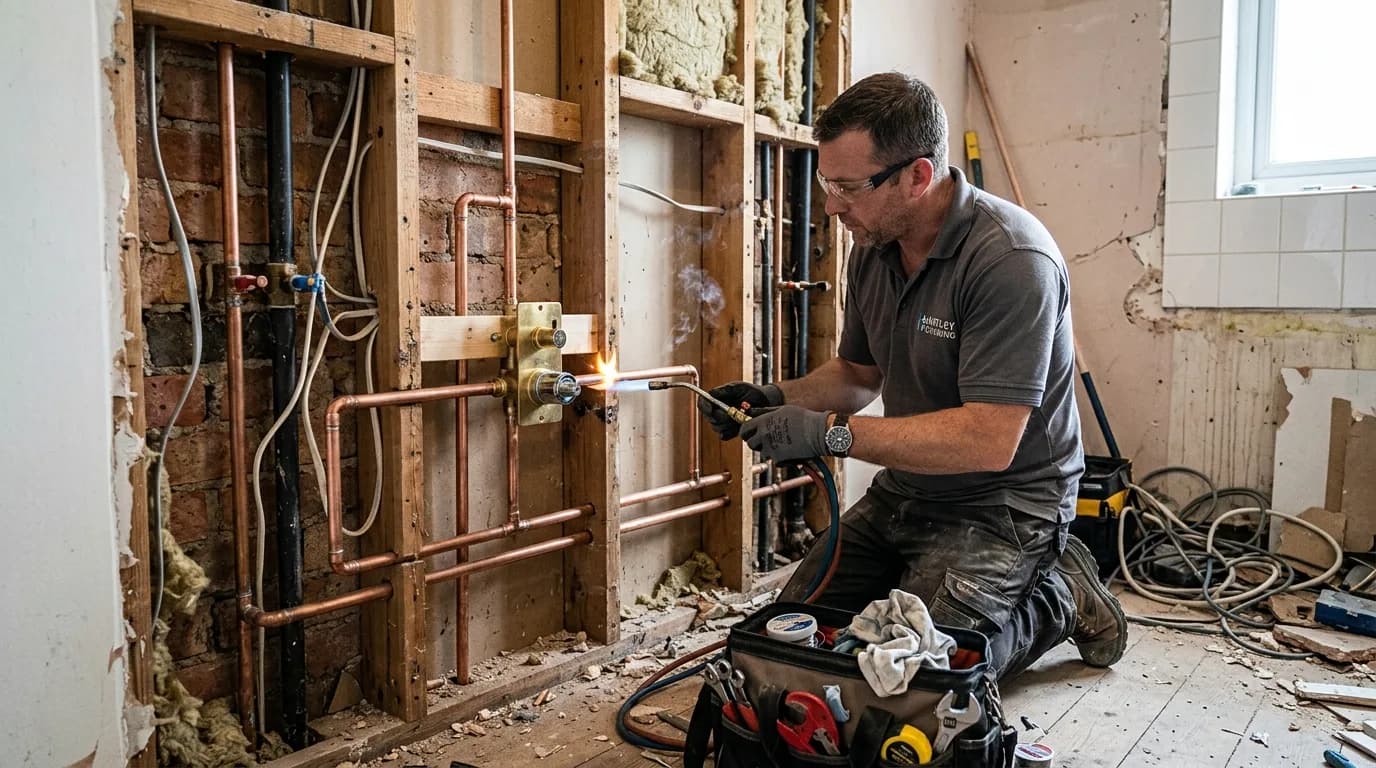
How to find a good bathroom fitter
Check they can handle all the trades, or manage the ones they can not
A good bathroom fitter can handle the plumbing and tiling themselves. For Part P electrical work, they should have a registered electrician they use regularly. Ask who does the electrical work and whether it will be certified - this matters when you come to sell the house.
Ask specifically about waterproofing
Ask 'what product do you use to tank the shower area?' A fitter who cannot answer that question clearly, or who says it is not necessary, is not someone you want waterproofing your bathroom. Aquapanel, Schluter Kerdi, and BAL Tanking Slurry are all acceptable products. Painting on a coat of building membrane is not.
Get three quotes with matching specs
Make sure each quote covers the same scope: supply of sanitary ware (or fit only), tiling (how many square metres), waterproofing, waste connections, and sign-off of electrical work. Comparing a quote that includes tiles against one that excludes them is meaningless.
Check their silicone work
Silicone joints around the bath, shower tray, and basin are where water most commonly gets in. Ask to see photos of finished bathrooms, specifically the joints. Neat, consistent silicone work is a sign of care; messy or uneven joints suggest someone who was rushing.
Bathroom guides
Bathroom renovation FAQs
How long does a bathroom renovation take?
Five to seven days for a standard bathroom strip-out and refit, assuming no structural changes and no moving of soil pipes. More complex jobs - wet rooms, en-suite additions, moving the toilet or bath position - will take 8 to 12 days. The tiling is usually what takes longest if there is a lot of it.
Do I need to move out during a bathroom renovation?
If you have more than one bathroom, no. If it is your only bathroom, you will be without washing facilities for most of the job. Talk to your fitter about whether they can restore running water at the end of each day, or consider booking a few nights in a hotel for the middle of the project when the room is fully stripped.
What is tanking and why does it matter?
Tanking is the process of applying a waterproof membrane to the walls and floor of a shower area or wet room before the tiles go on. Without it, water eventually gets behind the tiles and causes damp, mould, and structural damage. It is one of the most important parts of the job and also one of the most commonly skipped by cheaper fitters. Always ask if tanking is included in the quote.
Can I keep my bath and add a shower?
Yes. A shower over the bath with a thermostatic mixer valve and a good quality shower screen is a sensible option if you want both. Just make sure the shower valve is thermostatic and complies with BS EN 1111 - this protects against scalding if someone runs a tap elsewhere in the house. Any new electrical connections (for a power shower or extractor fan) must be done by a Part P registered electrician.
Should I use the same company for all the trades, or hire separately?
Using a single bathroom fitter who can manage plumbing, tiling, and basic electrical connections (with a registered electrician for Part P sign-off) is generally easier to coordinate and tends to result in fewer disputes about responsibility when things go wrong. Hiring a plumber, tiler, and electrician separately is cheaper on paper, but you are responsible for making sure they are available at the right times.
Quote service coming soon
Get free quotes from bathroom fitters near you
Free, no obligation. Read the cost guide first so you know what a fair price looks like before anyone gives you a number.