How to Choose a Builder: 10-Point Checklist
A good builder has public liability insurance, provides detailed written quotes, shows you recent completed work, and never asks for large upfront payments. Get it right and the project runs smoothly. Get it wrong and you face delays, cost overruns, and work that costs more to fix than it did to do. Here's the full checklist.

Chris Kervin
Written by Chris Kervin, Less.co.uk founder
The short answer
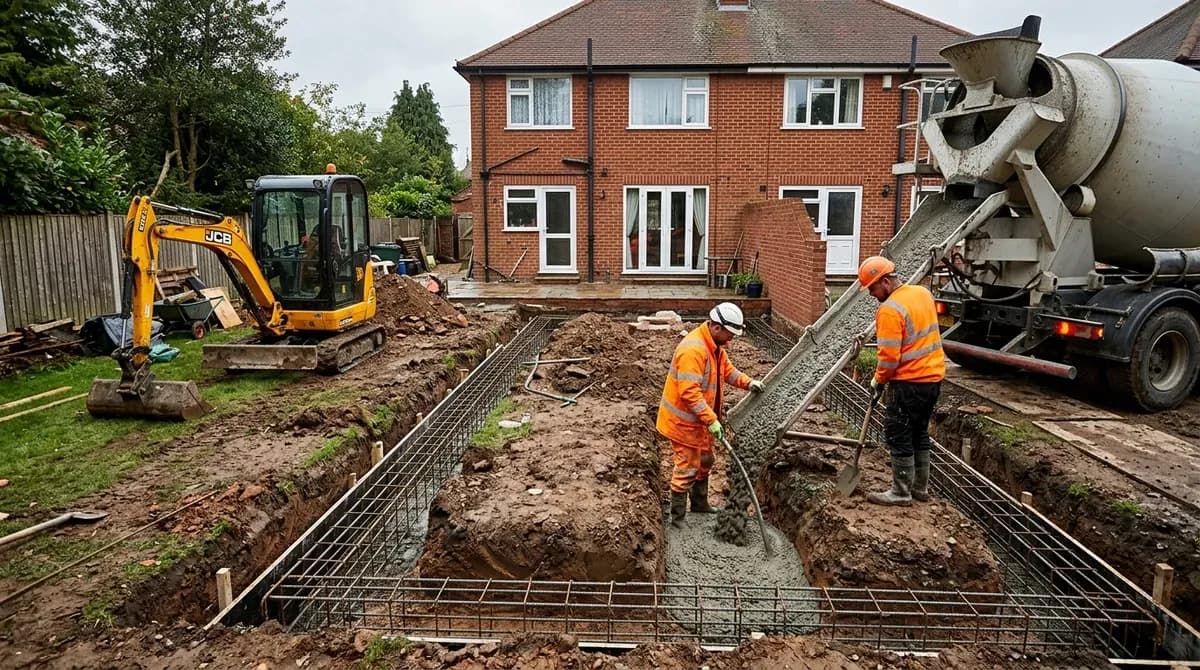
A good builder has public liability insurance, provides written itemised quotes, can show you recent completed work, doesn't ask for large upfront payments, and communicates clearly throughout the project. If anyone asks for cash, can't provide references, or pressures you to commit quickly - walk away.
1. Check their insurance
This is non-negotiable. Every builder should carry public liability insurance - a minimum of £2 million, ideally £5 million for larger projects. This covers damage to your property and injuries to third parties during the work.
Ask to see a copy of their certificate and check it's current. If they hesitate or say they'll "sort it out before they start," that's your first red flag. A builder without insurance means you're personally liable if something goes wrong.
For larger projects (extensions, structural work), also ask about employer's liability insurance. If the builder uses subcontractors or employees, this is a legal requirement.
2. Get written, itemised quotes
A proper quote - not an estimate - is a fixed price for a defined scope of work. It should list everything: what work will be done, what materials will be used (including brands and specifications), start and completion dates, and the total cost including VAT.
If a builder gives you a one-line quote ("Kitchen installation - £12,000"), ask for a breakdown. You need to see labour, materials, skip hire, scaffolding, and any other costs separately. This protects you if there's a dispute later and makes it far easier to compare quotes from different builders.
Get at least three quotes for any job. For larger projects like extensions or loft conversions, five is better.
3. Ask for references and go see their work
Any builder worth hiring will happily give you the contact details of 2-3 recent clients. Call them. Ask what the builder was like to work with, whether they finished on time and on budget, and whether they'd use them again.
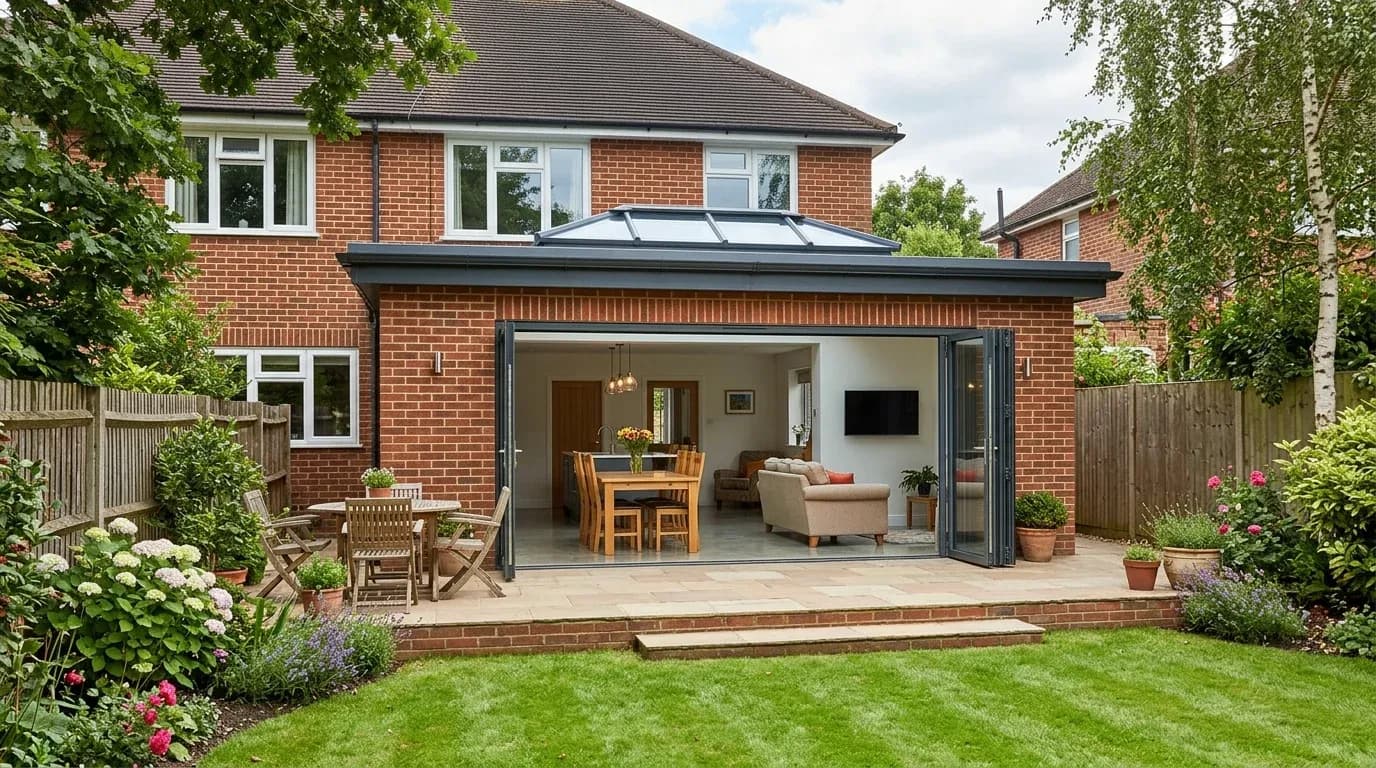
Better still, ask to visit a completed job. Photos on a website are easy to curate - standing in someone's finished kitchen and seeing the quality of the finish close up tells you far more.
Online reviews on Google, Checkatrade, or MyBuilderare useful as a starting point, but don't rely on them exclusively. A few glowing reviews are easy to fake. A consistent pattern of good feedback across multiple platforms is harder to manufacture.
4. Verify trade body memberships
Trade body membership isn't compulsory, but it's a good sign. The main ones to look for:
- Federation of Master Builders (FMB) - members are vetted and independently inspected
- TrustMark - government-endorsed scheme with financial protection on some work
- NHBC - for new-build and structural work
- Gas Safe Register - legally required for anyone working on gas appliances
- NICEIC or NAPIT - for electricians working on Part P-notifiable work
Verify memberships directly on the trade body's website. A logo on a van or website means nothing - anyone can download an image.
5. Agree a sensible payment schedule
Never pay the full amount upfront. A small deposit (10 to 15%) to secure the start date is reasonable. After that, payments should be tied to completed milestones - not dates.
A typical payment schedule for a house extension might look like:
- 10% deposit on signing the contract
- 25% when foundations are complete
- 25% when the structure reaches damp-proof course (DPC)
- 25% when the roof is on and watertight
- 10% on practical completion
- 5% retained for 3 to 6 months to cover snagging (retention)
The retention is important. It gives the builder an incentive to come back and fix any minor issues (cracked grout, stiff doors, paint touch-ups) that only become apparent once you've lived with the work for a few weeks.
6. Get a proper contract
For any job over £5,000, you should have a written contract. The JCT Minor Works or JCT Homeowner contracts are industry-standard documents designed for domestic building work. They're available from the JCT website for about £30 to £50 and cover everything: scope, price, timescales, variations, disputes, and insurance.
If the builder has their own contract, read it carefully before signing. Make sure it includes a clear description of the work, the agreed price, a payment schedule, a start and completion date, and a process for handling changes to the scope.
7. Check Companies House
If the builder operates as a limited company, check their listing on Companies House (free at gov.uk/government/organisations/companies-house). You can see when the company was incorporated, who the directors are, and whether they have any outstanding legal actions.
A company that's been trading for 10+ years with the same directors is a good sign. A company that was incorporated last month, or one with a string of dissolved companies at the same address, is a warning sign.
Sole traders won't appear on Companies House, but that's fine - many excellent builders operate as sole traders. Just make sure you have their full name, address, and UTR (Unique Taxpayer Reference) number.
8. Meet them in person before committing
A quote over email is convenient, but you should always meet the builder face-to-face before awarding the job. The site visit tells you a lot: are they on time? Do they listen to what you want? Do they ask intelligent questions about the property? Do they spot things you hadn't considered?
Trust your gut. If someone is evasive, dismissive of your questions, or tries to pressure you into a quick decision, that behaviour won't improve once they're halfway through your kitchen refit.
9. Understand who'll actually do the work
Some builders do everything themselves. Others are project managers who subcontract every trade. Neither approach is inherently better, but you need to know which you're getting.
If they use subcontractors, ask who they are and whether they're regulars. A builder with a trusted team of sparks, plumbers, and plasterers they've worked with for years is very different from one who picks up whoever's cheapest that week.
10. Watch for red flags
These should make you walk away immediately:
- Asking for cash to 'avoid VAT' - this is tax fraud, and you'll have no paper trail if something goes wrong
- Demanding a large upfront payment (anything over 15% is excessive)
- No fixed address, no landline, no company registration - just a mobile number and a van
- Pressure to commit quickly ('I've got another job starting Monday so I need to know today')
- Can't or won't provide references
- No written quote - just a verbal figure
- Refuses to sign a contract
- Significantly cheaper than everyone else - if the price is too good to be true, it usually is
Frequently asked questions
How do I check if a builder is legitimate?
Check Companies House for their registration, ask for proof of public liability insurance (minimum £2 million), request references from recent jobs, and verify any trade body memberships (FMB, NHBC, TrustMark) directly with the organisation. A legitimate builder will have no problem providing all of this.
Should I pay a builder upfront?
Never pay more than 10 to 15% upfront as a deposit, and only once you have a signed contract. Stage payments tied to completed milestones are standard - for example, 25% at foundations, 25% at damp-proof course, 25% at roof on, and the final 25% on completion. Always hold back 5 to 10% as retention for 3 to 6 months to cover any snagging.
What should a builder's quote include?
A proper written quote should include: a detailed description of the work, materials to be used (with specifications), start and estimated completion dates, a payment schedule tied to milestones, what's included and excluded (e.g., skip hire, scaffolding, building control fees), the total cost including VAT, and how variations will be handled.
Is a verbal quote legally binding?
A verbal quote can technically form a contract, but it's almost impossible to enforce because it becomes your word against theirs. Always insist on a written quote. A quote is a fixed price offer - once you accept it, the builder can't increase the price unless the scope of work changes. An estimate, by contrast, is just a rough guide and can go up.
Know what your project should cost
Use our cost guides to understand the going rate for your project before you start getting quotes.
Related articles
How to Find a Good Contractor
A practical guide to finding and vetting UK tradespeople.
Save Money on Home Improvements
Practical tips to cut costs without cutting corners.
Planning Permission: When Do You Need It?
A plain-English guide to what you can build without permission.
Bathroom Renovation Cost Breakdown
Where your money actually goes in a bathroom refit.