Underfloor Heating Running Costs: Electric vs Wet Compared
Underfloor heating sounds like a luxury - warm tiles on a cold morning, no radiators cluttering the walls. But is it a money pit? We've crunched the numbers for electric and wet systems, room by room, so you can see exactly what it costs.

Chris Kervin
Written by Chris Kervin, Co-Founder of Less.co.uk
The short answer
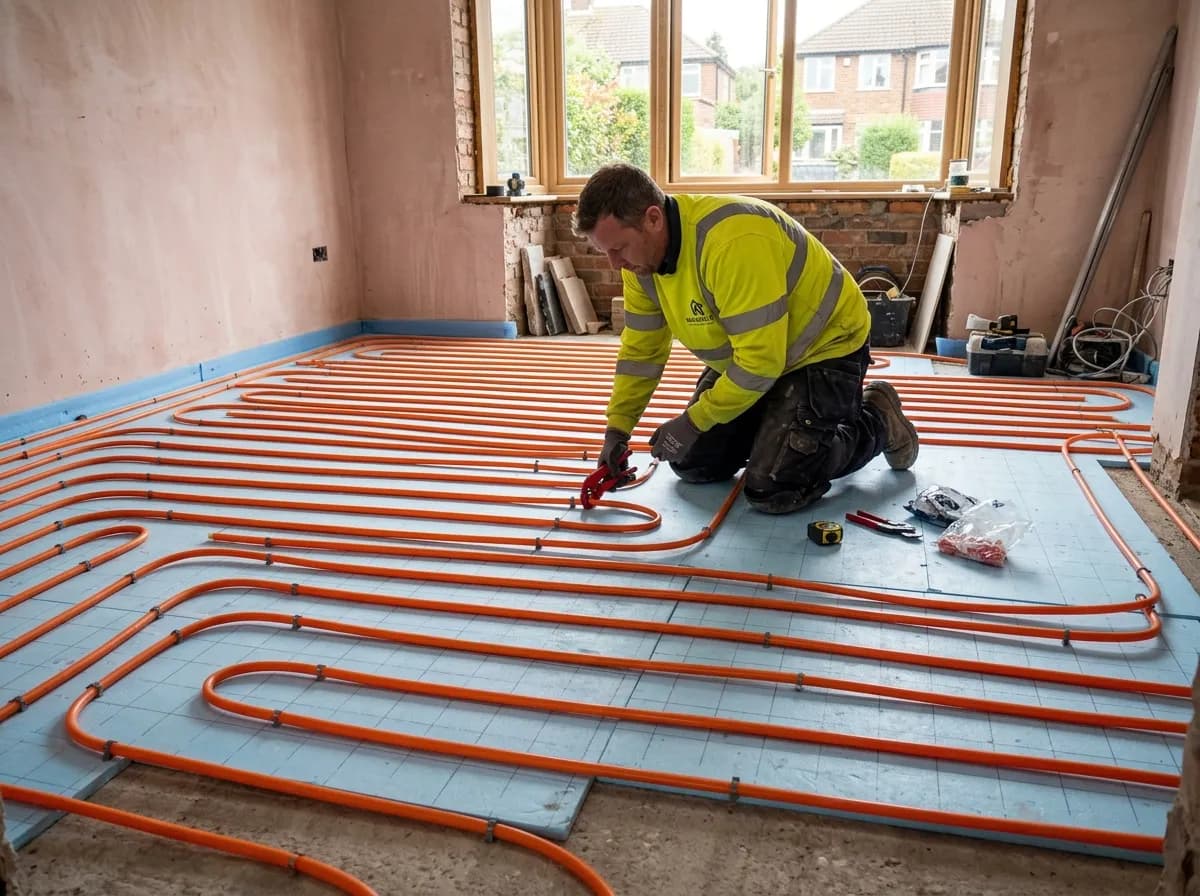
Wet (water-based) underfloor heating is 15 to 25% cheaper to run than radiators. Electric underfloor heating costs more - roughly 2 to 3 times as much per hour - so it makes sense in small rooms like bathrooms, but not as whole-house heating. The best setup for long-term savings? Wet underfloor heating paired with a heat pump.
Electric vs wet: two very different systems
Before we talk about running costs, it helps to understand that "underfloor heating" covers two completely different technologies. The running costs are vastly different, and choosing the wrong type is one of the most common mistakes people make.
Electric underfloor heatinguses thin heating mats or cables laid beneath the floor. It's cheap to install (£50 to £80 per m²) but expensive to run because electricity costs roughly 4 times as much as gas per kWh. It's best suited to small rooms - bathrooms, en-suites, utility rooms - where you want warm feet for a few hours a day.
Wet (water-based) underfloor heatingpumps warm water through a network of pipes beneath the floor, connected to your boiler or heat pump. It's more expensive to install (£80 to £130 per m²) but significantly cheaper to run. It's the right choice for whole rooms, whole floors, or entire houses.
Running costs room by room
Here's what you can expect to pay each month during the heating season (roughly October to March). These figures assume 6 to 8 hours of daily use and are based on the April 2026 Ofgem energy price cap: electricity at approximately 24.5p/kWh and gas at around 6.76p/kWh.
| Room | Electric UFH | Wet UFH | Radiator |
|---|---|---|---|
| Bathroom (4m²) | £5 to £8/month | £2 to £4/month | £4 to £6/month |
| Kitchen (15m²) | £18 to £30/month | £8 to £14/month | £12 to £18/month |
| Living room (20m²) | £25 to £40/month | £10 to £18/month | £15 to £22/month |
| Bedroom (12m²) | £15 to £24/month | £6 to £11/month | £9 to £14/month |
| Whole house (85m²) | £100 to £160/month | £40 to £70/month | £55 to £85/month |
The pattern is clear. Wet underfloor heating is the cheapest to run across the board. Electric underfloor heating is the most expensive - roughly double the cost of radiators for larger rooms. For a bathroom, though, the difference is only a few pounds a month, and many people consider that worth it for the comfort.
Get a personalised cost estimate in under 2 minutes
Why wet underfloor heating is cheaper
It comes down to physics. Underfloor heating works as a radiant system - it heats the floor surface, which then radiates warmth evenly across the room. Because the heat source is a large surface area (the entire floor) rather than a small one (a radiator), it doesn't need to get as hot to warm the room.
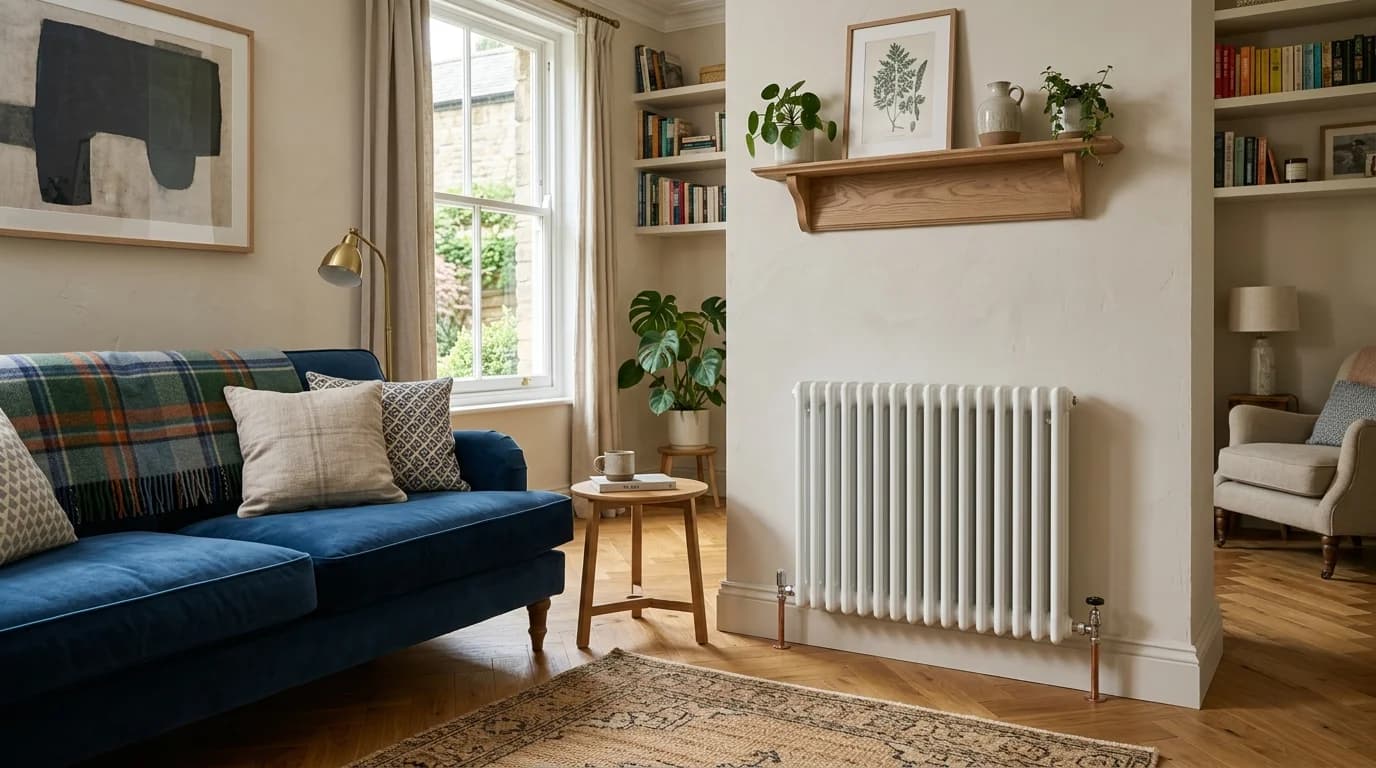
A typical radiator system runs at 60 to 75°C. Underfloor heating runs at 40 to 50°C with a boiler, or as low as 35°C with a heat pump. Lower water temperatures mean less energy used, which means lower bills.
There's also less heat wasted. Radiators create convection currents - hot air rises to the ceiling, where it's not much use to anyone. Underfloor heating distributes warmth from the ground up, keeping it where you actually feel it.
The heat pump advantage
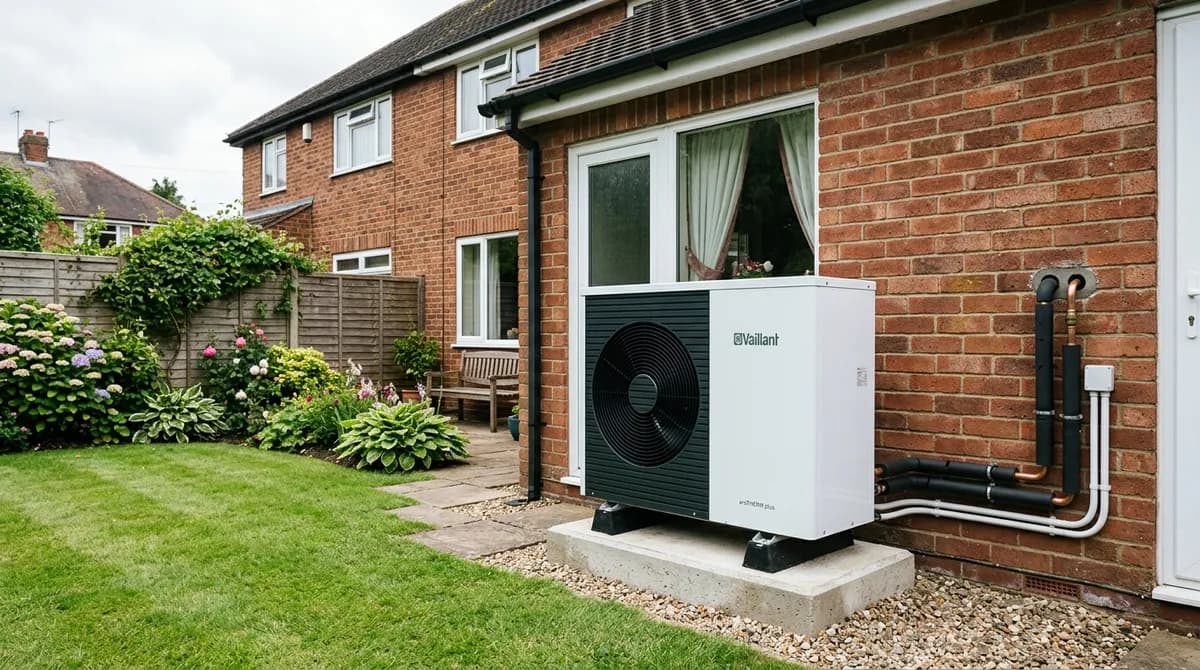
If you're considering underfloor heating for a new build, extension, or major renovation, it's worth thinking about the heat source too. Wet underfloor heating paired with an air source heat pump is one of the most efficient heating combinations available to UK homeowners.
Heat pumps work best at low flow temperatures. Radiators often need boosting to 55 to 65°C to heat a room adequately, which reduces the heat pump's efficiency (its "coefficient of performance" or COP). Underfloor heating only needs 35 to 45°C, which keeps the heat pump running at peak efficiency - typically producing 3 to 4 units of heat for every 1 unit of electricity. The Energy Saving Trust has more detail on how different heating systems affect running costs.
In practical terms, a household running wet underfloor heating with a heat pump could see heating bills 40 to 60% lower than a gas boiler with radiators. And with the Boiler Upgrade Scheme offering £7,500 towards air source heat pump installation, the upfront cost gap is narrowing.
When electric underfloor heating makes sense
Despite the higher running costs, electric underfloor heating has its place. Here's when it's a sensible choice:
- Bathrooms and en-suites - small rooms where you only want heat for an hour or two in the morning and evening. At 16 to 24p per day for a bathroom, most people don't notice it on their bill.
- Retrofit projects where lifting the floor isn't practical. Electric mats are only 3 to 6mm thick and can go straight under tiles without raising the floor height.
- Rooms without access to the central heating system - a conservatory, garden room, or home office in an outbuilding.
- Single rooms in a rental property where you want to add a comfort feature without major plumbing work.
How to keep running costs down
Whichever system you choose, these steps will reduce your underfloor heating bills:
- Use a programmable thermostat with zones. Heat only the rooms you're using, only when you need them. A good thermostat pays for itself within a year.
- Insulate beneath the heating. If there's no insulation board under the heating pipes or mats, you're losing a significant chunk of energy downward into the subfloor. Proper insulation makes a dramatic difference.
- Choose the right floor covering. Tiles and stone conduct heat brilliantly. Engineered wood works well too. Thick carpet with heavy underlay acts as an insulator and makes the system work harder - avoid it if you can.
- Don't crank the thermostat up. Underfloor heating is designed to run at a steady, moderate temperature. Setting it too high wastes energy and can damage certain flooring types.
- Consider a smart thermostat. Systems like Heatmiser or Warmup's app-controlled thermostats learn your schedule and adjust automatically. They also let you control heating remotely, so you're not heating an empty house.
Installation costs: the full picture
Running costs are only part of the story. Here's a quick comparison of installation costs so you can weigh up the total investment:
Electric underfloor heating
£50 to £80 per m² installed. A bathroom costs £200 to £400. A kitchen costs £750 to £1,200. Cheap and quick to fit, especially under tiles.
Wet underfloor heating
£80 to £130 per m² installed. A whole ground floor (40m²) costs £3,200 to £5,200. More disruptive to install but pays back through lower running costs over time.
Frequently asked questions
Is underfloor heating cheaper to run than radiators?
Wet (water-based) underfloor heating is generally 15 to 25% cheaper to run than radiators because it operates at a lower water temperature - around 40 to 50°C versus 60 to 75°C for radiators. Electric underfloor heating, however, is more expensive to run than a gas central heating system, so it's best suited to individual rooms like bathrooms rather than whole-house heating.
How much does electric underfloor heating cost to run per day?
For a typical bathroom (4m²), electric underfloor heating costs around 16 to 24p per day to run, assuming 4 to 6 hours of use. A larger kitchen (15m²) would cost around 60p-£1.00 per day. These figures are based on the April 2026 energy price cap rate of roughly 24.5p per kWh.
Does underfloor heating work well with a heat pump?
Yes - underfloor heating and heat pumps are an excellent combination. Heat pumps work most efficiently at low flow temperatures (35 to 45°C), which is exactly what underfloor heating needs. Radiators, by contrast, often need higher temperatures to heat a room effectively. Pairing underfloor heating with an air source heat pump can reduce your running costs significantly compared to a gas boiler.
Can I install underfloor heating in an existing house?
Yes, but it's easier in some situations than others. Electric underfloor heating mats are thin (3 to 6mm) and can be laid under tiles without raising the floor height significantly. Wet underfloor heating in an existing property usually means raising the floor level by 15 to 25mm with low-profile systems, or digging out the floor in a ground-floor room. It's most practical to install during a renovation when the floor is being replaced anyway.
See the full underfloor heating cost breakdown
Our detailed cost guide covers installation prices by room size, system type, and region - plus tips for getting the best deal.
Related articles
When Should You Replace Your Boiler?
The signs it's time, and what a new one costs.
Full House Renovation Cost
Room-by-room breakdown for a typical 3-bed semi.
Building Regs for Internal Works
Which home improvements need approval?
How to Find a Good Contractor
Practical tips for finding reliable tradespeople.