New Driveway Rules 2026: What's Changed?
Planning to pave your front garden? You might need planning permission. Since 2008, non-permeable driveways larger than 5 m² require council approval in England. Here's what that means in practice, which surfaces avoid the issue entirely, and why councils are cracking down harder than ever.

Chris Kervin
Reviewed by Chris Kervin, Less.co.uk Home Improvement Costs Specialist
The short answer
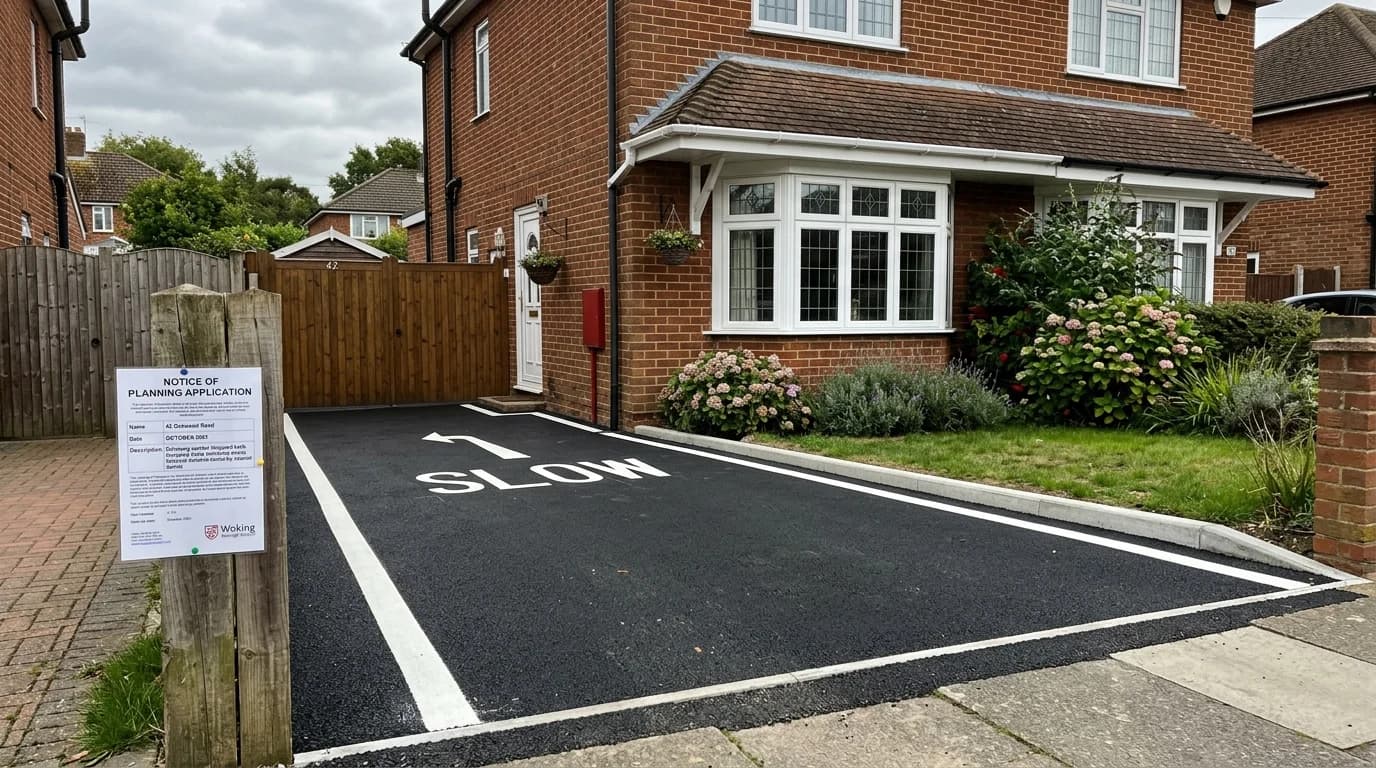
If your new driveway uses a permeable surface (gravel, permeable block paving, resin bound), you do not need planning permission. If it uses a non-permeable surface (standard concrete, sealed tarmac, traditional block paving) and covers more than 5 m², you do need planning permission. This has been the rule since 2008 but enforcement is getting stricter.
What are the current driveway rules?
The rules that most people refer to as "new driveway rules" actually came into force in October 2008, when the government amended Permitted Development rights in England. You can read the full gov.uk guidance on permeable surfacing for the detail. The change was a direct response to urban flooding caused by millions of front gardens being paved over, removing natural drainage and sending rainwater straight into storm drains.
The rule is straightforward: if you want to pave over more than 5 m² of your front garden with a non-permeable (impermeable) surface, you need planning permission from your local council. Use a permeable surface instead, and no permission is needed.
Five square metres is not much, it is roughly the size of a single parking space. So in practice, almost any driveway that covers most of a front garden needs to be permeable or have planning approval.
Why are councils cracking down in 2026?
For years after the 2008 rule change, enforcement was patchy. Many homeowners installed non-permeable driveways without permission, and councils rarely took action. That is changing for several reasons:
- Urban flooding is getting worse. Climate change means heavier, more frequent downpours. Paved-over front gardens contribute directly to surface water flooding, which damages properties and overwhelms drainage systems.
- The Environment Act 2021 and Schedule 3 of the Flood and Water Management Act 2010 have put sustainable drainage (SuDS) firmly on the agenda. Councils have new responsibilities and funding to manage surface water.
- Solicitors now routinely check driveway planning compliance during property sales. A non-compliant driveway can delay or even block a house sale.
- Some councils have started using satellite imagery and street-level photography to identify front gardens that have been paved over without permission.
Permeable vs non-permeable: what counts?
The distinction is simple in principle: can water drain through the surface and into the ground below? If yes, it is permeable. If no, it is not.
Permeable (no permission needed)
- ✓ Gravel or loose stone
- ✓ Permeable block paving (wider joints)
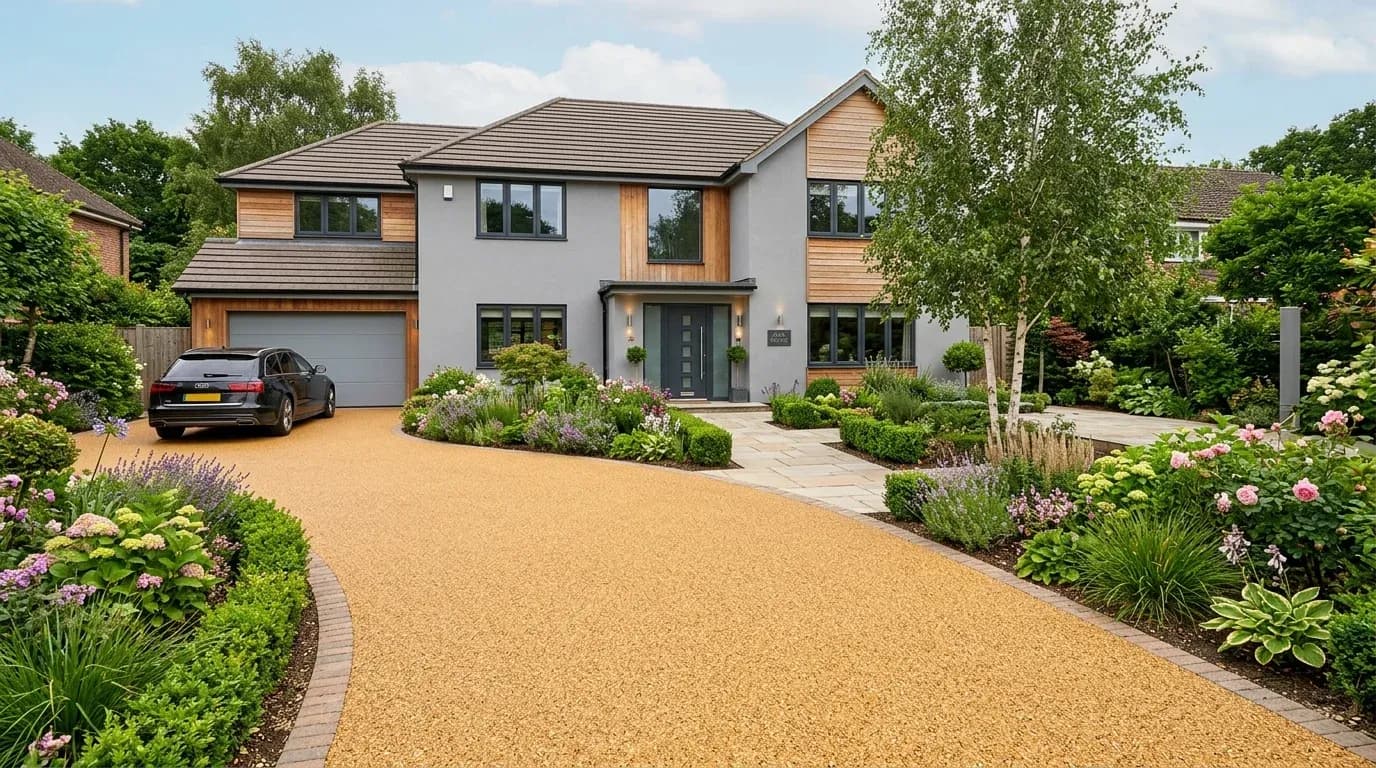
- ✓ Resin bound surface
- ✓ Grass grid / cellular paving
- ✓ Porous asphalt or tarmac
- ✓ Any surface draining to a lawn, border, or soakaway
Non-permeable (permission needed if over 5 m²)
- ✗ Standard concrete
- ✗ Sealed tarmac / asphalt
- ✗ Traditional block paving (tight joints)
- ✗ Resin bonded (not the same as resin bound)
- ✗ Natural stone slabs on solid mortar beds
- ✗ Any surface where water runs off onto the road
Resin bound vs resin bonded: These are different products and the distinction matters. Resin bound mixes aggregate with resin before laying, creating a smooth permeable surface. Resin bonded spreads resin on a base and scatters loose aggregate on top, it is not permeable. Only resin bound avoids the planning permission requirement.
The drainage workaround
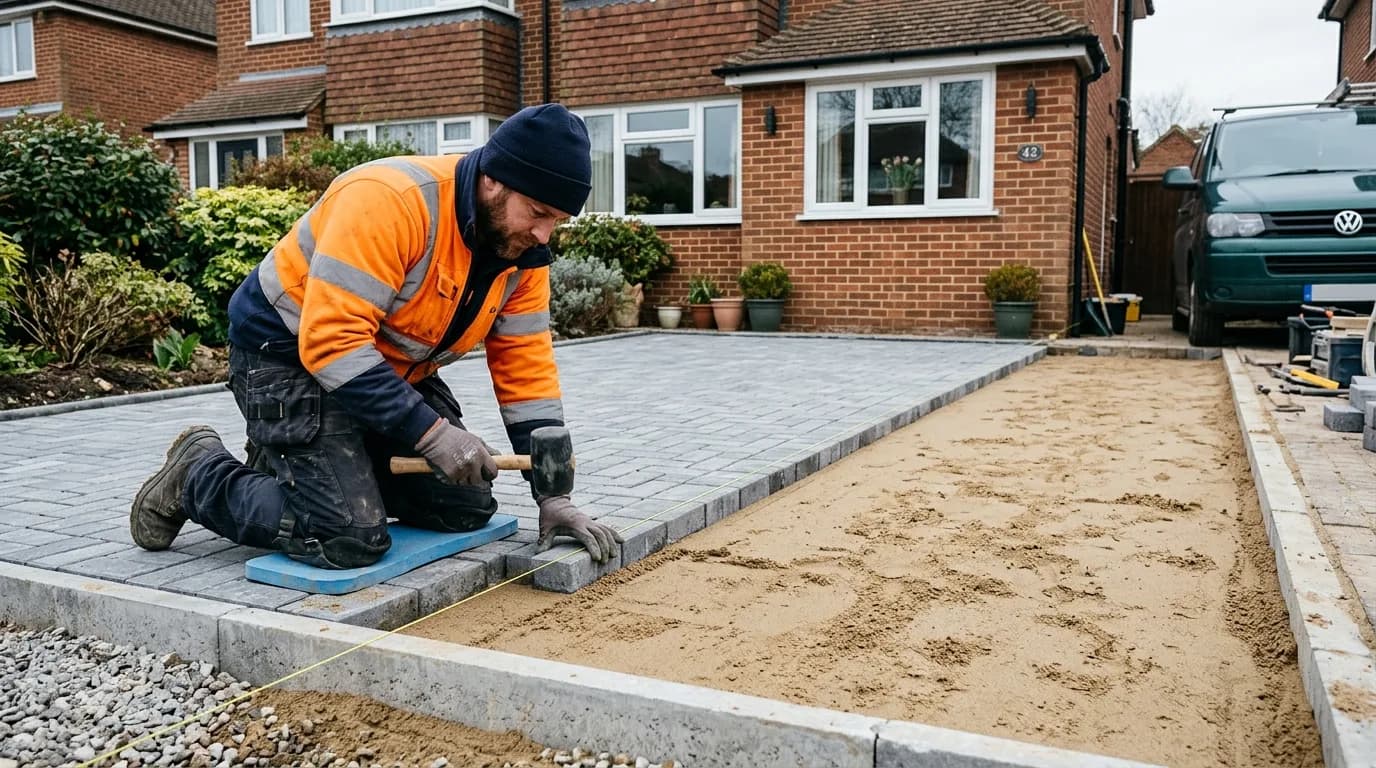
There is an alternative to using a fully permeable surface. If you direct the water from a non-permeable driveway to a permeable area within your property, such as a lawn, flower bed, or purpose-built soakaway, this also qualifies as Permitted Development. The key is that rainwater must not run off onto the road or into the public drainage system.
In practice, this means you could install a standard block paving driveway with a drainage channel that directs water into a soakaway or rain garden in your garden. This needs proper design to work effectively, and it is worth getting a driveway contractor experienced with drainage to specify it correctly.
What about Scotland, Wales, and Northern Ireland?
The 5 m² permeable driveway rule applies in England. Scotland, Wales, and Northern Ireland have their own planning systems with different rules:
- Scotland: Similar restrictions exist under Scottish Permitted Development rights. Hard surfacing in a front garden over 5 m² generally requires a planning application unless it is permeable.
- Wales: Permitted Development rights in Wales broadly mirror England, including the 5 m² rule for non-permeable driveways.
- Northern Ireland: Planning rules are different. Check with your local council planning department before starting any driveway work.
SuDS and new-build driveways
Since January 2024, Schedule 3 of the Flood and Water Management Act 2010 has been enacted in England, requiring new developments to include Sustainable Drainage Systems (SuDS). This applies to all new-build properties and major developments, not just driveways.
For new-build homes, the driveway should be designed with SuDS from the outset, whether that means permeable paving, integrated soakaways, or rain gardens. If you are buying a new-build property, the driveway should already comply. If you are replacing the driveway on a new-build, you should maintain the original SuDS provisions.
How much do permeable driveways cost?
The good news is that permeable options are not necessarily more expensive than non-permeable ones. Here is a rough comparison:
| Surface Type | Cost per m² | Permeable? |
|---|---|---|
| Gravel | £20 to £40/m² | Yes |
| Permeable block paving | £60 to £100/m² | Yes |
| Resin bound | £50 to £80/m² | Yes |
| Grass grid | £30 to £60/m² | Yes |
| Standard tarmac | £40 to £70/m² | No |
| Standard block paving | £50 to £90/m² | No |
| Concrete | £50 to £100/m² | No |
Gravel is the cheapest option overall and is fully permeable. Permeable block paving costs slightly more than standard block paving but avoids the need for planning permission.
What to do if your existing driveway breaks the rules
If you already have a non-permeable driveway installed without planning permission, here are your options:
- Apply for retrospective planning permission. Councils can grant permission after the event. There is no guarantee it will be approved, but many are, especially if you can show the drainage does not cause problems.
- Add drainage. Installing a drainage channel that directs water to a soakaway or permeable area on your property may bring the driveway into compliance without ripping it up.
- Replace with permeable. If you are planning a driveway refresh anyway, switching to permeable paving or resin bound solves the issue permanently.
- Do nothing (risky). Enforcement varies by council. Some are proactive, others are not. But the trend is towards stricter enforcement, and a non-compliant driveway can cause problems when selling your home.
Frequently asked questions
Do I need planning permission for a new driveway?
You need planning permission if the new driveway uses a non-permeable (impermeable) surface and covers more than 5 square metres of your front garden. If you use a permeable surface - such as gravel, permeable block paving, or resin bound - no planning permission is needed regardless of the size. This rule has been in place since 2008 in England.
What counts as a permeable driveway surface?
Permeable surfaces allow rainwater to drain through them into the ground rather than running off into the street. Common permeable driveway options include gravel, permeable block paving (with gaps between blocks), resin bound surfaces, grass grid systems, and porous asphalt or tarmac. Standard concrete, non-porous tarmac, and traditional block paving without drainage gaps are not permeable.
What happens if I install a driveway without planning permission?
If you install a non-permeable driveway over 5 square metres without planning permission, the council can issue an enforcement notice requiring you to make the surface permeable or restore the garden. In practice, enforcement has been inconsistent, but councils are becoming stricter as urban flooding worsens. You may also face problems when selling the house, as solicitors check for planning compliance during conveyancing.
Do the driveway rules apply to back gardens?
The specific planning permission rules about permeable surfaces apply to front gardens and any area between the front of the house and the highway. Hard surfacing in back gardens has different rules, though Local Authorities can still require SuDS (Sustainable Drainage Systems) for significant areas of hard standing under local planning policies.
What are SuDS requirements for driveways?
SuDS (Sustainable Drainage Systems) are designed to manage surface water runoff and reduce flood risk. For domestic driveways, using a permeable surface satisfies SuDS requirements. For larger developments, additional measures may be needed such as soakaways, rain gardens, or attenuation tanks. Since 2024, new developments in England must include SuDS under Schedule 3 of the Flood and Water Management Act 2010.
Planning a new driveway?
Check our full cost guides for different driveway types, including permeable options that avoid the need for planning permission.
Planning a new driveway?
Get up to 3 free quotes from local driveway specialists and compare prices, with no obligation to book.
Related articles
Do You Need Planning Permission for a Driveway?
Full guide to driveway planning permission in England.
Resin Driveways: Worth It?
Honest pros, cons, and real costs.
Government Grants for Home Improvements
All the grants available for UK homeowners in 2026.
Building Regulations for Internal Works
What counts as notifiable work inside your home.