How Much Do Sash Windows Cost in 2026?
A single sash window replacement costs between £600 and £1,800 depending on the frame material. Timber is the most expensive but lasts the longest. uPVC is the budget option and the profiles have improved hugely. If your existing sash windows are structurally sound, a full overhaul with draught proofing costs just £250 to £600 per window and often makes more sense than replacing them entirely.
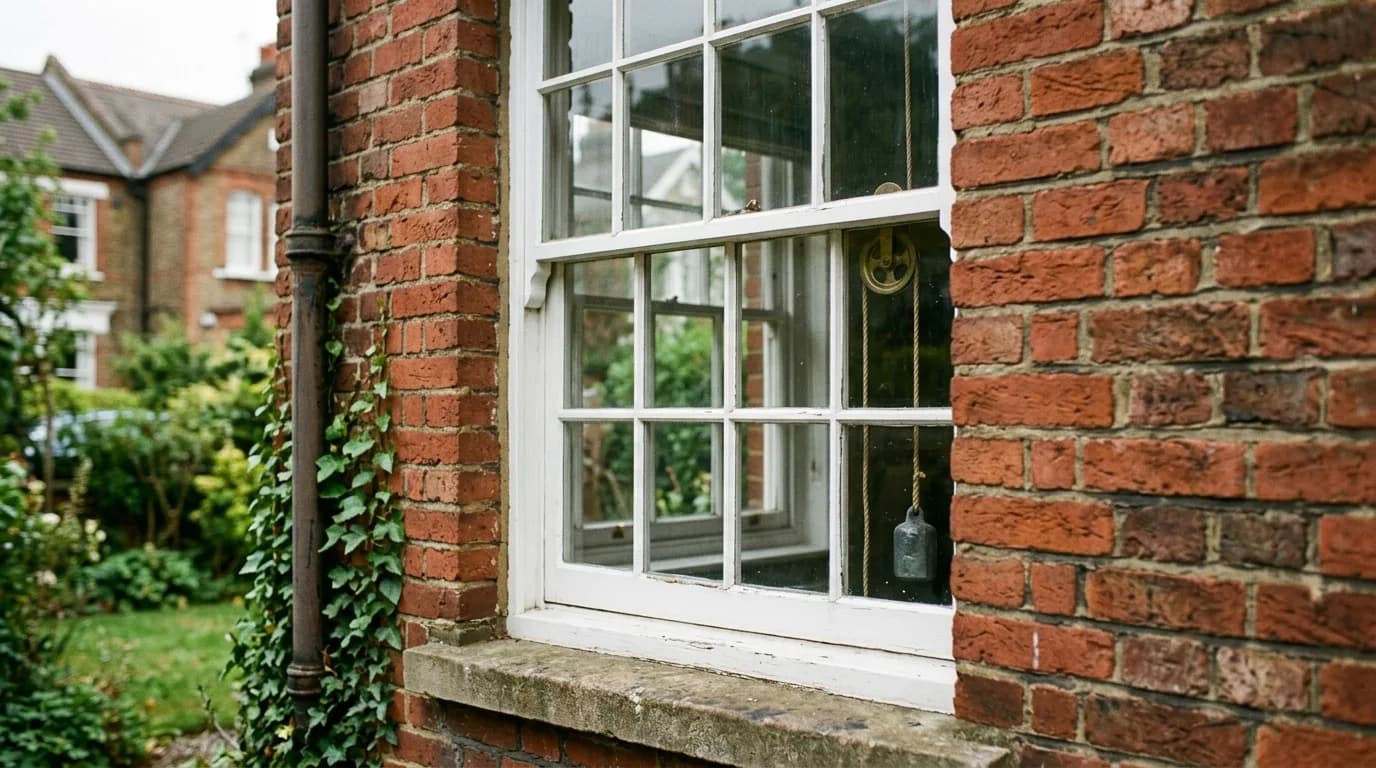
£600
uPVC sash from
£800
Timber sash from
£250
Repair/overhaul from
£6,400+
Whole house (8 windows)
Prices updated April 2026 · Based on industry data and contractor submissions.
Replacement sash windows must comply with Building Regulations Part L (energy efficiency) and Part Q (security). Use a FENSA or CERTASS registered installer. FENSA is not required for repairs, renovations, or draught proofing of existing windows. Listed buildings may require like-for-like timber replacement with listed building consent.
Sash Window Prices at a Glance
Prices below cover supply and installation for replacement, or labour and materials for repair work. Replacement prices include removal of the old window, FENSA certification, and waste disposal.
Sash window replacement (uPVC)
£900
£600 - £1,200
Sash window replacement (timber)
£1,100
£800 - £1,500
Sash window replacement (aluminium)
£1,400
£1,000 - £1,800
Sash window repair/renovation
£400
£250 - £600
Draught proofing existing sashes
£175
£100 - £250
Sash cord replacement
£110
£80 - £150
Whole house (8 timber sash windows)
£8,800
£6,400 - £12,000
Prices based on industry data for standard-sized sash windows (approx. 1200mm x 1800mm). Actual costs depend on window size, specification, and location.
Additional Costs to Budget For
Beyond the windows themselves, here are the extras that can add to the final bill.
| Item | Typical Cost |
|---|---|
| Secondary glazing (per window) | £300 - £600 |
| Timber splice repair (localised rot) | £100 - £300 |
| Sash weight replacement | £50 - £100 |
| Scaffolding (upper floors) | £300 - £600 |
| Listed building consent | No fee |
| Building control (if no FENSA) | £200 - £400 |
| Decorating after installation | £80 - £150 |
Repair or Replace? How to Decide
This is the single most important decision when it comes to sash windows. Getting it right can save you thousands.
Repair and renovate
A full sash window overhaul: new cords, draught proofing, rebalancing, repainting, and any minor timber repairs. Keeps the original windows and character of the property.
- + £250 - £600 per window
- + No FENSA or building regs needed
- + Keeps original character
- + Usually the right call for listed buildings
- ! Still single glazed (unless secondary glazing added)
Full replacement
New sash windows throughout, double glazed, with modern seals and hardware. Better energy efficiency and security but higher cost.
- + Double glazed as standard
- + Better energy efficiency
- + Modern security hardware
- ! £600 - £1,800 per window
- ! Conservation area restrictions may apply
What Affects the Cost of Sash Windows?
Frame material: uPVC, timber, or aluminium
Timber is the traditional choice and looks best on period properties, but it costs the most and needs repainting every 5 to 8 years. uPVC is the budget option and the profiles have improved a lot in recent years, though they still look like plastic up close. Aluminium sits in between and works well on contemporary properties. For a Victorian or Edwardian terrace outside a conservation area, uPVC with a woodgrain finish is a reasonable compromise if budget is the priority.
Repair vs full replacement
This is the biggest decision with sash windows. If the timber frames are solid and the window just needs new cords, draught strips, and a fresh coat of paint, renovation at £250 to £600 per window is far cheaper than replacement at £800 to £1,500. A good sash window specialist can overhaul an old window so it works like new. Only replace if the frames are badly rotted, warped beyond repair, or you specifically want double glazing throughout.
Conservation area and listed building rules
If your property is listed, you will almost certainly need to use timber replacements that match the originals in every detail. That means proper glazing bars, not stuck on ones, and typically single glazing or very slim double glazed units. In conservation areas, the rules vary by council, but most expect replacement windows to match the originals in appearance. Get this confirmed before you order anything. Having to rip out and redo non-compliant windows is a very expensive mistake.
Number of windows
Doing a whole house of sash windows in one go works out cheaper per window than replacing them individually. Installers give better rates on bigger jobs because they are on site for several days and can batch the work efficiently. Eight timber sash windows costs £6,400 to £12,000 as a package. Doing them one at a time over several years would cost noticeably more in total.
Window size and configuration
A standard Victorian sash window is roughly 1200mm wide by 1800mm tall. Larger windows cost more because of the extra material and the heavier sashes. Windows with multiple panes (six over six, for instance) cost more than simple two over two designs because of the additional glazing bars. If you have a mix of sizes, the quote should price each window individually.
uPVC vs Timber vs Aluminium Sash Windows
Each material has its place. Here is an honest comparison to help you choose.
uPVC sash windows (£600 - £1,200)
The budget option, and no shame in it. Modern heritage-style uPVC sash windows have slimmer profiles, convincing run bars, and smooth sliding mechanisms. They need zero maintenance, never need painting, and come with double glazing as standard. The profiles are thicker than timber so purists will notice the difference, but from the pavement they look perfectly fine. Best for: standard Victorian and Edwardian terraces not in conservation areas.
Timber sash windows (£800 - £1,500)
The traditional choice and still the best-looking option for period properties. Hardwood or engineered softwood frames with slim double glazed units that closely match the original single glazed look. Timber sash windows can last 60 to 100 years with proper maintenance, which means repainting every 5 to 8 years. They cost more upfront but the longevity is unmatched. Best for: listed buildings, conservation areas, and anyone who wants the authentic look.
Aluminium sash windows (£1,000 - £1,800)
The slimmest profiles of any material, which means the most glass and the most light. Aluminium sash windows are maintenance free, very strong, and available in any RAL colour. They do not suit traditional period properties as well as timber, but they work brilliantly on contemporary builds and conversions. Best for: modern homes, warehouse conversions, and properties where a clean, minimal profile matters.
How to Get Your Sash Windows for Less
Sash windows are more expensive than casement windows, but there are practical ways to bring the cost down.
Repair before you replace
Get a sash window specialist to assess your existing windows before committing to replacement. Many sash windows that look tired just need new cords, draught proofing, and repainting. A full overhaul costs £250 to £600 per window compared with £800 to £1,500 for timber replacement. You keep the original character and spend a fraction of the price. Only replace if the timber is genuinely beyond saving.
Use a sash window specialist, not a general window fitter
Sash windows are a different skill set from standard casement windows. A specialist will survey your windows properly, know whether repair or replacement is the right call, and understand the requirements for conservation areas and listed buildings. General window companies tend to quote for full replacement because that is what they sell. A specialist gives you the full range of options.
Consider uPVC if you are not in a conservation area
Heritage-style uPVC sash windows have come a long way. The profiles are slimmer, the run bars look more convincing, and they slide smoothly. At £600 to £1,200 per window versus £800 to £1,500 for timber, the savings add up quickly across a whole house. For a standard Victorian terrace that is not listed or in a conservation area, uPVC sash windows are a sensible budget choice. Nobody walking past your house will notice the difference.
Draught proof first, replace later
If your sash windows are draughty but structurally fine, professional draught proofing at £100 to £250 per window transforms the comfort level. Brush pile strips fitted into the sash channels stop the rattling and cut heat loss dramatically. You can always replace the windows later if you want double glazing. But draught proofing alone solves the problem most people actually have with old sash windows, which is the cold air whistling through the gaps.
Do the whole house at once
Replacing sash windows one or two at a time costs more per window than doing them all together. A full house of eight timber sash windows runs £6,400 to £12,000 as a package job. If you did them individually at £800 to £1,500 each, you would end up paying more in total. Most installers offer better rates on larger orders, and you only have one period of disruption rather than several over the years.
What to Expect: The Sash Window Replacement Process
Replacing a single sash window takes around half a day. A full house of sash windows typically takes two to three days. Here's the process.
- 1
Survey and conservation check
The installer surveys each window, measuring the openings and assessing the condition of the box frame. If the property is listed or in a conservation area, the local planning authority may require like-for-like replacement in timber, uPVC sash windows are unlikely to get consent in these situations.
- 2
Remove the old sashes and hardware
The inner and outer sashes are removed along with the sash cords, pulleys, and weights. If the existing box frame is in good condition, it may be retained and the new sashes fitted into it (known as a sash-only replacement).
- 3
Repair or replace the box frame
Rotten sections of the box frame are cut out and spliced with new timber. If the frame is beyond repair, a full frame replacement is carried out. New draught-proof parting beads and staff beads are fitted.
- 4
Fit the new sashes
New double-glazed sash units are fitted into the frame. Modern sash windows use spiral balances instead of traditional weights and cords, making them smoother to operate and easier to maintain. The sashes are checked for smooth sliding and correct alignment.
- 5
Draught proofing and hardware
Brush-pile or compression draught strips are fitted around each sash. New locks (meeting rail sash locks), handles, and any trickle vents are installed. Period-style hardware can be specified for heritage properties.
- 6
Finishing and snagging
External and internal gaps are sealed and decorated. The installer checks each window operates smoothly, locks securely, and drains correctly. A FENSA certificate is issued to confirm Building Regulations compliance.
Frequently Asked Questions
How much does it cost to replace a sash window?
A single sash window replacement costs between £600 and £1,800 depending on the frame material. uPVC sash windows are the most affordable at £600 to £1,200 per window. Timber sash replacements run £800 to £1,500 per window. Aluminium sash windows are the most expensive at £1,000 to £1,800 per window. These prices include supply, fitting, removal of the old window, and FENSA certification.
Is it better to repair or replace sash windows?
If the timber frames are structurally sound with no significant rot, repair and renovation is almost always the better option. A full sash window overhaul including new sash cords, draught proofing, rebalancing, and repainting costs £250 to £600 per window. That is considerably less than replacement and keeps the original character of the property. If the frames are badly rotted, warped, or the glazing bars are crumbling, replacement makes more sense. For listed buildings, repair is usually the only option the conservation officer will accept.
Do sash windows need FENSA certification?
Yes, if you are replacing the entire window unit. FENSA certification confirms the new windows meet Building Regulations for energy efficiency (Part L) and security (Part Q). If you are just repairing, overhauling, or draught proofing existing sash windows without replacing the frame, FENSA is not required. This is one of the advantages of repair over replacement.
Can you get double glazed sash windows?
Yes. Modern sash windows are available in double glazed versions in all materials. uPVC and aluminium sash windows come with double glazing as standard. Timber sash windows can be made with slim double glazed units that look very similar to the original single glazed panes. Some specialist companies also offer secondary glazing fitted behind existing single glazed sashes, which is a good compromise for listed buildings where replacing the windows is not permitted.
Are uPVC sash windows any good?
Modern uPVC sash windows have improved enormously. The profiles are slimmer than they used to be, the run bars and horns look convincing from the street, and the sliding mechanism works smoothly. They will never fool anyone up close on a Georgian townhouse, but for a Victorian terrace that is not in a conservation area, they are a perfectly decent option at roughly half the cost of timber. The main advantage is zero maintenance. The main drawback is that they still look like plastic if you know what to look for.
How long do sash windows last?
Timber sash windows can last 60 to 100 years or more with regular maintenance. Many Victorian sash windows are still going strong after 130 years with periodic repainting and the occasional cord replacement. uPVC sash windows last 20 to 30 years before the mechanisms start to wear. Aluminium sash windows have a similar lifespan to timber but with less maintenance needed. If longevity matters to you, timber is the clear winner, provided you are willing to repaint every 5 to 8 years.
Do I need planning permission to replace sash windows?
For a standard property not in a conservation area, replacing sash windows like for like does not need planning permission. If you are changing the window style, material, or colour significantly, check with your local authority first. For listed buildings, you will need listed building consent for any changes to windows. In conservation areas, the rules vary by council but most will expect replacement windows to match the originals in appearance. This often means timber sash windows rather than uPVC.

Written by Chris Kervin, Co-Founder of Less.co.uk
Last updated: · Pricing based on industry data and verified contractor submissions · Methodology
Ready to get your sash windows for less?
Sash window prices vary significantly depending on whether you repair or replace, and the material you choose. Getting quotes from sash window specialists rather than general window companies is the best way to get a fair price and the right advice.
Get Free QuotesFree, no obligation · Local specialists · Compare up to 3 quotes
More Home Improvement Cost Guides
Compare real quotes for your job
Prices move a lot with your postcode, the access on site and the spec you choose. Get up to 3 free quotes from vetted local tradespeople and see what yours actually comes to, with no obligation to book.