How Much Does a Bay Window Cost in 2026?
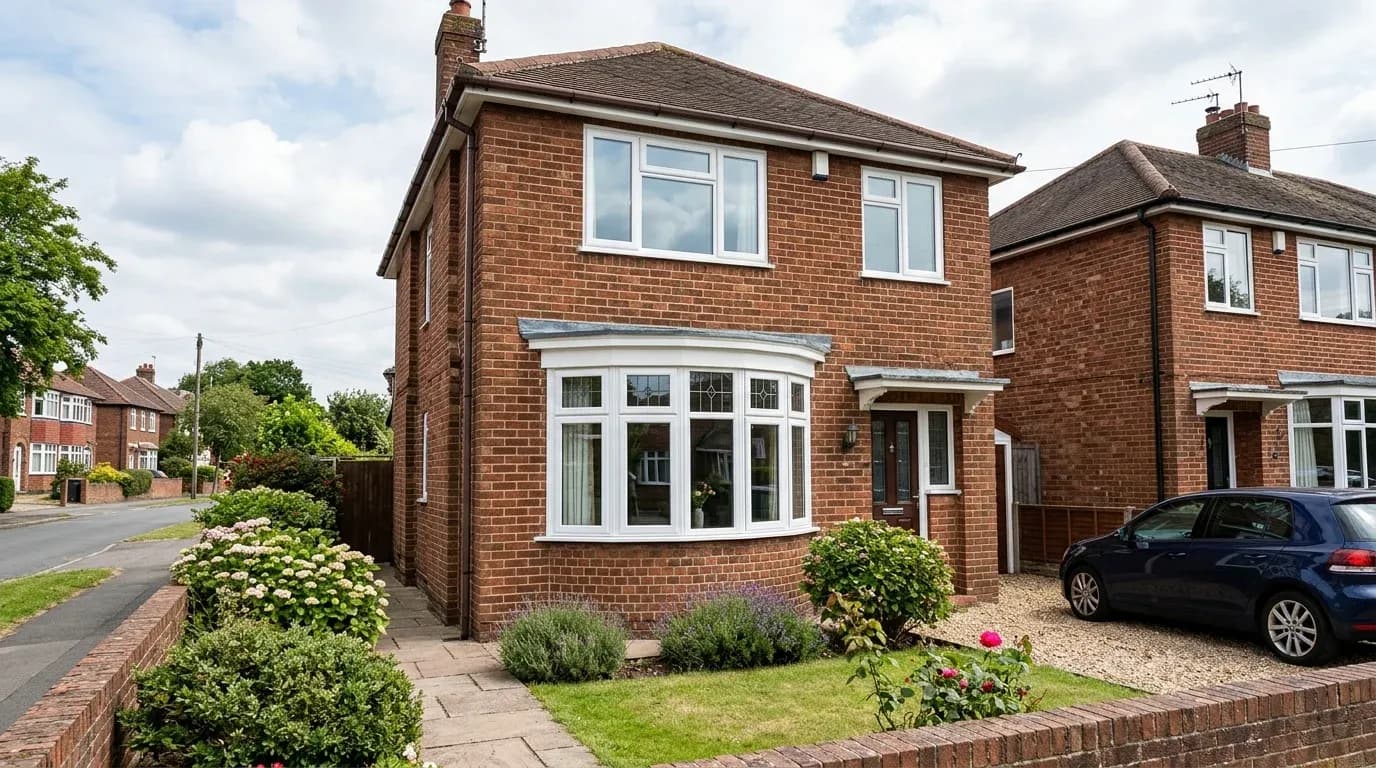
A 3-panel bay window replacement costs between £1,200 and £4,000 depending on the frame material, with uPVC at the lower end and timber at the top. If you want a brand new bay window where none exists, expect to pay £3,500 to £8,000including structural work. Bay windows are one of the more expensive window types to replace, but they are also one of the most noticeable improvements to a home's kerb appeal.
£1,200
Replacement from
£3,500+
New bay (structural)
£1,500
Average 3-panel uPVC
+40-60%
5-panel premium
Prices updated April 2026 · Based on published trade rates and UK market data.
Bay Window Prices at a Glance
These prices cover supply and installation including removal of the old window, FENSA certification, and waste disposal. Structural work for new bay installations is included where noted.
3-panel bay replacement (uPVC)
£1,500
£1,200 - £2,000
3-panel bay replacement (aluminium)
£2,400
£2,000 - £3,000
3-panel bay replacement (timber)
£3,000
£2,500 - £4,000
5-panel bay replacement
£3,200
£2,500 - £4,500
New bay window (structural, inc. lintel)
£5,500
£3,500 - £8,000
Bay pole/support replacement
£700
£400 - £1,200
Prices based on industry data. Actual costs depend on window size, specification, structural condition, and location.
Get free bay window quotes
Prices move a lot with your postcode, the access on site and the spec you choose. Get free quotes from local window installers and see what yours actually comes to, with no obligation to book.
Additional Costs to Budget For
Bay window projects often involve more than just the glass and frames. Here are the extras that can catch people out.
| Item | Typical Cost |
|---|---|
| Sash bay window (3-panel, timber) | £3,500 - £6,000 |
| Bay window roof/lead replacement | £300 - £800 |
| Scaffolding (if upper floor) | £300 - £600 |
| Planning permission application | £548 |
| Building control (if no FENSA) | £200 - £400 |
| Bay window seat installation | £300 - £800 |
Replacement vs New Bay Window: What's Involved
The cost and complexity differ significantly depending on whether you are replacing an existing bay or creating a new one.
Like-for-like replacement
Replacing the glass and frames within the existing bay structure. The opening stays the same size, the bay support stays in place, and the work is straightforward.
- + Usually done in one day
- + No planning permission needed (usually)
- + FENSA certified by installer
- + £1,200 - £4,000 depending on material
New bay window (structural)
Building a bay window where there was previously a flat wall or a smaller window. This is a structural project that involves opening up the wall, fitting a lintel, and building supports.
- ! 3-5 day project minimum
- ! Planning permission often required
- ! Needs structural engineer sign-off
- ! £3,500 - £8,000 including structural work
What Affects the Cost of a Bay Window?
Frame material: uPVC, aluminium, or timber
As with any window replacement, the frame material drives the price. uPVC is the most affordable and works well for most properties. Aluminium gives a slimmer, more contemporary profile but costs significantly more. Timber is the natural choice for period homes, especially in conservation areas, but needs ongoing maintenance. On a bay window, the material choice affects the cost more than on a standard casement because there is simply more frame involved.
Number of panels: 3-panel vs 5-panel
A standard bay window has three panels: one large front pane flanked by two angled side panes. Five-panel bays are wider and grander, found on larger Victorian and Edwardian properties. The extra two panels add 40-60% to the cost, not just because of extra materials but because the structural support needs to be more substantial and the installation takes longer.
Replacement vs new installation
Replacing an existing bay window like for like is a relatively straightforward job. The opening already exists, the structural support is in place, and the work can usually be done in a day. Installing a bay window where there was previously a flat window is a different scale of project entirely. It means cutting a bigger opening, fitting a steel lintel, building supports, and potentially adjusting the roof above. Budget at least double the cost of a straightforward replacement.
Structural condition
On older properties, the bay window structure itself may need work before new glazing goes in. Corroded bay poles, cracked lintels, failed damp-proof courses, and rotten timber sub-frames all need sorting first. A good installer will flag these during the survey. If they do not mention the structural condition at all, ask specifically about it. Fitting expensive new glass into a bay that is structurally compromised is a waste of money.
Casement vs sash mechanism
Bay windows can have either casement (side-hinged) or sash (sliding up-and-down) openings. Sash windows are more expensive to manufacture and install, particularly in a bay configuration where the angled meeting points between panels are tricky to get right. If your original bay had sash windows, replacing with sash again will cost 30-50% more than switching to casement. That said, sash windows look right on a Victorian terrace in a way that casement windows never quite manage.
Types of Bay Window
Not all bay windows are the same. The shape and style affects both the look and the cost.
Square bay (box bay)
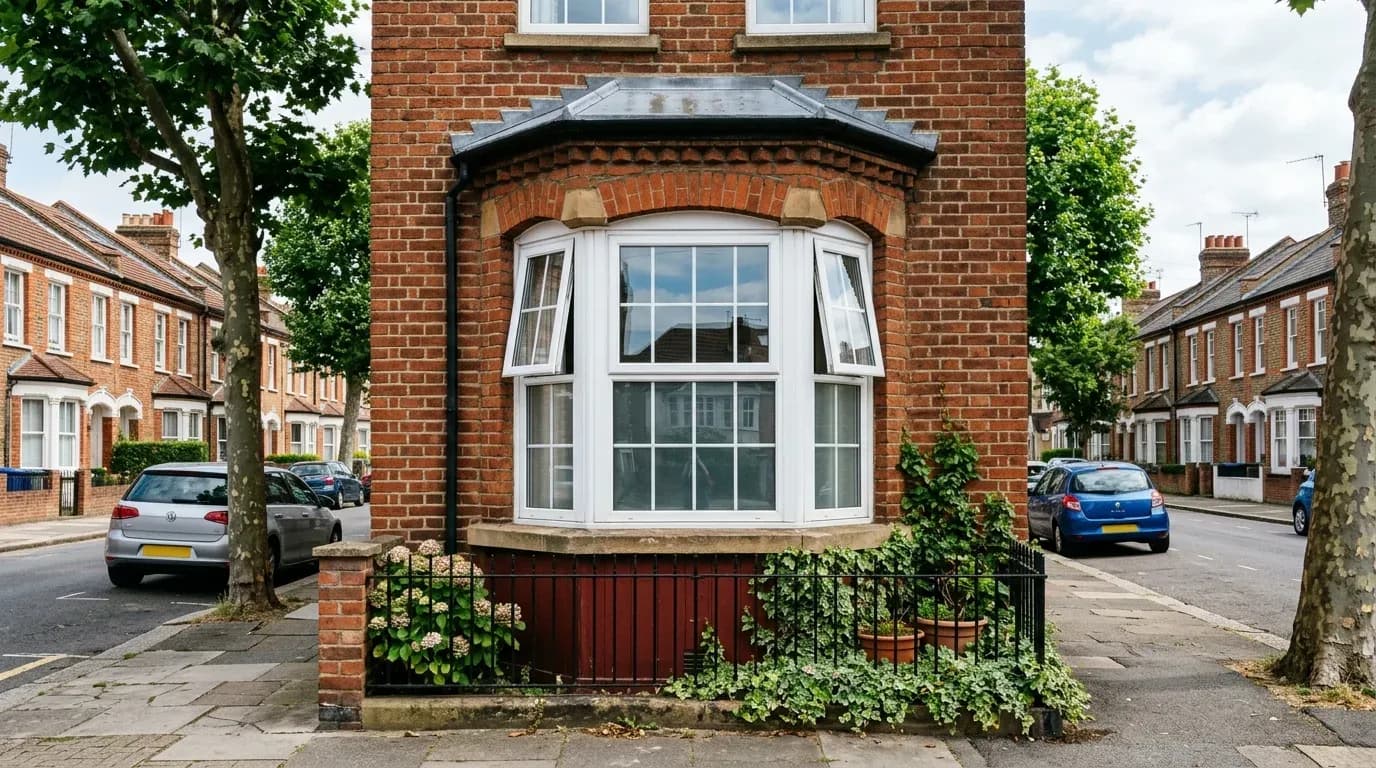
Projects straight out from the wall with flat front and sides at 90 degrees. Most common on Victorian terraces and found on both ground and first floors. The most affordable bay type because the angles are simple.
Angled bay (canted bay)
Has angled side panels, typically at 30 or 45 degrees, creating a softer projection than a box bay. Very common on Edwardian properties. Slightly more expensive than box bays because the angled frames need precise manufacturing.
Curved bay (bow window)
Uses four or more panels arranged in a gentle curve rather than straight angles. Creates an elegant, rounded projection. The most expensive bay type because curved glass or multiple narrow flat panels cost considerably more to manufacture. Often found on Georgian and Regency properties.
Oriel bay
A bay window on an upper floor that does not extend to the ground. It projects out from the wall and is supported by brackets or corbels below. Common on Tudor and Gothic revival properties. Replacement is more complex because access is awkward and the supporting structure needs careful attention.
How to Get Your Bay Windows for Less
Bay windows are more expensive than standard windows, but there are ways to bring the cost down without cutting corners.
Get at least three quotes
Get at least three quotes and compare them line by line. Prices for the same job often vary by 20 to 40% between firms. On a bay, check every quote covers the same things, including the bay roof, any structural repairs and making good inside, so you are comparing like for like.
Get quotes from bay window specialists
Bay windows are more complex than standard casement replacements. Not every window installer is equally comfortable with them, particularly the structural aspects. Ask how many bay windows they have fitted in the last year and whether they handle the structural work in-house or subcontract it. An installer who does bay windows regularly will be faster and less likely to encounter surprises mid-job.
Consider replacing all windows at once
If your bay windows need doing, your other windows probably do too. Getting everything replaced in one go almost always works out cheaper per window than doing them separately. Installers give better rates on bigger jobs because the fixed costs (scaffolding, travel, setup) are spread across more windows. It also means only one period of disruption rather than two.
Get the bay structure checked first
Before committing to new glass, get a builder or surveyor to check the bay structure itself. If the bay poles, lintels, or sub-frame need work, you want to know that before you have committed to a window order. Discovering structural problems partway through a window installation is expensive and disruptive. A quick structural check costs £100-£200 and could save you thousands in unexpected remedial work.
uPVC is fine for most properties
Unless you are in a conservation area or have a particularly grand period property, uPVC bay windows do the job well. Modern uPVC profiles have improved enormously and the cost difference between uPVC and timber is substantial - often £1,000-£2,000 per bay window. If aesthetics are a priority but budget is a concern, uPVC with a woodgrain foil finish is a reasonable compromise that costs less than real timber.
Don't skip the bay window roof
When replacing a bay window, check the condition of the bay roof too. Many bay window leaks are actually caused by failed lead flashing or felt on the small roof above the bay, not by the window seals. Getting the bay roof sorted at the same time as the windows avoids having to scaffold up again later. A new GRP or lead bay roof typically adds £300-£800 to the job.
Free, with no obligation to book.
What to Expect: The Bay Window Installation Process
Replacing a bay window typically takes one to two days per window. Here's how the work is carried out.
- 1
Survey and structural check
The installer surveys the existing bay window (or opening for a new bay) and checks the structural support above, bay windows rely on a lintel, gallows brackets, or a structural bay pole. If the bay is load-bearing, a structural engineer may need to confirm the support is adequate.
- 2
Scaffold erected and old window removed
Scaffolding is put up around the bay. The old window frames, glass, and any rotten timber sub-frames are carefully removed. The reveals and sill are cleaned up and checked for damp or decay.
- 3
New sub-frame and sill fitted
A new timber or PVC sub-frame is installed to ensure the bay is square and level. The sill, whether tiled, stone, or PVC, is fitted at this stage. Any structural support repairs (gallows brackets, bay pole) are completed.
- 4
Window frames installed and glazed
The new bay window frames (uPVC, aluminium, or timber) are fitted into the sub-frame and fixed securely. Double or triple glazed sealed units are installed. The frames are checked for level, plumb, and square operation.
- 5
Sealing, flashing, and weatherproofing
External gaps are sealed with expanding foam and finished with silicone or mortar. Lead flashing is fitted where the bay roof meets the wall. The bay roof covering (lead, GRP, or felt) is checked or replaced.
- 6
Internal finishing and scaffold removal
Internal plastering around the reveals is made good, window boards are fitted, and any decorating is completed. The installer checks all opening mechanisms, locks, and drainage holes before the scaffold comes down.
Frequently Asked Questions
How much does it cost to replace a bay window?
A like-for-like 3-panel bay window replacement costs between £1,200 and £4,000 depending on the frame material. uPVC is the cheapest at £1,200-£2,000, aluminium runs £2,000-£3,000, and timber costs £2,500-£4,000. These prices include supply, installation, removal of the old window, and FENSA certification.
How much does a new bay window cost where there wasn't one before?
Installing a brand new bay window where none existed before costs £3,500-£8,000 including structural work. This involves cutting a larger opening, fitting a steel lintel, building a bay support structure, and potentially altering the brickwork. You will likely need planning permission, especially if the bay projects over a public footpath or changes the front elevation significantly.
Do I need planning permission for a bay window?
Replacing an existing bay window like for like is usually permitted development and does not need planning permission, provided the new window is of similar appearance. Installing a new bay window where none existed before is a different matter - it changes the external appearance of the building and often requires planning approval. If your property is in a conservation area, listed, or in an AONB, check with your local planning authority regardless of what work you are doing.
Is a 5-panel bay window much more expensive than a 3-panel?
Yes, a 5-panel bay window typically costs 40-60% more than a 3-panel bay. The extra panels, wider structural support, and additional installation time all add up. A 5-panel uPVC bay replacement might cost £2,500-£4,500 compared with £1,200-£2,000 for a 3-panel version. The difference is most noticeable on the installation side, as 5-panel bays take considerably longer to fit.
What is a bay pole and when does it need replacing?
A bay pole (or bay support post) is the vertical metal or timber post that supports the masonry above a bay window from underneath. In older Victorian and Edwardian properties, these can corrode or rot over time, causing the brickwork above the bay to crack or sag. Replacing a bay pole typically costs £400-£1,200. If you notice cracks in the brickwork around your bay window, or the window is visibly dropping, get it checked sooner rather than later - leaving it gets more expensive.
Are sash bay windows more expensive than casement bays?
Sash bay windows cost 30-50% more than casement bays in the same material. The sliding sash mechanism is more complex to manufacture and install, especially in a bay configuration where the angles complicate the frame profiles. For a Victorian or Edwardian terrace where the original windows were sash, the authentic look is worth the premium if your budget allows it. If not, casement windows in a sympathetic style are a perfectly reasonable compromise.
Do bay windows add value to a house?
Bay windows add both light and the impression of more space, which buyers notice. A well-maintained bay window in a Victorian or Edwardian terrace is a character feature that estate agents actively highlight. Replacing a tired, draughty bay with a smart new one can improve the kerb appeal of a property noticeably. Whether it adds more value than it costs depends on the property and the local market, but you are unlikely to lose money on a straightforward replacement in a period property.

Written by Chris Kervin, Co-Founder of Less.co.uk
Last updated: · Pricing based on published trade rates and UK market data · Methodology
Ready to get your bay windows for less?
Bay window prices vary more than most window types because of the structural element. Getting multiple quotes is the single best way to make sure you are paying a fair price for the work involved.
Get Free Bay Window QuotesFree, no obligation · Local installers · Compare multiple quotes