How Much Does a Water Softener Cost to Run?
Running a water softener costs around £130 to £220 per year, mostly salt, plus a small amount of electricity and an annual service. Here is exactly where the money goes, what you get back in savings, and whether the maths stacks up for your home.
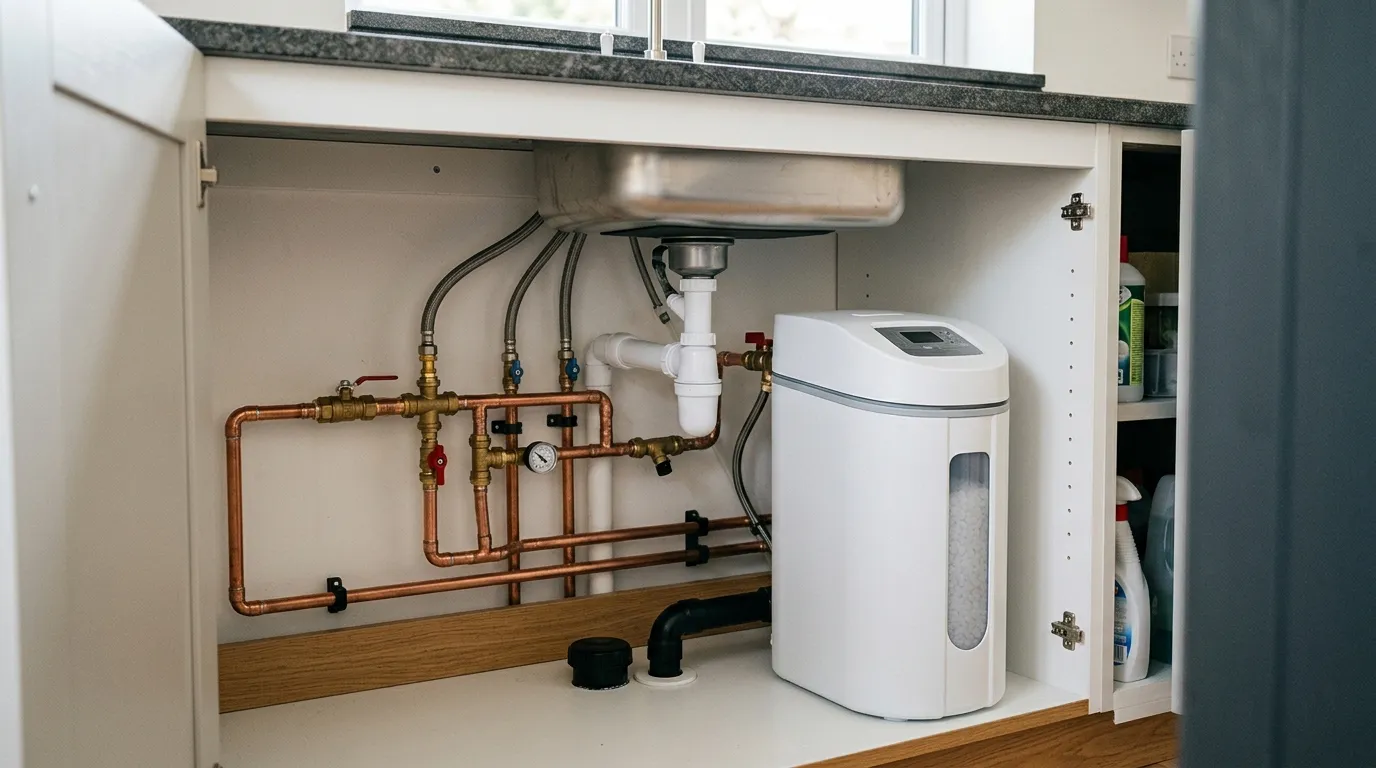
£40 to £80
Salt per year
£10 to £20
Electricity per year
£80 to £120
Annual service
£130 to £220
Total per year
Costs updated April 2026 · Based on industry data and typical UK household usage.
Annual Running Cost Breakdown
Here is where the money actually goes when you own a water softener. These figures are for a typical 4-person household in a hard water area. Your actual costs will vary slightly depending on your water hardness, how many people are in the home, and the model you have.
| Cost Item | Annual Cost |
|---|---|
| Block or tablet salt | £40 to £80 |
| Electricity | £10 to £20 |
| Annual service | £80 to £120 |
| Regeneration water | £5 to £10 |
| Total running cost | £130 to £220 |
Quick summary: Salt is by far the biggest ongoing cost. If you want to cut your running costs, buying salt in bulk and calibrating your regeneration settings correctly are the two most effective moves. Electricity is negligible, modern softeners draw barely more power than a bedside clock.
Block Salt vs Tablet Salt: Which Is Cheaper?
There are two main types of salt used in domestic water softeners, and they both do the same job, but they differ on price, convenience, and how you handle them.
Block Salt
~£5 to £8 per 8kg pack
- Clean and easy to handle
- Slower dissolve, fewer top-ups
- Favoured by Harvey and Kinetico units
- Less risk of bridging in brine tank
- Slightly more expensive per kg
- Fewer stockists
Tablet Salt
~£3 to £6 per 25kg bag
- Cheaper per kilogram
- Widely available in supermarkets
- Works in most softener brands
- Can clump or bridge if overfilled
- Dustier to handle
- Needs checking more often
For most homeowners, block salt is the more hassle-free choice, even if you pay a bit more per kilogram. If you have a metered or twin-tank softener and want to keep costs as low as possible, tablet salt bought in bulk is the economical option.
What You Save by Running a Water Softener
The £130 to £220 annual running cost is only half the story. In hard water areas, the savings from a properly working softener can significantly outweigh what you spend on it. Here is where those savings come from.
Boiler efficiency
Up to 7% per mm of limescale build-up on the heat exchanger
Appliance lifespan
Washing machines, dishwashers and kettles last longer without mineral deposits
Cleaning products
Fewer descalers, limescale removers, and specialist soaps needed
Skin and hair
Soft water requires less shampoo and conditioner, a real difference in very hard water areas
Showerheads and taps
No clogging or furring, far less maintenance time and money
Energy Saving Trust research shows:
Limescale build-up of just 1mm reduces the efficiency of a heating element by up to 7%. A 6mm build-up (common in very hard water areas after a few years) can reduce efficiency by over 40%. See Energy Saving Trust for more on hard water's impact on heating costs.
Payback Period: Does It Actually Pay for Itself?
The big question. A water softener costs £500 to £1,500 fully installed. Here is how the numbers work out over a 10-year period in a hard water area.
| Year | Cumulative Running Cost | Net Position |
|---|---|---|
| Installation | - | -£1,000 (avg cost) |
| Year 1 | £175 | -£875 |
| Year 2 | £350 | -£750 |
| Year 3 | £525 | -£625 |
| Year 5 | £875 | -£375 |
| Year 7 | £1,225 | -£125 |
| Year 10 | £1,750 | +£250 |
Savings estimate assumes a medium-hard water area (200 to 250 mg/l) and includes reduced energy bills, fewer appliance call-outs, and lower spend on cleaning and descaling products. Results will vary, in very hard water areas (Kent, Hertfordshire, parts of London), payback can be as quick as 3 to 4 years.
Is Your Area Hard Water? UK Regional Guide
Water softeners make the most sense in areas where water hardness is above 200 mg/l (milligrams per litre, also expressed as parts per million). You can find your exact water hardness level by checking the Drinking Water Inspectorate website or your water company's site. Here is a rough guide by region.
| Region | Worth It? |
|---|---|
| South East England | Strongly recommended |
| East Anglia | Strongly recommended |
| East Midlands | Strongly recommended |
| London | Strongly recommended |
| West Midlands | Worth considering |
| Yorkshire | Worth considering |
| North West | Probably not needed |
| North East | Probably not needed |
| Scotland | Probably not needed |
| Wales | Probably not needed |
Salt Delivery Services: A Hassle-Free Option
One of the most convenient ways to manage your salt costs is to sign up for regular deliveries. Several providers offer scheduled delivery so you never have to think about running out.
Harvey Water Softeners
Offers block salt deliveries alongside their own softener range. Good for Harvey unit owners who want the matched product.
Kinetico
Similar service with scheduled block salt delivery for their softener customers. Often bundled with servicing.
Local plumbing merchants and salt suppliers
Many independent merchants offer regular tablet or block salt drops at competitive bulk prices, often better value than manufacturer schemes.
Delivery subscriptions typically save 10 to 20% compared to ad hoc purchases and remove the hassle of lugging heavy salt packs home from the supermarket.
Common Questions About Softened Water
Can you drink softened water?
The standard setup, and the recommended one under British Water's Code of Practice, is to keep one unsoftened tap (usually the kitchen cold tap) connected directly to the mains for drinking and cooking. This is normal practice in every UK installation. Softened water is perfectly fine for bathing, laundry, and general use, and the sodium increase is minimal, well within the limits set by the Drinking Water Inspectorate.
Do sodium levels in softened water affect your health?
The increase in sodium from softened water is very small, typically around 1 to 20mg per 100ml depending on your original water hardness. The UK recommended daily limit for sodium is 2,400mg. Even in very hard water areas, softened water contributes a tiny fraction of that. For most healthy adults it is a non-issue. If you are on a low-sodium diet for medical reasons, your GP may advise drinking from the unsoftened tap.
How to Keep Your Water Softener Running Costs Down
Buy salt in bulk, it makes a real difference
A single block salt pack from a supermarket costs around £5 to £8. Buy online in bulk, say 15 to 20 packs at once, and you can bring that down to £3 to £5 per pack. If you have a dry utility room or garage to store them, buying ahead trims your annual salt bill by a third without any effort.
Skip the branded block salt
Block salt is made to a standard size, so generic packs from a builders merchant or online supplier fit machines from the big names like Harvey and Kinetico just as well as the salt those firms sell you. Branded block salt often carries a premium of £1 to £3 a pack for what is essentially the same product. As long as the blocks are the right dimensions for your unit, buy on price alone.
Get 3 quotes for your annual service
Annual servicing costs vary, some manufacturers charge a premium for their own branded service visits. An independent plumber with water softener experience can often do the same job for £60 to £80 rather than £120. Get a few quotes before you commit to a service contract, especially for year two onwards.
Set the regeneration timer correctly
Many water softeners are installed on default settings that are not matched to your actual water hardness and usage. A correctly calibrated softener uses the minimum salt needed, an over-configured one wastes salt on unnecessary cycles. Ask your installer to set it up based on a water hardness test, not factory defaults.
Use a salt delivery subscription to lock in lower prices
Harvey Water Softeners, Kinetico, and several local suppliers offer regular salt deliveries on subscription. You typically save 10 to 20% compared to buying ad hoc, plus you never run out unexpectedly and risk softener downtime. Worth setting up once you know your monthly usage.
Frequently Asked Questions
How much does a water softener cost to run per year?
A water softener typically costs £130 to £220 per year to run, covering salt (£40 to £80), electricity (£10 to £20), annual servicing (£80 to £120), and water used for regeneration cycles (£5 to £10). The main ongoing cost is salt, a 4-person household goes through roughly one 25kg bag per month.
Is a water softener worth the running cost?
In hard water areas (common across the South East, East Anglia, and the Midlands), yes. Limescale reduces boiler efficiency by up to 7% per millimetre of build-up and shortens the lifespan of washing machines, dishwashers, and kettles. Most households save £200 to £400 per year in reduced energy bills, fewer appliance repairs, and less spend on cleaning products. The payback period is typically 3 to 7 years.
Can I drink softened water from the tap?
The standard and recommended practice is to keep one unsoftened tap, usually the kitchen cold tap, connected to the mains for drinking and cooking. It is recommended under British Water's Code of Practice, rather than a legal requirement. The softened water from other taps is perfectly safe for bathing, laundry, and general use. The sodium increase in softened water is minimal and well within the safe limits set by the Drinking Water Inspectorate.
What is the difference between block salt and tablet salt?
Block salt comes in solid rectangular blocks that you drop directly into the salt chamber, it is cleaner to handle, dissolves more slowly, and requires less frequent topping up. Tablet salt is granular and cheaper per kilogram, but needs more careful filling and can bridge or clump in the brine tank. For most homeowners, block salt is the easier choice despite costing slightly more. Harvey Water Softeners, for example, design their units specifically for block salt.
How often does a water softener need servicing?
Annual servicing is recommended and typically costs £80 to £120. The engineer checks the resin bed, tests the regeneration cycle, inspects the valve and timer, and adjusts salt usage to match your actual water consumption and hardness. Skipping servicing does not immediately break the unit, but it can lead to inefficient salt use and missed early signs of resin degradation.
Do water softeners use a lot of electricity?
No, modern water softeners are very energy-efficient. They only draw power during the regeneration cycle (typically a few times a week, at night), which uses roughly the same electricity as a clock radio. Annual electricity cost is around £10 to £20 for most households. The energy saving from reduced limescale on your boiler and heating elements far outweighs this cost.
Useful Resources
Drinking Water Inspectorate (DWI)
Official body for drinking water quality standards in England and Wales. Check your local water hardness and sodium safety limits.
Energy Saving Trust
Independent advice on reducing home energy use. Includes research on hard water's impact on boiler and heating efficiency.

Written by Chris Kervin, Less.co.uk founder
Last updated: April 2026 · Based on industry data and verified contractor submissions · Methodology
Ready to sort your hard water problem?
A water softener pays for itself in 3 to 7 years in most hard water areas. Get quotes from local plumbers and see what it would cost you.
Compare Free QuotesFree, no obligation · Local plumbers · Compare up to 3 quotes