How Much Does a Water Softener System Cost in 2026?
A water softener system costs £500 to £1,500 fully installed. The water softener installation cost alone is £150 to £500, with ongoing salt costs of £40 to £80 per year. In hard water areas, a water softener system protects your boiler, appliances, and taps from limescale damage. Here is the full cost breakdown.
£500
Installed from
£800
Mid-range
£40 to £80
Salt per year
2 to 3 hrs
Typical install
Prices updated April 2026 · Based on industry data and contractor submissions.
Water Softener System Cost by Type
How much does a water softener cost? Here are 2026 UK prices for different system types and sizes, including the cost to install a water softener. All installations must comply with WRAS (Water Regulations Advisory Scheme) requirements.
Compact salt-based softener
Small households (1-2 people), block salt
£550
£350 to £700
Standard salt-based softener
Average household (3-4 people), block or tablet salt
£800
£600 to £1,000
Premium salt-based softener
Large household, twin-tank, WiFi monitoring
£1,200
£900 to £1,500
Salt-free conditioner
No salt, no wastewater, scale prevention only
£500
£300 to £700
Installation (plumber)
Connection to mains, unsoftened drinking tap
£300
£150 to £500
Ongoing Running Costs
A water softener is not just a one-off purchase. Here are the ongoing costs to budget for.
| Item | Typical Cost |
|---|---|
| Block salt (per year) | £40 to £80 |
| Electricity | £2 to £4/month |
| Annual service | £80 to £120 |
| Resin replacement (every 10-15 years) | £150 to £300 |
Water Softener Installation Cost by Region
Water softener system UK cost varies by region. You can check your area's water hardness via the Drinking Water Inspectorate. These are average total costs for a standard salt-based unit, supply and fit.
| Region | Average Cost | vs National |
|---|---|---|
| London | £1,100 | +22% |
| South East | £1,000 | +11% |
| East of England | £950 | +6% |
| South West | £920 | +2% |
| Midlands | £900 | Average |
| Yorkshire | £820 | -9% |
| North West | £840 | -7% |
| North East | £780 | -13% |
| Scotland | £750 | -17% |
| Wales | £800 | -11% |
How to Get Your Water Softener for Less
Buy the unit online and pay a plumber to fit it
Water softener units are widely available online, often at better prices than through an installer. A competent plumber can fit any standard unit in 2 to 3 hours. This can save £100 to £300 compared to buying the unit through the fitting company.
Check your water hardness first
If your water is only moderately hard (150 to 200 mg/l), a magnetic or electrolytic conditioner at £50 to £150 may be enough to prevent scale without the ongoing salt costs. Water softeners are most worthwhile in hard (200 to 300 mg/l) and very hard (300+ mg/l) areas. Check your water hardness on your water company's website.
Choose a metered softener, not a timer model
A metered softener only regenerates once it has treated a set volume of water, so it uses salt in line with what your household actually gets through. A timer model regenerates on a fixed schedule whether you need it or not, wasting salt and water when you are away or using less. With salt at £5 to £10 a bag and most homes getting through 1 to 2 bags a month, the metered option quietly saves money every year it runs. Check the unit is metered or volume controlled before you buy.
Buy salt in bulk
Block salt typically costs £5 to £8 per 8kg pack from a supermarket. Buying in bulk online - say a pallet of 15 to 20 packs - can bring the cost down to £3 to £5 per pack. If you have somewhere dry to store them, buying ahead saves a third on your ongoing salt costs.
Fit when other plumbing work is happening
If you are having a new boiler, kitchen, or bathroom fitted, ask the plumber to install the water softener at the same time. They are already on site, the water is already being turned off, and the additional work takes 1 to 2 hours. You save on a separate call-out.
What to Expect: The Installation Process
A water softener installation is a straightforward plumbing job. Here is how it works.
- 1
Water hardness test
Find out how hard your water is from your water company's website or ask the plumber to test it. If it is under 150 mg/l, you may not need a softener. Between 150 and 200 mg/l is moderately hard. Above 200 mg/l is where a softener starts to make sense, and above 300 mg/l it is highly recommended.
- 2
Choose system location
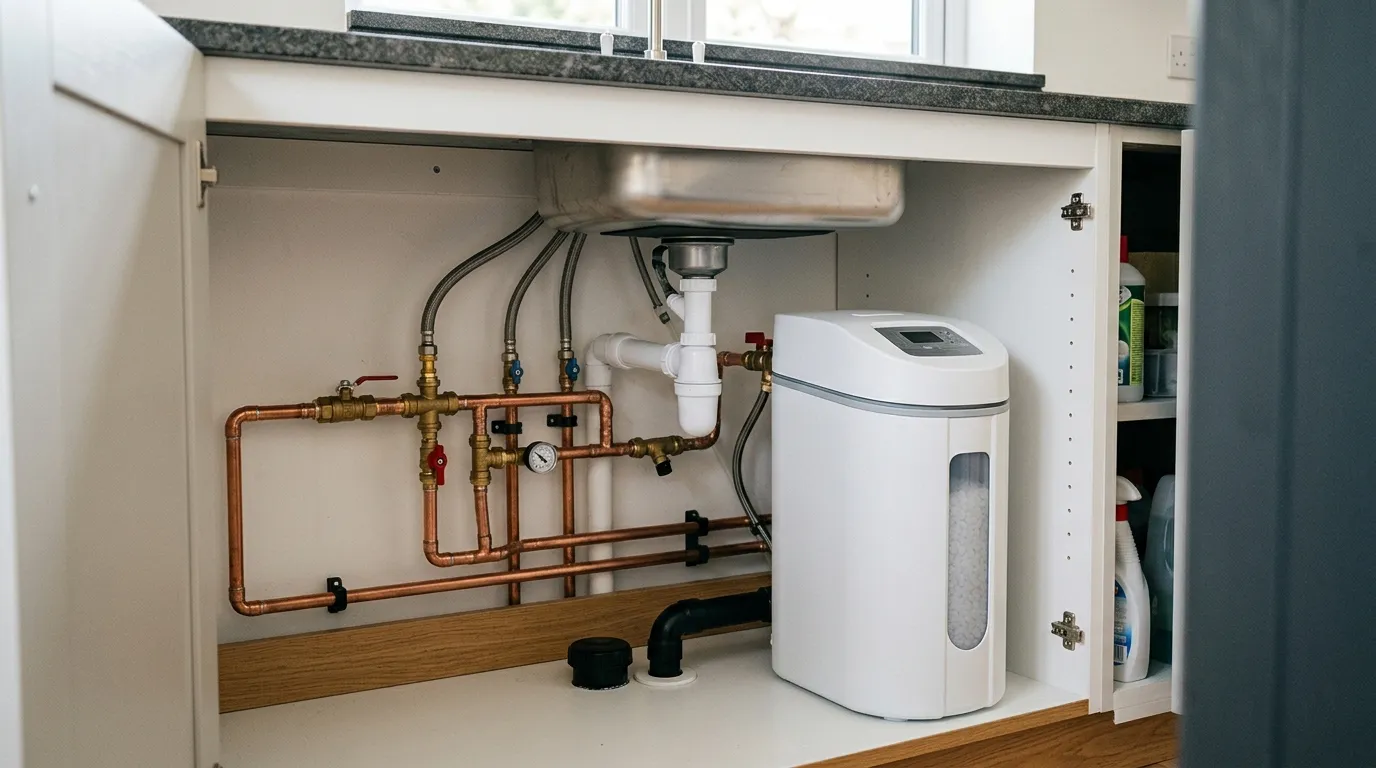
The plumber identifies the best position for the softener, typically under the kitchen sink or in an airing cupboard, close to the rising main. The unit needs to be accessible for salt top-ups and maintenance. They also confirm the right size for your household based on the number of people, bathrooms, and water hardness.
- 3
Connect to mains supply
The plumber connects the softener to the rising main and fits a bypass valve so you can isolate the softener for maintenance. One unsoftened drinking water tap is kept for drinking water, which is recommended practice for softener installations. The work takes 2 to 3 hours for a standard installation.
- 4
Set up salt/resin tank
The salt chamber is filled with block or tablet salt, and the resin tank is primed ready for the first regeneration cycle. The plumber shows you how to top up the salt and explains how often it needs doing.
- 5
Commission and calibrate
The softener runs its first regeneration cycle. The plumber tests the water hardness before and after to confirm the unit is working correctly. They programme the regeneration timer based on your water usage and hardness level, and walk you through the system controls.
Frequently Asked Questions
How much does a water softener cost?
A water softener costs £500 to £1,500 fully installed. The unit itself costs £350 to £1,000 depending on size and brand. Installation adds £150 to £500 for a plumber to fit it into your mains water supply, usually under the kitchen sink or in an airing cupboard. Ongoing costs are £40 to £80 per year for salt.
Is a water softener worth it?
If you live in a hard water area (over 200 mg/l), a water softener can save you money by extending the life of your boiler, washing machine, and dishwasher. Limescale reduces heating efficiency by up to 7% per mm of build-up, so a softener also cuts your energy bills. In very hard water areas (300+ mg/l), the savings can pay for the softener within 3 to 5 years.
What is the difference between salt-based and salt-free water softeners?
Salt-based softeners use ion exchange to remove calcium and magnesium from the water, producing genuinely soft water. Salt-free systems (technically water conditioners) do not remove the minerals - they change their structure so they are less likely to form scale. Salt-based systems are more effective but need regular salt top-ups and produce a small amount of wastewater during regeneration.
How much salt does a water softener use?
A typical household water softener uses one 25kg bag of salt per month, costing £40 to £80 per year. In very hard water areas or larger households, you may go through 1.5 to 2 bags per month. Block salt is the easiest to handle - you just drop it in the salt chamber when it runs out. Tablet salt is cheaper but needs filling more carefully.
Can I install a water softener myself?
If you are handy with plumbing, a DIY installation is possible and saves £150 to £500 on fitting costs. The softener connects to the rising main using push-fit or compression fittings. However, you should leave an unsoftened drinking water tap (usually the kitchen cold tap), as keeping one unsoftened outlet for drinking water is recommended practice. If in doubt, use a plumber.

Written by Chris Kervin, Co-Founder, Less.co.uk
Last updated: April 2026 · Pricing based on industry data and verified contractor submissions · Methodology
Fed up with limescale?
A water softener protects your boiler, appliances, and taps. See what it costs and whether it is worth it for your area.
Compare Free QuotesFree, no obligation · Local plumbers · Compare up to 3 quotes