Structural Surveys: Your Complete Guide
Whether you are buying a property, investigating cracks, or planning structural alterations, the right survey gives you the information you need to make sound decisions. This guide explains the different types, what they cost, and when each one is appropriate.
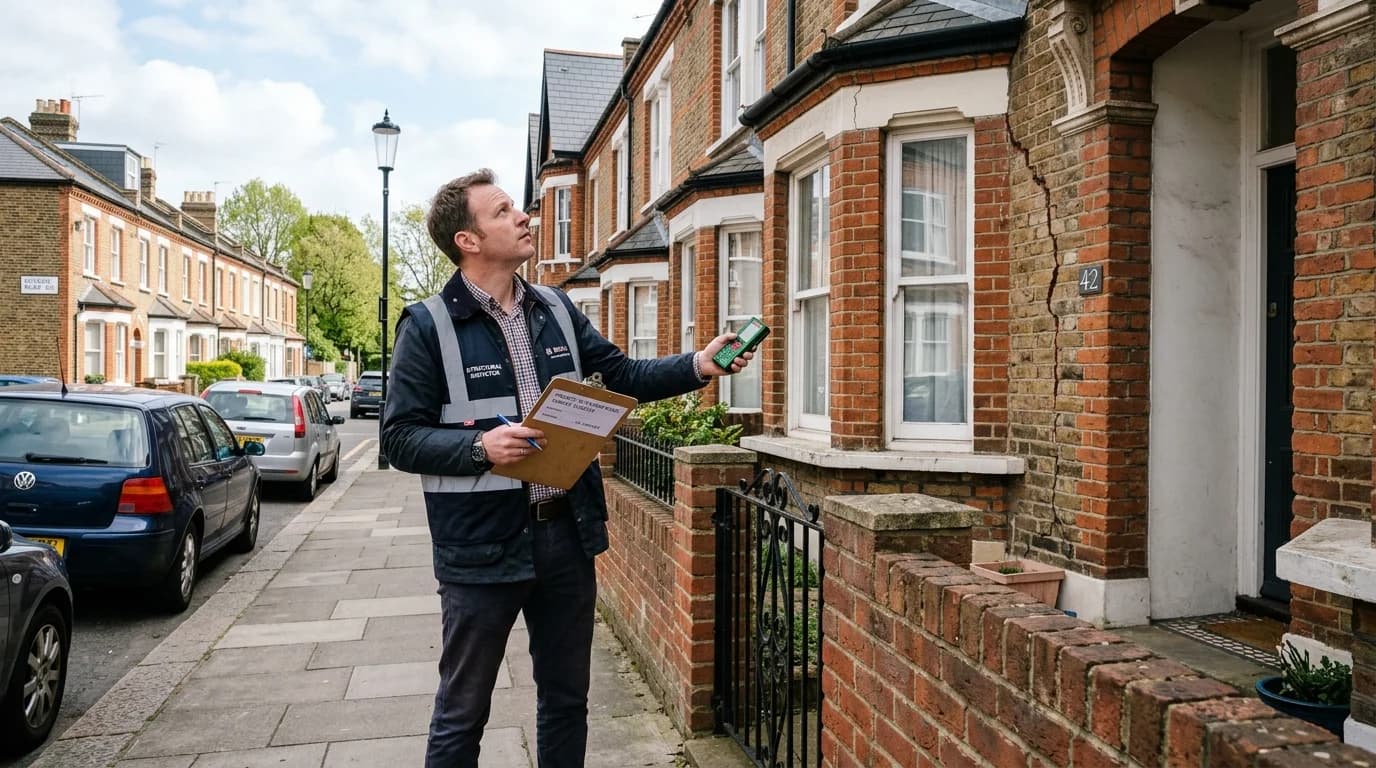
Types of property survey
RICS Level 1, Condition Report
A basic traffic-light report on the condition of the property. Suitable for modern, standard-build homes in good condition. Does not include a valuation or detailed advice. The cheapest option at £200 to £350.
RICS Level 2, Homebuyer Survey
A more detailed inspection covering the condition of visible elements, with a valuation and insurance reinstatement figure. Flags concerns but does not investigate them in depth. The most popular choice for standard properties, costing £300 to £500.
RICS Level 3, Building Survey
A thorough inspection of the entire property, including the structure, roof space, and accessible areas. Provides detailed advice on defects, repairs, and maintenance. Essential for older properties, listed buildings, or anything you plan to renovate. Costs £500 to £1,200.
Structural Engineer's Report
A targeted assessment by a chartered structural engineer, focusing on a specific concern, subsidence, cracks, load-bearing walls, or the structural feasibility of alterations. Not a general survey but a specialist opinion with calculations where needed. Costs £300 to £800.
Get at least three quotes
Survey fees vary between chartered surveyors and structural engineers depending on their experience, the property size, and your location. Get at least three written quotes so you can compare the scope of the report, turnaround time, and fee like for like. Make sure each quote confirms the surveyor is registered with RICS or the engineer is a member of IStructE or ICE, and that professional indemnity insurance is in place.
Common questions
What is the difference between a structural survey and a homebuyer survey?
A RICS homebuyer survey (Level 2) gives you a broad overview of the property's condition with a traffic-light rating system. A RICS building survey (Level 3), often called a structural survey, is far more detailed, covering the property from roof to foundations. A structural engineer's report is different again: it is a targeted assessment of a specific structural concern, such as cracks, subsidence, or the viability of removing a wall.
How do I find a good structural engineer?
Look for a chartered structural engineer who is a member of the Institution of Structural Engineers (IStructE) or the Institution of Civil Engineers (ICE). Check they have professional indemnity insurance. Ask for recommendations from your solicitor, estate agent, or RICS surveyor. Avoid engineers who also offer to do the remedial work, you want independent, unbiased advice.
Do I need a survey to buy a house?
Your mortgage lender will require a valuation, but that only confirms the property is worth the loan amount. It does not check the condition. A homebuyer survey (Level 2) or building survey (Level 3) is not legally required but is strongly recommended. Skipping a survey to save £500 could cost you tens of thousands if the property has hidden defects.
Need a survey?
See what it costs and compare quotes from qualified surveyors near you.
See 2026 prices