Rendering: Your Complete Guide
Tired of cracked or stained exterior walls? Rendering protects your home from damp, boosts insulation, and transforms kerb appeal. For peace of mind, look for a renderer registered with TrustMark, the government-endorsed quality scheme. This guide covers every render type, when it makes sense, what it costs, and how to find someone who will do a proper job.
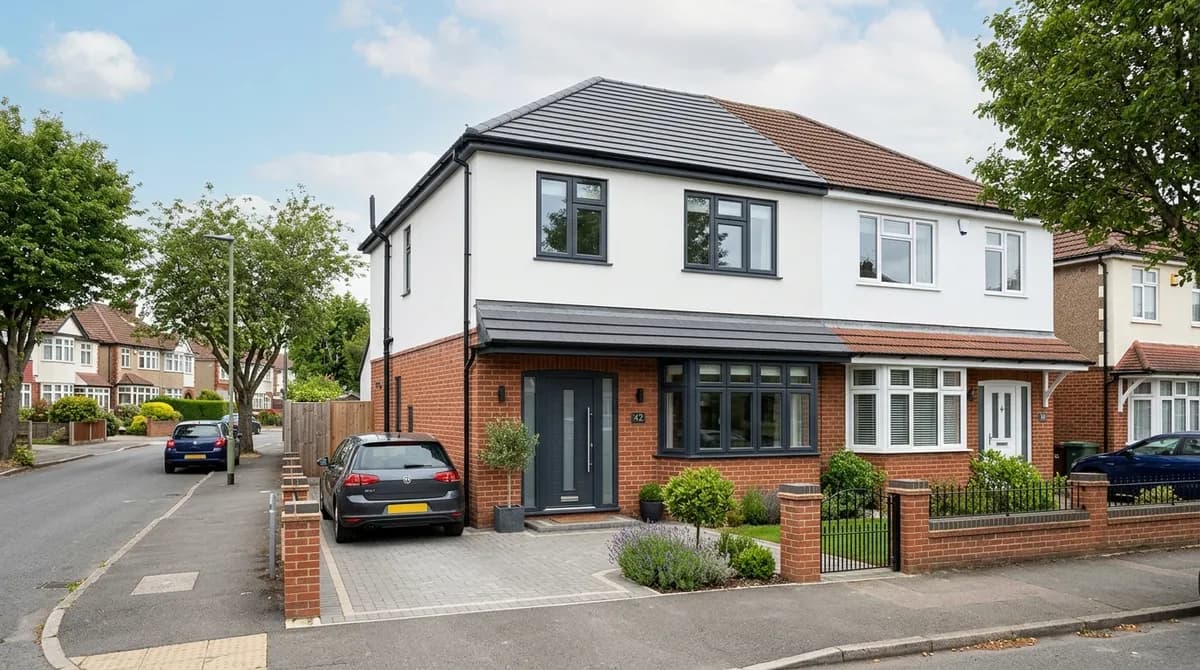
Types of render
Sand and cement render
The traditional and most affordable option. A mix of sand, cement, and water applied in two or three coats, then painted. Reliable but can crack over time and needs repainting every few years.
Monocouche (one-coat through-coloured)
A factory-mixed render applied in a single coat with colour built in, so no painting is needed. Faster to apply and lower maintenance than sand and cement, with a textured finish.
Silicone render
A thin-coat flexible render that repels water and resists algae. Applied over a base coat, it stays cleaner for longer and comes in a wide range of colours. The premium choice for most modern jobs.
Acrylic render
Similar to silicone but slightly less breathable. Good water resistance, available in many colours, and works well over insulation boards. A solid mid-range option.
Lime render
The right choice for older and listed buildings. Lime render is breathable, allowing moisture to escape from the wall rather than trapping it. Softer than cement-based renders and needs a specialist who understands lime.
Pebbledash removal and re-render
Removing the existing pebbledash back to a sound substrate, then applying a fresh render system. Popular with homeowners looking to modernise an older property.
When rendering makes sense
Damp protection
If your external walls are letting moisture through, rendering creates a weatherproof barrier. Combined with external wall insulation, it can solve persistent damp issues that internal fixes have not shifted.
Thermal insulation
Rendering over external wall insulation (EWI) boards is one of the most effective ways to insulate a solid-walled property. It wraps the house in a thermal blanket without losing any internal floor space. Lower-income households may get help towards the cost through ECO4, which runs until December 2026, or the council-delivered Warm Homes: Local Grant.
Kerb appeal and value
Cracked, stained, or outdated pebbledash drags a property down. A fresh render finish - particularly silicone or monocouche - can transform the look of a house and make it significantly more attractive to buyers.
Structural protection
Exposed brickwork on older properties can deteriorate over time, with mortar joints eroding and bricks spalling. Rendering provides a protective layer that extends the life of the masonry underneath.
Get at least three quotes
Rendering prices vary significantly between contractors, particularly for silicone and monocouche finishes where material costs differ. Get at least three written quotes that specify the render type, number of coats, any insulation included, prep work, and scaffolding. Comparing like for like stops you paying over the odds or picking a quote that has left things out.
Common questions
How long does render last on a house?
Traditional sand and cement render lasts 20 to 30 years with proper maintenance, though cracking can appear sooner if the mix or application was poor. Silicone and monocouche renders typically last 25 to 40 years and need far less upkeep because they are designed to shed water and resist algae growth.
Can I render over old pebbledash?
Yes, but only if the existing pebbledash is firmly bonded to the wall. A renderer should tap-test the surface first, any hollow or drummy areas need to come off before new render goes on. If the pebbledash is sound, a bonding agent and scratch coat can provide a good base.
Does rendering a house add value?
Fresh rendering can add kerb appeal and protect the structure from damp, both of which buyers notice. If you combine render with external wall insulation, lower-income households may get help through ECO4 (open until December 2026) or the council-run Warm Homes: Local Grant. Estate agents reckon a well-rendered exterior can add 5 to 10% to a property’s value, depending on the area and the condition of the house before the work.
What is the difference between monocouche and silicone render?
Monocouche is a one-coat, through-coloured cement-based render with a textured finish. Silicone render is a thin-coat system applied over a base coat, it is more flexible, repels water better, and comes in a wider range of colours. Silicone costs more but tends to stay cleaner for longer.