How Much Do Sliding Patio Doors Cost in 2026?
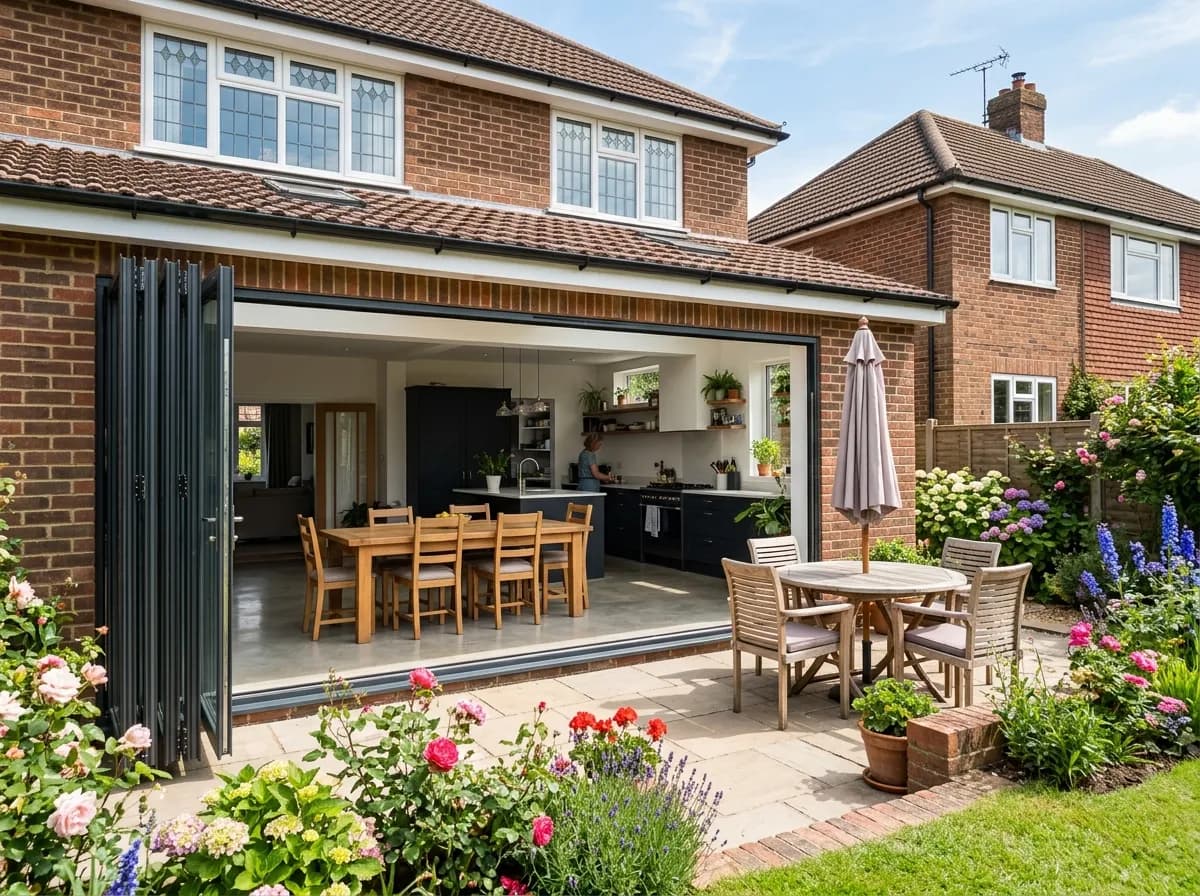
Sliding patio doors cost £800 to £6,000 installed, depending on size, material, and mechanism. uPVC inline sliders start from £800, aluminium from £1,500. Here is the full breakdown.
£800
uPVC from
£1,500
Aluminium from
£300-£600
Fitting cost
20-30 yrs
Lasts
Prices updated April 2026 · Based on industry data and contractor submissions.
Sliding Patio Door Prices: Full Breakdown
What does a sliding patio door cost in 2026? The table below covers the main configurations, from a basic 2-panel uPVC slider to a premium lift-and-slide door in aluminium. Supply-only and fitted prices are shown where the difference is significant.
uPVC inline slider (2-panel, 1.8m)
Standard width, double glazed, white or grey, supply only
£1,000
£800 - £1,200 supply / £1,100 - £1,600 fitted
uPVC inline slider (3-panel, 2.7m)
Wider opening, double glazed, standard colours, supply only
£1,500
£1,200 - £1,800 supply / £1,600 - £2,300 fitted
Aluminium inline slider (2-panel)
Slim frames, double glazed, any RAL colour, supply only
£2,000
£1,500 - £2,500 supply / £2,000 - £3,200 fitted
Aluminium inline slider (3-panel)
Wider opening, slim frames, any RAL colour, supply only
£3,250
£2,500 - £4,000 supply / £3,200 - £5,000 fitted
Lift-and-slide door (aluminium, 3m)
Premium mechanism, larger panels, superior weather seal
£4,000
£3,000 - £5,000 supply / £3,800 - £6,000 fitted
Installation only (no supply)
Fitting, sealing, and finishing, customer-supplied door
£450
£300 - £600
Inline Slider vs Lift-and-Slide: Which Should You Choose?
These are the two main types of sliding patio door, and the difference goes beyond price.
Inline slider (standard)
The most common and affordable type. The door panel slides horizontally in a fixed track at floor level, running on rollers. Works well for standard openings up to about 2.4 metres wide. The track sits proud of the floor slightly, which means a small step over the threshold. Rollers can wear over time and may need replacing after 10 to 15 years of heavy use. A quality inline slider in uPVC starts from £800 fitted, it is the sensible choice for most homes on a budget.
Lift-and-slide (premium)
A more sophisticated mechanism: when you turn the handle, the panel lifts slightly off its seals onto low-friction rollers, gliding effortlessly even with very large, heavy panels. When you close it, the panel drops back down against the seals, creating a tight, weatherproof closure. This makes lift-and-slide far superior for openings over 2.5 metres wide, or where the door will be used frequently. The mechanism also allows for a flush or near-flush threshold. It costs roughly 50% to 100% more than an inline slider, but the improvement in everyday usability is significant.
Which is right for you?
For a standard rear door opening (up to about 1.8m wide), a quality inline slider does the job well and saves you a considerable amount of money. If you are covering a wider opening, a kitchen-diner wall, for example, or you want the smoothest possible operation with the best weather performance, lift-and-slide is worth the extra investment. Pocket sliders (where the panel slides into a wall cavity) are a third option for a completely unobstructed opening, but require significant structural work and are rarely cost-effective in a retrofit.
uPVC vs Aluminium Sliding Doors: Cost and Features
The frame material is the biggest single factor affecting the price of a sliding patio door. Here is how uPVC and aluminium compare across the things that matter most.
| Feature | uPVC | Aluminium |
|---|---|---|
| 2-panel slider (supplied and fitted) | £1,100 - £1,600 | £2,000 - £3,200 |
| 3-panel slider (supplied and fitted) | £1,600 - £2,300 | £3,200 - £5,000 |
| Frame width | 70-80mm (wider) | 35-55mm (slimmer) |
| Colour options | White, grey, black, woodgrain foils | Any RAL colour, dual colour possible |
| Thermal performance | Good, frames naturally insulate | Excellent with thermal break technology |
| Lifespan | 20-30 years | 30-45 years |
| Maintenance | Virtually none | Virtually none |
uPVC is perfectly adequate for most homes and will serve you well for two decades or more. Aluminium is the choice if you want slimmer sight lines, a wider colour palette, or the door to be a design feature in its own right. Both are low-maintenance in practice.
Sliding Doors vs Bifold Doors: Which Gives Better Value?
Both open up the back of your house, but they do it differently, and the cost difference is substantial.
Cost difference
A 2.4m aluminium sliding door costs £2,000 to £3,200 fitted. An aluminium bifold of similar width (typically 3 panels) costs £3,000 to £5,000. For equivalent openings, you are typically paying £1,000 to £2,000 more for bifolds. Over a wider span, the gap widens further. If budget is a factor, sliding doors give you the vast majority of the light and view for significantly less money.
Opening and use
A standard 2-panel slider opens half the width of the door, one panel is always fixed. A bifold folds the panels back against the wall, opening up almost the entire span. If you regularly want to fully open the back of your house, for entertaining, barbecues, or creating that seamless indoor-outdoor flow, bifolds make sense. If you mainly want a bit of fresh air and a nice view, a slider does the job at half the price.
Maintenance and reliability
Sliding doors have fewer moving parts than bifolds. Bifold mechanisms, the hinges, pivot points, and running gear, are more complex and need occasional adjustment or lubrication. In a well-made door from a reputable manufacturer this is rarely a problem, but it is worth knowing. Sliding doors are simpler by design, and a quality inline slider or lift-and-slide will give many years of trouble-free use with minimal attention.
Weather performance
This is an area where sliding doors have historically had the edge. A lift-and-slide door in particular presses firmly against its seals when closed, keeping draughts and rain out very effectively. Standard bifolds have more joints and pivot points where seals can deteriorate over time. The best bifolds now have excellent weather performance, but budget bifolds can let in draughts in exposed locations. A quality sliding door is the lower-risk choice for weatherproofing.
Structural Work: What Might You Need?
The cost of a sliding patio door can rise significantly if structural changes are needed. Here is what to expect.
Replacing like-for-like
If you are swapping old patio doors for new ones in the same opening, structural work is minimal. The installer removes the old frame, checks the lintel is adequate, and fits the new door. This is the simplest and cheapest scenario. The only additional cost might be making good any plasterwork or external rendering around the new frame.
Widening an existing opening
If you want wider doors than the current opening allows, a structural engineer needs to specify a new lintel. Engineer fees typically run from £200 to £500, and the lintel itself costs £150 to £400 depending on size. The building work to install the new lintel, temporarily support the structure, and make good the brickwork adds £500 to £1,000. Total additional cost for widening an opening: £850 to £1,900 on top of the door price.
Creating a new opening
Cutting a new opening in a rear wall is a bigger project. You will need a structural engineer to assess the wall and specify the lintel, Building Regulations approval for the structural work, and a competent builder to carry out the work safely. Budget an additional £1,500 to £3,500 for opening up a new aperture, depending on wall construction (brick cavity wall, block, or timber frame), wall thickness, and how much making good is needed inside and out.
Party wall considerations
If the wall involved is a party wall (shared with a neighbour), you may need to serve a Party Wall Notice under the Party Wall etc. Act 1996. This applies to rear walls that are shared, less common but worth checking. A party wall surveyor costs £700 to £1,500 if your neighbour does not agree to the works informally. Check with your installer or a structural engineer before starting.
How to Get Your Sliding Doors for Less
Get at least three quotes
Sliding patio door prices vary more than most people expect, even for identical specifications. Labour costs, supplier relationships, and installer margins all differ significantly between companies. Getting three quotes on the same specification, door size, material, glass type, and colour, often reveals a spread of £500 to £1,000 on the same job. Never accept the first price you are given, and do not assume the cheapest quote is the worst quality.
Choose uPVC if budget is the priority
uPVC sliding doors cost 30% to 50% less than aluminium and look far better than the uPVC of 10 years ago. Modern uPVC comes in white, anthracite grey, black, and realistic woodgrain foils. Frame widths are slightly thicker than aluminium, giving you marginally less glass area, but for most openings this is barely noticeable. A quality uPVC 2-panel slider from a reputable brand will last 20 to 30 years and cost roughly half the price of the aluminium equivalent.
Opt for inline over lift-and-slide where possible
Lift-and-slide doors feel wonderfully smooth and seal better, but for a standard 1.8m to 2.4m opening, a well-made inline slider performs perfectly well. The price difference is substantial, up to £2,000 more for lift-and-slide. Save the premium mechanism for larger openings (over 2.5m) where the smoother operation and improved weather seal genuinely make a difference. For a typical back door, a quality inline slider will serve you just fine for decades.
Bundle with other glazing work
If you are replacing windows elsewhere in the house at the same time, add the patio doors to the same order. Installers offer better rates when there is more work on a single visit: one survey, one set of factory orders, one installation day. The saving is typically 10% to 15% compared to having doors and windows fitted separately. Get combined quotes and compare them against individual quotes, the difference is often significant enough to make it worth scheduling the work together.
Pay your deposit on a credit card
Most installers ask for a deposit before they order your door, and a few go under before fitting day. Pay at least part of the deposit on a credit card: under Section 75 of the Consumer Credit Act, the card provider is jointly liable for purchases over £100 and up to £30,000, so you can claim the money back if the firm folds or never turns up. Keep the deposit small and never pay a large amount in cash up front.
Useful Resources
What to Expect: The Sliding Patio Door Installation Process
Installing new sliding patio doors typically takes one full day. If the opening needs widening or a new lintel, allow 2-3 days including structural work.
- 1
Survey and measurement
A surveyor measures the structural opening, checks the lintel, and assesses whether the existing opening needs widening. If structural changes are needed, Building Regulations approval is required.
- 2
Remove the existing door or window
The old frame, glass, and any surrounding trim are carefully removed. The opening is cleaned back to bare brickwork or blockwork and checked for level and square.
- 3
Prepare the opening
The opening is squared, levelled, and any necessary structural supports are installed. A new lintel is fitted if the opening is being widened. A damp-proof course (DPC) and cavity tray are put in place.
- 4
Fit the new door frame
The outer frame is positioned, levelled with packers, and fixed to the masonry with frame fixings. The threshold is sealed and the frame is checked for square before the glazed panels are installed.
- 5
Glaze and hang the sliding panels
Double or triple glazed sealed units are fitted into the frame. Sliding panels are hung on the track and carefully adjusted for smooth, even operation. Locks, handles, and any multipoint locking mechanisms are fitted and tested.
- 6
Seal, trim, and finish
External and internal seals are applied around the frame to ensure weathertightness. Internal plastering or architrave is made good. The installer provides FENSA or CERTASS certification to confirm Building Regulations compliance.
Frequently Asked Questions
How much does a sliding patio door cost?
A uPVC sliding patio door costs £800 to £1,600 supplied and fitted for a standard 2-panel set. A 3-panel uPVC slider costs £1,600 to £2,300 fitted. Aluminium sliding doors are more expensive: a 2-panel aluminium inline slider costs £2,000 to £3,200 fitted, and a 3-panel version costs £3,200 to £5,000. A premium lift-and-slide door in aluminium (3-metre span) costs £3,800 to £6,000 installed. Fitting alone (if you supply the door) costs £300 to £600.
What is the difference between an inline slider and a lift-and-slide door?
An inline slider runs in a track at floor level and glides horizontally on rollers. It is the most common and affordable type of sliding patio door. A lift-and-slide door uses a handle mechanism that slightly raises the panel off its seals when you turn it, allowing it to glide smoothly on low-friction rollers, then presses it back down against the seals when closed. This gives a much tighter weather seal, handles heavier panels (up to 3 metres wide), and is smoother to operate. Lift-and-slide doors cost roughly 50% to 100% more than standard inline sliders but are better for larger openings.
Are sliding patio doors cheaper than bifold doors?
Yes, sliding patio doors are considerably cheaper than bifold doors. A 2-panel aluminium slider costs £2,000 to £3,200 fitted. A 3-panel aluminium bifold for a similar opening costs £3,000 to £5,000. The saving is typically £1,000 to £2,000 for equivalent-width openings. Sliding doors also have fewer moving parts and mechanisms, which means less maintenance and fewer things to go wrong over time. The trade-off is that bifolds open the entire wall width when fully folded back, while sliders always leave half the opening fixed.
Do I need planning permission for sliding patio doors?
You do not need planning permission to replace existing patio doors or windows with new sliding doors of the same size. If you are creating a new opening in a rear wall, you generally do not need planning permission under permitted development rights. However, you will need Building Regulations approval for any structural work, adding or replacing a lintel, removing a section of wall, or widening an opening all require sign-off from Building Control. If your property is listed or in a conservation area, check with your local planning authority before starting work.
Do sliding patio doors need a FENSA certificate?
Yes. Replacement glazing, including sliding patio doors, must comply with Building Regulations Part L (thermal performance). If your installer is FENSA-registered, they self-certify the work and issue a FENSA certificate at no extra cost. If your installer is not FENSA-registered, you need a Building Regulations inspection through your local council (typically £200 to £400). You will need this certificate when you sell the property, solicitors check for it during conveyancing. Always confirm your installer is FENSA-registered before work begins.
How long do sliding patio doors last?
A good-quality uPVC sliding door should last 20 to 30 years with minimal maintenance, just keep the tracks clean and lubricate the rollers occasionally. Aluminium sliding doors typically last 30 to 45 years. The rollers and seals are the parts most likely to need attention over time; these can usually be replaced without replacing the whole door. Most installers offer a 10-year guarantee on the door and frame, and the glazing unit typically carries a 5-year guarantee against seal failure.

Written by Chris Kervin, Less.co.uk founder
Last updated: April 2026 · Pricing based on industry data and verified contractor submissions · Methodology
Get your sliding doors for less
Sliding patio doors bring light, views, and easy garden access without the cost and complexity of bifolds. Get the right type for your home and compare prices before committing.
Get Free QuotesFree, no obligation · FENSA-registered installers · Compare up to 3 quotes
FENSA Certification
FENSA certification required. All replacement glazing work in England and Wales must be carried out by a FENSA-registered installer (who self-certifies) or separately approved by your local Building Control. Without certification, you may have difficulty selling your property. Always confirm your installer is FENSA-registered before work begins.
More Home Improvement Cost Guides
Compare real quotes for your job
Prices move a lot with your postcode, the access on site and the spec you choose. Get up to 3 free quotes from vetted local tradespeople and see what yours actually comes to, with no obligation to book.