Patio Doors: Your Complete Guide
New patio doors can transform a room - flooding it with natural light and opening up the space to your garden. Whether you want sliding doors, bifolds, or a classic pair of French doors, the choice of type, material, and installer all affect what you pay and how long they last. This guide covers every option and what they cost.
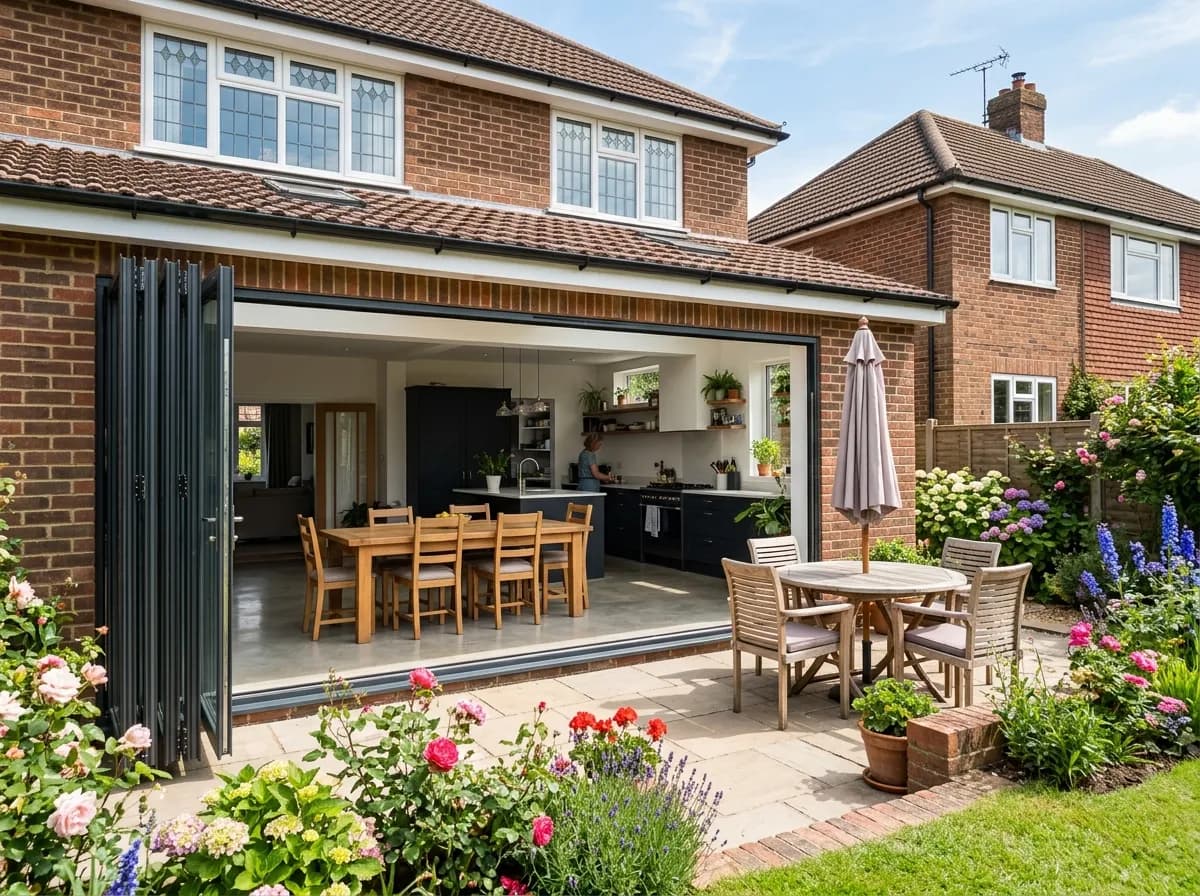
Types of patio door
Sliding patio doors
The classic patio door. Two or three panels on a track - one fixed, the others slide. Space-efficient because nothing swings into the room or out to the garden. Standard 2-panel units are the most affordable option. Wider 3-panel and lift-and-slide versions are available for larger openings.
Bifold doors
Multiple panels (typically 3 to 5) that fold and concertina to one side, giving you an almost fully open wall. The most dramatic option and the widest opening. Popular for kitchen-diners and open-plan living areas that lead to a garden or patio. More expensive than sliding doors but transformative for the right space.
French doors
A pair of hinged doors that swing open, usually outward. The most traditional style and often the cheapest to buy. They give a wide opening but need clearance space outside. Commonly used as a standalone feature or combined with fixed side panels for extra light. Available in uPVC, aluminium, and timber.
Inline sliding doors
A premium version of sliding patio doors with larger, heavier glass panels and slimmer frames. Often called lift-and-slide doors. The panels lift slightly off the track when you turn the handle, then glide smoothly on rollers. They create a near-seamless transition between inside and outside. More expensive but increasingly popular in modern homes and extensions.
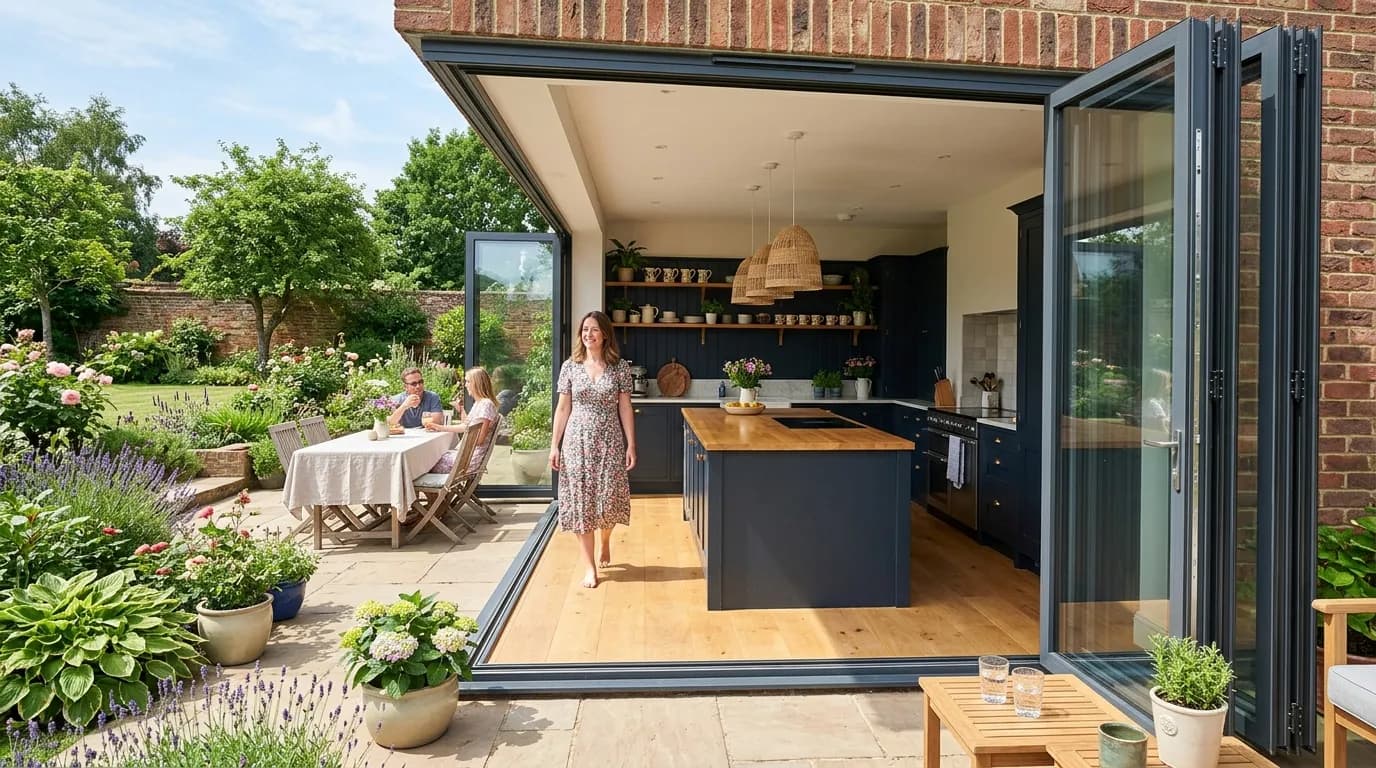
Materials compared
The frame material affects the price, look, and longevity of your patio doors.
| Feature | uPVC | Aluminium | Timber |
|---|---|---|---|
| Cost | Lowest | 30-50% more than uPVC | Most expensive |
| Lifespan | 20-30 years | 30-45 years | 50+ years (if maintained) |
| Frame width | Wider frames, less glass | Slim frames, more glass | Medium frames |
| Maintenance | Wipe clean, virtually none | Wipe clean, virtually none | Sand and repaint every 3-5 years |
| Colours | Limited (white, grey, black, woodgrain) | Any RAL colour | Any paint or stain colour |
| Best for | Budget, low maintenance | Modern look, larger openings | Traditional homes, listed buildings |
Energy ratings and Part L compliance
Replacement patio doors must meet Building Regulations Part L, which sets minimum energy efficiency standards. As of 2026, the minimum U-value for replacement windows and doors is 1.4 W/m2K. Most modern double-glazed patio doors meet this comfortably, and triple glazing achieves U-values of 0.8 to 1.0.
Patio doors are rated A++ to E on the energy efficiency scale, similar to windows. Look for A-rated or above - the difference in heating bills between a C-rated and an A-rated door is noticeable, especially for larger openings.
Your installer must be FENSA registered to self-certify compliance. Without FENSA, you will need local authority Building Control sign-off, which adds cost and delay.
Get at least three quotes
Patio door prices vary significantly between installers, and the specification can differ too - frame material, glass type, hardware, and whether making good is included all affect the final bill. Get at least three written quotes from FENSA-registered installers for the same door type and size so you can compare like for like. That way you know the difference is the company, not the spec.
Patio door guides
Patio door cost guide
Full pricing for sliding, bifold, French, and inline doors in uPVC and aluminium. Includes installation costs.
Sliding patio door cost
Inline slider and lift-and-slide prices in uPVC and aluminium. Plus sliding vs bifold comparison.
Double glazing cost guide
Window replacement prices - often done alongside patio doors for a consistent look.
Extension cost guide
Building an extension? Patio or bifold doors are a popular finishing touch.
Common questions
What is the difference between patio doors and French doors?
Patio doors (sliding doors) have panels that slide behind each other on a track. One panel is usually fixed and the other slides. They take up no floor space when open because nothing swings outward. French doors are a pair of hinged doors that open outward (or inward). They give a wider opening when both doors are open, but you need clearance space on both sides. Bifold doors are a third option - multiple panels that fold and stack to one side, giving the widest opening of all.
Is uPVC or aluminium better for patio doors?
uPVC is cheaper, low-maintenance, and thermally efficient. It is the best choice if budget is your priority. Aluminium is slimmer (so you get more glass and more light), stronger (allowing larger panels), and has a more contemporary look. It costs 30% to 50% more than uPVC but lasts longer and holds its value better. Timber is the premium option - beautiful but requires regular maintenance. For most UK homeowners, aluminium offers the best balance of performance, appearance, and longevity.
Do patio doors need to be FENSA registered?
Yes. Any replacement glazing work in England and Wales must comply with Building Regulations Part L (energy efficiency). If your installer is FENSA registered, they self-certify the work and you receive a FENSA certificate. If they are not FENSA registered, you need to apply to your local council for Building Regulations approval, which costs £200 to £400 and involves an inspection. Always use a FENSA-registered installer to avoid this extra cost and hassle. You will need the certificate when you sell your home.
How long do patio doors last?
uPVC patio doors last 20 to 30 years with minimal maintenance. Aluminium doors last 30 to 45 years - the powder coating may need refreshing after 20 years, but the frames themselves are extremely durable. Timber doors can last 50 years or more if maintained (sanded and repainted every 3 to 5 years), but neglected timber deteriorates quickly. The glass units (double or triple glazed) typically last 15 to 25 years before the seals fail and they start to mist up.
Open up your home for less
Find out what patio doors cost and which type suits your home.
See 2026 pricesCompare real quotes for your job
Prices move a lot with your postcode, the access on site and the spec you choose. Get up to 3 free quotes from vetted local tradespeople and see what yours actually comes to, with no obligation to book.