How Much Do Kitchen Worktops Cost in 2026?
Your worktop choice can swing a kitchen budget by thousands. A laminate worktop for a typical 3-metre kitchen costs £400 to £700 fitted, while quartz runs £1,500 to £2,700 for the same length. Below we break down every popular material by price per metre so you can work out exactly what your kitchen worktop will cost.
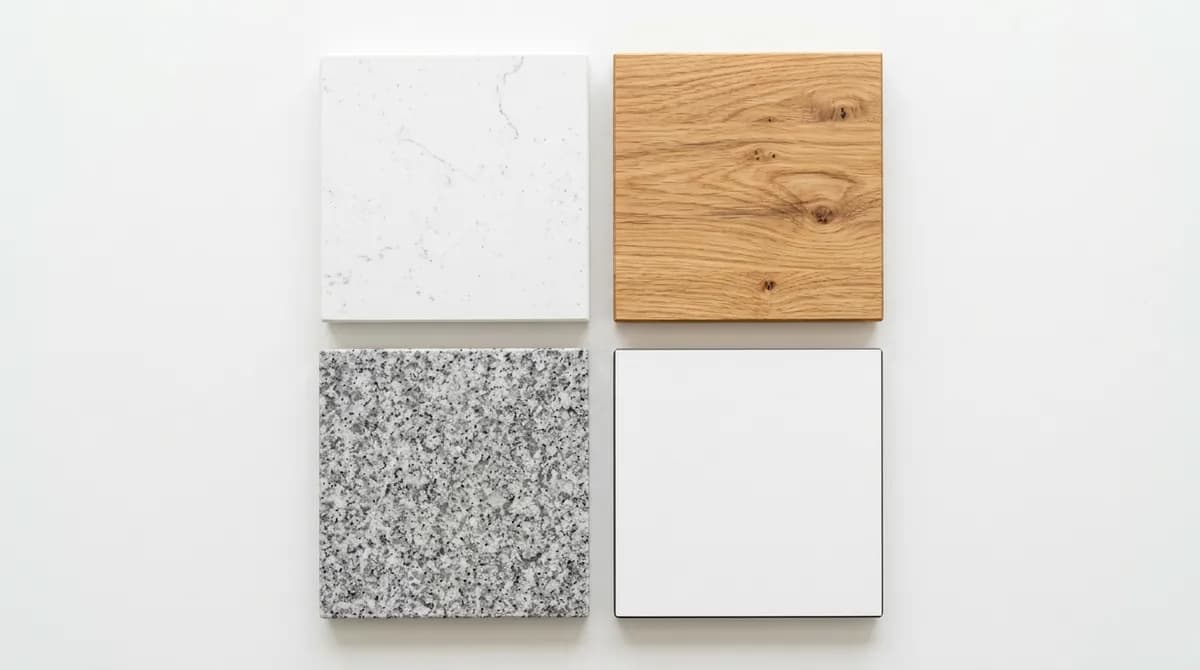
£400 - £700
Laminate (3m fitted)
£1,500 - £2,700
Quartz (3m fitted)
£1,200 - £2,100
Granite (3m fitted)
3 - 5 metres
Average worktop run
Prices updated April 2026 · Based on published trade rates and UK market data.
Kitchen Worktop Prices by Material
Prices below cover supply and installation for a standard 600mm-deep worktop. Stone prices include templating, fabrication, and fitting. The "typical 3m" column gives you a realistic fitted cost for an average-sized kitchen.
Laminate
Supply per metre
£20 - £60
Fitted per metre
£100 - £250
Typical 3m fitted
£400 - £700
Lifespan
10-15 years
Solid wood (oak, walnut)
Supply per metre
£50 - £120
Fitted per metre
£200 - £400
Typical 3m fitted
£600 - £1,200
Lifespan
20+ years
Granite
Supply per metre
£200 - £400
Fitted per metre
£400 - £700
Typical 3m fitted
£1,200 - £2,100
Lifespan
25+ years
Quartz (Silestone, Caesarstone)
Supply per metre
£200 - £500
Fitted per metre
£500 - £900
Typical 3m fitted
£1,500 - £2,700
Lifespan
25+ years
Corian / solid surface
Supply per metre
£150 - £350
Fitted per metre
£350 - £650
Typical 3m fitted
£1,050 - £1,950
Lifespan
20+ years
Marble
Supply per metre
£300 - £600
Fitted per metre
£500 - £1,000
Typical 3m fitted
£1,500 - £3,000
Lifespan
25+ years
Dekton / sintered stone
Supply per metre
£250 - £500
Fitted per metre
£500 - £900
Typical 3m fitted
£1,500 - £2,700
Lifespan
25+ years
Prices based on a standard 600mm-deep, 30mm-thick worktop with a straight edge profile. Includes one sink cut-out. Prices vary by supplier, region, and specification.
Get free kitchen worktop quotes
Tell us the material you want and roughly how many metres of worktop you need, and local kitchen fitters will get in touch with prices. Free, with no obligation to book.
Which Worktop Material Should You Choose?
Here is an honest take on each material, based on how they actually perform in real kitchens rather than how they look in a showroom.
Laminate
Laminate is fine for most kitchens and there is no shame in choosing it. Modern laminates from brands like Duropal, Axiom, and Bushboard look far better than the cheap chipboard worktops of 20 years ago. They are waterproof at the surface, easy to clean, and completely maintenance-free. The downsides: they can chip at the edges, scorch marks are permanent, and they do not add the same wow factor as stone. If you are doing a budget kitchen, put the money into decent units and go with laminate. You can always upgrade the worktop in 10 years without touching the rest of the kitchen.
Solid wood (oak, walnut, iroko)
Wooden worktops bring warmth and character that no other material matches. They age beautifully if you look after them, developing a patina over time. The catch: they need oiling every 6 to 12 months without fail. Water pooling around the sink area will stain and eventually damage the wood if you do not wipe it dry. Oak is the most popular and affordable. Walnut looks stunning but costs more. Iroko is a good tropical hardwood alternative with natural water resistance. Not ideal around sinks or dishwashers unless you are disciplined about drying.
Quartz (the sweet spot)
Quartz is the most popular premium worktop in the UK for good reason. It is engineered stone (roughly 93% crushed quartz mixed with resin), so it is harder than granite, completely non-porous, and never needs sealing. It comes in hundreds of colours and patterns, including convincing marble-effect options without the maintenance headache of real marble. Silestone, Caesarstone, and Compac are the leading brands. If you can stretch your budget to quartz, it is the best all-round choice for a busy family kitchen.
Granite
Granite was the premium worktop of choice for years, but has fallen out of fashion slightly as quartz has taken over. It is still a beautiful natural material and incredibly durable. Each slab is unique, which can be a selling point or a drawback depending on how much variation you want. Granite needs sealing once a year to prevent staining. It is very heat-resistant. The main downsides: it is heavy (your cabinets need to support the weight), and the natural variation means the slab you see in the showroom will not look exactly like what arrives in your kitchen.
Marble
Marble looks gorgeous, there is no denying that. But it is a high-maintenance choice for a kitchen worktop. It stains easily from acidic foods (lemon juice, red wine, tomato sauce), it scratches, and it needs regular sealing. Marble works brilliantly as a feature piece, perhaps on an island where you do not prepare food, but as a main kitchen worktop it can be frustrating for everyday cooking. If you love the marble look, a quartz worktop in a marble-effect pattern gives you 90% of the look with none of the maintenance.
Corian and solid surface
Corian (by DuPont) and similar solid surface materials are made from acrylic and mineral dust. The big advantage is that they can be shaped seamlessly, with no visible joints and integrated sinks moulded directly into the worktop. Scratches can be sanded out. The downside: they are not as heat-resistant as stone and can scorch if you put a hot pan down directly. They sit in the mid-premium price bracket and work well in modern, minimalist kitchens.
Dekton and sintered stone
Dekton is a relatively new material made by Cosentino (the same company behind Silestone). It is created by compressing a mixture of raw materials used in glass, porcelain, and quartz surfaces under extreme heat and pressure. The result is virtually indestructible: UV-resistant, heat-proof, scratch-resistant, and stain-proof. It is also available in very thin profiles (8mm or 12mm) which suit a contemporary look. The downsides: it is expensive, and if it does chip it is harder to repair than quartz. Best for high-end contemporary kitchens where durability and design are both priorities.
Additional Costs to Budget For
The worktop itself is not the only cost. Here are the extras that can add up, especially with stone worktops.
| Extra Item | Typical Cost |
|---|---|
| Templating visit (stone worktops) | £100 - £200 |
| Upstands (stone) | £30 - £80 per metre |
| Full-height splashback (stone) | £80 - £150 per metre |
| Hob cut-out | Included (stone) / £30 - £60 (laminate) |
| Sink cut-out | Included (stone) / £30 - £60 (laminate) |
| Drainer grooves | £50 - £100 |
| Edge profile upgrade | £10 - £30 per metre |
| Removal of old worktop | £50 - £150 |
What Affects the Cost of a Kitchen Worktop?
Beyond the material itself, several factors influence the final price you pay.
Material choice
This is the biggest factor by far. Laminate can be ten times cheaper than marble per linear metre. Be honest about how you use your kitchen. If you rarely cook and want low maintenance, laminate is genuinely fine. If you cook daily and want something that can handle hot pans and sharp knives, quartz or granite makes more sense long-term.
Length of worktop run
The average UK kitchen has a 3 to 5 metre worktop run. Larger kitchens, especially L-shaped or U-shaped layouts, can have 6 to 8 metres. Every extra metre adds the per-metre price to your bill. An island adds another 2 to 3 metres on top of your main run.
Thickness
Standard worktop thickness is 30mm for laminate and 20mm for stone. Upgrading to 30mm stone looks more substantial and is more durable, but adds 15-25% to the cost. Some suppliers offer 12mm stone with a built-up edge to look thicker, which can save money.
Edge profile
A simple straight (eased) edge is included in most stone quotes. Fancier profiles like bullnose, ogee, or waterfall edges cost an extra £10 to £30 per metre. A waterfall edge where the worktop cascades down the side of an island is a statement feature but adds significant cost.
Number of cut-outs and joints
Each hob cut-out, sink cut-out, and joint adds complexity. Stone worktops are fabricated off-site from templates, and complex shapes cost more. If your kitchen has lots of corners and angles, the templating and cutting is more involved.
Your location
Fitting costs are higher in London and the South East, adding roughly 20-30% to the labour portion of the price. The materials cost the same wherever you are in the UK, but delivery and installation charges vary by region.
How to Get Your Kitchen Worktop for Less
A few smart moves can save you hundreds on your worktop without compromising on quality.
Get three worktop quotes and compare like for like
Stone worktop prices vary enormously between fabricators. Get at least three quotes for the exact same stone, thickness, and edge profile. Some suppliers include templating and fitting in their price, others charge separately. Make sure you are comparing on the same basis.
Choose quartz over granite or marble
Quartz is engineered stone, so it is consistent in colour and pattern, easier to fabricate, and needs no sealing. It is often the same price as granite or cheaper, and most kitchen fitters prefer working with it. You get a wider choice of colours and a lower-maintenance surface.
Consider laminate seriously
Modern laminate worktops look far better than they did ten years ago. Brands like Duropal and Axiom offer realistic stone and wood effects. A good laminate worktop costs a fraction of stone, lasts 10 to 15 years, and is completely maintenance-free. If you are doing a kitchen on a budget, spend the money on good units and a laminate worktop rather than cheap units with an expensive worktop.
Replace the worktop without replacing the kitchen
If your kitchen carcasses and doors are still in good condition, a new worktop on its own can completely transform the look. Swapping a tired laminate for quartz or solid wood costs £1,500 to £2,700 for a typical kitchen, versus £8,000 or more for a full kitchen replacement. It is one of the best-value kitchen upgrades you can do.
Use upstands instead of a full tiled splashback
Stone upstands (a short strip running along the wall behind the worktop) are much cheaper than full-height splashbacks or tiling. They cost £30 to £80 per metre compared with £80 to £150 per metre for a full splashback. They still look smart and protect the wall where it matters most.
Ask about offcuts and remnants
Stone fabricators often have offcuts from larger jobs that are big enough for a small to medium kitchen. These remnants sell at a significant discount, sometimes 30 to 50% off. It limits your colour choice, but if you are flexible on the exact shade, you can get premium stone for a fraction of the list price.
Free, with no obligation to book.
Useful resources
- Federation of Master Builders, Check whether a fitter is a member before you hire
- Which?, Independent kitchen worktop reviews and comparisons
What to Expect: The Worktop Installation Process
Fitting new kitchen worktops typically takes a day for laminate, or 2-3 weeks from templating to fitting for stone and engineered materials.
- 1
Templating and measurement
For stone and engineered worktops, a templater visits to create a precise digital or physical template of the kitchen layout, marking cut-out positions for hobs, sinks, and taps.
- 2
Fabrication
The worktop is cut, shaped, and polished at the fabricator's workshop. Edge profiles, drainer grooves, and undermount sink cut-outs are all completed before delivery. This stage takes 1-2 weeks for stone.
- 3
Removal of old worktop
The existing worktop is disconnected from any plumbing or gas appliances and carefully removed. The base units are checked for level and adjusted if needed.
- 4
Fitting the new worktop
The new worktop sections are positioned, joined (using colour-matched adhesive for stone, or bolts and sealant for laminate), and secured to the base cabinets.
- 5
Sink and hob reconnection
The sink is fitted, siliconed, and reconnected to the plumbing. The hob is refitted, gas hobs must be reconnected by a Gas Safe registered engineer.
- 6
Sealing and finishing
Joints between the worktop and wall are sealed with silicone. Upstands or splashbacks are fitted. Natural stone worktops such as granite or marble may require an initial application of sealant.
Frequently Asked Questions
How much does a kitchen worktop cost in the UK?
Kitchen worktop costs vary hugely by material. Laminate worktops start from £100 to £250 fitted for a typical 3-metre run. Solid wood (oak or walnut) runs £200 to £400 fitted per metre. Quartz is the most popular premium option at £500 to £900 per metre fitted. Granite is similar at £400 to £700 per metre. For a typical 3-metre kitchen, expect to pay £400 to £700 for laminate or £1,500 to £2,700 for quartz, fully fitted.
What is the best kitchen worktop for the money?
Quartz is widely considered the best value premium worktop. It is harder than granite, does not need sealing, resists stains, and comes in hundreds of colours and patterns. If budget is tight, laminate worktops have improved massively and a good quality laminate will last 10 to 15 years without any maintenance at all. Solid wood is a good middle ground if you like the look, but it needs oiling every 6 to 12 months.
Is quartz cheaper than granite?
They are broadly similar in price. Quartz worktops cost £200 to £500 per linear metre for materials, while granite runs £200 to £400. The fitted price for both is usually £400 to £900 per metre depending on the stone, thickness, and edge profile. Quartz is often slightly cheaper because it is engineered and more consistent to work with, whereas granite needs to be cut from natural slabs which can vary in quality.
How long does it take to fit a kitchen worktop?
Laminate and solid wood worktops can usually be cut and fitted in a single day. Stone worktops (quartz, granite, marble) require a templating visit first, where the fitter creates precise measurements. The stone is then cut off-site and fitted a few days later. Allow 5 to 10 working days from templating to installation for stone worktops.
Can I fit a kitchen worktop myself?
Laminate and solid wood worktops are realistic DIY projects if you are handy with a circular saw and jigsaw. You will need to cut accurately for hob and sink openings. Stone worktops cannot be DIY fitted - they are far too heavy and require specialist cutting equipment. Even for laminate, getting a tight joint where two worktops meet is tricky and a poor joint will let water in.
Do quartz worktops stain?
Quartz is highly stain-resistant because it is non-porous. Unlike granite or marble, it does not need sealing. However, it is not completely stain-proof - strong dyes like turmeric or red wine can mark it if left sitting for a long time. Wipe spills up promptly and you will have no issues. Quartz is significantly more forgiving than marble, which stains easily from acidic foods like lemon juice.
Free, with no obligation to book.

Written by Chris Kervin, Co-Founder of Less.co.uk
Last updated: · Pricing based on published trade rates and UK market data · Methodology