New Kitchens: Styles, Layouts & How to Choose 2026
Planning a new kitchen is a string of decisions, and this guide walks you through the ones that matter: unit styles and worktops, the layout that suits your room, whether to go supply-and-fit or fit-only, and how to pick a fitter you can trust. Budgets run from around £3,000 to over £30,000 - see our kitchen cost guide for the full breakdown.
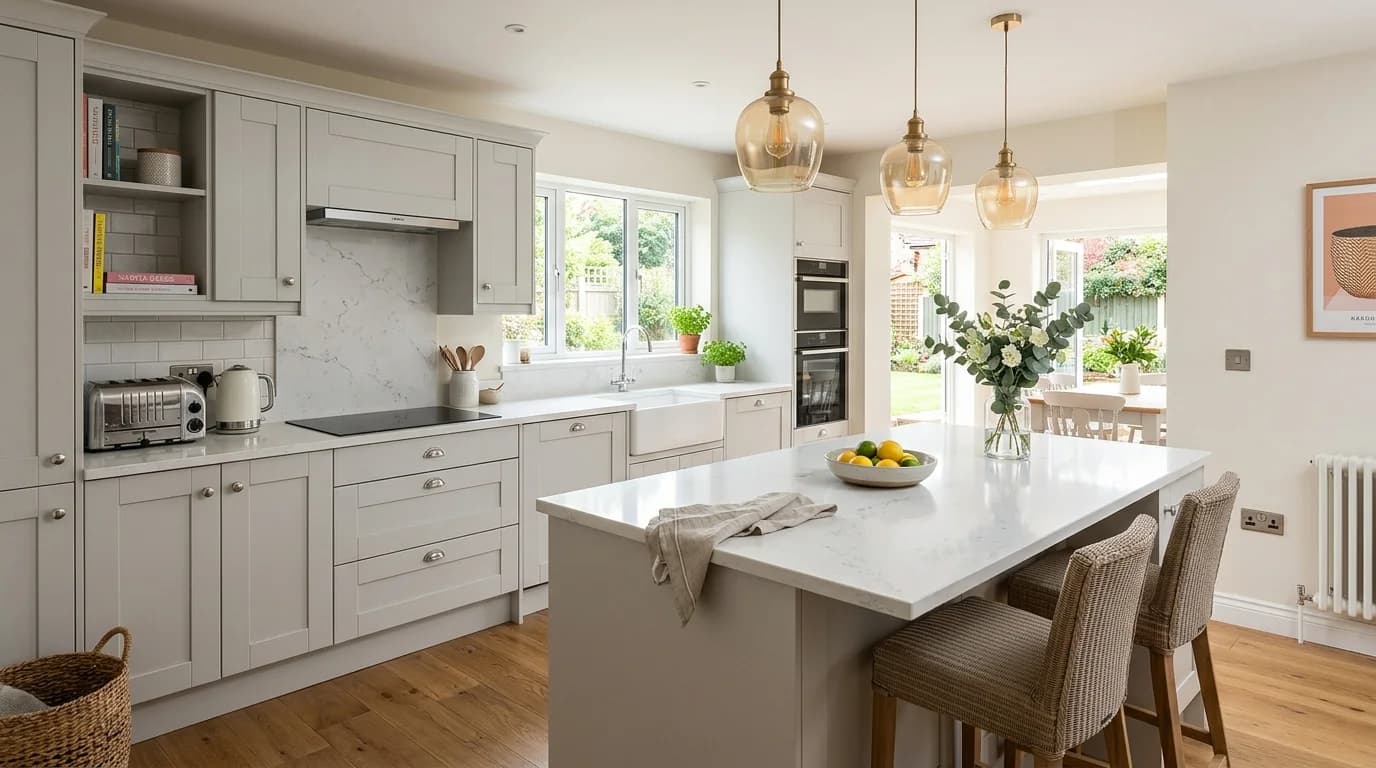
Any electrical work in the kitchen must comply with Building Regulations Part P (electrics) and Part J (gas appliances). New sockets, moved sockets, or changes to the ring circuit must be carried out by a registered electrician who can self-certify the work. This is a legal requirement, not optional.
Quick answer
How much does a new kitchen cost?
A fitted kitchen in the UK typically costs between £3,000 and £30,000. A budget flat-pack kitchen with basic appliances runs around £3,000 to £7,000 fitted; a mid-range shaker-style kitchen from Howdens or Magnet costs £8,000 to £15,000; and a fully bespoke kitchen from a specialist manufacturer starts at £20,000 and goes up from there.
View the full kitchen cost guideWhat does a kitchen renovation involve?
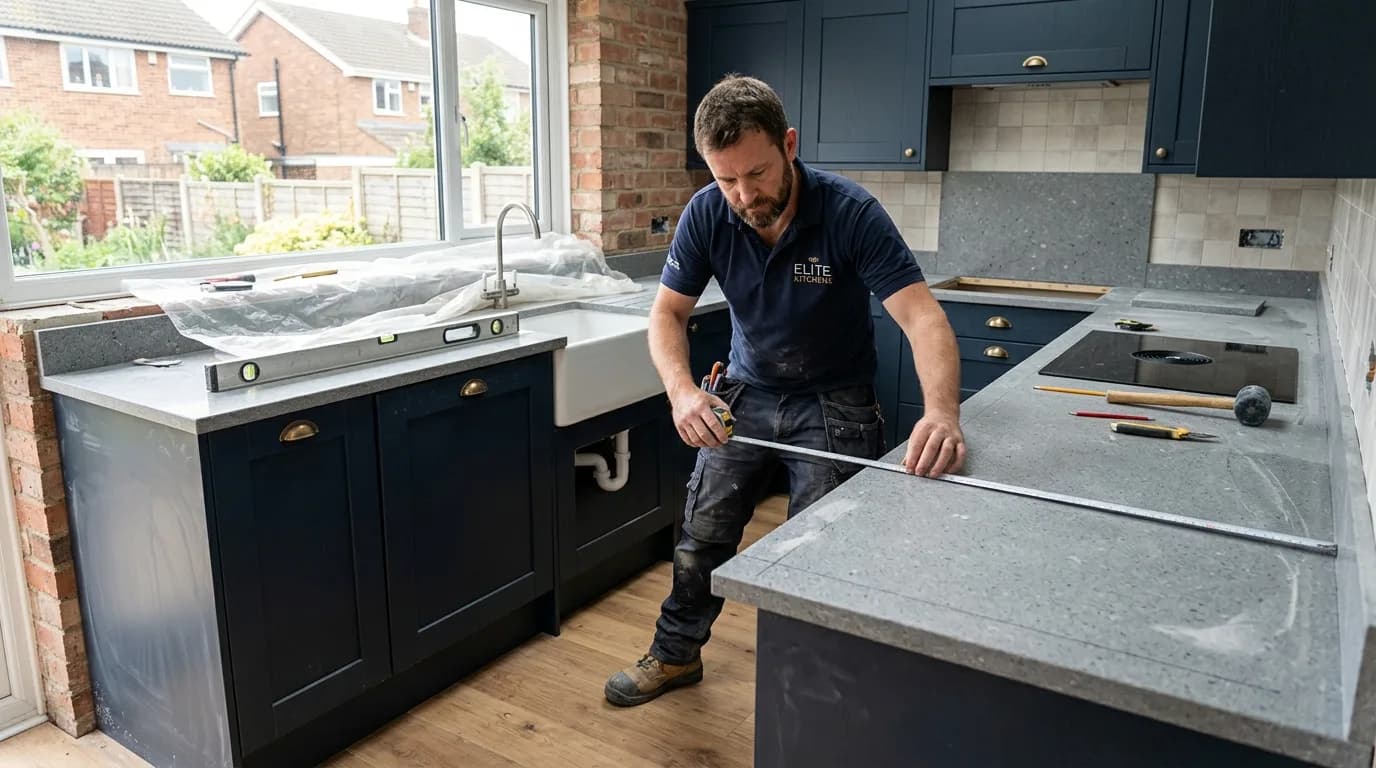
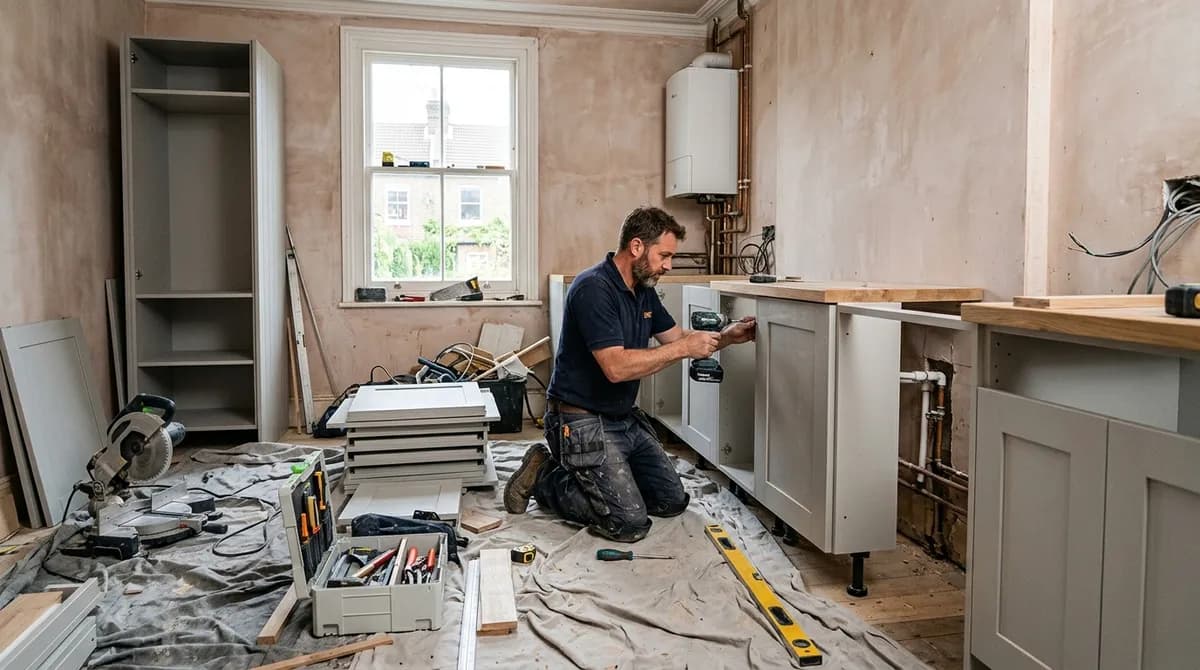
A kitchen fit is one of the more involved home improvement jobs because it touches plumbing, electrics, and carpentry at the same time. Here is a rough sequence of what happens:
Old kitchen is stripped out, waste is removed, and the walls are assessed for any damage or damp
Any first-fix plumbing and electrical work is done before units go in (moving the sink position, adding sockets)
Base units are fitted and levelled, then wall units, then worktops cut and fitted
Appliances are plumbed in and connected, splashback and tiling done, then final snags (handles, plinths, cornices) addressed
Things to think about before you hire
Supply and fit, or fit only?
Kitchen showrooms offer convenience - one call, one contract, one point of responsibility. But their cabinet prices are often marked up 30 to 50% over trade prices. Buying from Howdens or Magnet and hiring an independent fitter separately takes more effort but can save you several thousand pounds. Just be prepared for the fact that if a door is the wrong size, sorting it out is on you. We cover more ways to cut costs in our guide to saving money on a new kitchen.
Worktop material
Laminate worktops are the cheapest (from £100 installed per metre) and perfectly serviceable. Solid wood and quartz sit in the middle ground. Granite and marble look good but need professional fitting and can crack if the cabinets underneath are not properly supported. Whatever you choose, make sure your fitter has done it before - cutting a quartz worktop badly is an expensive mistake.
Integrated vs freestanding appliances
Integrated appliances (hidden behind cabinet doors) give a cleaner look but cost more to buy and replace. If your dishwasher breaks in five years, a freestanding model is much cheaper to swap. If you are selling the house, integrated appliances do add appeal. If you are staying long-term, consider what you would genuinely prefer to live with.
Ventilation
Good extraction is often an afterthought that causes problems later. If you cook regularly, an underpowered extractor fan will leave grease on your new units and condensation on the walls. If the cooker hood vents through the external wall rather than recirculating, you will need a hole made in the wall - factor this into your quote.
How to find a good kitchen fitter
Check experience with your specific kitchen brand
IKEA kitchens (the METOD system) have a different assembly logic from Howdens or Wren. A fitter who says they can fit any kitchen is not wrong, but one who has fitted your specific brand 20 times will be faster and encounter fewer problems. Ask directly.
Get an itemised quote
A quote that says 'kitchen fit - £2,500' tells you nothing. Ask for a breakdown: day rate, disposal of old units, tiling (if included), appliance connections, and whether VAT is included. Surprise additions are very common on kitchen fits if the scope is not defined upfront.
Confirm who handles the other trades
Most kitchen fitters can do basic plumbing connections, but they cannot self-certify electrical work under Part P. Ask who will do the electrical work and confirm they are registered. If the fitter says they will sort it, ask for the electrician's name and registration details.
Ask to see at least two recent kitchens
Photos are good; seeing a recent job in person is better. Most fitters can arrange a reference visit with a past customer. Look at the quality of the worktop joins, the consistency of the gaps between doors, and whether the plinths are flush. These are the things that separate a careful fitter from a fast one.
Get at least three written quotes
Kitchen fitting prices vary enormously - we regularly see quotes differ by 40% or more for the same job. Get three quotes based on the same specification: same kitchen units, same worktop material, same appliance connections. Make sure each quote spells out what is and is not included so you are comparing like with like.
Agree on what happens with waste
An old kitchen is a lot of material to dispose of. Confirm in writing that waste removal is included in the price, or that you are responsible for it. Hiring a skip separately is cheaper than paying a fitter's disposal rate.
Kitchen guides
New kitchen FAQs
How long does a kitchen installation take?
Three to ten days, depending on the size of the kitchen and whether any structural work, tiling, or plastering is involved. A straightforward swap - same layout, no moving of plumbing or electrics - can be done in three to four days. A full kitchen with an island, new flooring, and moved utilities will take closer to two weeks.
Do I need a plumber and an electrician as well as a kitchen fitter?
It depends on your plans. If your sink is staying where it is and you are not adding new sockets, your fitter may be able to handle the basic connections. But any new socket positions or changes to the ring circuit must be carried out by a Part P registered electrician. Moving a sink or adding a dishwasher connection will need a plumber. Make sure any quote is clear about who is responsible for each trade.
Is it cheaper to buy the kitchen separately and just pay for fitting?
Often, yes. Supply-and-fit packages from kitchen showrooms are convenient, but the markup on cabinets can be significant. Buying directly from Howdens, Magnet, or even IKEA and hiring an independent fitter can save you money - but you take on more responsibility for coordinating the order, delivery, and any mistakes. Budget an extra 10 to 15% for unforeseen extras when going this route.
What questions should I ask a kitchen fitter before hiring them?
Ask which kitchen brands they are experienced with (important if you are fitting an IKEA or Howdens kitchen - systems differ), whether they carry public liability insurance, who handles plastering and tiling if needed, how they manage waste removal, and whether they can show you photos of recent work. A fitter who cannot show you recent kitchens is a risk.
Do I need planning permission for a new kitchen?
No planning permission is needed for a like-for-like kitchen replacement. However, if you are adding an extraction system that vents through an external wall, some permitted development rules apply. Any electrical work in the kitchen must comply with Building Regulations Part P and be carried out by a competent registered electrician (check at niceic.com) who will self-certify the work.
Quote service coming soon
Get free quotes from kitchen fitters near you
Free, no obligation. Read the cost guide first so you know what a fair price looks like before anyone gives you a number.