Ground Source Heat Pump Cost UK 2026
A ground source heat pump costs £15,000 to £25,000 for a horizontal loop system, or £20,000 to £35,000 for a vertical borehole. After the £7,500 BUS grant, the net cost drops to as little as £7,500. Running costs are typically 30 to 50% lower than a gas boiler.
£15,000
Horizontal loop from
£20,000
Borehole from
£7,500
BUS grant
20 to 25 yrs
Lifespan
Prices updated April 2026 · Based on industry data and contractor submissions.
£7,500 grant available. The Boiler Upgrade Scheme (BUS) provides £7,500 towards ground source heat pump installations in England and Wales. Your MCS-certified installer applies on your behalf. Read our full grants guide.
Ground Source Heat Pump Prices at a Glance
These prices cover the full installation, the heat pump unit, ground loop, connection to your heating system, and commissioning. The BUS grant of £7,500 is deducted from your final bill if eligible.
| System Type | Average Cost | Price Range |
|---|---|---|
| Horizontal loop system (small home) | £18,000 | £15,000 to £22,000 |
| Horizontal loop system (large home) | £23,000 | £20,000 to £25,000 |
| Vertical borehole system (single bore) | £25,000 | £20,000 to £30,000 |
| Vertical borehole system (multiple bores) | £32,000 | £28,000 to £35,000 |
| After BUS grant (£7,500 off) | - | £7,500 to £27,500 |
Prices include supply, installation, and commissioning. VAT at 0% applies to heat pump installations (since April 2022).
Horizontal Loop vs Vertical Borehole
This is the biggest decision in any ground source installation. Both work on the same principle, extracting heat from the ground via a closed loop of pipe, but the method of getting those pipes into the ground differs significantly.
Horizontal loop, £15,000 to £25,000
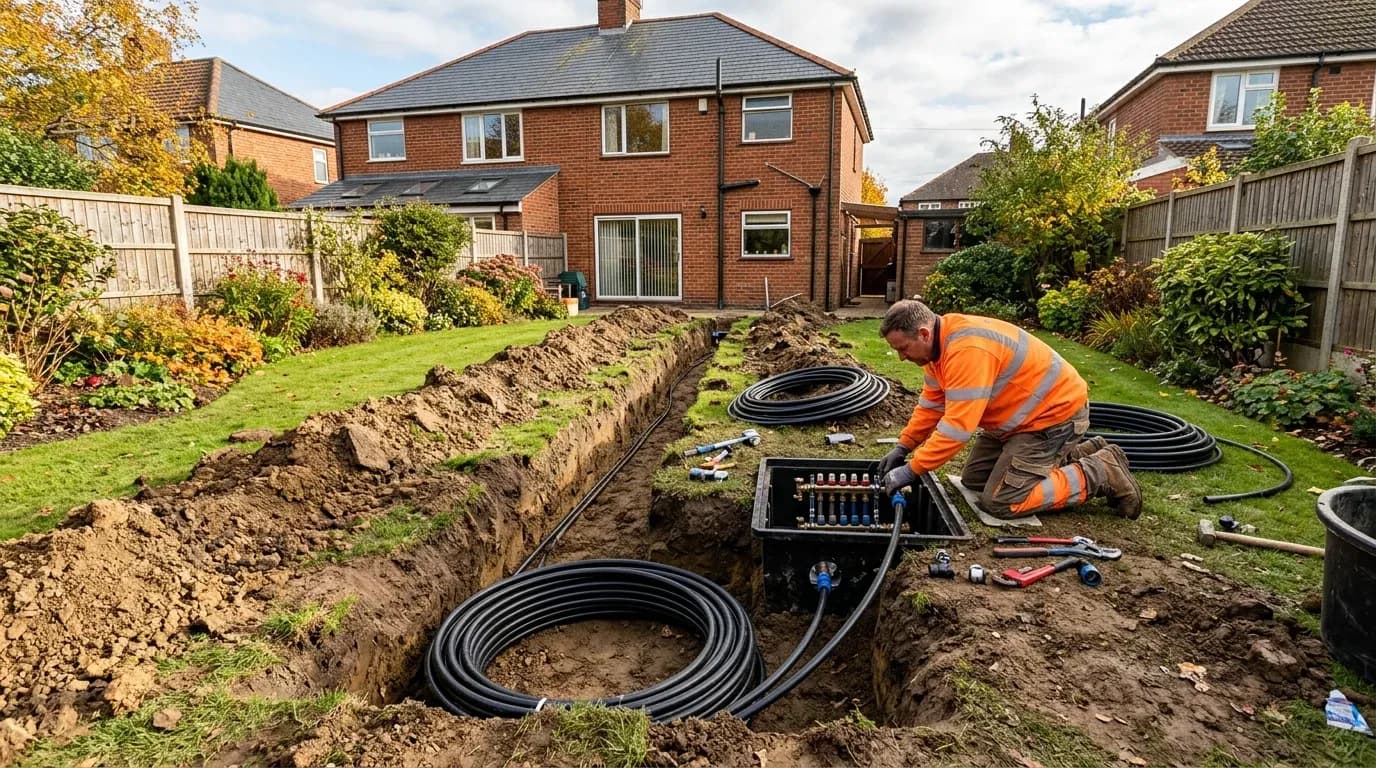
Pipes are laid in trenches 1 to 2 metres deep, typically using a slinky coil arrangement. You need a garden area roughly 2 to 3 times your home's floor area. The trenching disrupts your garden significantly during installation, but grass and planting recover within a growing season. Cheaper than a borehole because digging trenches costs far less than drilling.
Vertical borehole, £20,000 to £35,000
A drilling rig bores one or more holes 60 to 200 metres deep. Pipes are inserted into the boreholes and grouted in place. Takes up very little garden space, the borehole itself is only about 150mm in diameter. Ideal for properties with small gardens, but the drilling adds £5,000 to £10,000 to the cost. The deeper the bore, the more consistent the ground temperature and the higher the COP.
Which should you choose? If you have a large garden and want the lowest installation cost, go horizontal. If space is limited or you do not want your garden dug up, a borehole is the only option. Performance-wise, both achieve similar COP ratings once installed.
Running Costs Compared
Annual heating costs for a typical 3-bedroom detached house. Ground source heat pumps are the cheapest to run of all heating systems because they extract free heat from the ground.
| Heating System | Annual Cost | Efficiency (COP) |
|---|---|---|
| Ground source heat pump | £800 to £1,400 | 3.5 to 4.5 |
| Air source heat pump | £1,000 to £1,600 | 2.5 to 3.5 |
| Gas boiler (modern condensing) | £1,200 to £1,800 | 0.90 to 0.94 |
| Oil boiler | £1,500 to £2,200 | 0.85 to 0.92 |
| LPG boiler | £1,800 to £2,800 | 0.85 to 0.92 |
| Direct electric heating | £2,500 to £3,500 | 1.0 |
Based on April 2026 energy prices. COP for boilers shown as efficiency percentage. Actual costs depend on property size, insulation, and usage.
What Affects the Cost of a Ground Source Heat Pump?
Property size and heat demand
A larger home needs a bigger heat pump and more ground loop. A 2-bedroom cottage might only need an 8kW unit, while a 5-bedroom detached house could require 16kW or more. The heat pump unit itself ranges from £4,000 to £8,000, with the larger units sitting at the top end.
Ground conditions and geology
Rocky ground costs more to trench or drill through but actually conducts heat better, improving efficiency. Clay soils are easier to dig but have lower thermal conductivity. Your installer will assess ground conditions as part of the design survey, this is included in reputable quotes.
Existing heating system
If your home already has underfloor heating or oversized radiators, the heat pump can connect directly. If you have standard radiators, some or all may need upgrading to larger ones or replacing with underfloor heating to work efficiently at the lower flow temperatures a heat pump delivers.
Hot water cylinder
Ground source systems need a hot water cylinder (heat pumps cannot produce instant hot water like a combi boiler). If you do not already have one, factor in £800 to £1,500 for supply and installation of a suitable cylinder. Existing cylinders may or may not be compatible.
Access for machinery
Horizontal trenching needs a mini-digger, and borehole drilling needs a drill rig. Both need vehicle access to your garden. Restricted access (narrow side passages, steep slopes, overhead cables) can add cost or make certain approaches impossible.
Ground Source Heat Pump Prices by Region
Average installation cost for a horizontal loop ground source heat pump across UK regions.
| Region | Average Cost | vs National |
|---|---|---|
| London | £24,000 | +14% |
| South East | £22,500 | +7% |
| East of England | £21,500 | +2% |
| South West | £21,000 | Average |
| Midlands | £20,500 | -2% |
| Yorkshire | £19,500 | -7% |
| North West | £19,500 | -7% |
| North East | £19,000 | -10% |
| Scotland | £20,000 | -5% |
| Wales | £20,000 | -5% |
How to Get Your Ground Source Heat Pump for Less
Ground source heat pumps are a significant investment, but there are concrete ways to reduce the upfront and ongoing costs.
Claim the BUS grant
The Boiler Upgrade Scheme provides £7,500 towards a ground source heat pump. Your installer applies on your behalf and deducts it from your bill. Make sure your installer is MCS-certified, this is a requirement for the grant. The scheme runs until at least March 2028.
Go horizontal if you have the garden
Horizontal loop systems cost £5,000 to £10,000 less than vertical borehole systems. If you have a garden roughly 2 to 3 times the floor area of your house, horizontal trenching is the most cost-effective option. The ground will need reinstating afterwards, but it recovers within a growing season.
Insulate your home first
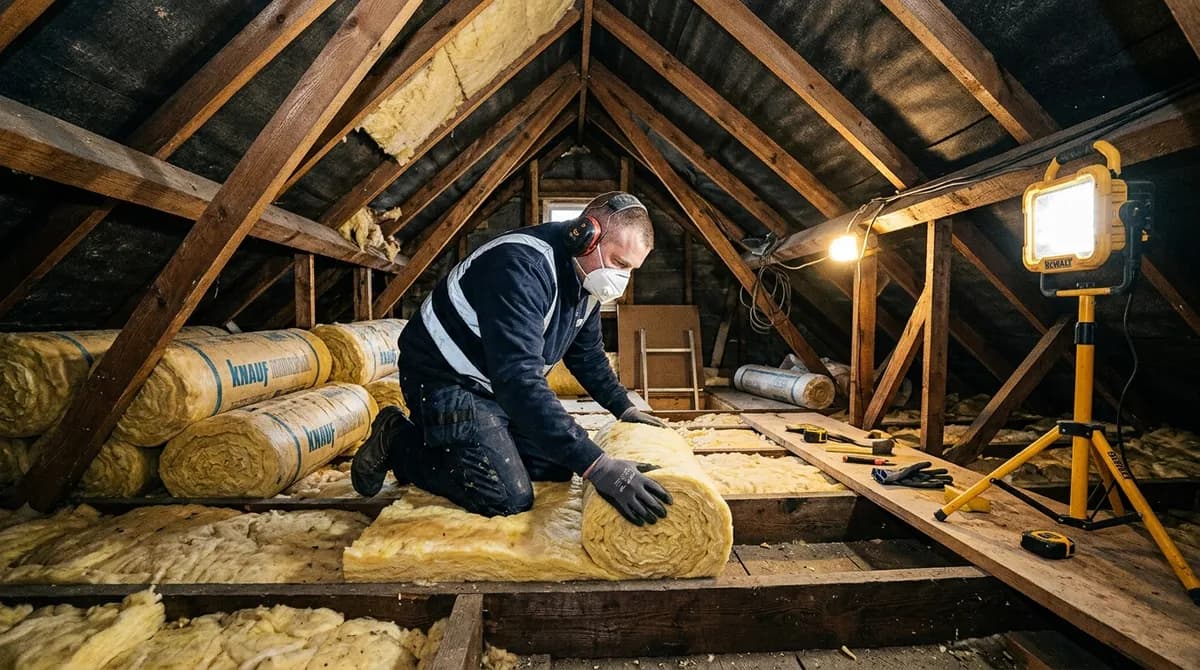
A heat pump works best in a well-insulated home. Improving your loft insulation, cavity wall insulation, and draught-proofing before installing a heat pump means you can fit a smaller (cheaper) unit that runs more efficiently. Poor insulation forces the system to work harder and increases running costs.
Get at least 3 MCS-certified quotes
Prices for ground source installations vary significantly between installers. Some charge a premium for the design work, while others include it. Getting three quotes from MCS-certified installers, and checking that each quote covers the same scope, can save you £2,000 to £5,000 on an identical system.
Combine with underfloor heating
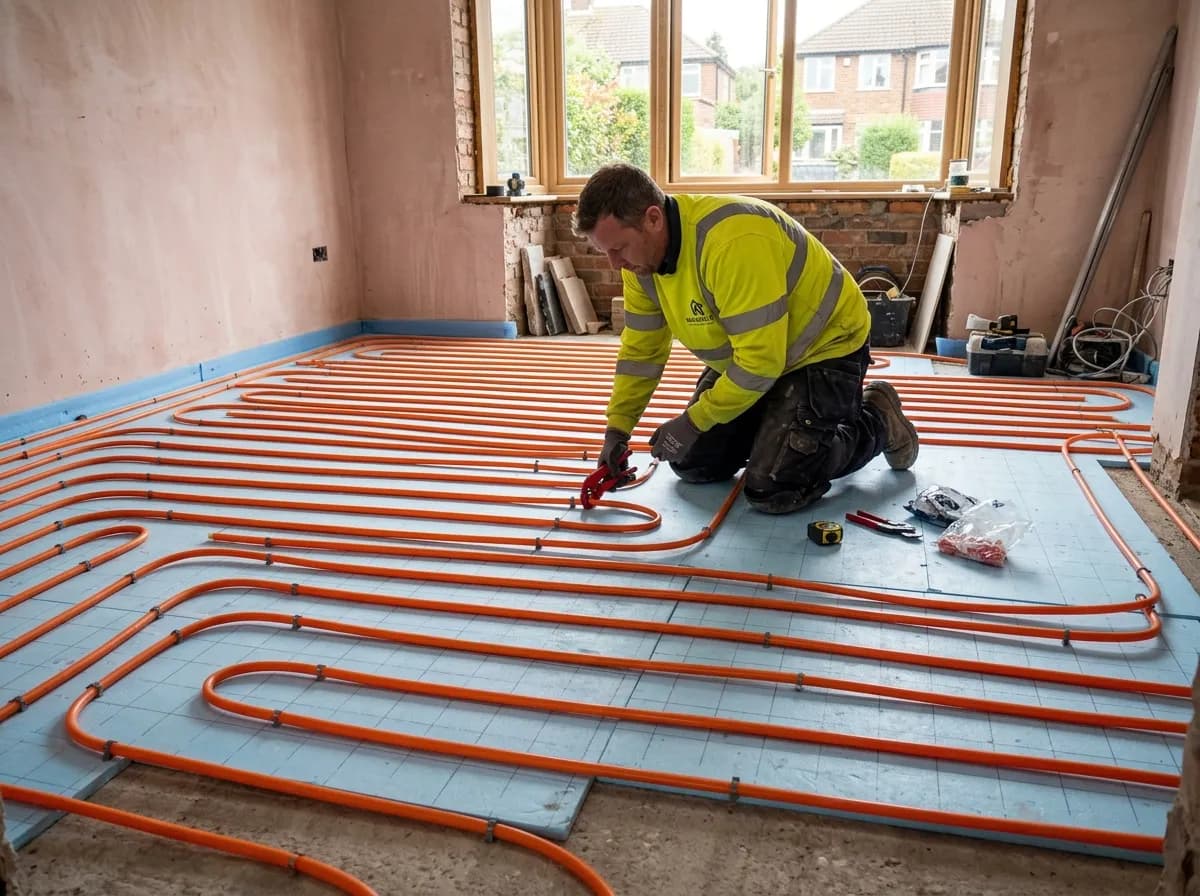
Ground source heat pumps deliver heat most efficiently at lower flow temperatures (35 to 45°C), which is exactly what underfloor heating needs. If you are renovating anyway, installing underfloor heating alongside the heat pump gives you the best COP and lowest running costs. Radiators work too, but oversized ones may be needed.
Useful resources
- Boiler Upgrade Scheme, Up to £7,500 grant for ground source heat pumps
- MCS, Find a certified installer (required for BUS grant eligibility)
- Energy Saving Trust, Independent guide to ground source heat pumps
What to Expect: The Ground Source Heat Pump Process
A ground source heat pump installation is a significant project, typically taking 3 to 6 weeks from survey to commissioning. Here's how it works.
- 1
Site survey and heat loss assessment
An MCS-certified installer surveys your property, calculates heat loss, and determines whether a horizontal trench or vertical borehole is best suited to your garden size and ground conditions.
- 2
Design and BUS grant application
The system is designed to match your heating demand, including ground loop length, heat pump capacity, and any changes to radiators or underfloor heating. If eligible, a Boiler Upgrade Scheme (BUS) grant application is submitted.
- 3
Install the ground loop
For a horizontal system, trenches are dug 1.2 to 2 metres deep across your garden. For a borehole system, a drilling rig bores one or more holes 60 to 100 metres deep. Polyethylene pipes filled with antifreeze solution are laid in the trenches or boreholes.
- 4
Connect the ground loop to the heat pump
The ground loop pipework is routed into the house and connected to the heat pump unit (usually installed in a utility room or garage). The system is pressure-tested for leaks.
- 5
Install the indoor heating system
The heat pump is connected to your hot water cylinder, radiators, or underfloor heating circuit. Existing radiators may need upgrading to larger models to work efficiently at lower flow temperatures.
- 6
Commission and MCS certification
The installer commissions the system, checks performance, and registers the installation with MCS. You receive an MCS certificate, which is required to claim the BUS grant.
Frequently Asked Questions
How much does a ground source heat pump cost to install?
A ground source heat pump costs £15,000 to £25,000 for a horizontal loop system and £20,000 to £35,000 for a vertical borehole system. After the £7,500 Boiler Upgrade Scheme (BUS) grant, the net cost drops to £7,500 to £27,500. These prices include the heat pump unit, ground loop installation, and connection to your heating system.
What is the difference between horizontal and vertical ground source heat pumps?
A horizontal system uses pipes laid in trenches 1 to 2 metres deep across a large area of garden, you need roughly 2 to 3 times the floor area of your house. A vertical borehole system drills down 60 to 200 metres into the ground, requiring far less surface area but costing more due to the drilling. Horizontal is cheaper but needs a big garden; vertical works in smaller plots but costs £5,000 to £10,000 more.
How much does a ground source heat pump cost to run?
Running costs for a ground source heat pump are typically £800 to £1,400 per year for a 3-bedroom house, compared to £1,200 to £1,800 for a gas boiler and £2,500 to £3,500 for direct electric heating. Ground source systems achieve a COP of 3.5 to 4.5, meaning for every £1 of electricity used, they produce £3.50 to £4.50 worth of heat.
Do I need planning permission for a ground source heat pump?
Ground source heat pumps usually fall under permitted development, so you do not need planning permission for domestic installations. However, if you live in a conservation area, listed building, or national park, you should check with your local planning authority first. The ground works (trenching or drilling) may need separate consideration if they affect tree roots with Tree Preservation Orders.
How long does a ground source heat pump last?
The heat pump unit itself typically lasts 20 to 25 years, which is significantly longer than a gas boiler (12 to 15 years). The ground loop has a lifespan of 50+ years as it has no moving parts, it is simply a closed loop of pipe buried underground. This makes the total cost of ownership very competitive over time, despite the higher upfront cost.
Is a ground source heat pump worth it?
Ground source heat pumps make the strongest financial case for off-gas-grid properties currently using oil or LPG, where fuel costs are highest. With the BUS grant reducing the upfront cost by £7,500, payback periods are typically 8 to 12 years. They also shield you from future oil and LPG price rises. For properties already on mains gas with an efficient modern boiler, the payback is longer but the environmental benefit is significant.
What is COP and why does it matter?
COP stands for Coefficient of Performance. It measures how much heat a heat pump produces for each unit of electricity it uses. A COP of 4.0 means the system produces 4 kWh of heat for every 1 kWh of electricity consumed. Ground source heat pumps typically achieve a COP of 3.5 to 4.5, which is higher than air source heat pumps (2.5 to 3.5) because ground temperatures are more stable year-round.
Can I get a grant for a ground source heat pump?
Yes. The Boiler Upgrade Scheme (BUS) provides a £7,500 grant towards the cost of a ground source heat pump in England and Wales. The property must have an EPC (Energy Performance Certificate) and be replacing an existing fossil fuel heating system. Your MCS-certified installer applies for the grant on your behalf, and it is deducted from your bill, you do not need to pay upfront and claim back.

Written by Chris Kervin, Co-Founder, Less.co.uk
Last updated: · Pricing based on industry data and verified contractor submissions · Methodology
Compare real quotes for your job
Prices move a lot with your postcode, the access on site and the spec you choose. Get up to 3 free quotes from vetted local tradespeople and see what yours actually comes to, with no obligation to book.