Garage Doors: Costs & Guides for UK Homeowners
A new garage door is one of those upgrades that makes a surprisingly big difference to how your home looks from the street. It can also make the garage more secure. This guide covers the main types of garage door, the materials available, and what you should expect to pay in 2026. For installer quality, the Door & Hardware Federation (DHF) is the main trade body.
If your door has stopped working, a repair is usually far cheaper than a new door. Most repairs cost £80 to £300, and a pair of springs about £260. See our garage door repair costs.
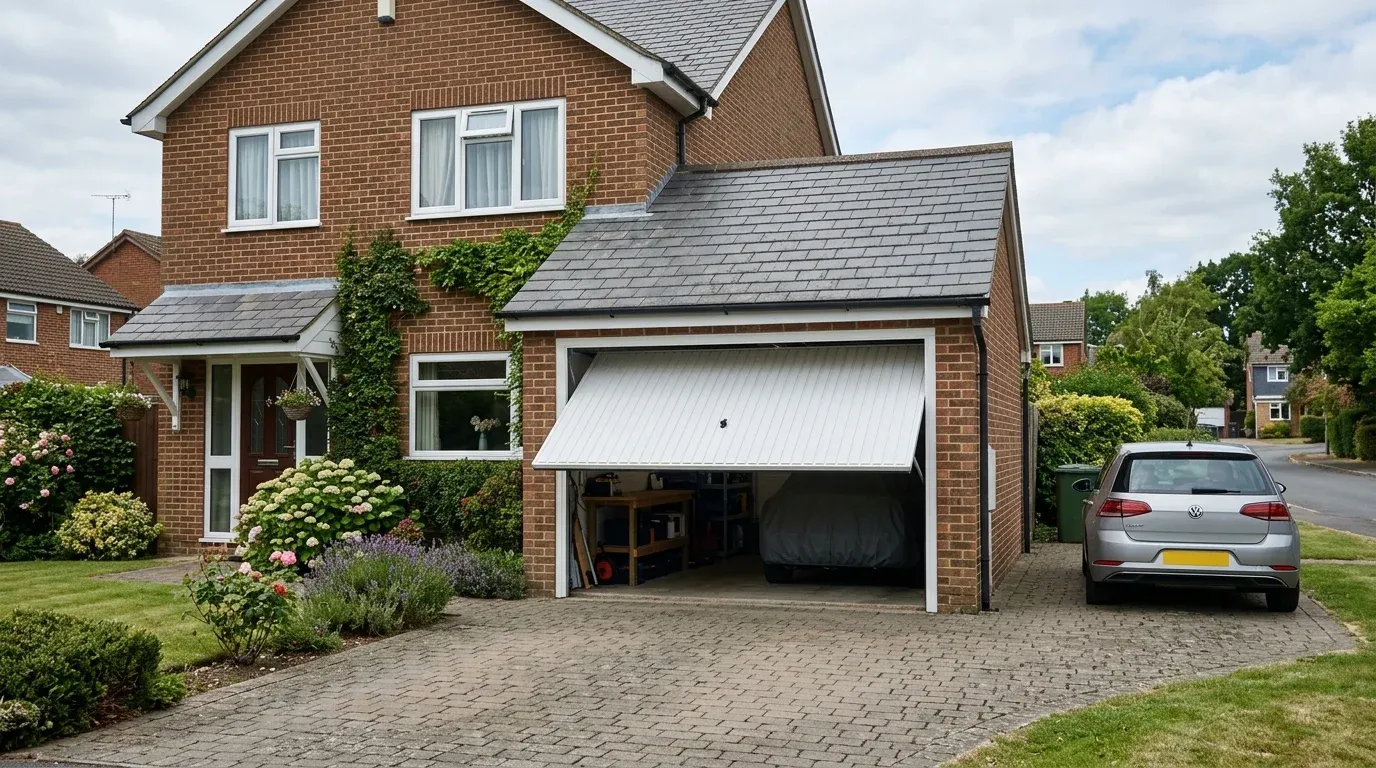
Types of garage door
Up-and-over
The most common type in UK homes. A single panel tilts outward and slides up into the garage ceiling on a track mechanism. Available in canopy gear (simpler, cheaper) or retractable gear (smoother, better for automation). The most affordable option but requires clearance space in front of the garage when opening.
Roller
The door rolls up into a compact drum above the opening, so it takes up almost no space inside the garage or on the driveway. Ideal for short driveways where an up-and-over door would swing out into the path. Usually supplied with electric operation as standard.
Sectional
Made of horizontal panels that hinge and slide upward on vertical tracks, then sit flat against the garage ceiling. The best option for insulation and draught-proofing because the panels sit tightly together with rubber seals. More expensive than up-and-over doors but quieter and more secure.
Side-hinged
Traditional barn-style doors that open outward on side hinges. Good for garages used as workshops where you only need to open one side. They do not require ceiling tracks or headroom clearance, but they need full clearance space on the driveway in front of the opening.
Garage door materials
| Material | Pros | Cons |
|---|---|---|
| Steel | Affordable, durable, low maintenance, wide colour range | Can dent, less insulation unless double-skinned, may rust over time |
| Timber | Classic appearance, excellent insulation, can be painted any colour | Needs regular maintenance (sanding, repainting), warps if neglected, heavier |
| GRP (fibreglass) | Lightweight, does not rust or rot, can mimic timber grain | Can yellow or fade in UV, less robust than steel, limited colour options |
| Aluminium | Lightweight, rust-proof, modern aesthetic, good for large doors | More expensive, can dent easily, less insulation than steel |
Electric vs manual garage doors
Electric operation
- + Open and close from inside your car with a remote
- + Automatic locking when closed (better security)
- + Smooth, consistent operation
- + Safety sensors prevent closing on obstacles
- - Costs about £450 to £600 extra
- - Needs a power supply in the garage
- - Motor will eventually need replacing (10 to 15 years)
Manual operation
- + Cheaper to buy and install
- + No electrical supply needed
- + Nothing mechanical to go wrong
- + Fine for infrequently used garages
- - Need to get out of the car to open
- - Relies on manual locks (less secure)
- - Can be heavy and awkward, especially for larger doors
Our take: If you use the garage for parking a car regularly, electric operation pays for itself in convenience and security within the first year. For a garage that is mainly storage and only opened occasionally, manual is perfectly fine.
Cost at a glance
£900 to £1,500
Up-and-over
£1,000 to £2,000
Roller
£1,650 to £3,800
Sectional
£450 to £600
Electric add-on
Repairs: most cost £80 to £300. See garage door repair costs
See Full Cost BreakdownHow to choose a garage door installer
Check they offer a warranty on both door and fitting
A good installer will offer a manufacturer warranty on the door (typically 5 to 10 years) and their own guarantee on the installation (at least 12 months). If there is no installation warranty, that is a red flag, fitting errors cause most early problems with new garage doors.
Ask about after-sales service
Electric doors will need servicing eventually. Ask whether the installer offers a call-out service for adjustments, motor replacements, and spring repairs. A local company that can come back quickly is worth more than a national chain that takes weeks to book.
Get at least three quotes
Garage door prices vary enormously between suppliers. Get quotes from at least three installers, ideally members of the Door & Hardware Federation (DHF) at dhfonline.org.uk, making sure each is quoting for the same type, size, and specification of door. Compare not just the price but what is included, old door removal, disposal, frame repairs, and electrical connection.
Ask to see recent installations nearby
Any installer worth hiring should be able to point you to recent jobs in your area. Drive past and check the finish, neat frame trims, even gaps, smooth operation. This tells you more about their workmanship than any sales brochure.
Garage door guides
Garage door cost guide
Full breakdown of garage door prices by type, material, and region in 2026.
Roller garage door cost
Manual, electric, and insulated roller door prices compared.
Electric garage door cost
Automation fitted from about £450, new electric doors from about £1,000. Motor types and fitting.
Garage door repair cost
Springs, cables, motors and servicing. Most repairs cost £80 to £300.
Garage conversion cost
Thinking of converting the garage instead? See what it costs.
Common questions
What type of garage door is best?
It depends on your priorities. Roller doors are best for saving space (they roll into a compact drum above the opening). Sectional doors offer the best insulation and security. Up-and-over doors are the most affordable and widely available. Side-hinged doors suit garages used as workshops where you only need to open one side.
How long does it take to fit a new garage door?
A straightforward replacement of a single garage door usually takes half a day to a full day. If the frame needs replacing, the opening needs adjusting, or electrical work is required for an automated door, it can take 1 to 2 days.
Do I need planning permission for a new garage door?
In most cases, no. Replacing a garage door like-for-like or even changing the type does not require planning permission under permitted development rights. However, if your property is listed or in a conservation area, check with your local council first. If the garage opens straight onto a pavement or road, pick a door that doesn't open outwards over it, as the Highways Act 1980 s.153 doesn't allow that.
Is it worth getting an electric garage door?
For most homeowners who use the garage regularly for parking, yes. Electric operation adds about £450 to £600 but gives you keyless entry, automatic locking, and smoother operation. For garages used mainly for storage and opened infrequently, manual is fine.
How much does a garage door repair cost?
Most repairs cost £80 to £300. A pair of springs is about £260, a new cable about £130 and a yearly service about £100. A new motor costs about £450 to £600 fitted.
Can I fix a broken garage door spring myself?
It isn't safe. Springs and cables hold the door's weight under tension, so leave them to a garage door engineer. Expect about £260 to replace the pair.
Is it worth repairing an old garage door?
Usually, if the door is straight and secure. A repair costs a fraction of a new door, which costs about £950 for an up-and-over and about £1,600 for an electric roller.