Garage Conversion Ideas: Single, Double & Small Garages
A standard single garage gives you around 11 square metres of floor space - roughly the size of a decent spare bedroom. A double garage doubles that. Here is what you can do with it, how much each option costs, and practical tips for making the most of the space.
Typical garage dimensions
Single garage
2.4m x 4.8m internal (roughly 11.5m²). About 7'10" x 15'9" in feet. Enough for a double bedroom, a home office, or a compact gym.
Double garage
4.8m x 4.8m internal (roughly 23m²). About 15'9" x 15'9" in feet. Enough for a kitchen-diner, a self-contained annexe, or two separate rooms.
Single Garage Conversion Ideas
A single garage is a surprisingly versatile space. These are the most popular uses, with realistic costs and practical advice for each one.
Home office
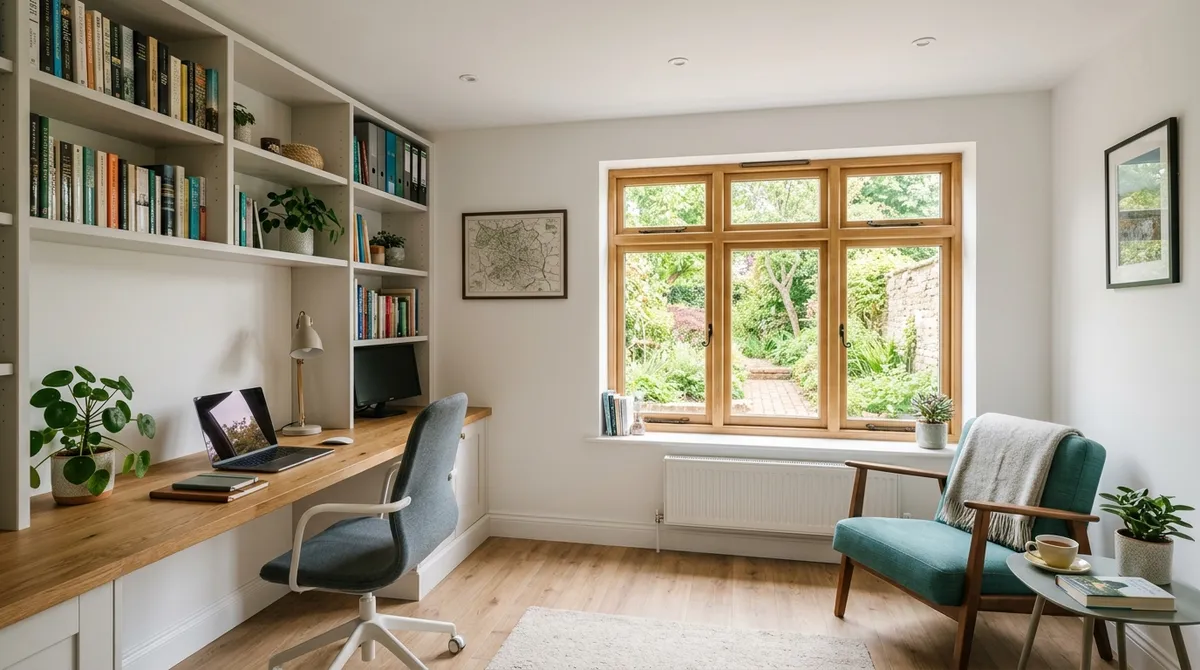
£8,000 to £15,000A single garage gives you roughly 11 square metres - enough for a generous desk, bookshelves, and a comfortable chair with room to spare. The key to a good garage office is insulation (you will be in there all day), plenty of sockets (at least 6 to 8 doubles), and good lighting. A window where the garage door was, combined with a couple of LED ceiling panels, keeps it bright without glare on screens.
Practical tip
Run a data cable from the house rather than relying on Wi-Fi through thick walls. A small radiator or electric panel heater is usually enough - the insulation does most of the work. If you take client calls, consider acoustic insulation on the party wall.
Extra bedroom
£10,000 to £18,000A standard single garage (2.4m x 4.8m) comfortably fits a double bed, wardrobe, and bedside tables. The room will need to meet Building Regulations for a habitable bedroom - that means adequate ventilation, a fire escape route (typically a window that opens wide enough), and proper insulation. Adding an en suite shower room is possible but will occupy about 2 to 3 square metres of the floor area.
Practical tip
If you are adding an en suite, position it at the end nearest the existing drainage to keep plumbing costs down. French doors work better than a small window for making the room feel spacious and bringing in light.
Playroom
£8,000 to £14,000Relocating toys, games, and children's mess to the garage can transform the rest of the house. The conversion needs to be warm, safe, and easy to clean. Hard-wearing LVT or laminate flooring is better than carpet for a playroom. Good lighting is important - children need to see what they are doing. Consider soundproofing on shared walls if noise is a concern.
Practical tip
Built-in storage along one wall keeps the floor clear for play. Fit extra sockets low down for game consoles and charging. A large window or French doors lets you keep an eye on the garden while children play inside.
Home gym
£8,000 to £15,000A garage is well suited to a gym - the concrete sub-floor can handle heavy equipment, and you do not need plumbing. The conversion itself is similar to a home office but with a few differences: the floor may need reinforcing or a rubber surface for weights, ventilation needs to be better than average (mechanical extraction or large opening windows), and mirrors on one wall help with form and make the space feel larger.
Practical tip
Think about the floor carefully. Rubber gym flooring over the insulated sub-floor protects both the equipment and the building. A ceiling-mounted pull-up bar needs a structural fixing - plan this before the plasterer arrives.
Music room or recording studio
£12,000 to £20,000A detached garage is particularly good for a music room because it is already separated from the main house. Sound insulation is the big extra cost - acoustic plasterboard, resilient bars on the walls, and a floating floor can add £2,000 to £5,000 to a standard conversion. But the result is a space where you can play instruments or record without disturbing anyone.
Practical tip
Double-glazed windows with acoustic glass make a noticeable difference. An isolated electrical circuit (separate from the house) reduces electrical hum in recordings. Plan cable routes for microphone leads and speakers before the plasterer finishes.
Double Garage Conversion Ideas
A double garage gives you around 23 square metres - enough for a genuinely large room or two smaller ones. Here are the best ways to use that space.
Open-plan kitchen-diner
£15,000 to £30,000This is one of the most popular double garage conversion ideas and one of the best for adding value. Knocking through between an integral double garage and the existing kitchen creates a large open-plan family space. You get a spacious kitchen with room for a dining table, a sofa area, or a breakfast bar. The opening between the garage and kitchen needs a structural beam (RSJ) - budget £1,500 to £3,000 for the steelwork alone.
Practical tip
Keep the kitchen units along the garage walls to maximise the open space. Bi-fold doors where the garage doors were flood the room with light and open onto the garden. Underfloor heating works well in an open-plan space and frees up wall space that radiators would occupy.
Self-contained annexe
£25,000 to £45,000A double garage (roughly 5m x 5m internally) provides enough space for a small self-contained flat with a kitchen, bathroom, bedroom area, and living space. This is the most expensive conversion option but can add significant value or generate rental income. Planning permission is likely needed if the annexe will be let separately - check with your local authority before spending money on plans.
Practical tip
Separate metering for gas, electric, and water makes life simpler if the annexe is used by a family member or tenant. The entrance should ideally be separate from the main house. Think carefully about sound insulation between the annexe and the house.
Two separate rooms
£18,000 to £28,000Splitting a double garage into two rooms - perhaps a home office and a guest bedroom, or a gym and a utility room - gives you flexibility. A stud partition wall between the rooms is straightforward to build and costs around £500 to £1,000 including plasterboard and insulation. Each room can have its own door, window, and heating.
Practical tip
Think about which room gets the better natural light from the front (where the garage doors were). The interior room may need a window on a side wall or a sun tunnel/roof light if the garage has a pitched roof.
Home cinema or entertainment room
£15,000 to £25,000A double garage gives you enough room for a proper cinema setup - a large screen or projector, tiered seating, and surround sound. The enclosed space is naturally dark, which is an advantage. Sound insulation is important unless you want the neighbours to hear every explosion. Acoustic treatment on the walls (not just insulation - proper acoustic panels) improves sound quality dramatically.
Practical tip
Blackout blinds or no windows at all on the front wall work well for cinema use. Run conduit in the walls before plastering for speaker cables, HDMI, and power. A small fridge area at the back completes the experience without needing plumbing.
Small Garage Conversion Ideas
Not every garage is a standard size. Older properties and some modern builds have smaller garages that struggle to fit a car anyway - making them ideal candidates for conversion. Here are ideas that work well even in tight spaces.
Compact home office
£6,000 to £12,000Under 10m² - typically 2.4m x 3.6m or similar
Even a small garage provides more space than a spare bedroom desk setup. Use the full width for a long desk spanning the back wall, with storage above. Keep the colour scheme light. A single large window where the garage door was is better than dividing it into a window and a door - use a side door for access if possible.
Utility room
£5,000 to £10,000Any size - works well even in very small garages
Moving the washing machine, tumble dryer, and ironing board out of the kitchen into the garage frees up valuable kitchen space. A utility room conversion is relatively simple - you need plumbing for the washing machine (a cold water feed and a drain), power for the dryer, and basic finishes. It does not need to be plasterboard-perfect like a living room.
Hobby workshop
£5,000 to £12,000Any size - but plan storage carefully
A craft room, pottery studio, or woodworking workshop benefits from the robust concrete floor and easy-clean surfaces. You may not need full Building Regs compliance if the space is not a habitable room - but you should still insulate and add proper electrics for safety and comfort. Good task lighting and plenty of power points are essential.
Boot room and storage
£5,000 to £10,000Any size - ideal for small integral garages
A practical boot room with coat hooks, shoe storage, a bench, and space for dog leads and muddy boots can transform how you enter the house. Add a small sink for hand washing and a tiled floor that can handle wet footwear. It does not need to be a grand space - functionality is the point.
How to Make a Garage Conversion Feel Bigger
A single garage is not a large room by any measure. Here is how to stop it feeling like a converted garage and start it feeling like a proper room.
Maximise natural light
The front wall (where the garage door was) is your biggest opportunity for glazing. French doors or a large window flood the room with light. If the garage has a pitched roof, a Velux skylight adds light from above without losing wall space. Avoid blocking windows with furniture - keep the sightlines clear.
Keep colours light
White or pale grey walls and ceiling reflect light and make the space feel open. A single feature wall in a darker shade adds character without closing the room in. Avoid dark flooring if the room is small - a mid-tone oak or pale LVT keeps things feeling airy.
Use built-in storage
Freestanding furniture in a small room eats floor space. Built-in wardrobes, shelving, or desk units along one wall use the depth of the wall framing and feel less bulky. Floor-to-ceiling storage makes the most of the height.
Eliminate radiators
Underfloor heating frees up every wall for furniture and makes the room feel bigger. Electric underfloor heating is cheap to install during a conversion (the floor is being built anyway) and removes the need for radiators. If underfloor heating is not in the budget, a slim vertical radiator takes less wall space than a horizontal one.
Get the threshold right
The step between the house and the converted garage is one of the details that separates a professional job from an amateur one. A flush threshold (where the garage floor meets the house floor at the same level) looks and feels seamless. If a step is unavoidable, a single well-finished step is better than an awkward ramp.
Cost Comparison by Conversion Type
Quick reference for budgeting. All prices are for a single garage conversion unless noted otherwise.
| Conversion Type | Cost Range |
|---|---|
| Home office | £8,000 to £15,000 |
| Playroom / games room | £8,000 to £14,000 |
| Home gym | £8,000 to £15,000 |
| Extra bedroom | £10,000 to £18,000 |
| Bedroom with en suite | £14,000 to £22,000 |
| Music room / studio | £12,000 to £20,000 |
| Kitchen-diner (double) | £15,000 to £30,000 |
| Self-contained annexe (double) | £25,000 to £45,000 |
| Utility room | £5,000 to £10,000 |
| Boot room | £5,000 to £10,000 |
Want a detailed breakdown of each cost component? See our full garage conversion cost guide.
Useful resources
- Planning Portal: Garage conversion, Check if your garage conversion needs planning permission
- Building Regulations, Requirements for converting a garage to habitable space
- LABC, Building Control inspections for garage conversions
Frequently Asked Questions
What is the best use for a single garage conversion?
The best use depends on what your household needs most. A home office is the most popular choice and one of the cheapest to build since it needs no plumbing. An extra bedroom with an en suite adds more to property value but costs more. A playroom is ideal for families with young children. The key is to choose a use that your household will genuinely benefit from every day, not just what looks good on paper.
Can you convert a single garage into a bedroom?
Yes. A standard single garage (typically 2.4m x 4.8m internally) provides enough floor area for a comfortable double bedroom. It needs to meet Building Regulations for a habitable room - adequate insulation, ventilation, and fire safety (including a fire escape window or door). There is no fixed minimum ceiling height in the regulations, but you want enough headroom for the room to feel comfortable, which most garages have. Adding an en suite shower room is possible but will take space from the bedroom.
How do you make a small garage conversion feel bigger?
Light colours on walls and ceiling make a noticeable difference. French doors or bi-fold doors where the garage door was bring in natural light and create a connection to the outside. Avoid dividing a single garage into separate rooms - it will feel cramped. Built-in storage along one wall keeps the floor clear. A raised timber floor with underfloor heating eliminates the need for radiators, which frees up wall space.
Can you convert a garage into a kitchen?
Yes, though it is one of the more expensive conversion options because of the plumbing and drainage required. The most popular approach is knocking through the wall between an integral garage and the existing kitchen to create a large open-plan kitchen-diner. This requires a structural engineer to design a suitable beam (RSJ) to support the wall above the opening. Expect to pay £15,000 to £25,000 for a kitchen-diner garage conversion.
What is the cheapest garage conversion idea?
A home office, playroom, or gym is the cheapest type of garage conversion because none of them need plumbing. The work covers insulation, electrics, plastering, flooring, and a new front wall - typically £6,000 to £12,000 for a single garage. Avoiding plumbing saves £2,000 to £5,000 compared to conversions that include a bathroom or kitchen.

Written by Chris Kervin, Co-Founder of Less.co.uk
Last updated: · Pricing based on industry data and verified contractor submissions · Methodology
Ready to convert your garage?
Compare free quotes from local builders near you. Know what it should cost before you hire.
Compare Free QuotesComing soon - sign up to our newsletter to be the first to know.
More home improvement guides