How Much Do Electric Gates Cost in 2026?
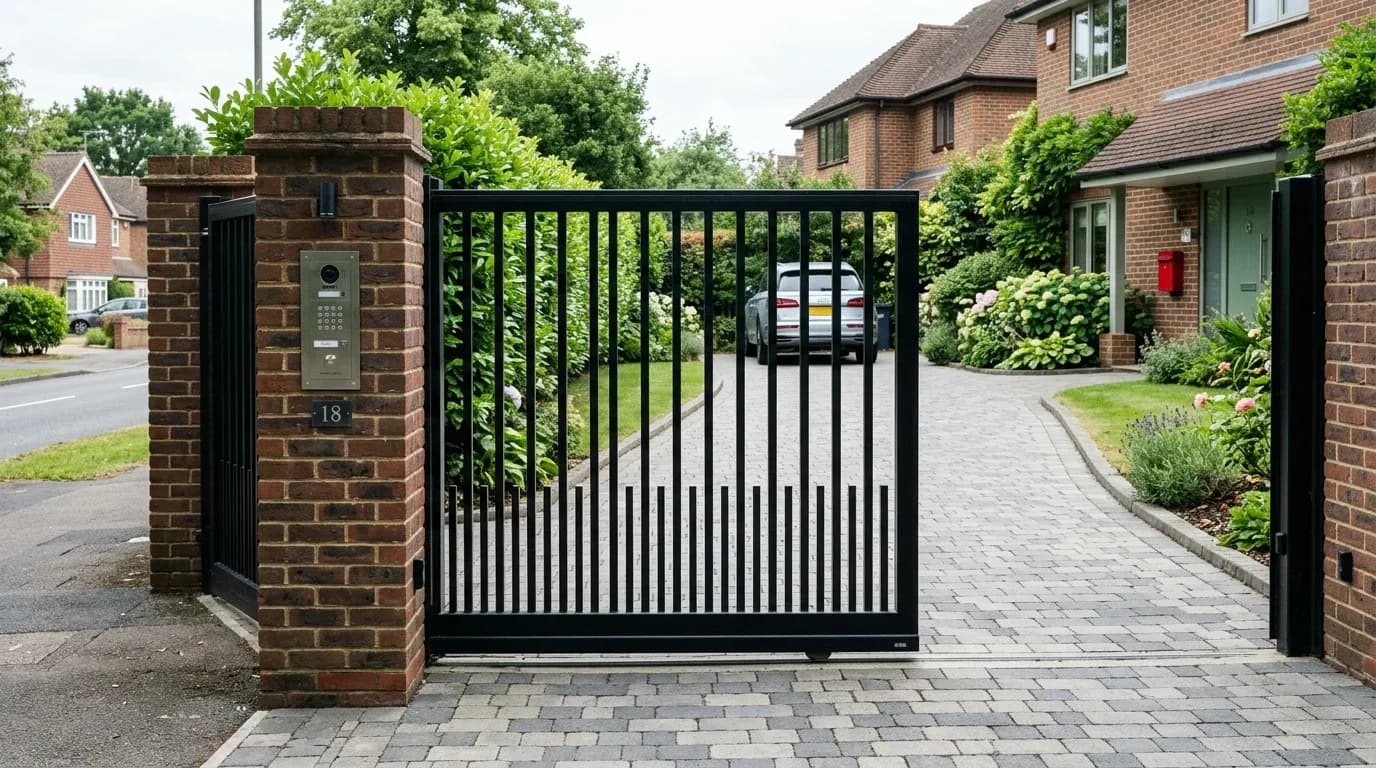
Electric driveway gates cost £2,000 to £5,000 for swing gates and £3,500 to £8,000 for sliding gates. The cost of electric gates residential is lower if you automate existing gates at £1,500 to £4,000. Electric wooden gates cost more than aluminium. Here is the full breakdown including access control, safety, and running costs.
£2,000
Swing gates from
£3,500
Sliding gates from
£1,500+
Automate existing
1 to 2 days
Typical install
Prices updated April 2026 · Based on industry data and contractor submissions.
Safety regulations apply. All automated gates must comply with the Machinery Directive and BS EN 13241. Safety edges, photocells, and force limitation are legally required. Poorly installed gates have caused serious injuries and fatalities - always use a TrustMark-registered installer.
Electric Driveway Gates Cost by Type
How much do electric gates cost? These prices include gates, motors, control unit, remote controls, and safety devices. Check gov.uk planning permission guidance if your gates are near a highway or over 1 metre high. The cost of electric gates for driveways varies by material and style.
Electric swing gates (timber)
Pair of timber gates with underground motors
£3,000
£2,000 to £4,000
Electric swing gates (aluminium)
Pair of aluminium gates with motors
£3,800
£2,500 to £5,000
Electric swing gates (wrought iron)
Pair of wrought iron gates with motors
£4,500
£3,000 to £6,000
Electric sliding gate (aluminium)
Single electric sliding gate with track and motor
£5,500
£3,500 to £8,000
Automation kit (existing swing gates)
Motors, control unit, remote, safety devices
£2,200
£1,500 to £3,000
Automation kit (existing sliding gate)
Motor, track, control unit, remote, safety
£3,000
£2,000 to £4,000
Get Free Electric Gate Quotes
Compare prices from trusted local electric gate installers near you. Fill in a few details and receive up to 4 free, no-obligation quotes.
Access Control Options
| Option | Typical Cost |
|---|---|
| Remote control (2 fobs) | £50 to £150 |
| Keypad entry | £100 to £300 |
| Video intercom | £300 to £800 |
| Smartphone app control | £150 to £400 |
| Number plate recognition | £500 to £1,500 |
| Pedestrian gate automation | £500 to £1,200 |
Additional Costs
| Item | Typical Cost |
|---|---|
| Electrical supply to gate | £300 to £800 |
| Gate posts / pillars | £500 to £2,000 |
| Concrete track (sliding gate) | £300 to £600 |
| Safety edges and photocells | £200 to £400 |
| Annual service | £100 to £200 |
Cost of Electric Gates by Region
| Region | Average Cost | vs National |
|---|---|---|
| London | £4,800 | +23% |
| South East | £4,300 | +10% |
| East of England | £4,100 | +5% |
| South West | £4,000 | +3% |
| Midlands | £3,900 | Average |
| Yorkshire | £3,500 | -10% |
| North West | £3,600 | -8% |
| North East | £3,300 | -15% |
| Scotland | £3,500 | -10% |
| Wales | £3,400 | -13% |
How to Get Your Electric Gates for Less
The Door & Hardware Federation (DHF) publishes safety guidance for automated gates. Always use an installer who follows these standards.
Automate existing gates instead of buying new ones
If your current gates are in good condition, fitting an automation kit saves £1,500 to £4,000 compared to new electric gates. Automating a pair of existing swing gates costs £1,500 to £3,000 fitted, and existing sliding gates £2,000 to £4,000, including the legally required safety devices. Just make sure the existing gates are strong enough for the motor.
Choose arm-mounted motors over underground
Underground motors look neater because they are hidden below ground, but they cost more, are harder to maintain, and can flood in wet conditions. Arm-mounted motors are visible but cheaper (£200 to £400 less per pair), easier to repair, and just as reliable. Unless appearance is critical, arm-mounted is the better value choice.
Start with remote control and add intercom later
A basic remote control system is usually included in the gate price. A video intercom adds £300 to £800. If budget is tight, start with remote control and add the intercom later - most systems are modular, so you can upgrade without replacing anything.
Combine with driveway or fencing work
If you are resurfacing the driveway or replacing the front fence, do the gates at the same time. The groundwork is shared - the electrician runs the cable while the ground is already dug up, and the installer fits posts while the fence contractor is on site. This typically saves 10 to 15% on the total project.
Go solar if the gate is a long way from the house
Running mains power to a gate at the end of a long drive means trenching and armoured cable, which can add several hundred pounds to the bill. A solar powered kit generates its own power on site and removes that cost. Solar suits gates with light to moderate use, so ask the installer to size the panel and battery for UK winter daylight so it does not run flat in December.
Use a Part P registered electrician for the power supply
The motor usually needs a new outdoor circuit, which is notifiable electrical work under Part P. An electrician registered with a competent person scheme such as NICEIC or NAPIT can self-certify the work and notify building control for you. Do it any other way and you pay the council building control fee yourself, typically £200 to £400.
Comparing quotes is the simplest way to pay less
Getting three or four quotes and comparing them is how most homeowners avoid overpaying. It takes a couple of minutes, with no obligation.
Get my free quotesWhat to Expect: The Electric Gate Installation Process
A typical electric gate installation takes one to two days once the groundwork is ready. Here is how the process works from start to finish.
- 1
Site survey
The installer visits your property to measure the driveway entrance, check ground levels, locate the nearest power supply, and recommend whether swing or sliding gates suit your space. A proper survey before quoting avoids surprises on installation day.
- 2
Post and pillar installation
Gate posts or brick pillars are set into concrete foundations. For sliding gates, a concrete track beam is also laid along the opening. The foundations typically need two to three days to cure before the gates can be hung.
- 3
Gate hanging
The gates are lifted into position and hung on the posts or pillars. The installer checks alignment, clearance from the ground, and smooth manual operation before moving on to the automation stage.
- 4
Motor and automation fitting
Underground or arm-mounted motors are installed and wired to the control unit. The electrical supply is connected (armoured cable from the consumer unit). Remote controls, keypads, or intercoms are set up and paired with the system.
- 5
Safety features and testing
Safety edges, photocells, and force limitation devices are fitted and calibrated as required by the Machinery Directive and BS EN 13241. The installer runs full open-close cycles, tests all safety features, and hands over the remote controls and user instructions.
Frequently Asked Questions
How much do electric gates cost?
Electric swing gates cost £2,000 to £5,000 for a pair, supply and fit. Electric sliding gates cost £3,500 to £8,000. Automating existing manual gates costs £1,500 to £3,000 for a pair of swing gates, or £2,000 to £4,000 for a sliding gate, fitted with the legally required safety devices. Prices vary based on gate material (timber, metal, composite), width, and the type of access control system (remote, keypad, intercom, app).
Do I need planning permission for electric gates?
You do not normally need planning permission for gates under 1 metre high next to a road, or under 2 metres high elsewhere. If you live in a conservation area or your property is listed, you may need permission regardless of height. Automated gates next to a public highway may also need a highways assessment to ensure they do not create a traffic hazard when opening.
What safety regulations apply to electric gates?
Electric gates must comply with the Machinery Directive (2006/42/EC), the Supply of Machinery (Safety) Regulations 2008, and BS EN 13241. Key requirements include: safety edges or photocells to detect obstructions, a force limitation system to prevent crushing injuries, and manual release for power failures. Poorly installed gates that trap or crush people can result in prosecution.
What is better - swing or sliding gates?
Swing gates are cheaper and simpler to install, but need clear space behind them to open (usually into the driveway). Sliding gates run on a track parallel to the fence and need no opening arc - ideal for short driveways or sloping ground. Sliding gates cost more but work in spaces where swing gates cannot.
Can I automate my existing gates?
Yes, provided the gates are in good structural condition and hang properly. Automating a pair of existing swing gates costs £1,500 to £3,000 fitted, and existing sliding gates £2,000 to £4,000, including motors, control unit, and the legally required safety devices. The gates need to be heavy enough for the motor - lightweight timber gates sometimes need reinforcing.

Reviewed by Chris Kervin, Less.co.uk Home Improvement Costs Specialist
Last updated: April 2026 · Pricing based on industry data and verified contractor submissions · Methodology