Electric Gates: Your Complete Guide
Electric gates used to be a luxury reserved for country estates. Now they are increasingly popular on everyday family homes - and the prices have come down to match. This guide covers the types, costs, safety rules, and access control options you need to know about. All automated gates must comply with safety legislation - the HSE powered gates guidance explains the requirements.
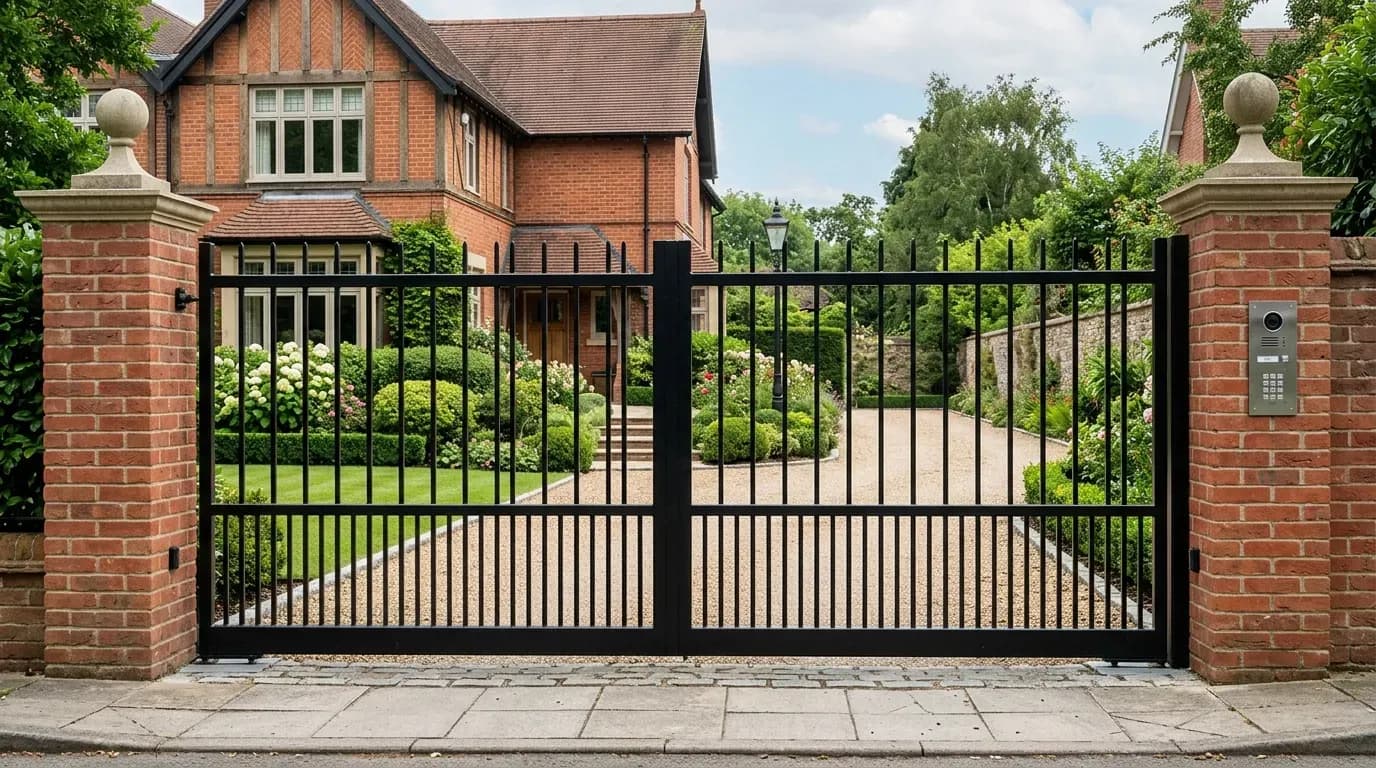
Types of electric gate
Swing gates
Open inward (usually onto the driveway) like a pair of doors. The most common type for UK homes. Need clear space behind them to open - if your driveway slopes up steeply from the road, the arc may not clear. Cheaper and simpler than sliding gates.
Sliding gates
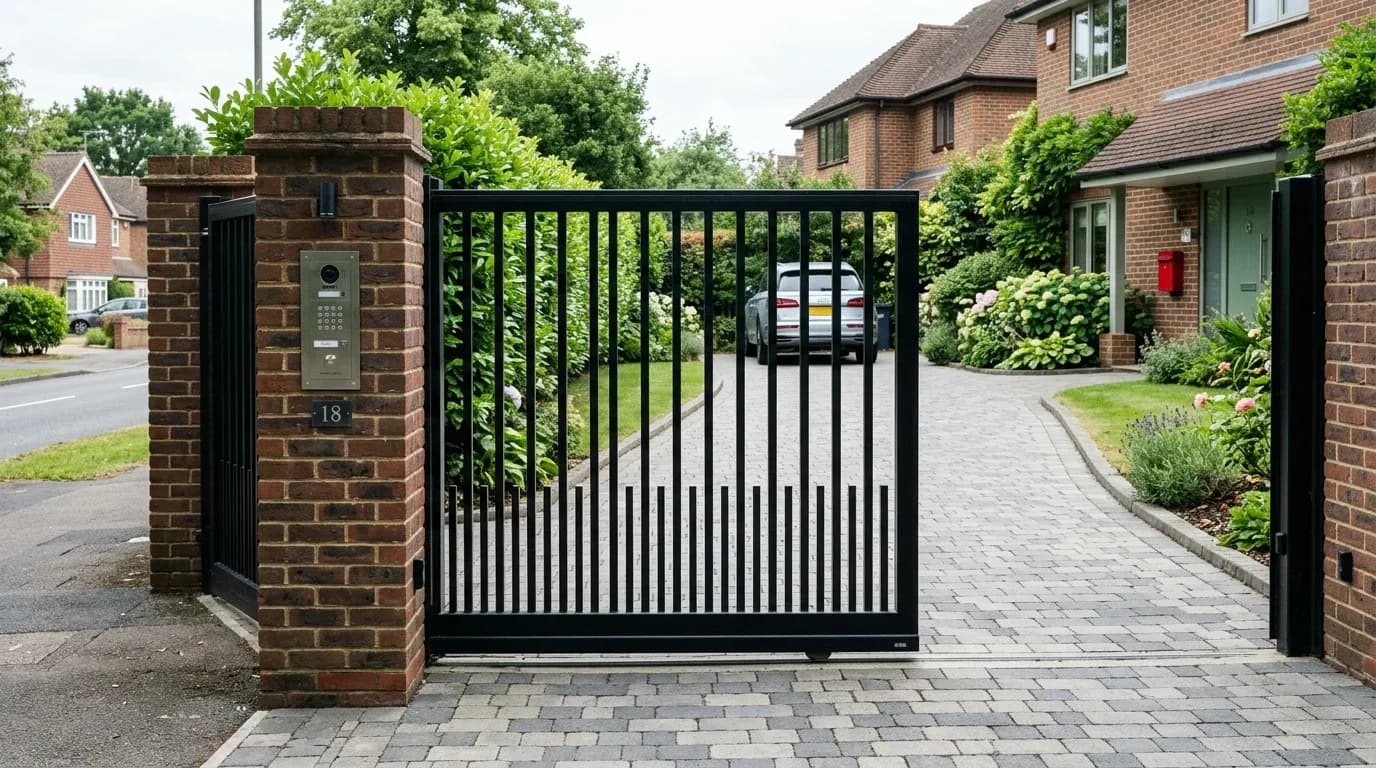
Run on a track parallel to the fence or wall. Need no opening arc, so they work on short driveways, sloping ground, or where space is tight. More expensive because of the track and longer gate panel, but very reliable.
Bi-fold gates
Fold in half as they open, needing only half the arc of a standard swing gate. A good compromise between swing and sliding - they cost less than sliding gates but work where swing gates do not have enough room.
Up-and-over gates
Lift upward into a horizontal position. More common on garages than driveways, but can be used for car parks and larger entrances. Not widely used on residential properties in the UK.
Finding a good electric gate installer
Use a specialist gate installer, not a general builder
Electric gates involve metalwork, automation motors, safety sensors, and electrics. This is a specialist trade. A fencing contractor or general builder may be able to hang a gate, but the automation, safety compliance, and access control setup need someone who does this full-time.
Get three quotes for the same gate specification
Electric gate prices vary hugely because the spec can differ so much between installers. Get at least three written quotes covering the same gate type (swing or sliding), same material, same automation brand, same safety features, and same access control setup. One installer quoting budget motors and no safety edges is not comparable to another quoting FAAC motors with full safety sensors.
Ask about safety compliance
All automated gates in the UK must comply with the Machinery Directive and the Supply of Machinery (Safety) Regulations. The HSE publishes detailed guidance on powered gate safety at hse.gov.uk. The installer should carry out a force test and risk assessment, fit safety edges or photocells, and provide a Declaration of Conformity on completion. If they do not mention safety, find someone else.
Check what aftercare and servicing they offer
Electric gates need annual servicing. Ask whether the installer offers a service contract and what it covers. A company that installs the gates and disappears is less useful than one that services them year after year. Check Google reviews for comments about aftercare, not just the initial installation.
Electric gate guides
Electric gate cost guide
Swing and sliding gate prices, automation kits, access control, and regional costs.
Gate automation cost
Automate existing gates from £1,500. Motor types, safety requirements, and access control.
Driveway cost guide
Driveway prices - often done at the same time as gate installation.
Fencing cost guide
Front and rear fencing prices for UK homes.
Common questions
Are electric gates worth it?
Electric gates add security, convenience, and kerb appeal. They deter opportunist burglars, keep children and pets safely inside, and mean you never have to get out of the car in the rain. They also add value to a property - estimates vary, but electric gates can add 5 to 10% to a home's perceived value, especially in areas where security is a concern.
How long do electric gates last?
Well-maintained electric gates last 15 to 25 years. The gates themselves (metal or hardwood) last even longer - it is the motors and electronics that wear out first. Annual servicing extends the life of the motors significantly. Budget motors may last 5 to 8 years, while quality brands like FAAC, BFT, and Nice typically last 15+ years.
What happens when the power goes out?
All electric gates must have a manual release mechanism so they can be opened by hand during a power cut. This is usually a key release on the motor housing. Some systems have battery backup that keeps the gates operating for 20 to 50 cycles after a power failure. Solar-powered backup is also available for properties in rural areas.
Do electric gates need maintenance?
An annual service is recommended and costs £100 to £200. This includes checking the safety devices, lubricating moving parts, testing the force limitation, and adjusting the gate alignment. Without regular servicing, motors wear out faster and safety systems can fail - which is a legal liability issue as well as a practical one.