Conservatory Cost & Guide 2026
How much does a new conservatory cost? Most UK homeowners pay between £8,000 and £25,000 depending on the style, size, and roof type. Whether you are after a lean-to conservatory, a Victorian-style build, or an orangery with a solid insulated roof, this guide covers costs, planning permission rules, and what to look for in a good installer.
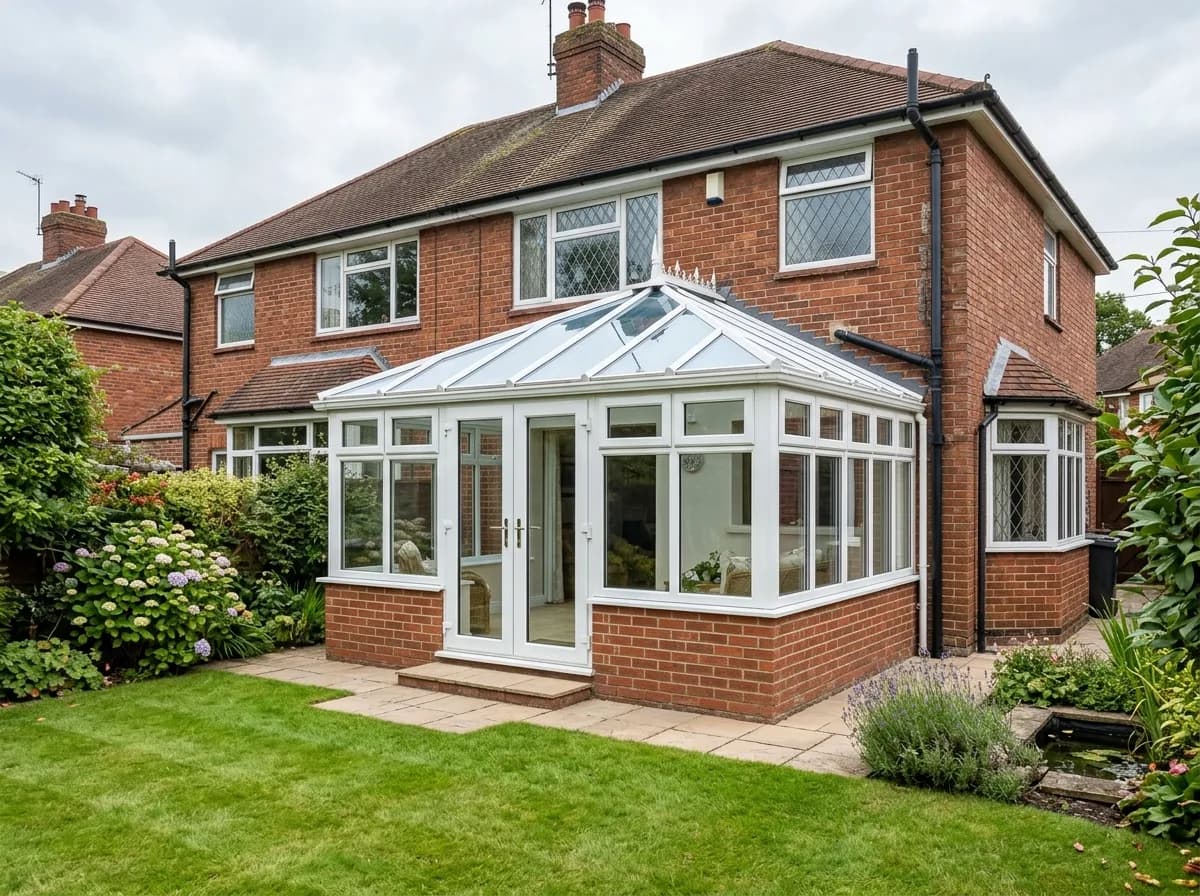
Planning permission is not usually required for a conservatory, but there are limits on size, height, and how far it extends from the house. Listed buildings and conservation areas have stricter rules. Always check before you start.
Quick answer
How much does a conservatory cost?
A fully installed conservatory costs between £8,000 and £40,000. A small lean-to in uPVC starts from around £8,000. A mid-range Victorian or Edwardian conservatory runs £12,000-£18,000. An orangery with brick pillars and a lantern roof typically costs £20,000-£40,000. The roof type is the single biggest factor in whether the room is comfortable year-round.
View the full conservatory cost guide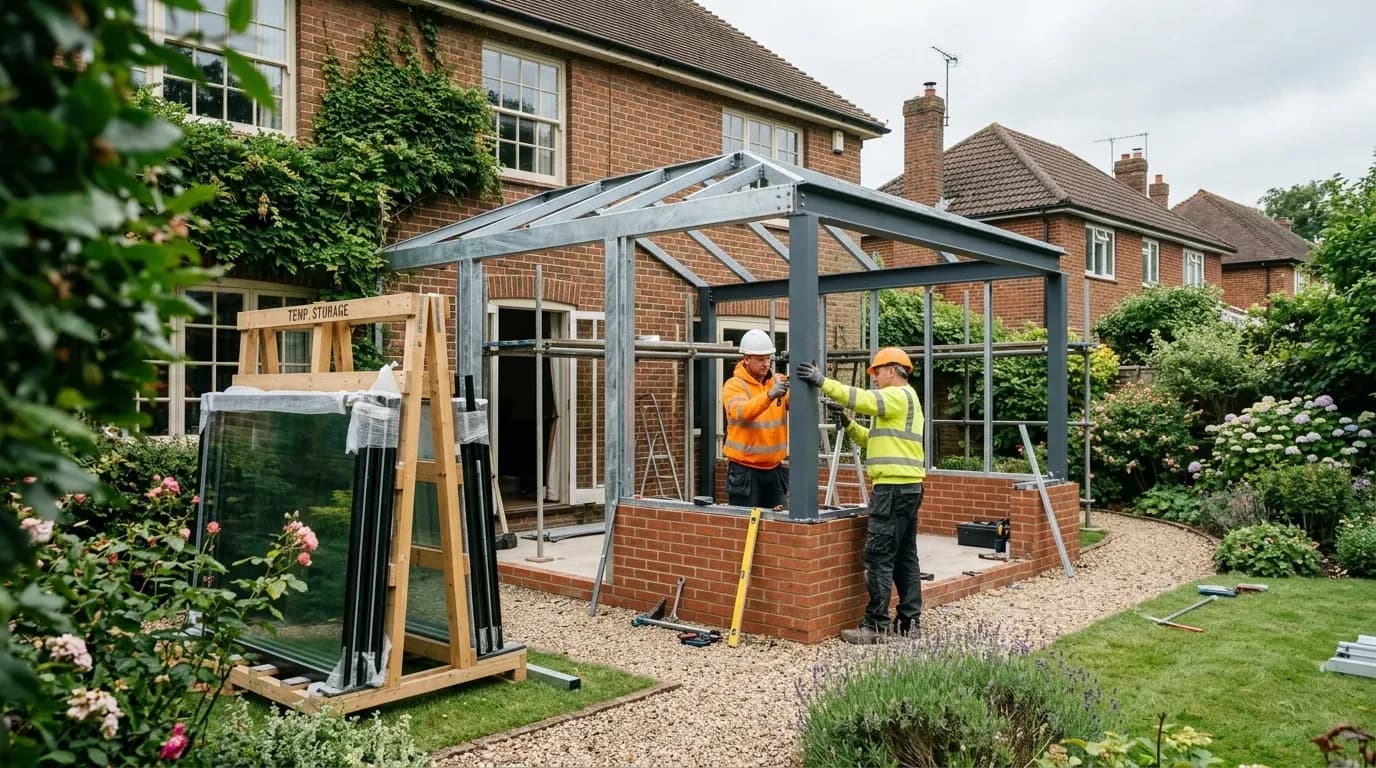
Conservatory styles compared
Each style has its strengths. The right choice depends on your house, your budget, and how you plan to use the room.
Lean-to
The simplest and cheapest option. A single-slope roof that leans against the house wall. Works particularly well on bungalows and properties with low eaves heights where a peaked roof would not fit. The rectangular footprint makes it easy to furnish. From £8,000.
Pros
Cheapest style, simple build, suits low eaves
Cons
Less headroom at the front, can look basic on larger houses
Victorian
The classic conservatory shape with a bay-fronted design (three or five facets) and an ornate ridge. Looks attractive from the garden and lets in light from multiple angles. The curved front means furniture arrangement is less flexible than a square room. From £9,000.
Pros
Classic look, lots of natural light, adds character
Cons
Less usable floor space due to bay shape, more complex framework
Edwardian (Georgian)
A square or rectangular footprint with a pitched roof. Maximises the internal floor space because the walls are all straight. Generally the best all-round choice for families who want a room they can properly furnish. From £10,000.
Pros
Maximises floor space, easy to furnish, clean lines
Cons
Less architectural interest than Victorian, can look boxy if poorly designed
P-shaped
Combines a lean-to and a Victorian or Edwardian section to create an L-shaped room. Ideal for larger properties where you want two distinct zones, perhaps a dining area and a lounge. From £16,000.
Pros
Two distinct living zones, impressive scale, suits wide properties
Cons
Expensive, needs a wide rear wall, complex build
T-shaped
A central projection that creates a T-footprint. The central section extends further into the garden while the two side sections sit closer to the house. Suits wide properties with plenty of garden space. From £18,000.
Pros
Striking design, good for large spaces, excellent light
Cons
Most expensive standard style, needs significant garden space
Orangery
More like a brick extension than a traditional conservatory. Brick or rendered pillars with glazing panels between them, and a flat roof perimeter with a central lantern roof. Feels like a permanent part of the house rather than an add-on. From £20,000.
Pros
Feels like a proper room, better insulated, adds most value
Cons
Most expensive option, takes longer to build, heavier on foundations
Planning permission for conservatories
Most conservatories fall under permitted development, which means you do not need to apply for planning permission. However, there are conditions.
The conservatory (plus any other extensions) must not cover more than half the area of land around the original house
The height must not exceed the highest part of the existing roof, and eaves must not exceed 3m if within 2m of a boundary
Single-storey rear extensions must not extend more than 4m from the original rear wall (3m for semi-detached or terraced houses)
Listed buildings, properties in conservation areas, and flats do not have these permitted development rights, you will need to apply for planning permission
If you are not sure whether your project needs permission, contact your local planning authority or check the Planning Portal. It costs nothing to ask.
Things to think about before you buy
The roof is the most important decision
A polycarbonate roof is cheap but makes the conservatory too hot in summer and too cold in winter. A glass roof with solar-control coating is much better. A solid insulated roof (tiles or panels) gives the best thermal performance and makes the room feel like a proper extension. Expect to pay £2,000-£7,500 for the roof alone, depending on the type and size.
Heating is not optional
If you want to use the conservatory in winter, you need heating. Extending your existing central heating is the most cost-effective option (£300-£800 per radiator). Electric underfloor heating works well with tiled floors (£500-£1,200). Without heating, the room will be too cold to use comfortably from October to March.
Foundations matter more than you think
Every conservatory needs proper foundations, not just paving slabs. Strip foundations with concrete are standard and cost £1,500-£3,500. If the ground is sloped, has drainage issues, or contains tree roots close to the surface, expect to pay more. Skimping on foundations leads to problems with movement and leaking within a few years.
Think about how you will use the room
A conservatory used as a dining room needs different dimensions than one used as a lounge. Measure your furniture before settling on a size. A 3×3m conservatory is comfortable for a small table and chairs but cramped for a sofa and armchairs. A 4×3m footprint gives you enough space for proper furniture arrangements.
How to find a good conservatory installer
Get quotes from at least one national firm and two local installers
National firms (Everest, Anglian, etc.) tend to charge more because of their marketing overheads. Local installers are often cheaper for the same product. Getting quotes from both gives you a clear picture of the market rate and negotiating leverage.
Ask who does the groundworks
Some conservatory companies subcontract the base to a local builder and only handle the frame and glazing. Others do the whole job in-house. Find out who is responsible for each part of the build, and who you call if there is a problem with the base six months later.
Check what is included in the quote
A conservatory quote should cover everything: foundations, dwarf walls, frame, glazing, roofing, electrics (sockets and lighting), flooring, and internal finishing. Ask specifically whether drainage, guttering, removal of the existing wall, and Building Regulations fees are included or extra.
Get three quotes for the same specification
Conservatory prices vary wildly between companies. Get at least three written quotes covering the same style, size, frame material, roof type, and glazing spec. A lean-to in uPVC with a polycarbonate roof is a completely different product from one with a glass roof - so make sure every quote is pricing the same thing, or the comparison is worthless.
Ask about aftercare and guarantees
A good installer offers a 10-year guarantee on the frame and glazing, backed by an insurance-backed guarantee in case the company ceases trading. Check whether the guarantee covers the base and groundworks as well as the superstructure. Ask how they handle snagging issues after handover.
Conservatory guides
Conservatory cost calculator
Conservatory cost guide
Lean-to conservatory cost
Orangery cost
Conservatory roof replacement cost
Solid roof conservatory cost
House extension cost guide
Double glazing cost guide
How much does a conservatory add to house value?
Common questions about conservatories
Is a conservatory worth it in the UK?
For most homeowners, yes. A well-built conservatory adds usable living space for significantly less than a brick extension. The key is getting the roof right. A cheap polycarbonate roof creates a room that is too hot in summer and too cold in winter, which means you will not use it for half the year. A glass roof with solar-control coating or a solid insulated roof makes the space comfortable year-round and adds genuine value to your property.
How long does a conservatory last?
A uPVC conservatory should last 20 to 30 years with minimal maintenance. Aluminium frames last even longer. Hardwood conservatories can last 40+ years but require regular treatment to prevent rot. The roof is usually the first thing that needs attention, polycarbonate panels yellow and crack after 10 to 15 years, while glass roofs last the lifetime of the structure.
Can I build a conservatory myself?
You can buy a conservatory as a DIY kit, but the foundations and base need to be done properly. The glazing is heavy and awkward to handle, and getting the roof sealed correctly against the house wall is critical. Most people who start a DIY conservatory end up hiring someone to finish it. If you have building experience and a helper, it is doable. If you do not, the risk of leaks and structural issues makes professional installation a better option.
Do conservatories add value to a house?
A well-built conservatory adds 5 to 8% to a property’s value. An orangery can add 7 to 10%. The value depends heavily on whether the space is usable in all seasons and how well it integrates with the rest of the house. A conservatory that feels like an afterthought, or one that is unusable in summer heat, adds less than one that functions as a genuine living space. We break this down further in our guide to how much a conservatory adds to house value.
What is the best direction for a conservatory to face?
North-facing conservatories get less direct sun, which means less overheating but less natural warmth in winter. South-facing ones get the most sun but can overheat badly in summer without proper ventilation and solar-control glazing. East-facing gets morning sun and is pleasant through the day. West-facing gets afternoon and evening sun. There is no perfect answer, it depends on when you use the room most and how willing you are to invest in blinds and ventilation.
Quote service coming soon
Get free quotes from conservatory installers near you
Free, no obligation. Read the cost guide first so you know what a fair price looks like before anyone gives you a number.
Compare real quotes for your job
Prices move a lot with your postcode, the access on site and the spec you choose. Get up to 3 free quotes from vetted local tradespeople and see what yours actually comes to, with no obligation to book.