How Much Does an Orangery Cost in 2026?
The average orangery cost in the UK is £32,500, and most homeowners pay between £20,000 and £55,000 for a fully installed orangery. A small 3m × 3m orangery starts from around £20,000, while a large 6m × 4m design with underfloor heating and bi-fold doors can reach £70,000. Orangery costs also move with where you live: the same 4m × 3m build averages £42,000 in London and £27,000 in the North East.
£32,500
Average cost
£20,000+
Small orangery
£70,000+
Large orangery
6 to 10 weeks
Build time
Prices updated April 2026 · Based on industry data and contractor submissions.
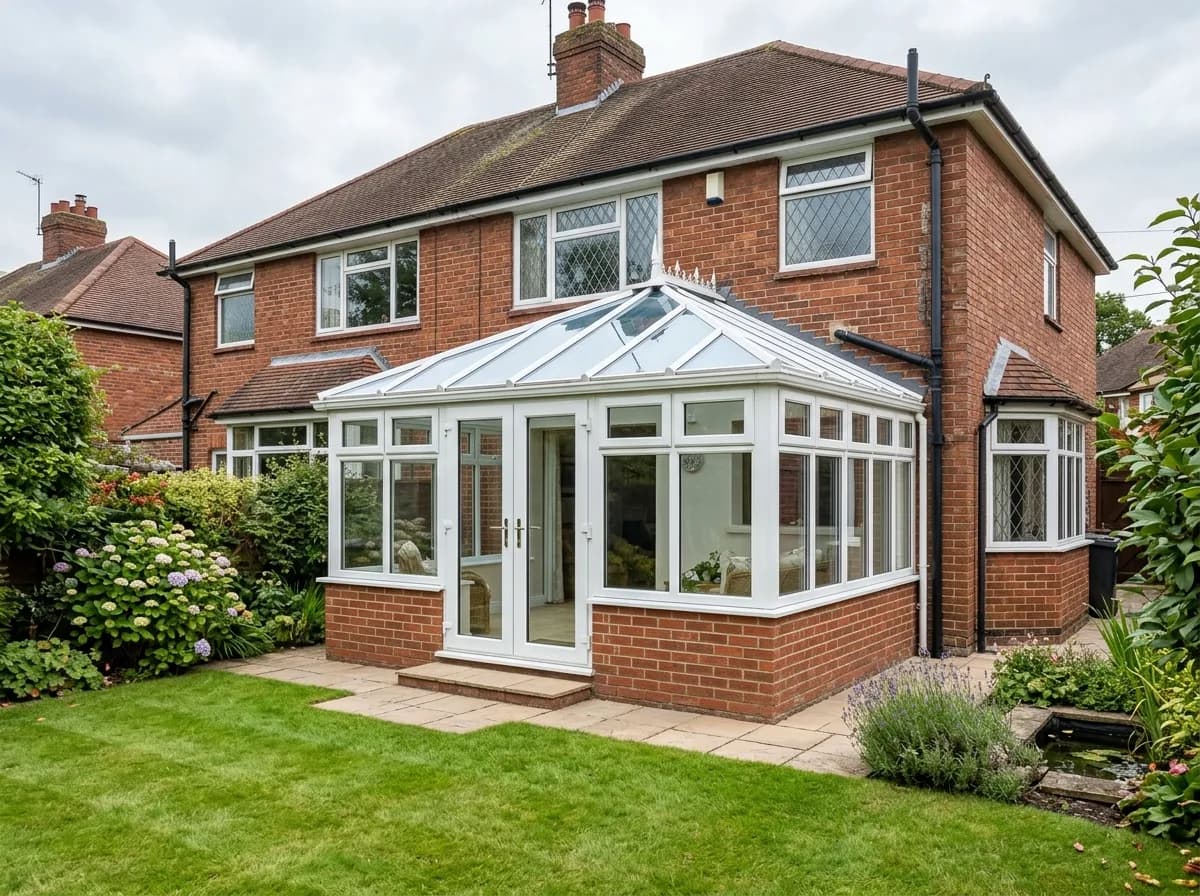
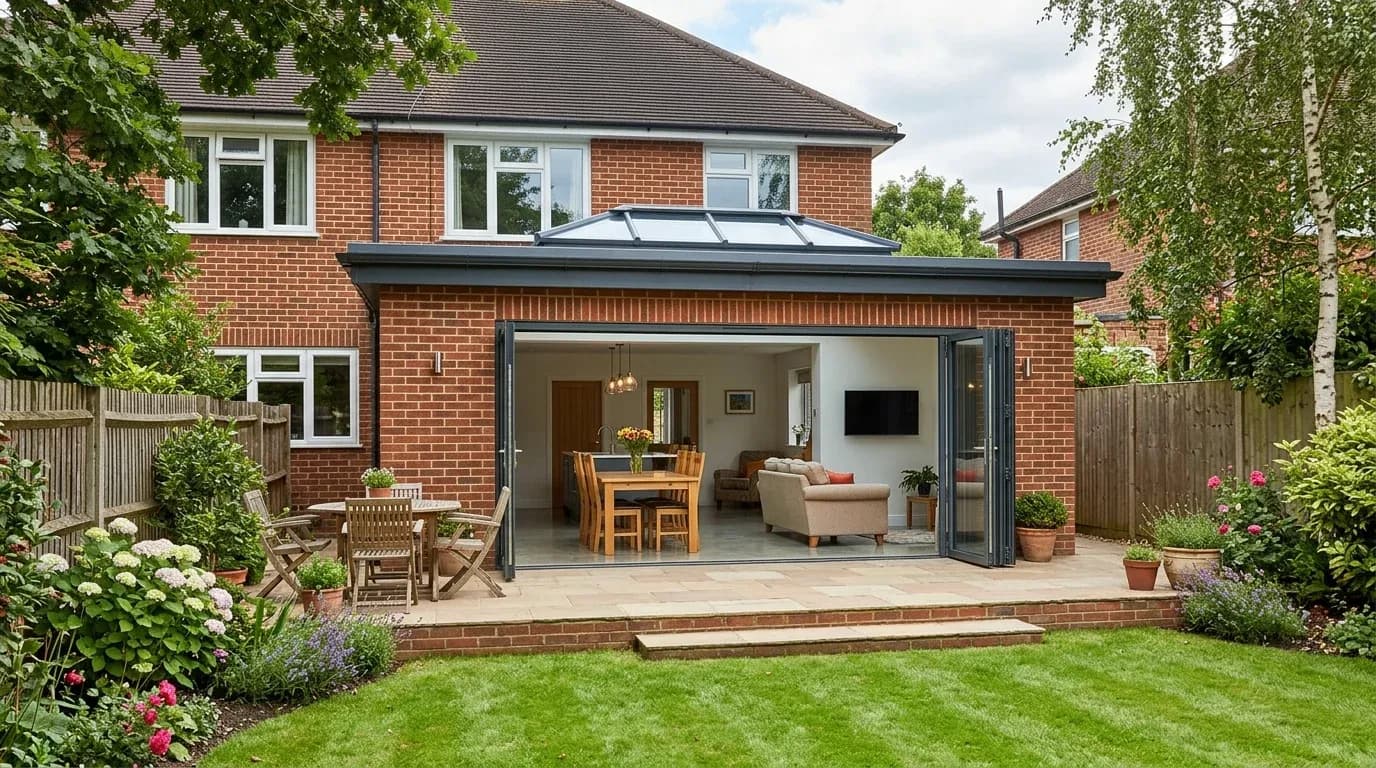
What is an orangery? An orangery is a hybrid between a conservatory and a full brick extension. It has solid brick or rendered pillars with large glazed panels between them, a flat roof perimeter (usually with a lantern roof in the centre), and more substantial construction than a conservatory. The result is a room that looks and feels like a natural part of the house, with better insulation and year-round usability.
Orangery Cost by Size
Size is the single biggest factor in orangery cost. A 3m × 3m orangery costs £20,000 to £30,000, a 4m × 3m costs £25,000 to £40,000, a 5m × 4m costs £35,000 to £55,000, and a 6m × 4m costs £45,000 to £70,000. Prices below are for a fully installed orangery with brick pillars, uPVC or aluminium glazing, lantern roof, electrics, plastering, and basic flooring.
Small (3m × 3m)
9m² floor area
£25,000
£20,000 to £30,000
Medium (4m × 3m)
12m² floor area
£32,500
£25,000 to £40,000
Large (5m × 4m)
20m² floor area
£45,000
£35,000 to £55,000
Extra large (6m × 4m)
24m² floor area
£57,500
£45,000 to £70,000
All prices include foundations, brick pillars, glazing, lantern roof, electrics, internal plastering, and tiled flooring. Underfloor heating, bi-fold doors, and premium finishes are additional.
Orangery vs Conservatory vs Extension Cost
An orangery sits right between a conservatory and a full brick extension in terms of both cost and construction. Here is how the four main options compare for a 3m × 3m footprint.
Lean-to conservatory (3×3m)
Simplest and cheapest option
£10,000 to £16,000
Victorian conservatory (3×3m)
Bay-fronted, ornate design
£15,000 to £22,000
Orangery (3×3m)
Brick pillars, lantern roof
£20,000 to £30,000
Full extension (3×3m)
Solid brick walls and tiled roof
£30,000 to £45,000
| Feature | Conservatory | Orangery |
|---|---|---|
| Walls | Mostly glazed | Brick pillars + glazing |
| Roof | Fully glazed | Flat perimeter + lantern |
| Insulation | Moderate | Good |
| Year-round use | Depends on spec | Yes |
| Value added | 3 to 5% | 5 to 7% |
| Build time | 2 to 4 weeks | 6 to 10 weeks |
| Planning permission | Usually not needed | Often needed |
Bottom line: An orangery typically costs 40 to 60% more than an equivalent conservatory, but 20 to 30% less than a full extension. For the money, you get a room that feels like part of the house, works year-round, and adds genuine value when you sell. It is the sweet spot for many homeowners.
Orangery Cost Breakdown by Material
Understanding where the money goes helps you make informed choices about specification. Here is a typical breakdown for a medium (4m × 3m) orangery.
| Component | Typical Cost |
|---|---|
| Brickwork and pillars | £4,000 to £8,000 |
| Glazing and frames | £6,000 to £12,000 |
| Lantern roof | £3,000 to £6,000 |
| Foundations | £2,000 to £4,000 |
| Internal plastering and finishing | £2,000 to £4,000 |
| Electrics | £800 to £1,500 |
| Flooring | £1,000 to £2,500 |
| Building regs and structural calcs | £500 to £1,000 |
Total for a medium orangery: approximately £20,300-£39,500 depending on specification and location. Labour is included within each component cost.
Why Choose an Orangery Over a Conservatory?
Orangeries cost more than conservatories, but there are solid reasons many homeowners consider the extra spend worthwhile.
Better insulation and year-round use
The solid roof perimeter and brick pillars provide far better thermal performance than a fully glazed conservatory. Most orangeries are comfortable through winter without excessive heating costs, and the reduced glass area means less overheating in summer too.
Adds more value to your home
An orangery typically adds 5 to 7% to a property's value, compared with 3 to 5% for a standard conservatory. Estate agents consistently report that buyers view orangeries more favourably because they look and feel like a permanent part of the house rather than a bolt-on addition.
Looks like a natural extension of your house
The brick pillars, rendered walls, and solid roof perimeter blend with the existing brickwork far better than a full-glass conservatory. From outside, a well-built orangery looks as though it has always been there. This matters for kerb appeal and resale value.
More flexible internal use
Orangeries are commonly used as kitchen-diners, living rooms, and home offices. The solid roof perimeter provides space for downlights, extractor ducting, and speakers. The flat ceiling area also gives somewhere to mount wall cabinets or shelving, something a fully glazed conservatory cannot offer.
Fewer condensation problems
Traditional conservatories suffer from condensation because of the temperature difference between the glass roof and the warm interior air. The solid roof perimeter of an orangery dramatically reduces this. You will still get some condensation on the lantern roof glass in cold weather, but it is far less of an issue than with a fully glazed structure.
What Affects the Cost of an Orangery?
Size
This is the biggest driver. Every extra square metre adds to the foundations, brickwork, glazing, roofing, and finishing. A 3m × 3m orangery at £25,000 can become £57,000 or more at 6m × 4m. Work out the minimum size that gives you the room you need and do not oversize, a smaller, well-finished orangery is a better investment than a large, underspecified one.
Brick vs render finish on pillars
Matching brick is the classic look but can be expensive, especially if your house uses an uncommon brick that needs to be sourced or specially made. Rendered blockwork (painted or K-rend) is usually cheaper and gives a clean, modern finish. Some homeowners use brick on the main elevation and render on the less visible sides to save money.
Lantern roof size and style
A larger lantern roof lets in more light but costs more. Aluminium lantern roofs are sleeker and more durable than uPVC but carry a 20 to 30% premium. Self-cleaning, solar-control glass is worth the extra, it reduces heat gain in summer and cuts down on cleaning a roof you cannot easily reach.
Bi-fold vs French doors
Bi-fold doors opening onto the garden are a popular choice for orangeries. A set of aluminium bi-folds (2.4m wide, 3 panels) costs £2,500 to £4,500, compared with £800 to £1,500 for uPVC French doors. Bi-folds look stunning when open but are rarely opened fully outside of a handful of warm days each year.
Underfloor heating
Underfloor heating is common in orangeries because it frees up wall space and works well with tiled or stone floors. Electric underfloor heating costs £2,000 to £3,000 installed, while wet (water-based) systems cost £3,000 to £4,000 but are cheaper to run. This is far easier to install during the build than to retrofit later.
Site access and ground conditions
If your garden is only accessible through the house, materials will need to be carried through rather than craned in. Sloping sites, clay soil, or areas with high water tables may need deeper or reinforced foundations, adding £1,000 to £3,000 to the groundwork costs.
Planning Permission & Building Regulations
This is where orangeries differ from straightforward conservatories. The more substantial construction pushes them closer to a full extension in planning terms, which means more paperwork and potentially more cost.
Orangeries often require planning permission.The solid brick pillars and flat roof perimeter mean many local authorities classify an orangery as an extension rather than a conservatory. Always check with your local planning authority before committing to any work. A householder planning application costs £548 in England and takes around 8 weeks for a decision.
Planning permission
Whether you need planning permission depends on the size, position, and construction of the orangery. Some fall under permitted development (same rules as conservatories), but the solid walls and flat roof can push the structure into "extension" territory. Your builder or architect should advise, but a pre-application enquiry with your council (around £50) is a sensible investment before you commit.
Building Regulations
Building Regulations approval is almost always required for an orangery. The solid walls, foundations, and structural elements need to comply with Part A (structure), Part L (energy efficiency), Part P (electrics), and other relevant sections. Your builder should handle the application, but budget £500 to £1,000 for building control fees and structural engineer calculations.
Party wall agreements
If your orangery is built within 3 metres of a neighbouring property's wall (or within 6 metres and the excavation would cut below their foundations), you may need a party wall agreement under the Party Wall etc. Act 1996. This involves serving notice on your neighbour at least two months before work begins. If they agree, there is no additional cost. If they dispute, you will both need surveyors, budget £700 to £1,500 per surveyor.
Structural engineer report
A structural engineer will design the foundations, specify the steel work for the flat roof, and ensure the brick pillars are adequate. This typically costs £300 to £600 and is essential, do not skip it. The report is also required for the Building Regulations application.
Listed buildings and conservation areas: If your property is listed or in a conservation area, you will almost certainly need full planning permission for an orangery. Contact your local planning authority before doing anything else. Unauthorised work on a listed building is a criminal offence.
Orangery Costs by Region
Average prices for a medium orangery (4m × 3m) with brick pillars, lantern roof, and standard specification, fully installed, by UK region.
| Region | Average Cost | vs National |
|---|---|---|
| London | £42,000 | +31% |
| South East | £37,000 | +16% |
| East of England | £34,000 | +6% |
| South West | £33,000 | +3% |
| Midlands | £32,000 | Average |
| Yorkshire | £29,000 | -9% |
| North West | £30,000 | -6% |
| North East | £27,000 | -16% |
| Scotland | £28,000 | -13% |
| Wales | £28,000 | -13% |
Based on industry data. Prices for a medium orangery (4m × 3m), fully installed.
How to Get Your Orangery for Less
An orangery is a significant investment, but there are practical ways to keep the cost under control without sacrificing quality.
Get structural calcs done early to avoid costly surprises
An orangery needs proper structural calculations because of the brick pillars and lantern roof. Getting these done before you commit to a quote means the builder can price accurately from the start. Unexpected ground conditions or structural issues discovered mid-build can add thousands to the final bill.
Consider a flat-roof-only design without the lantern
The lantern roof is the centrepiece of a traditional orangery, but it adds £3,000 to £5,000 to the build. A flat-roof-only design with large roof lights still floods the room with natural light and costs significantly less. You lose the height and drama of a lantern, but the room is still bright and airy.
Use matching bricks from your house to avoid buying new
If your house has common brick types, your builder may be able to source reclaimed bricks that match. New bricks that match an older property can be surprisingly expensive, and the wrong match stands out. Ask your builder to take a sample brick from a hidden spot to match against.
Compare quotes from both conservatory companies and builders
Specialist conservatory companies tend to be more expensive but offer turnkey packages. General builders often come in lower but you may need to manage subcontractors (glazing, electrics) yourself. Get quotes from both types and compare like-for-like. Make sure every quote includes the same spec for glazing, brickwork, and finishing.
A smaller orangery often adds more value per pound than a larger one
A well-finished 3m × 3m orangery used as a kitchen-diner or living room adds proportionally more value than a sprawling 6m × 4m one. Buyers care about quality and usability, not just square footage. Spend the budget on a smaller room with better finishes, underfloor heating, good lighting, quality flooring, rather than stretching to a bigger footprint with cheaper materials.
Build in autumn or winter when installers are quieter
Most people want their orangery built over spring and summer, which means longer lead times and less room to negotiate. Schedule your build for October through February and you may find builders more willing to sharpen their prices. The groundworks are weather-dependent, but once the roof is on the rest of the build carries on regardless.
What to Expect: The Orangery Build Process
An orangery takes longer to build than a conservatory because of the brickwork and structural elements. Here is the typical sequence for a medium-sized build.
- 1
Design, planning, and structural calcs (2 to 6 weeks before build)
Your architect or builder designs the orangery and submits any planning applications. A structural engineer produces calculations for the foundations, pillars, and roof steelwork. Building Regulations approval is applied for. This stage needs to be completed before any work starts on site.
- 2
Foundations and groundworks (week 1 to 2)
The existing patio or lawn is cleared. Trenches are dug for strip foundations, typically deeper than a conservatory base because of the heavier brick pillars. Concrete is poured, and the oversite is prepared. Drainage is connected if needed. This stage is weather-dependent.
- 3
Brickwork and pillars (week 2 to 4)
The brick pillars are built up to the required height. The brickwork is matched to your existing house as closely as possible. Cavity walls are insulated and tied in. A ring beam (steel or concrete) is cast across the top of the pillars to support the flat roof structure.
- 4
Flat roof and lantern (week 4 to 6)
The flat roof structure is built out from the ring beam, insulated, and finished with a membrane (GRP or EPDM). The central opening for the lantern roof is framed. The lantern roof is then fitted and sealed. Lead flashing is dressed into the existing house wall.
- 5
Glazing, doors, and windows (week 5 to 7)
The glazed panels are fitted between the brick pillars. Bi-fold or French doors are installed. All units are sealed and adjusted. The structure is now watertight.
- 6
Electrics, heating, plastering, and flooring (week 7 to 9)
Electrical first fix (cables and back boxes) followed by plastering of the internal pillars and ceiling. Underfloor heating mats are laid if specified. The floor is tiled or finished. Sockets, switches, and lights are fitted. Any internal wall removal between the house and orangery is completed during this phase.
- 7
Finishing, snagging, and handover (week 9 to 10)
Final decoration, silicone sealing, door adjustments, and a deep clean. Your builder walks you through the locking mechanisms, drainage, and ventilation. You should receive Building Regulations completion certificates, electrical certificates, and any structural warranty documentation.
Official Resources
Trusted sources for further reading and professional guidance.
Planning Portal: Conservatory permitted development rules
Official guidance on when planning permission is needed for conservatories and orangeries.
Gov.uk: Building Regulations approval
Building Regulations requirements for orangeries, which typically need full approval unlike conservatories.
TrustMark: Government endorsed quality scheme
Find TrustMark registered conservatory and orangery installers who meet government-endorsed standards.
Frequently Asked Questions
What is the average cost of an orangery in the UK?
The average orangery cost in the UK is £32,500 for a medium 4m × 3m build, fully installed. Most homeowners pay between £20,000 and £55,000, and a large 6m × 4m orangery with underfloor heating and bi-fold doors can reach £70,000. Region makes a real difference to the average: the same 4m × 3m orangery averages £42,000 in London and £27,000 in the North East.
How much does a 4m × 3m orangery cost?
A 4m × 3m orangery (12m² of floor area) costs £25,000 to £40,000 fully installed, with an average of £32,500. That covers foundations, brick pillars, glazing, the lantern roof, electrics, internal plastering, and tiled flooring. Underfloor heating, bi-fold doors, and a kitchen fit-out are extra.
Is an orangery cheaper than a conservatory?
No, an orangery costs more than a conservatory, typically 40 to 60% more for the same footprint. A 3m × 3m lean-to conservatory is £10,000 to £16,000 and a Victorian conservatory of that size is £15,000 to £22,000, while the equivalent orangery is £20,000 to £30,000. The extra buys brick pillars, deeper foundations, and a flat roof perimeter, which is why an orangery is usable year-round and adds 5 to 7% to a property's value against 3 to 5% for a conservatory.
Do you need foundations for an orangery?
Yes. An orangery needs proper strip foundations, dug deeper than a standard conservatory base because the brick pillars and flat roof structure are far heavier. Foundations typically cost £2,000 to £4,000, and a structural engineer designs them as part of a £300 to £600 report that also covers the pillars and roof steelwork. Clay soil, a sloping garden, a high water table, or a nearby tree can push the groundworks up by a further £1,000 to £3,000.
How much does a small orangery cost?
A small orangery (3m × 3m) typically costs between £20,000 and £30,000 fully installed in the UK. This includes foundations, brick pillars, glazing, lantern roof, electrics, and basic internal finishing. Costs can rise if you add underfloor heating, bi-fold doors, or a higher specification of brickwork and glazing.
Is an orangery cheaper than an extension?
Yes, an orangery is typically 20 to 30% cheaper than a full brick extension of the same size. A 3m × 3m orangery costs around £20,000 to £30,000, while a single-storey extension of the same footprint would run £30,000 to £45,000. The orangery uses more glazing and less brickwork, which brings the cost down while still giving you a solid, year-round room.
Do I need planning permission for an orangery?
Orangeries often require planning permission because their solid construction, brick pillars, flat roof perimeter, and substantial foundations, pushes them closer to a full extension in planning terms. Some orangeries do fall under permitted development, but it depends on the size, height, and position relative to your boundaries. Always check with your local planning authority before committing to the build.
How long does an orangery take to build?
A typical orangery takes 6 to 10 weeks to build from groundworks to completion. The foundations and brickwork take longer than a standard conservatory because of the solid pillars and flat roof structure. A smaller orangery (3m × 3m) may be ready in 6 weeks, while a large one (6m × 4m) with underfloor heating and a full kitchen fit-out could take 10 to 12 weeks.
Does an orangery add value to your house?
Yes, an orangery typically adds 5 to 7% to a property's value. Because an orangery looks and feels like a permanent part of the house, with brick pillars, a solid roof perimeter, and proper insulation, buyers see it as a genuine extra room rather than a bolt-on conservatory. The return on investment is generally better than a standard conservatory, particularly if the orangery is used as a kitchen-diner or living space.
What is the difference between an orangery and a conservatory?
The main differences are in the walls and roof. A conservatory has mostly glazed walls with a lightweight frame and a fully glazed or polycarbonate roof. An orangery has substantial brick or rendered pillars with large glazed panels between them and a flat roof perimeter with a lantern roof in the centre. Orangeries are better insulated, more expensive (typically 40 to 60% more), and feel more like a natural extension of the house.
Can I use an orangery as a kitchen?
Yes, orangeries are commonly used as kitchen-diners. The solid roof perimeter provides space for downlights and extractor ducting, and the brick pillars can support wall units. The lantern roof floods the space with natural light. You will need to factor in plumbing, electrics, and ventilation costs on top of the orangery build price, budget an additional £5,000 to £15,000 for a basic to mid-range kitchen installation.

Written by Chris Kervin, Co-Founder of Less.co.uk
Last updated: · Pricing based on industry data and verified contractor submissions · Methodology
Ready to get your orangery for less?
Compare free quotes from local orangery builders near you. Getting three quotes and comparing them properly is the single best way to avoid overpaying.
Get Free QuotesComing soon, sign up to our newsletter to be the first to know.
Compare real quotes for your job
Prices move a lot with your postcode, the access on site and the spec you choose. Get up to 3 free quotes from vetted local tradespeople and see what yours actually comes to, with no obligation to book.