Central Heating Cost & Installation Guide 2026
How much does a new central heating system cost? A full installation in a typical three-bed house runs between £3,000 and £8,000 in 2026. This guide covers gas and electric central heating options, radiator upgrades, underfloor heating, zone controls, and the Gas Safe requirements you need to know about.
Quick answer
A full central heating system installation in a typical three-bedroom house costs £3,000 to £8,000. This covers the boiler, all pipework, radiators, controls, and commissioning. Adding underfloor heating to part of the property or specifying a higher-spec system will increase the cost. Most installations take 3 to 5 days.
See full central heating cost guideWhat the job involves
What does central heating installation involve?
Boiler installation
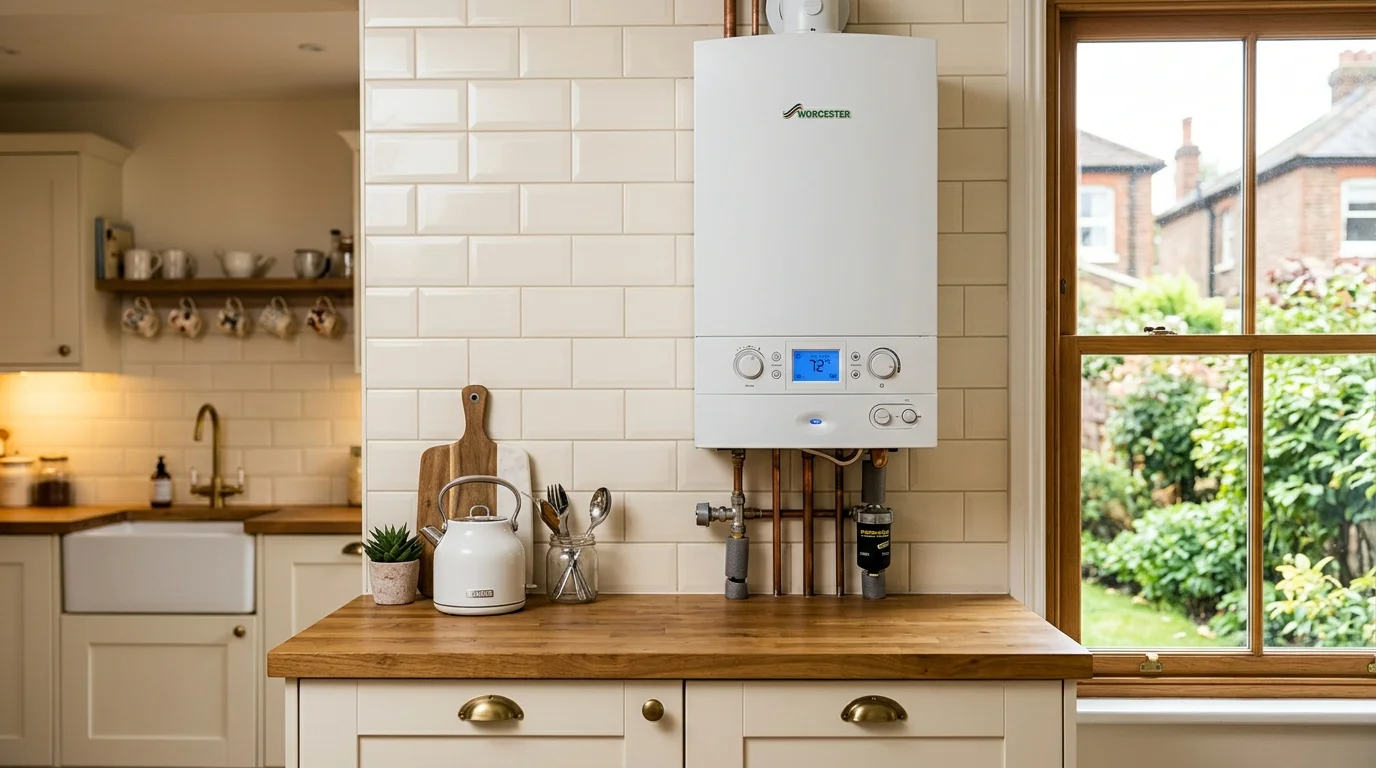
The boiler is the heart of the system. The engineer will position it, connect the gas supply, fit the flue, and connect the flow and return pipework. For new installations, the boiler location, flue direction, and proximity to external walls all need to comply with Building Regulations. All gas connections must be made by a Gas Safe registered engineer.
Pipework and radiator fitting
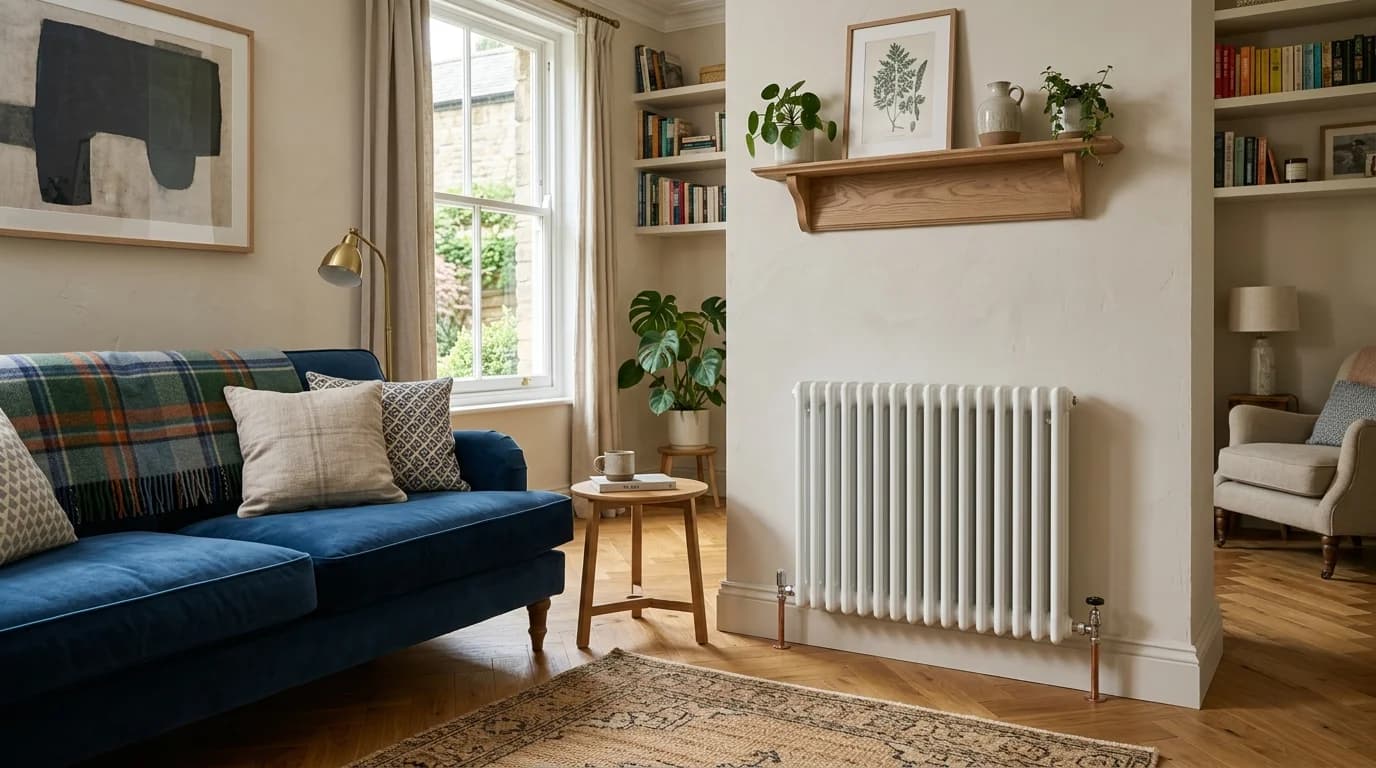
Pipework runs from the boiler to each radiator, usually in 15mm or 22mm copper pipe. Radiators are sized to suit the heat load of each room - a properly designed system specifies radiator sizes based on room dimensions and insulation levels. Thermostatic radiator valves (TRVs) are fitted to each radiator to allow individual room temperature control, as required under Building Regs.
Controls and zone setup
A modern system needs a programmer or smart thermostat, zone controls (separate circuits for upstairs and downstairs in most cases), and a cylinder thermostat if there is a hot water cylinder. Zone controls let you heat different parts of the house independently, which reduces energy use. Ask your engineer to explain the control setup so you understand how to get the best out of it.
Flushing and commissioning
Once installed, the system is flushed to remove debris and flux residue, treated with inhibitor to protect the pipework and boiler heat exchanger, and then pressure-tested. The engineer should fit a magnetic filter to catch any future corrosion particles before they reach the boiler. Commissioning is the final step - the engineer sets the controls, balances the radiators, and issues the Building Regs compliance documents.
Gas pipework and boiler connections must be carried out by a Gas Safe registered engineer. This is a legal requirement. You can verify any engineer at gassaferegister.co.uk before allowing them to work on your gas installation.
Before you hire
Key things to consider
Radiator sizing matters more than most people realise
Undersized radiators are a common problem on older systems. A heating engineer should calculate the heat requirement for each room based on its dimensions, insulation standard, and glazing area, then specify radiators accordingly. If you are upgrading rather than installing from scratch, ask your engineer to check whether the existing radiators are the right size for the boiler you are fitting.
A magnetic filter is a worthwhile addition
A magnetic filter - fitted on the return pipe to the boiler - captures iron oxide sludge before it can settle in the boiler heat exchanger and reduce its efficiency. The Adey MagnaClean is the best-known brand. Most reputable engineers fit one as standard; if yours does not include it, ask about it. It adds around £80 to £120 to the job and can meaningfully extend boiler life.
Consider whether to separate the boiler supply from the rest of the system
On larger jobs, it is sometimes worth getting a separate boiler quotation from the system quotation. This lets you compare boiler brands and prices directly, rather than accepting whatever the system installer specifies. Some engineers will agree to supply labour only if you source your own boiler - though most prefer to supply and install together as they can then stand behind the whole job.
Underfloor heating needs planning at the design stage
Wet underfloor heating requires a manifold, zone controls, and pipework laid before the floor screed or floor finish is installed. It is much harder to add retrospectively. If you are renovating or extending and considering UFH in any rooms, the time to do it is while the floors are already up. UFH is particularly effective in extension rooms with tiled floors and good insulation.
Finding a contractor
How to find a good heating engineer
- 1
Verify Gas Safe registration before anything else
Go to gassaferegister.co.uk and look up the engineer or company by name or registration number. Check that the registration covers the specific categories of work you need - a domestic gas engineer should have central heating and boiler work listed on their card.
- 2
Ask for the system specification in writing
A proper quote should specify: the boiler make, model, and kW output; the pipe diameter; how radiator sizes have been calculated; the controls included; and what commissioning and documentation is provided. If a quote just lists a total price, ask for the breakdown.
- 3
Get at least three quotes
Central heating pricing varies significantly between engineers. Three quotes let you compare the specification as well as the price - it is not uncommon for the cheapest quote to have a smaller boiler or fewer TRVs.
- 4
Check they will issue Building Regs documentation
A Gas Safe registered engineer self-certifies under Building Regulations and must issue the relevant certificates on completion. Ask upfront how they handle this. You will need these documents when you sell.
- 5
Ask about manufacturer warranties and servicing
Some boiler manufacturers (Worcester Bosch, Vaillant) offer extended warranties of up to 12 years on certain models when installed by one of their registered engineers. Ask whether your quoted engineer qualifies. Annual servicing is also required to maintain most manufacturer warranties.
Guides
Central heating guides
Central Heating Cost Guide
Full system installation, radiator upgrades, and power flush prices.
£3,000 to £8,000
New Radiator Cost Guide
Standard, designer, and towel rail prices. Plus heat pump compatibility.
£150 to £1,000
Underfloor Heating Guide
Wet vs electric UFH, costs per m², and when to install.
Power Flush Guide
What a power flush involves, when you need one, and what it costs.
FAQ
Common central heating questions
How do I check if a heating engineer is Gas Safe registered?
Every registered engineer carries a Gas Safe ID card. You can also check at gassaferegister.co.uk using their registration number. Verify before work starts - it takes 30 seconds and is a legal requirement for gas work.
How long does a full installation take?
A full central heating installation in a typical three-bedroom house takes 3 to 5 working days. Larger homes or those with solid walls, underfloor heating, or more complex layouts take longer.
What is the difference between a wet system and underfloor heating?
A standard wet system uses radiators fed by hot water from the boiler. Underfloor heating uses pipework in the floor at lower flow temperatures, which is more efficient with heat pumps and modern condensing boilers. UFH is best installed during renovation when the floors are already up.
Is a smart thermostat worth fitting?
For most homes, yes. Smart thermostats allow remote control, detailed scheduling, and usage reporting. Models from Nest, Hive, and tado° are popular choices. They add around £150 to £350 to the installation. Most homeowners find the convenience and the small running cost reductions make them a worthwhile addition.
Do I need Building Regulations approval?
New central heating installation must be notified to Building Control under Part J (combustion appliances) and Part L (energy efficiency). A Gas Safe registered engineer self-certifies this automatically and issues documentation on completion. You do not need a separate council application if you use a registered engineer.
Quote service coming soon
Compare quotes from local heating engineers
Get free quotes from Gas Safe registered heating engineers near you. No obligation, no sign-up needed.
Compare Free Quotes