How Much Does a Power Flush Cost in 2026?
A power flush costs between £300 and £600 for a standard house with up to 10 radiators. Add roughly £30 to £40 per extra radiator beyond that.
£500
Average cost
£300
Small flat
£700+
Large house
4 to 6 hours
Time taken
Prices updated April 2026 · Based on industry data and contractor submissions.
Use a qualified heating engineer. A power flush involves your gas boiler and central heating system. While not legally required to be Gas Safe registered for flushing alone, using a Gas Safe engineer means they can also check your boiler during the job. Always check credentials at gassaferegister.co.uk.
Power Flush Prices by House Size
The main factor driving cost is the number of radiators in your home. More radiators means more time, more chemicals, and a higher bill.
| House Size | Average Cost | Price Range |
|---|---|---|
| 1-bed flat (up to 5 radiators) | £300 | £250 to £350 |
| 2-bed house (6 to 8 radiators) | £400 | £350 to £480 |
| 3-bed house (8 to 10 radiators) | £500 | £400 to £550 |
| 4-bed house (10 to 14 radiators) | £580 | £500 to £650 |
| 5-bed house (15+ radiators) | £700 | £600 to £800+ |
Prices include chemicals, inhibitor treatment, and labour. Some engineers charge extra for a magnetic filter - always check what is included.
What Is a Power Flush and How Does It Work?
Over time, your central heating system builds up sludge - a mixture of rust, limescale, and metallic debris that settles in radiators and pipework. This sludge reduces efficiency, causes cold spots, and can damage your boiler.
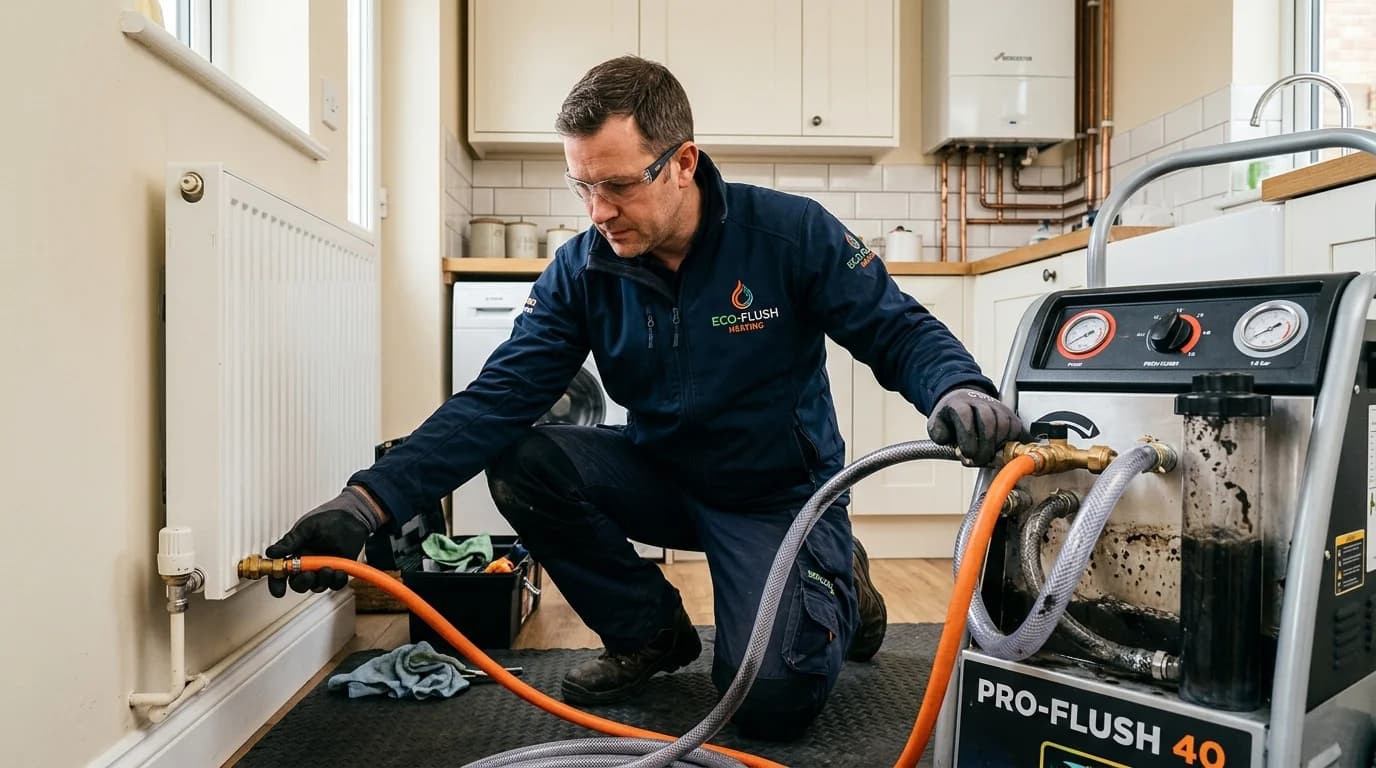
A power flush uses a high-pressure machine to force water and specialist chemicals through every part of your system, stripping out the accumulated muck. It is the most thorough way to clean a central heating system without replacing any components.
The process, step by step
- 1
System assessment
The engineer checks each radiator, looks at the colour of the water (by bleeding one), and assesses the overall condition of your pipework. If the system is too old or corroded, they will tell you a flush is not the right approach.
- 2
Machine connection
A power flushing machine is connected to your central heating system - usually at the pump or a radiator tail. The machine pumps water and cleaning chemicals through the system at high velocity.
- 3
Individual radiator flush
Each radiator is flushed individually. The engineer closes off all radiators except the one being cleaned, allowing the full force of the machine to push sludge out. This is where the time goes - a thorough flush treats every radiator separately.
- 4
System rinse
Once every radiator has been treated, the entire system is flushed through with clean water until it runs clear. A good engineer will show you the before-and-after water colour - the difference is usually dramatic.
- 5
Inhibitor and refill
A corrosion inhibitor chemical is added to protect the system going forward. The system is refilled, pressurised, and bled. If you have a magnetic filter, the engineer will clean or check it at this point.
Signs You Need a Power Flush
Not every heating problem needs a power flush. But if you are noticing several of these, it is worth getting an engineer to take a look.
Cold spots at the bottom of radiators (sludge sits at the base)
Some radiators are hot while others barely warm up
Heating takes much longer to warm up than it used to
Boiler makes banging, kettling, or gurgling noises
Dark or dirty water comes out when you bleed radiators
Boiler keeps cutting out or showing error codes
Your energy bills have crept up without any obvious reason
Engineer has recommended a flush before fitting a new boiler
Power Flush vs. Chemical Flush vs. Magnetic Filter
A power flush is not always the answer. Here is how it compares to the alternatives - and when each one makes sense.
Power flush
- Cost
- £300 to £600
- Time
- 4 to 6 hours
- Effectiveness
- High - physically forces sludge out under pressure
- Best for
- Heavily contaminated systems, pre-boiler installation
Chemical flush
- Cost
- £100 to £200
- Time
- 1 to 2 hours (plus soak time)
- Effectiveness
- Moderate - relies on chemicals dissolving debris
- Best for
- Mildly contaminated systems, routine maintenance
Magnetic filter (ongoing)
- Cost
- £100 to £200 fitted
- Time
- 30 minutes to install
- Effectiveness
- Preventative - catches metallic debris before it circulates
- Best for
- New or recently flushed systems, ongoing protection
| Method | Cost | Time | Best For |
|---|---|---|---|
| Power flush | £300 to £600 | 4 to 6 hours | Heavily contaminated systems, pre-boiler installation |
| Chemical flush | £100 to £200 | 1 to 2 hours (plus soak time) | Mildly contaminated systems, routine maintenance |
| Magnetic filter (ongoing) | £100 to £200 fitted | 30 minutes to install | New or recently flushed systems, ongoing protection |
When a Power Flush Is a Waste of Money
A power flush is not a magic fix. In some situations, it can actually cause more problems than it solves - or simply be an unnecessary expense.
Your system is very old and corroded
If your pipework and radiators are 20+ years old with heavy corrosion, the force of a power flush can dislodge debris that was actually plugging small leaks. The result: leaking joints, weeping radiators, and a bill for replacement parts on top of the flush. A good engineer will assess this risk before starting and may recommend replacing the worst sections instead.
You are replacing the entire heating system anyway
If you are getting all new radiators and pipework alongside a new boiler, there is nothing to flush. The new system starts clean. You only need a power flush when keeping existing radiators and pipes.
The problem is not sludge
Cold radiators can be caused by air locks, faulty thermostatic valves, or an incorrectly balanced system - none of which a power flush will fix. If only one or two radiators are cold, the issue is more likely a stuck TRV or trapped air than system-wide sludge.
Your system was recently flushed
If you had a power flush within the last 5 to 6 years and have a magnetic filter fitted, your system should still be in good shape. Another flush this soon is unlikely to make any difference. If you are still having problems, the cause is elsewhere.
How to Get Your Power Flush for Less
A few smart choices can save you £100 to £200 on the total job.
Bundle it with a new boiler installation
If you are getting a new boiler fitted, ask the engineer to include a power flush in the quote. Many will offer a reduced rate since they already have access to the system and the machine is on site. You could save £100 to £150 compared to booking a standalone flush.
Consider a chemical flush if the problem is mild
If your radiators have minor cold spots and the water is only slightly discoloured, a chemical flush at £100 to £200 might be all you need. It is less aggressive than a power flush and costs significantly less. Ask your engineer for an honest opinion - a decent one will not upsell you on a power flush when a chemical cleanse will do.
Get at least three quotes
Power flush prices vary significantly between engineers. Get written quotes from at least three Gas Safe registered engineers and compare what is included - some quotes include the inhibitor chemical and magnetic filter; others charge extra. The cheapest quote is not always the best if it skips the inhibitor.
Fit a magnetic filter to avoid needing another flush
A magnetic filter (like a MagnaClean) costs £100 to £200 fitted and catches metallic debris continuously, slowing sludge buildup significantly. If you get a power flush without fitting a filter afterwards, you are just resetting the clock - sludge will build up again within a few years.
Useful resources
- Gas Safe Register, Verify your heating engineer is legally registered to work on gas appliances
- CIPHE, The Chartered Institute of Plumbing and Heating Engineering
- Energy Saving Trust: Boilers, Independent guidance on boiler efficiency and maintenance
What to Expect: The Power Flush Process
A power flush takes 4 to 8 hours depending on the size of your system and how badly blocked it is. Here's what the engineer does.
- 1
System assessment
The engineer inspects the heating system, checks each radiator for cold spots, and takes a water sample to assess the level of sludge and corrosion. They connect a power flushing machine to the system, usually at the pump or a radiator valve.
- 2
Chemical cleaning agent added
A powerful cleaning chemical is added to the system water. The power flush machine circulates this at high flow rates (but low pressure, so it does not damage pipes) to break down sludge, limescale, and magnetite deposits throughout the pipework and radiators.
- 3
Individual radiator flushing
The engineer works through each radiator one at a time, reversing the flow direction to dislodge stubborn deposits. Badly blocked radiators may need extra attention or have their valves temporarily removed to flush directly.
- 4
System flushed with clean water
Once the dirty water runs clear, the system is flushed through with clean mains water to remove all traces of the cleaning chemical and loosened debris.
- 5
Inhibitor added and system refilled
A corrosion inhibitor chemical is added to protect the system going forward. The system is refilled, pressurised, and bled. If you have a magnetic filter, the engineer cleans or checks it at this point.
Frequently Asked Questions
How much does a power flush cost?
A power flush typically costs £300 to £600 for a standard house with up to 10 radiators. The price depends on the size of your system - a one-bedroom flat might cost around £300, while a large four or five-bedroom house with 15+ radiators could run to £700 or more. Most engineers charge an extra £30 to £40 per additional radiator beyond the base quote.
Is a power flush worth the money?
It depends on the state of your system. If your radiators have cold spots, your heating is slow to warm up, or your boiler is making kettling noises, a power flush can make a genuine difference - restoring efficiency and reducing your gas bills. However, if your system is very old with corroded pipes, a power flush can dislodge debris that then causes leaks. A good engineer will assess your system honestly and tell you whether a flush is the right call or if replacement pipework is a better investment.
How long does a power flush take?
A power flush on a typical three-bedroom house takes 4 to 6 hours. Larger systems with more radiators or heavy sludge buildup can take a full day. The engineer connects a power flushing machine to your system, pumps cleaning chemicals through each radiator individually, then flushes everything through until the water runs clear.
What is the difference between a power flush and a chemical flush?
A power flush uses a high-flow machine to physically push water and chemicals through your system at speed, dislodging sludge, rust, and debris from each radiator. A chemical flush (or chemical cleanse) involves adding cleaning chemicals to the system and leaving them to circulate for a period before draining. A power flush is more thorough and effective for heavily contaminated systems, but a chemical flush costs less (£100 to £200) and can be sufficient for mild cases.
Do I need a power flush before a new boiler?
Not always, but many engineers recommend it - and some boiler manufacturers require evidence of a system flush to validate the warranty. If your existing system has visible sludge (dark water when you bleed a radiator) or cold spots, a power flush before a new boiler installation protects the new unit from day one. Sludge from old pipework is one of the most common causes of new boiler failure within the first few years.
Can a power flush damage my central heating system?
On a well-maintained system in reasonable condition, a power flush is safe. The risk comes with very old systems (15+ years without a flush) where corroded pipes or radiator seals may fail under pressure. A good engineer will check the condition of your system first and warn you if there is a risk of leaks. If your system is in poor condition, they may recommend replacing the worst sections of pipework rather than flushing.

Written by Chris Kervin, Co-Founder, Less.co.uk
Last updated: · Pricing based on industry data and verified contractor submissions · Methodology
Ready to get your heating sorted for less?
Compare free quotes from qualified heating engineers near you. A power flush could restore your radiators to full efficiency and lower your gas bills from day one.
Get Free QuotesFree, no obligation · Local engineers · Qualified professionals only
More home improvement costs
Compare real quotes for your job
Prices move a lot with your postcode, the access on site and the spec you choose. Get up to 3 free quotes from vetted local tradespeople and see what yours actually comes to, with no obligation to book.