How Much Does Woodworm Treatment Cost in 2026?
Professional woodworm treatment cost is £500 to £2,000 per room depending on severity and method. The cost of woodworm treatment in a loft runs to £500 to £1,500, while cost of woodworm treatment in a roof can reach similar levels. If structural timber needs replacing, costs can reach £5,000 or more. Here is the full breakdown.
£100-£250
Survey
£500-£2,000
Per room
£500-£1,500
Loft treatment
10-30 yrs
Guarantee
Prices updated April 2026 · Based on industry data and contractor submissions.
Woodworm Infestation Treatment Cost
How much does woodworm treatment cost? Here are prices for surveys, chemical spray, gel, heat treatment, and timber replacement for a woodworm infestation.
Survey/inspection
Species identification, activity check, treatment recommendation
£175
£100 - £250
Chemical spray treatment (per room)
Insecticidal spray applied to affected timber
£550
£300 - £800
Gel/paste treatment (per room)
Boron-based gel applied to timber surfaces
£700
£400 - £1,000
Heat treatment (per room)
Timber heated to 56 degrees to kill larvae
£1,000
£500 - £1,500
Whole loft treatment
Spray treatment of all accessible loft timbers
£1,000
£500 - £1,500
Full house treatment
All accessible timbers throughout the property
£3,500
£2,000 - £5,000
Timber replacement (structural)
Sistering or replacing damaged joists/beams
£3,000
£1,000 - £5,000+
Guarantee (PCA member)
10-30 year transferable guarantee certificate
Included
Included with professional treatment
What Affects Professional Woodworm Treatment Cost?
Treatment costs vary considerably depending on the situation. These are the key factors.
Severity and spread of infestation
A small area of woodworm in one room is a straightforward fix. A widespread infestation across multiple rooms, floors, or the entire loft space requires far more labour, materials, and time. The more timber that needs treating, the higher the cost. A specialist survey will map the full extent before quoting.
Type of woodworm
Common furniture beetle (Anobium punctatum) is the most frequent and least damaging species, and treatment is relatively affordable. Deathwatch beetle (Xestobium rufovillosum) attacks hardwood and is harder to treat. House longhorn beetle (Hylotrupes bajulus) can cause serious structural damage and requires more intensive (and expensive) treatment. Species identification is part of a professional survey.
Accessibility of affected timbers
Exposed floor joists in a cellar or open loft timbers are easy to reach and cheaper to treat. Timbers hidden behind plasterwork, under floorboards, or in confined spaces take longer to access, which pushes up labour costs. If boards or plaster need removing and replacing, that adds to the bill.
Whether structural timbers are compromised
If woodworm has weakened load-bearing joists, beams, or rafters, treatment alone is not enough. Damaged structural timber may need sistering (bolting new timber alongside the old) or full replacement. This is skilled carpentry work and costs £1,000 to £5,000 or more depending on the extent. A structural engineer may need to assess the damage first.
Property size and number of floors
A one-bedroom flat with a single affected room will cost far less than a four-bedroom Victorian house with woodworm in the loft, ground floor joists, and cellar timbers. Larger properties mean more timber to inspect, more surface area to treat, and more time on site. Multi-storey homes also require more access equipment.
Underlying damp issues
Woodworm larvae thrive in damp timber (above 20% moisture content). If the root cause is a leaking roof, poor ventilation, or rising damp, that needs fixing first or the woodworm will come back. Damp-proofing or ventilation work adds to the overall project cost, but skipping it means you will likely pay for woodworm treatment twice.
Woodworm Treatment Cost UK by Region
Average total cost for a standard single-room woodworm treatment varies by region.
| Region | Average Cost | vs National |
|---|---|---|
| London | £1,350 | +23% |
| South East | £1,200 | +9% |
| South West | £1,150 | +5% |
| East of England | £1,100 | Average |
| Midlands | £1,100 | Average |
| Yorkshire | £1,000 | -9% |
| North West | £1,020 | -7% |
| North East | £950 | -14% |
| Scotland | £980 | -11% |
| Wales | £1,000 | -9% |
How to Get Your Woodworm Treatment for Less
Check it is active before you pay for anything
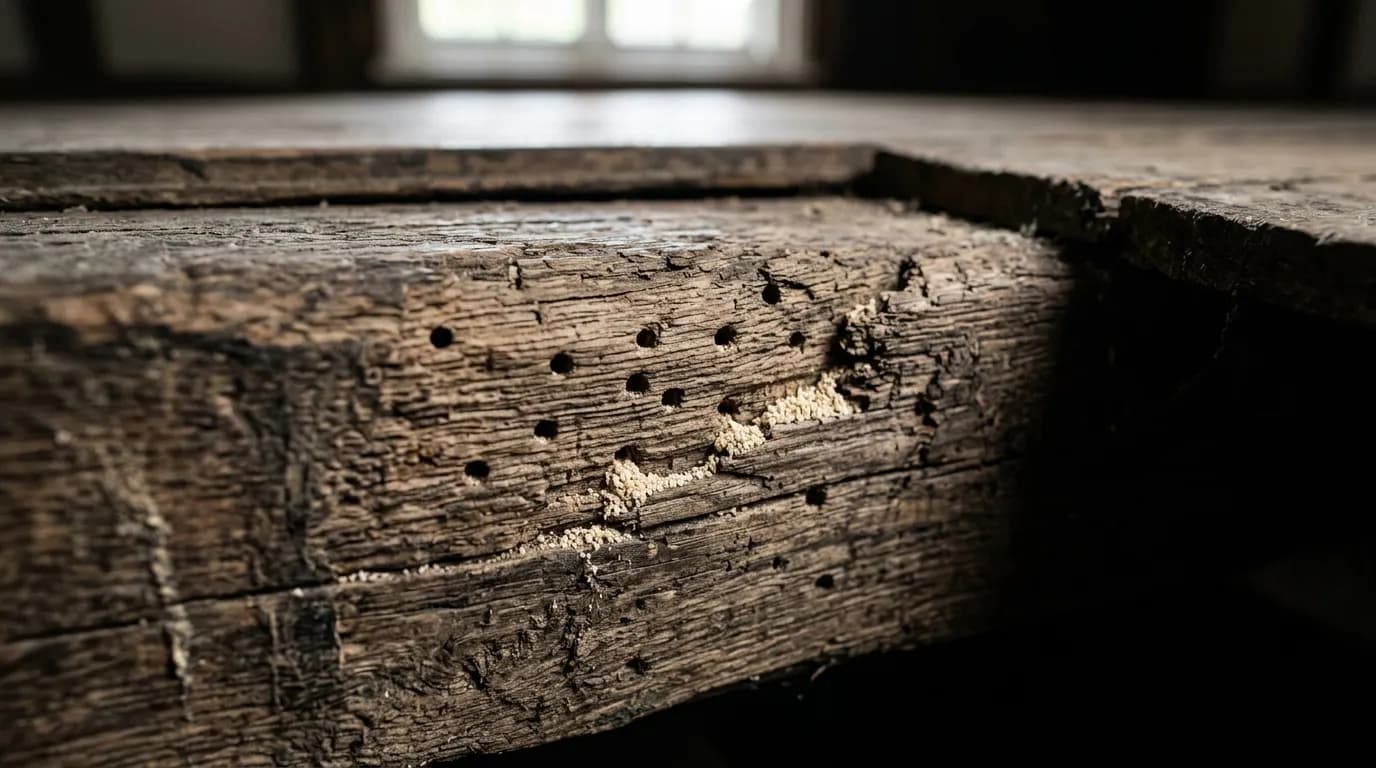
Woodworm that is no longer active needs no treatment at all. Before spending a penny, brush away the fine bore dust (frass) around the holes, or lay a sheet of paper beneath the timber, and check back over a few weeks. Fresh dust or new holes with clean, pale edges mean live larvae, especially between April and September when the beetles emerge. No new dust after the summer usually means the infestation is old and dormant, which can save you the entire treatment cost.
Get an independent survey first
Some timber treatment companies offer free surveys but have an incentive to recommend treatment. Pay £100 to £250 for an independent survey from a chartered surveyor or PCA member who does not also sell treatment. They will tell you honestly whether treatment is needed and what type. This can save hundreds or thousands if the infestation turns out to be inactive.
Do not pay to treat timber that is not affected
Some firms quote to spray the whole house or the entire loft when the woodworm is confined to one area. Treating a single affected room costs roughly £300 to £800, while a blanket full-house treatment runs to £2,000 to £5,000. Ask the specialist to mark exactly which timbers are active on the survey and to quote for those plus any directly connected ones, rather than a blanket spray. There is rarely any need to treat sound, dry timber elsewhere in the property.
Fix the damp problem first
Woodworm larvae need damp timber (above 20 percent moisture content). If you fix the source of the damp, a leaking gutter, poor ventilation, or rising damp, the timber dries out and becomes inhospitable to woodworm. In many cases, fixing the damp alone stops the infestation without the need for chemical treatment.
Get three quotes from PCA members
Prices vary significantly between timber treatment companies. Get at least three quotes from Property Care Association (PCA) members. PCA members carry insurance and provide transferable guarantees that satisfy mortgage lenders. Compare not just the price but the scope of work, guarantee length, and whether they address the underlying damp.
DIY treat non-structural timber yourself
If the woodworm is limited to floorboards, skirting boards, or furniture, a brush-on woodworm killer costs £10 to £30 per litre and is straightforward to apply. This saves the cost of professional treatment for non-critical areas. Reserve the professional treatment (and the expense) for structural timbers and hard-to-reach areas like the loft.
What to Expect: The Treatment Process
Professional woodworm treatment follows a clear process. Here is how it works from survey to sign-off.
- 1
Survey and identification
A specialist inspects the affected timber, identifies the woodworm species, checks whether the infestation is active, and measures timber moisture content. The survey takes 1 to 2 hours for a typical property.
- 2
Determine extent of infestation
The surveyor checks all accessible timbers throughout the property - loft, floors, skirting boards, and any structural beams. They assess the extent of damage and check for underlying damp problems that may be causing the infestation. A written report and quote are provided.
- 3
Chemical treatment application
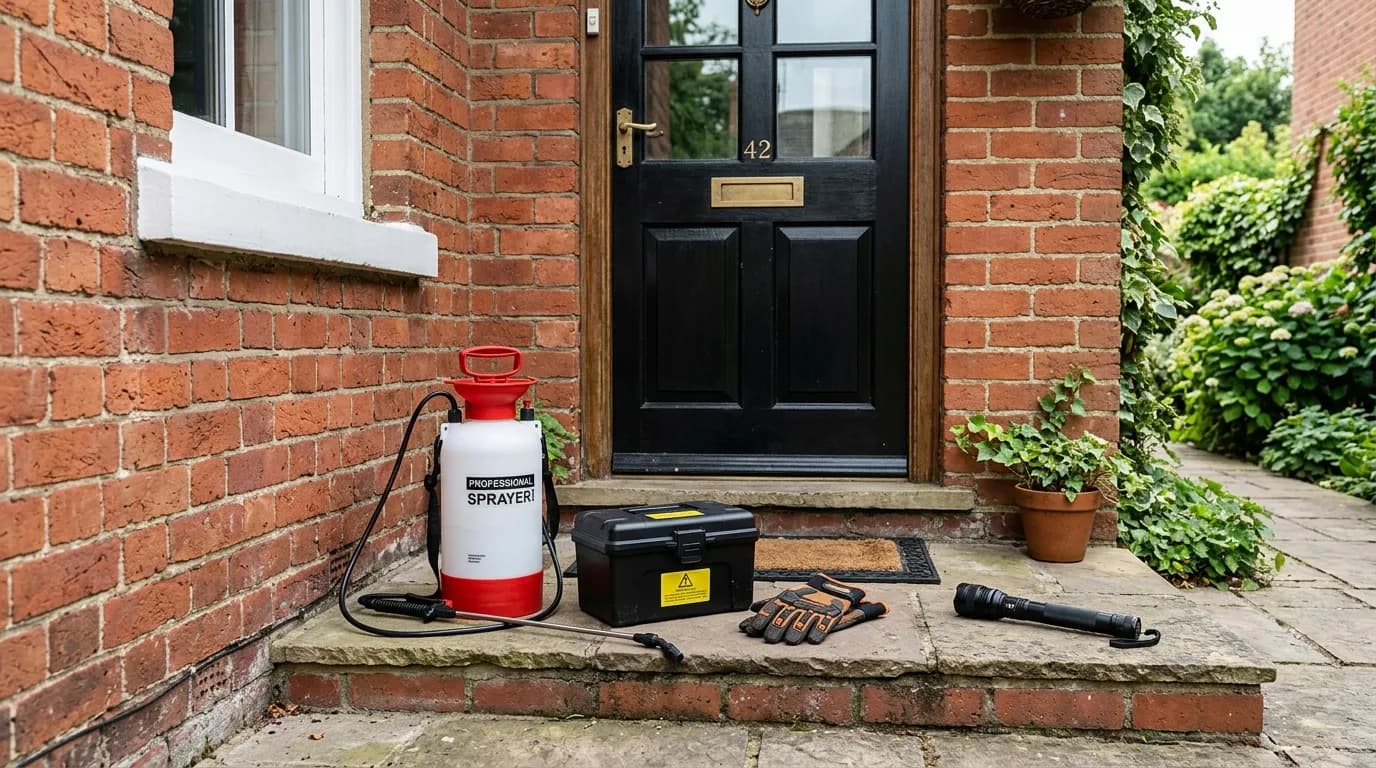
The area is cleared and protected. For spray treatment, an insecticidal solution is applied under pressure to all accessible timber surfaces. For gel treatment, a boron-based paste is applied. Heat treatment involves heating the timber to 56 degrees using specialist equipment. Treatment of a single room typically takes half a day.
- 4
Timber replacement if needed
If structural timber has been badly compromised, it is replaced or reinforced. Sistering - bolting new timber alongside the damaged section - is a common repair method for joists and beams. This work is usually carried out by a carpenter working alongside the treatment specialist.
- 5
Monitoring and prevention
The specialist addresses any underlying damp problems to prevent reinfestation. On completion, you receive a treatment certificate and guarantee (typically 10 to 30 years from a PCA member). The guarantee is transferable to future owners, which is important for property sales. Keep the certificate safe.
Frequently Asked Questions
How much does woodworm treatment cost?
Woodworm treatment costs £500 to £2,000 per room depending on severity and method. A chemical spray treatment costs £300 to £800 per room. Gel or paste treatment is £400 to £1,000 per room. Heat treatment costs £500 to £1,500 per room. A full loft treatment runs to £500 to £1,500. National companies like Rentokil woodworm treatment cost tends to be at the higher end. If structural timber needs replacing, costs can reach £5,000 or more.
Do I need a woodworm survey?
If you have found holes in timber and are not sure whether the infestation is active, a professional survey is a good idea. A specialist survey costs £100 to £250 and identifies the species, whether it is active, and what treatment is needed. Many timber treatment companies offer a free survey if you proceed with treatment, but be aware that some may recommend unnecessary work.
What guarantee comes with woodworm treatment?
Most professional woodworm treatments come with a 10 to 30 year guarantee. Treatment by a Property Care Association (PCA) member typically includes a transferable guarantee, which is important if you sell the property. The guarantee covers retreatment if woodworm returns in the treated area. Keep the certificate safe as mortgage lenders and buyers will want to see it.
Can I treat woodworm myself?
For small areas of non-structural timber, DIY treatment is possible. Brush-on or spray woodworm killer from a hardware shop costs £10 to £30 per litre and works on accessible surfaces. However, the product only reaches the surface of the timber and may not penetrate deep enough to kill larvae inside. For structural timbers, loft spaces, or widespread problems, professional treatment with a guarantee is the safer choice.
Does woodworm affect my mortgage or house sale?
Yes, woodworm can affect property sales and mortgages. If a mortgage surveyor finds active woodworm, the lender may require treatment and a guarantee before approving the mortgage. A treatment certificate from a PCA member with a transferable guarantee satisfies most lenders. If you are selling, getting treatment done before listing avoids delays and gives buyers confidence.

Written by Chris Kervin, Co-Founder of Less.co.uk
Last updated: April 2026 · Pricing based on industry data and verified contractor submissions · Methodology
Worried about woodworm?
Get a professional survey and find out exactly what you are dealing with. Compare treatment prices from local PCA members.
Compare Free QuotesFree, no obligation · Local timber specialists · Compare up to 3 quotes
PCA-Accredited Specialists
Use a PCA-accredited specialist. The Property Care Association (PCA) is the main trade body for woodworm and damp treatment in the UK. PCA members carry proper insurance and their work comes with a guarantee (typically 10 to 30 years) that is transferable when you sell. Mortgage lenders usually require Property Care Association-standard treatment reports.