Woodworm Treatment: Your Complete Guide
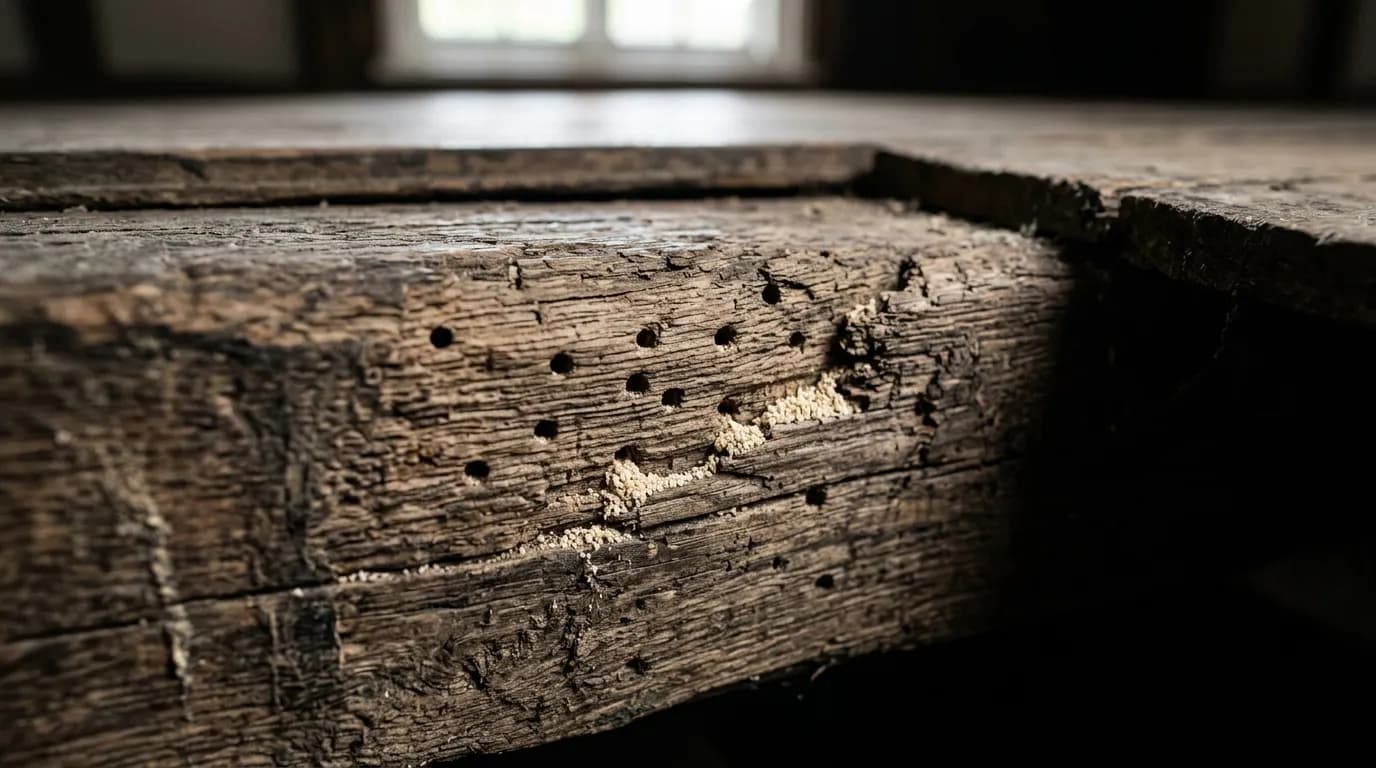
Those small round holes in your floorboards or loft timbers could be woodworm. Before you panic, not every hole means you have an active problem, and not every infestation needs expensive treatment. This guide helps you identify what you are dealing with, understand the risk, and decide whether you need a professional.
Types of woodworm in the UK
Common furniture beetle (Anobium punctatum)
By far the most common species in UK homes. The adult beetle is 3 to 5mm long and brown. It attacks softwood and hardwood, leaving 1 to 2mm round exit holes. Larvae feed inside the timber for 3 to 5 years before emerging as adults. Usually causes cosmetic damage rather than structural problems.
Deathwatch beetle (Xestobium rufovillosum)
Found mainly in older properties with oak or elm structural timbers. The exit holes are 3mm in diameter. Named for the tapping sound the adult makes in spring. This species is more serious because it attacks structural hardwood timbers, particularly in damp conditions. Treatment is more complex and expensive.
House longhorn beetle (Hylotrupes bajulus)
Rare but serious. Found mainly in the south of England, particularly Surrey. Attacks softwood roof timbers and can cause significant structural damage. Exit holes are oval and 6 to 10mm across. Building Regulations in some areas require treated timber in new roofs because of this species.
Powderpost beetle (Lyctus brunneus)
Attacks only hardwood with a high starch content, such as oak, ash, and elm. Often found in recently imported hardwood timber or new hardwood flooring. Exit holes are 1 to 2mm with very fine, flour-like dust. Usually self-limiting once the starch in the timber is consumed.
How to tell if woodworm is active
Fresh bore dust (frass)
Fine, gritty powder around holes or on surfaces below the timber. This is the clearest sign of an active infestation. Brush away any dust and check back in a few weeks, if it reappears, the infestation is active.
New exit holes
Fresh holes have clean, light-coloured edges. Old holes darken over time and may have dust or dirt around them. Compare any new holes to existing ones, if some look noticeably fresher, beetles are still emerging.
Live beetles
Adult beetles emerge between April and September. They are small (3 to 5mm for furniture beetle) and brown. If you find live beetles near timber, the infestation is active. Dead beetles on windowsills can also indicate activity nearby.
Weak or crumbly timber
If timber crumbles when you push a screwdriver into it, the damage is extensive. This is more common with deathwatch beetle in structural timbers. Cosmetic holes in otherwise solid timber are less concerning.
Damp conditions
Woodworm larvae need a moisture content of around 20 percent or higher. Damp lofts, poorly ventilated subfloors, and timbers near leaking gutters are high-risk areas. Fixing the damp problem can be as important as treating the woodworm.
Seasonal timing
The best time to check is April to September when adult beetles are emerging. Holes found during this period with fresh dust are almost certainly active. Holes found in winter may be from a previous emergence and could be inactive.
Structural vs cosmetic damage
| Factor | Cosmetic | Structural |
|---|---|---|
| Location | Floorboards, skirting, furniture | Joists, beams, rafters, lintels |
| Species | Common furniture beetle | Deathwatch or house longhorn beetle |
| Timber condition | Solid with surface holes | Crumbly, weak, or hollow-sounding |
| Urgency | Monitor and treat if needed | Get a specialist survey immediately |
| Treatment cost | £300 - £800 per room | £1,000 - £5,000+ (may need timber replacement) |
Woodworm guides
Get at least three quotes
Woodworm treatment prices vary considerably between timber and damp specialists. Some companies include a survey in their quote while others charge separately, and the treatment method they recommend can make a big difference to the final bill. Get at least three written quotes so you can compare the survey, treatment, and guarantee terms like for like. Be wary of any company that pushes for immediate treatment without a proper inspection first. Look for specialists who are members of the Property Care Association (PCA), which sets standards for timber and damp treatment.
Common questions
How do I know if I have woodworm?
Look for small round holes in timber, typically 1 to 2mm in diameter for common furniture beetle. Fresh bore dust (frass), a fine, gritty powder, around the holes or on surfaces below indicates an active infestation. The adult beetles emerge in spring and summer, so fresh holes and dust during April to September suggest active woodworm. Old holes without fresh dust may be inactive and need no treatment.
Is woodworm a serious problem?
It depends on the species and location. Common furniture beetle (the most prevalent UK species) causes cosmetic damage to floorboards and furniture but rarely threatens structural integrity. Deathwatch beetle and house longhorn beetle are far more serious, they attack structural timbers like joists and beams and can weaken a building. If you find woodworm in structural timbers, get a specialist survey immediately.
Does woodworm need to be treated?
Active infestations should be treated. Inactive woodworm (old holes, no fresh dust) does not necessarily need treatment. Many surveyors and timber treatment companies will recommend treatment regardless, so get a second opinion if you are unsure. Reducing moisture in the affected area can also help, as woodworm larvae prefer damp timber with a moisture content above 20 percent.
Can I treat woodworm myself?
For small areas of non-structural timber (furniture, floorboards), DIY treatment with a brush-on or spray woodworm killer from a hardware shop can be effective. For structural timbers, loft spaces, or widespread infestation, professional treatment is recommended. Professionals can access hidden areas, identify the species accurately, and provide a guarantee, which is important if you are selling the property.
Spotted holes in your timber?
Find out what woodworm treatment costs and whether your infestation needs professional attention.
See 2026 prices