Underpinning: Your Complete Guide
Subsidence is one of the most worrying things a homeowner can face. But it is more common than you think and, in most cases, entirely fixable. Underpinning work requires Building Regulations approval. This guide covers what causes it, how underpinning works, what it costs, and how to get your insurance to pay for it.
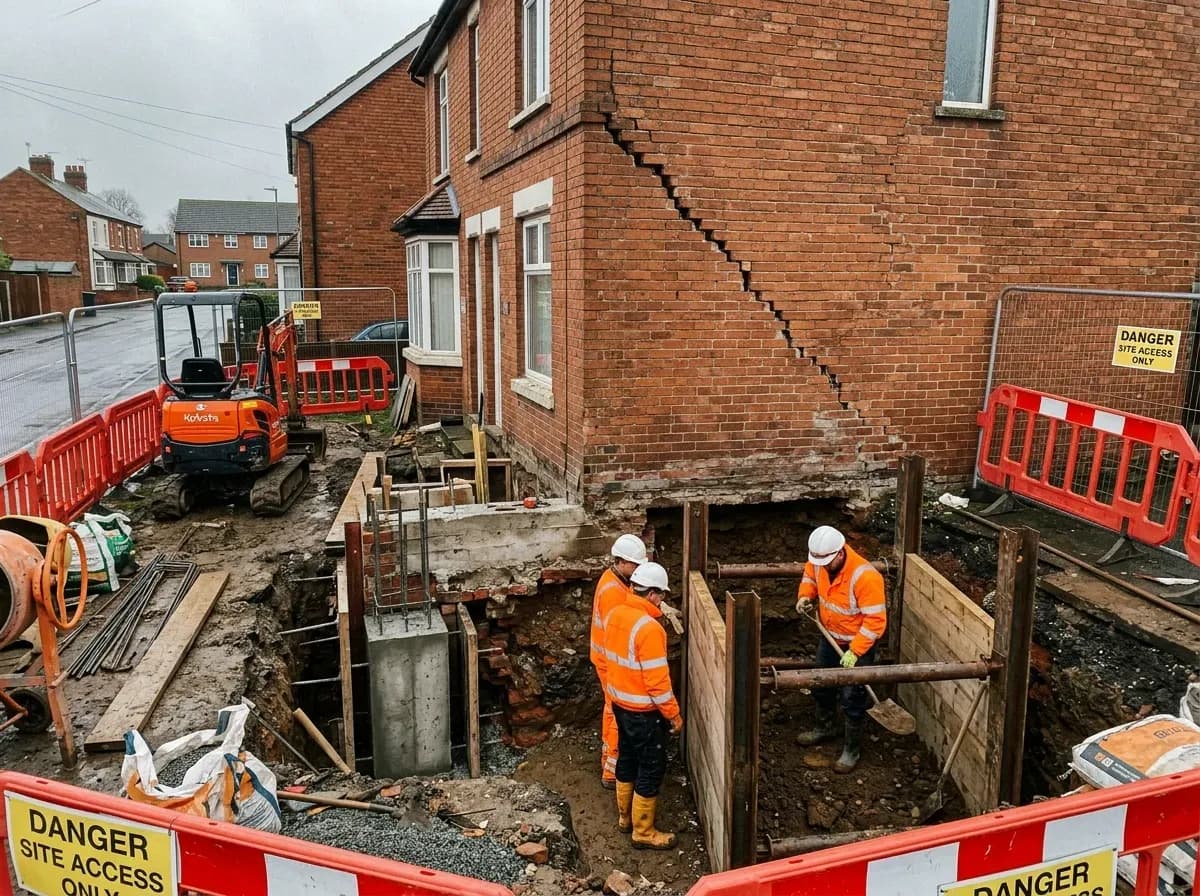
Types of underpinning
Mass concrete
The traditional method. Sections beneath the existing foundations are dug out in sequence and filled with concrete. Each section cures before the next is excavated. Effective and well-proven, used for most domestic jobs.
Mini-piling
Small-diameter piles are driven or drilled down to stable ground, then connected to the building via a reinforced beam. Used where the depth to stable ground is too great for mass concrete, or where access is restricted.
Resin injection
Expanding resin is injected into the ground to fill voids and strengthen the soil. Less invasive and quicker than traditional methods. Suitable for lighter subsidence cases and some soil types. Not a replacement for underpinning in severe cases.
Beam and base
A reinforced concrete beam is cast below the existing foundations, spanning between mini-piles. This redistributes the building load across the piles. Used for more severe cases or where the existing foundations are in poor condition.
Get at least three quotes
Underpinning prices vary significantly between contractors depending on the method they propose, access to your foundations, and how busy they are. Before committing to any work, get at least three written quotes from specialist underpinning contractors so you can compare like for like. Make sure each quote specifies the method, the number of sections, the depth, and whether any making good is included. A couple of phone calls could save you thousands.
Common questions
What causes subsidence?
The most common causes are: clay soil shrinkage during dry weather (the biggest cause in the UK), tree roots extracting moisture from the ground near foundations, leaking drains washing away soil beneath foundations, and poor original foundation design. Properties on clay soil in the south east of England are most at risk.
How do I know if I have subsidence?
Warning signs include: diagonal cracks in the brickwork (especially around windows and doors), cracks wider than 3mm or getting bigger, doors and windows that suddenly stick or will not close properly, and cracks in the internal plaster. Not all cracks are subsidence - settlement, thermal movement, and lintel failure can look similar. A chartered structural engineer (find one via the Institution of Structural Engineers) can diagnose the cause.
Does insurance cover underpinning?
Most buildings insurance policies cover subsidence, heave, and landslip under the standard perils. The excess is typically £1,000. Your insurer will send a structural engineer to investigate and manage the repair. Important: notify your insurer before commissioning any work - if you do it yourself without their agreement, they may refuse to pay.
Worried about subsidence?
See what underpinning costs and how to get your insurance to cover it.
See 2026 prices