What Can You Put in a Skip?
Most household and building rubbish can go in a skip. The exceptions are hazardous items, electricals, liquids and gas bottles, and a few things firms handle separately, like mattresses, sofas and plasterboard. Search any item below to check.
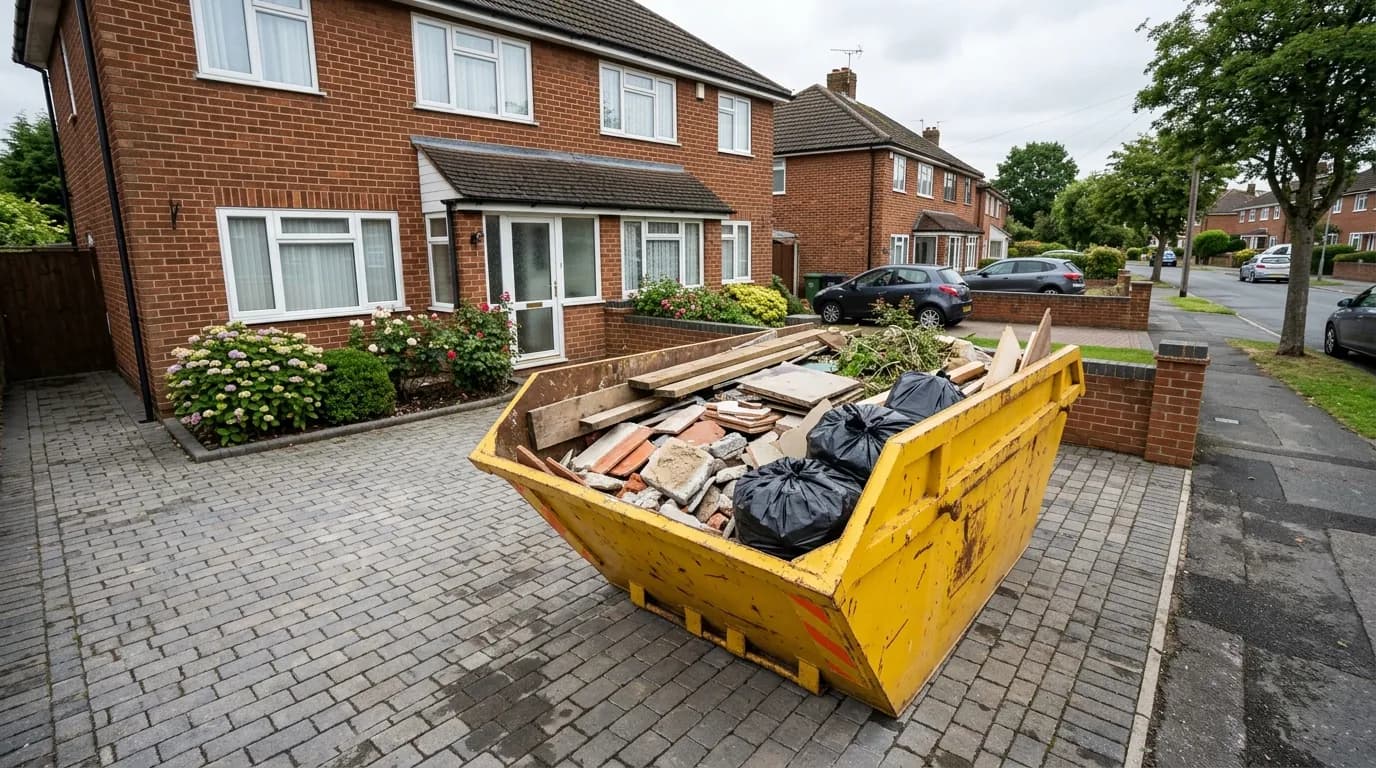
Usually fine
- Household rubbish in bags
- Wood, timber and old furniture
- Garden waste
- Bricks, rubble, tiles and soil
- Bathroom suites and kitchen units
- Metal, plastic, cardboard and carpet
Ask first
- Mattresses (often a charge)
- Sofas and armchairs
- Plasterboard
- Lots of soil or rubble
- Small electricals
- Tyres
Not allowed
- Asbestos
- Fridges, freezers and TVs
- Gas bottles and batteries
- Liquid paint and chemicals
- Oil and fuel
- Fluorescent tubes and medical waste
Check an item
Skip firms set their own rules within the law, so "ask first" items are worth mentioning when you book. It can save a surcharge, or a skip left uncollected.
- Usually fineBagged household rubbishFine, as long as nothing banned is hidden in the bags.
- Usually fineWood and timberIncludes old doors, fence panels and decking.
- Usually fineFurniture without upholsteryTables, wardrobes, bed frames and shelving. Break them down to save space.
- Usually fineGarden wasteSome firms offer a cheaper skip just for green waste.
- Usually fineBricks, rubble and concreteHeavy, so use a smaller skip and don't fill it above the fill line the firm gives you.
- Usually fineTiles and ceramicsHeavy in bulk, like rubble.
- Usually fineSoilAccepted, but it's heavy. Tell the firm, as large amounts may need a heavy-waste skip.
- Usually fineBathroom suitesBaths, toilets and basins are fine.
- Usually fineKitchen units and worktopsFine once the appliances are out.
- Usually fineMetal and scrapFine. Scrap dealers may take larger amounts for free.
- Usually finePlasticsFine.
- Usually fineCardboard and paperFine. Flatten boxes to save space.
- Usually fineCarpet and underlayAccepted by most firms. Roll it tightly.
- Usually fineGlass and windowsUsually accepted. Wrap broken glass, and ask first about lots of old windows.
- Usually fineEmpty, dry paint tinsFine once the paint has dried out completely.
- Usually fineClothes and textilesFine, though charity shops and textile banks will take anything wearable.
- Ask firstMattressesMany firms take them for an extra charge, because they're recycled separately.
- Ask firstSofas and armchairsIn England, upholstered seating must be kept apart from other waste and incinerated, because the foam can contain persistent chemicals. Many firms refuse it or charge extra.
- Ask firstPlasterboardIt must be kept apart from other waste, so firms usually want it bagged separately or in its own skip.
- Ask firstLarge amounts of soil or rubbleSkips have weight limits. Firms often offer a heavy-waste skip with a lower fill line.
- Ask firstSmall electrical itemsElectrical waste is recycled separately, so most firms say no. Take them to the tip or a shop take-back point.
- Ask firstTyresTyres are banned from landfill. A few firms take them for a fee, most say no.
- Ask firstJapanese knotweedNeeds specialist disposal. Don't put it in a normal skip.
- Not allowedAsbestosHazardous. Use a licensed asbestos contractor, or ask your council where to take small amounts.
- Not allowedFridges and freezersThey contain refrigerant gases that must be removed safely. Your council or the shop you buy a new one from can take it.
- Not allowedTVs, monitors and screensElectrical waste. Take them to the tip.
- Not allowedGas bottles and cylindersThey can explode when crushed. Return them to the supplier.
- Not allowedBatteriesHazardous. Supermarkets and tips take household batteries, and garages take car batteries.
- Not allowedLiquid paint and solventsLiquids and chemicals can't go in a skip. Your tip will take them.
- Not allowedOil, petrol and dieselHazardous liquids. Take them to the tip.
- Not allowedChemicals and pesticidesHazardous. Your council can tell you where to take them.
- Not allowedFluorescent tubes and low-energy bulbsThey contain mercury. Tips and many shops collect them.
- Not allowedMedical and clinical wasteReturn medicines to a pharmacy and ask your council about sharps.
The items people ask about most
Can you put a mattress in a skip?
Often, yes, but expect an extra charge. Mattresses are recycled separately from the rest of the skip, so many firms add a fee for each one. Tell the firm when you book. Your council's large-item collection is another option.
Can you put a sofa in a skip?
Ask first. In England, sofas, armchairs and other upholstered seating must be kept apart from other waste and incinerated, because the foam and fabric can contain persistent chemicals. Many skip firms won't take them in a mixed skip, or charge extra to handle them separately. A council large-item collection is usually simpler.
Can you put plasterboard in a skip?
Not mixed in with everything else. Plasterboard has to be kept apart from other waste, so most firms want it bagged separately in the skip or put in a skip of its own. Check before you load it.
Can you put soil in a skip?
Yes, but soil, rubble and hardcore are heavy, and skips have weight limits. For more than a few bags, ask for a heavy-waste skip. These are often smaller, or have a lower fill line.
Can you put garden waste in a skip?
Yes. Branches, hedge cuttings, grass and leaves are fine. Some firms offer a cheaper skip for green waste only.
Can you put electrical items in a skip?
Usually not. Anything with a plug or battery is recycled separately, so most firms say no. Take small electricals to your local tip, and ask the shop to take your old appliance when you buy a new one.
Can you put a fridge in a skip?
No. Fridges and freezers contain refrigerant gases that must be removed safely. Your council's large-item collection, your local tip or the shop delivering your new fridge can take it.
Can you put paint in a skip?
Only empty tins with the paint completely dried out. Liquid paint, solvents and chemicals can't go in a skip. Take them to your local tip.
Can you put tyres in a skip?
Usually not. Tyres are banned from landfill. A few firms take them for a fee, but most refuse. Tyre fitters often take old tyres for a small charge.
Can you put glass in a skip?
Usually, yes. Wrap broken glass so it can't hurt anyone, and ask first if you're getting rid of a lot of old windows.
Can you put black bags in a skip?
Yes. Bagged household rubbish is fine, as long as nothing banned is hidden inside.
Can you put carpet in a skip?
Yes, most firms accept carpet and underlay. Roll it tightly to save space.
How full can you fill a skip?
Load it level with the sides, and no higher. The lorry has to lift and carry the skip on public roads, so an overloaded skip isn't safe. The driver can refuse to take it until you remove the extra, and some firms charge for the wasted trip.
Weight matters as well as volume. Soil, rubble and tiles are heavy, so a skip full of them can go over its weight limit long before it looks full. Firms often mark a lower fill line for heavy waste, or offer a smaller skip for it.
Break things down before they go in. Flattened boxes, dismantled furniture and cut-down branches take up far less room, so you may manage with a smaller, cheaper skip. Our skip sizes guide shows how much each size holds.
What happens if something banned goes in?
The firm can refuse to collect the skip until it's removed, or charge you to sort it out. You're responsible for what goes in, even if a neighbour adds something overnight, so cover the skip or put it out of sight if you can.
You're also responsible for who takes it away. GOV.UK says you must check that the company is on the register of waste carriers, and you could be fined if your rubbish ends up dumped by someone who wasn't allowed to take it. You can check a firm on the Environment Agency register in England. Scotland, Wales and Northern Ireland keep their own registers.
Where to take what can't go in a skip
Your local tip
Recycling centres take most of what a skip can't: electricals, paint, oil, batteries, gas bottles and fluorescent tubes. Your council's website lists opening times and any booking rules.
Council large-item collection
Most councils collect sofas, fridges and mattresses from your home for a fee, which is often cheaper than a skip surcharge.
The shop you buy from
When you buy a new fridge, washing machine or TV, ask the retailer to take the old one away. Many do, sometimes for a small fee.
Charities and reuse
Furniture in good condition can go to a charity shop or reuse group, which keeps it out of the skip altogether.
For hazardous waste such as asbestos and chemicals, GOV.UK can find your council's hazardous waste service.
Get free skip hire quotes
Tell us what you're clearing and local skip firms will get in touch with prices. Free, with no obligation to book.
Frequently asked questions
What can't you put in a skip?+
Asbestos, fridges and freezers, TVs and screens, gas bottles, batteries, liquid paint and solvents, oil and fuel, chemicals, fluorescent tubes and medical waste. Mattresses, sofas, plasterboard, tyres and electricals are often restricted, so ask the firm first.
How high can you fill a skip?+
No higher than the sides. An overloaded skip isn't safe to carry, so the driver can refuse to take it until you remove the extra, or the firm may charge you. Heavy waste such as soil and rubble often has a lower fill line.
Can you put a mattress in a skip?+
Often, yes, but expect an extra charge. Mattresses are recycled separately from the rest of the skip, so many firms add a fee for each one. Tell the firm when you book. Your council's large-item collection is another option.
Can you put a sofa in a skip?+
Ask first. In England, sofas, armchairs and other upholstered seating must be kept apart from other waste and incinerated, because the foam and fabric can contain persistent chemicals. Many skip firms won't take them in a mixed skip, or charge extra to handle them separately. A council large-item collection is usually simpler.
Do I need a permit for a skip?+
Only if it goes on the road. A skip on your own drive or garden doesn't need one. On a public road you need a skip permit from the council, which the skip firm usually arranges and adds to your bill.
Sources
- GOV.UK: Dispose of household waste (checking a waste carrier)
- GOV.UK: Manage waste upholstered domestic seating containing POPs
- GOV.UK: Dispose of waste to landfill (tyres, liquids and plasterboard)
- GOV.UK: Skip licence (England and Wales)
- GOV.UK: Find a local hazardous waste disposal service
- Environment Agency: public register of waste carriers

Written by Chris Kervin, Co-Founder, Less.co.uk
Last updated: · Checked against GOV.UK and Environment Agency guidance · Methodology