Skip Sizes and Prices: Which Skip Do You Need?
Ordering the wrong skip size is one of the most common, and costly, mistakes people make. A mini skip costs from £100, a midi from £150, a builders skip from £200, and a large skip from £250. This guide tells you exactly which size suits which job, what you cannot put in, and how to keep the bill down.
£100
Mini skip (2yd) from
£150
Midi skip (4yd) from
£200
Builders skip (6yd) from
£250
Large skip (8yd) from
Prices updated April 2026 · Based on published trade rates and UK market data.
Skip Sizes and Prices Explained
All prices include delivery, hire period (typically 7 to 14 days), collection, and disposal. A council permit is extra if the skip goes on a public road.
Mini skip
2 cubic yards · approx. 25 to 30 bin bags
£130
£100 to £170
Best for: Small garden clearances, a few bags of rubble, minor decluttering
Midi skip
4 cubic yards · approx. 40 to 50 bin bags
£185
£150 to £220
Best for: Bathroom refit, single room clearance, garden waste after a big tidy
Builders skip
6 cubic yards · approx. 60 to 70 bin bags
£240
£200 to £280
Best for: Kitchen refit, bathroom refit with structural work, mixed renovation waste
Large skip
8 cubic yards · approx. 80 to 90 bin bags
£300
£250 to £350
Best for: House clearance, loft conversion, larger renovation projects
Maxi skip
10 to 12 cubic yards · approx. 100 to 120 bin bags
£370
£300 to £450
Best for: Large renovation, extension groundwork, significant demolition waste
Roll-on/roll-off
20 to 40 cubic yards · approx. 200+ bin bags
£550
£400 to £700
Best for: Commercial projects, whole house strip-out, major demolition
Prices based on industry data. Actual costs vary by location, waste type, and the skip company you choose.
Get free skip hire quotes
Tell us about the job and local skip hire companies will get in touch with prices. Free, with no obligation to book.
Which Skip Size for Which Job?
Not sure which size you need? Here is a quick reference by common home improvement project.
| Project | Recommended Skip |
|---|---|
| Garden clearance (small) | Mini skip (2yd) |
| Garden clearance (large) | Midi skip (4yd) |
| Bathroom refit | Midi or Builders skip |
| Kitchen refit | Builders skip (6yd) |
| Loft conversion | Builders or Large skip |
| House clearance | Large skip (8yd) |
| House renovation | Large or Maxi skip |
| Extension / demolition | Maxi or Roll-on/roll-off |
When in doubt, go one size up. Swapping to a larger skip after delivery costs extra; ordering right first time saves money.
What You Cannot Put in a Skip
Certain items are banned from standard skips by law or by the skip company's insurance. Putting prohibited waste in a skip can land you with a fine, or the skip company refusing to collect it.
Asbestos
Hazardous material, requires specialist licensed removal
Tyres
Classed as controlled waste, cannot go in general skips
Car and household batteries
Contain hazardous chemicals and heavy metals
Gas bottles and canisters
Risk of explosion during compaction
Fridges and freezers
Contain refrigerant gases requiring safe extraction
Paint (wet/liquid)
Hazardous waste, dried paint tins are usually fine
Solvents and chemicals
Hazardous waste, take to a licensed facility
Plasterboard (often)
Restricted on most mixed-waste skips, ask your company
Note on plasterboard: Plasterboard is increasingly treated as a separate waste stream by skip companies. If your project involves removing stud walls, ceilings, or partitions, ask specifically about plasterboard when you book, many firms require it in a dedicated skip or charge extra for mixed loads.
Do You Need a Skip Permit?
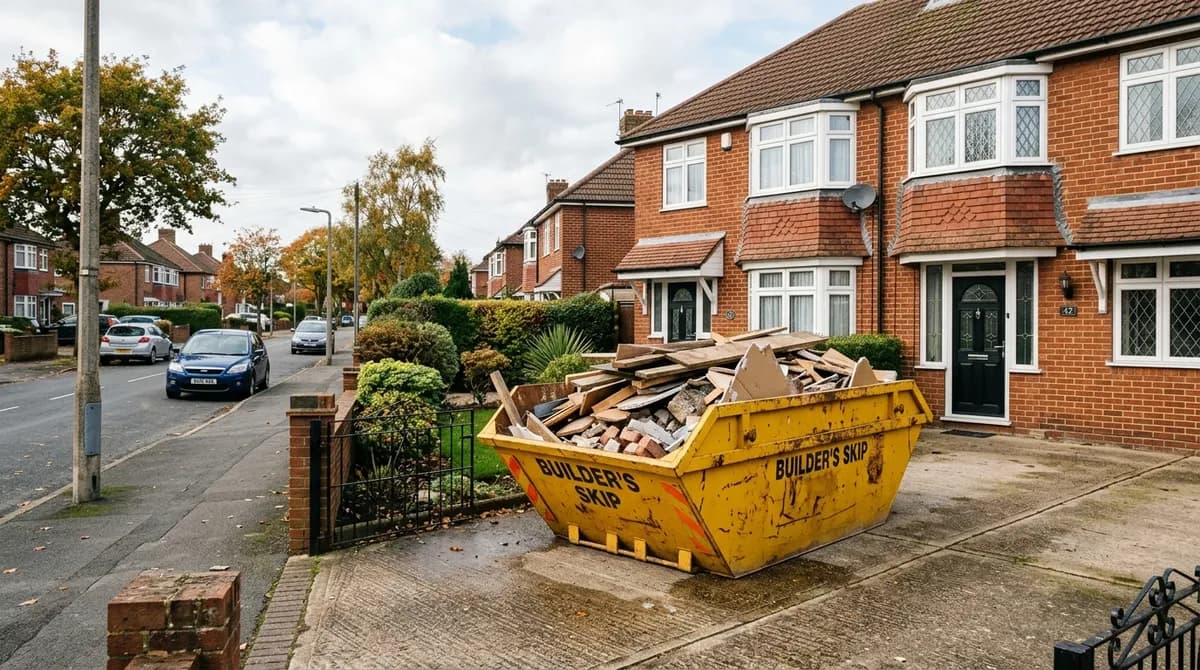
A permit is only required if the skip is placed on a public road, pavement, or council-maintained land. If it sits entirely on your own driveway or private land, you do not need one.
No permit needed
- Skip on your own driveway
- Skip in your front garden
- Skip on any private land
Permit required
- Skip on a public road
- Skip on a pavement
- Skip on a grass verge
A council skip permit typically costs £20 to £60, depending on your local authority. Your skip company should arrange this for you and add the fee to the invoice, just make sure to ask whether it is included upfront. Permits are usually granted quickly, but some councils need 48 hours' notice.
Skip Bag Alternative: Is It Worth It?
A skip bag (sometimes called a hippo bag) is a large polypropylene bag, similar in concept to a skip, but much smaller and without the need for a vehicle to deliver a metal container. You buy the bag, fill it yourself, and the company collects it.
| Feature | Skip Bag | Mini Skip (2yd) |
|---|---|---|
| Typical cost | £80 to £120 | £100 to £170 |
| Capacity | ~1 cubic yard | 2 cubic yards |
| Permit needed? | No | No (if on driveway) |
| Access requirements | Very easy, fits in tight spaces | Needs clearance for delivery vehicle |
| Best for | Small clearances, limited access | Slightly larger jobs with driveway space |
Skip bags are good for small jobs where access is limited, a narrow side passage, a flat without a driveway, or a single-room clearance. For anything bigger, a standard skip works out better value per cubic yard.
How to Get Your Skip for Less
A few simple choices before you book can make a real difference to the final bill.
Order the right size first time
Getting the wrong size is expensive either way, an overfilled skip may be refused for collection (or charged extra), and swapping to a larger one means an extra delivery and collection fee. Estimate your waste volume before you book, and if you are between sizes, go one up.
Split a skip with a neighbour
If a neighbour is also doing work, sharing a larger skip between two households is often cheaper than each ordering separately. A large (8yd) skip split two ways works out better value than two separate midi skips.
Put the skip on your driveway
Avoid the permit fee (£20 to £60) by positioning the skip entirely on your own property. Even a tight fit on the driveway saves money, just make sure it does not overhang onto the pavement.
Break things down before loading
Flat-packing old furniture, breaking up timber, and crushing cardboard before it goes in the skip can free up a surprising amount of space. Heavy items like rubble and tiles should go in first at the bottom; lighter waste fills the gaps around them.
Recycle what you can before it goes in
Old furniture, working appliances, and decent-condition building materials can often be given away on Freecycle or sold on Facebook Marketplace. Every item that leaves separately is space saved in the skip, meaning you might get away with a smaller (cheaper) size.
Get at least three quotes
Skip hire prices vary considerably between companies, even within the same town. Always get three quotes before booking, and check what is included, delivery, collection, disposal, and weight limits. The lowest headline price is not always the cheapest all-in.
Check the quote includes VAT
Skip hire is standard-rated, so 20% VAT applies. Some companies quote a price that excludes it, which means a skip advertised at £200 really costs £240. Confirm every quote is VAT-inclusive before you compare them, or the cheapest headline figure can end up the most expensive.
Pay by credit card, not a cash deposit
On any skip booking over £100, paying by credit card gives you Section 75 protection: the card company is jointly liable if the skip never arrives or the firm folds, so you can reclaim the money. Smaller skip bags can come in under that £100 threshold, so it mainly helps on standard skip hire. Either way, avoid paying a large cash deposit up front to a company you do not know.
Free, with no obligation to book.
Frequently Asked Questions
What size skip do I need for a bathroom refit?
A midi skip (4 cubic yards) is usually enough for a standard bathroom refit, it holds around 40 to 50 bin bags of waste, which covers removed tiles, old sanitaryware, pipework, and general debris. If the bathroom is large or you are doing a full strip-back including flooring and plasterwork, step up to a builders skip (6 cubic yards) to give yourself plenty of room.
What size skip do I need for a kitchen refit?
A builders skip (6 cubic yards, £200 to £280) is the standard choice for a kitchen refit. It holds around 60 to 70 bin bags and easily handles old units, worktops, appliances, flooring, and plasterwork. For a large kitchen or if you are also removing structural walls, a large skip (8 cubic yards) gives you more breathing room.
Can I put plasterboard in a skip?
Many skip companies now require plasterboard to go in a separate, dedicated skip because it cannot be mixed with general waste, when plasterboard gets wet and decomposes alongside organic material, it releases hydrogen sulphide gas. If your project involves any plasterboard (stud walls, ceilings, partitions), ask your skip company upfront about their policy. Some charge extra; others provide a separate plasterboard-only skip.
How much does a skip permit cost?
A council skip permit typically costs £20 to £60, depending on your local authority. You only need one if the skip sits on a public road, pavement, or grass verge. If it fits entirely on your own driveway or private land, no permit is needed. Most skip companies arrange the permit on your behalf and add the fee to your invoice.
What can you not put in a skip?
Items you cannot put in a standard skip include: asbestos, tyres, batteries (car or household), gas bottles, fridges and freezers (they contain refrigerant gases that must be removed safely), paint tins with wet paint, solvents and chemicals, and medical waste. Plasterboard is restricted on many skips. If in doubt, ask your skip company, disposing of prohibited waste illegally can result in a significant fine.
What is a skip bag and is it cheaper than a skip?
A skip bag (sometimes called a hippo bag) is a large polypropylene bag that you fill yourself and the company collects. They hold roughly 1 cubic yard and cost £80 to £120 collected. They are cheaper than a mini skip for very small jobs, and easier if access is tight. For anything beyond a small clearance, a proper skip works out better value.
Useful Resources

Written by Chris Kervin, founder of Less.co.uk
Last updated: · Pricing based on published trade rates and UK market data · Methodology
Know which skip you need? Get it for less.
Skip prices vary more than most people realise, even within the same town. Getting three quotes takes minutes and can save you a decent chunk, especially on larger skips where the price difference between companies can be £50 or more.
Compare Free Skip Hire QuotesFree, no obligation · Local skip companies · Compare multiple quotes