Scaffolding: Your Complete Guide
Scaffolding is the unglamorous cost that catches out many homeowners. Almost every external project above ground-floor height needs it - roofing, rendering, guttering, painting, loft conversions, and extensions. This guide covers types, costs, hire periods, and how to avoid paying more than you need to.
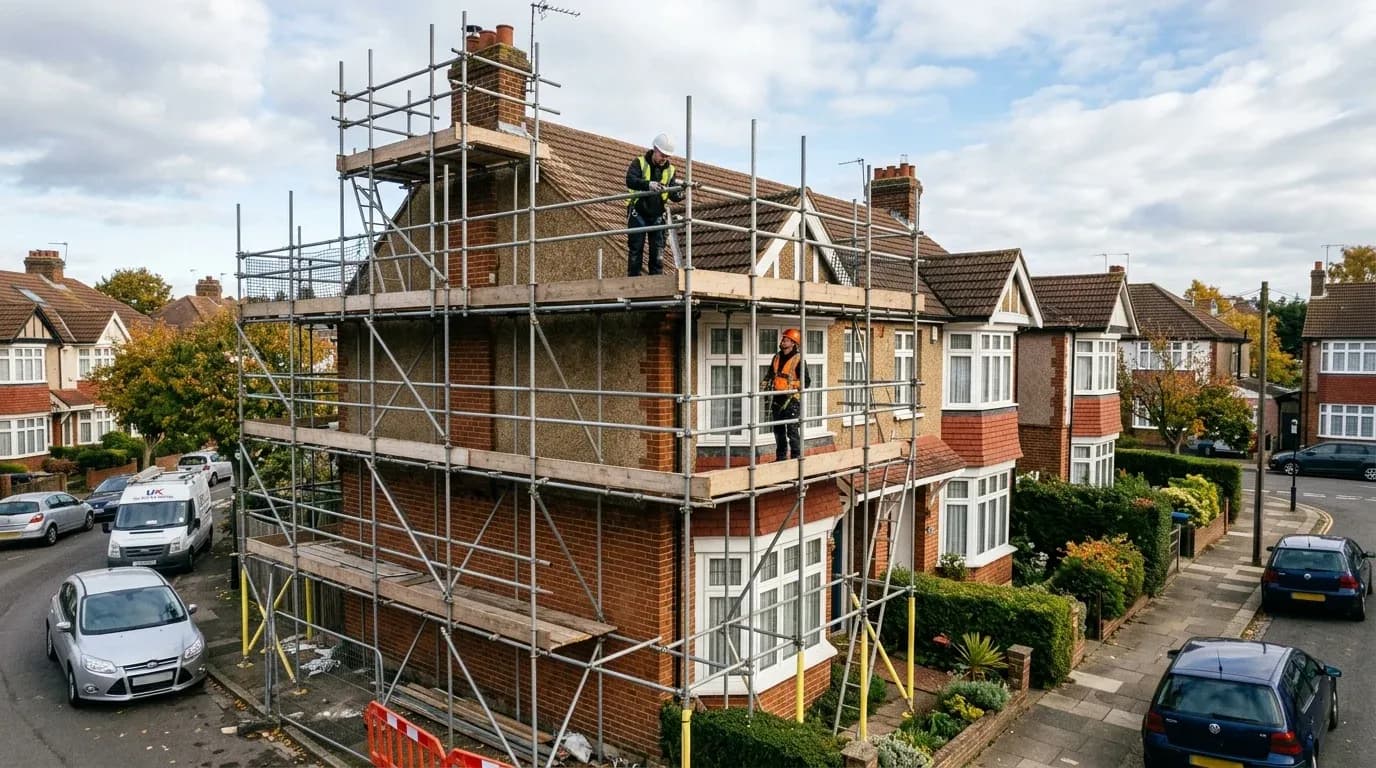
Types of scaffolding
Independent scaffold
The most common type for houses. Stands on its own without leaning on the building. Two rows of standards (vertical poles) support the platforms. Safe, versatile, and suitable for most domestic work.
Putlog scaffold
Uses the building wall for support - horizontal tubes (putlogs) slot into the mortar joints. Cheaper than independent scaffold but only suitable during construction when the wall is being built. Occasionally used on older buildings.
Tower scaffold
A freestanding mobile tower on wheels. Used for smaller, localised work like chimney repairs, painting a gable end, or fitting a satellite dish. Can be moved around the property and does not need a full erection team.
Birdcage scaffold
A working platform that covers an entire area - used for ceiling work inside large rooms, churches, or commercial spaces. Rarely needed for standard domestic work but sometimes used for ornate ceiling repairs.
Get at least three quotes
Scaffolding hire prices vary between companies, and the quote structure differs too. Look for contractors who are members of the National Access and Scaffolding Confederation (NASC). Prices - some charge a fixed price for the full hire period, others split it into erection, weekly hire, and dismantling. Get at least three written quotes for the same coverage and hire duration. Check whether each quote includes delivery, board-out for public footpaths, and any council licence fees. Comparing like for like is the only way to tell a fair price from an inflated one.
Scaffolding guides
Scaffolding cost guide
Hire prices by coverage and project type, plus regional variations and how to save.
Scaffolding hire guide
Weekly rates by property type, what's included, durations by job, and pavement licences.
Roofing cost guide
New roof prices including scaffolding estimates for different property types.
Guttering cost guide
Guttering and fascia prices, where scaffolding is usually included in the quote.
Common questions
How much does scaffolding cost?
Scaffolding for a typical two-storey house costs £500 to £1,500 for the first week including erection and dismantling. A single elevation costs £300 to £600, while a full wrap-around on a detached house costs £1,200 to £2,500. Weekly hire after the first week runs at £10 to £20 per metre.
Do I need a licence for scaffolding?
Only if the scaffolding sits on a public footpath, pavement, or road. You need a scaffolding licence from your local council, which costs £50 to £300 and takes 1 to 3 weeks to process. If the scaffold is entirely on your private land, no licence is needed.
How long can scaffolding stay up?
There is no legal time limit for scaffolding on private land. However, if it sits on a public highway, the council licence will specify a maximum duration - typically 4 to 12 weeks. The scaffolding company charges weekly hire, so there is a financial incentive to keep the hire period short.
What types of scaffolding are there?
The most common for domestic work is independent scaffolding - a freestanding structure that does not lean on the building. Putlog scaffolding uses the building wall for support and is cheaper but less versatile. Tower scaffolds are mobile, freestanding units used for smaller jobs like chimney repairs. Birdcage scaffolding provides a working platform across an entire area, used for ceiling work.