Pest Control: Your Complete Guide to Costs & Treatment
From rats in the loft to wasps under the eaves, pest problems are stressful and need sorting quickly. This guide covers the most common UK household pests, what treatment costs, when you can tackle it yourself, and how to find a reputable pest controller who will actually fix the problem. For accredited professionals, the British Pest Control Association (BPCA) maintains a searchable directory.
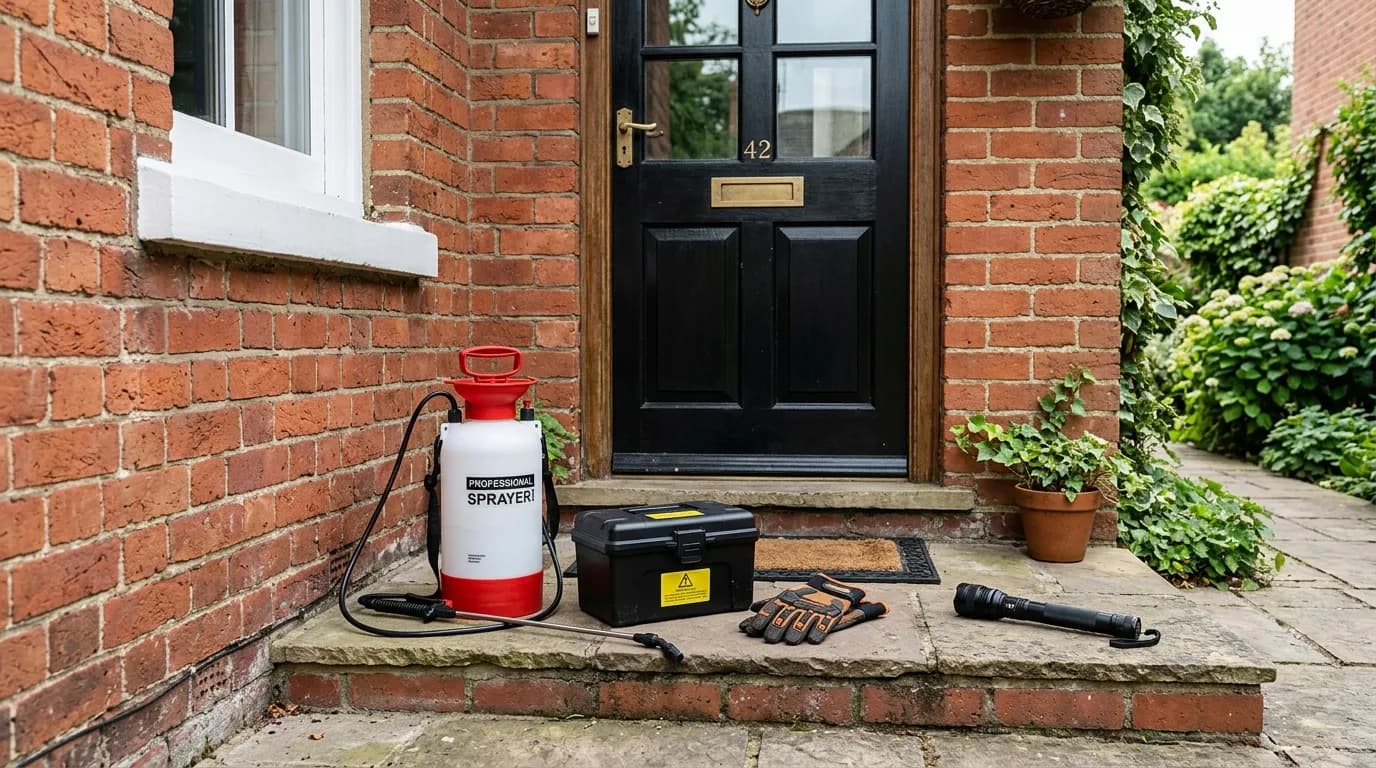
Common UK household pests
Rats and mice
The most common call-out for UK pest controllers. Rats gnaw through wiring and pipework, contaminate food, and carry disease. Mice are smaller but breed faster. Signs include droppings, gnaw marks, scratching noises at night, and greasy smear marks along walls.
Wasps
Wasp nests appear from late spring and grow through summer. A mature nest can hold 5,000 to 10,000 wasps. Never try to remove an active nest yourself - a pest controller can treat it in under an hour with insecticidal dust, and the nest dies within 24 hours.
Bed bugs
Tiny blood-feeding insects that hide in mattress seams, bed frames, and furniture. They spread through luggage, second-hand furniture, and shared laundry. Bites appear in clusters and are intensely itchy. Professional heat or chemical treatment is the only reliable cure.
Cockroaches
German and Oriental cockroaches are the main UK species. They thrive in warm, damp areas near food sources - kitchens, bathrooms, behind appliances. They breed rapidly, so early treatment is critical. Gel bait applied by a professional is the most effective method.
Ants
Black garden ants are a nuisance rather than a health risk. They enter homes through tiny gaps looking for sweet food. Small infestations respond to shop-bought bait stations. Larger or persistent problems - especially pharaoh ants - need professional treatment.
Fleas
Usually brought in by cats or dogs, fleas can survive in carpets and soft furnishings for months without a host. Treat your pets first, then have the home treated. Professional spray treatment kills adults and a growth inhibitor stops eggs from developing.
Moths
Clothes moths and carpet moths cause damage to natural fibres - wool, silk, cashmere. Look for bare patches in carpets and small holes in stored clothing. Pheromone traps help with monitoring, but a heavy infestation needs professional spray treatment.
Squirrels, pigeons, and foxes
Grey squirrels in the loft can cause serious damage to wiring and insulation. Pigeons foul buildings and carry disease. Foxes dig up gardens and scatter bins. All require humane removal methods, and some are protected - a BPCA member will know the legal position.
DIY vs professional treatment
| Pest | DIY? | Notes |
|---|---|---|
| Ants (garden) | Yes | Bait stations from a hardware shop usually work |
| Moths (mild) | Yes | Pheromone traps and cedar blocks for small problems |
| Rats / mice | No | Entry points must be found and sealed - professionals are far more effective |
| Wasps | No | Serious sting risk. Never disturb a nest without protective equipment |
| Bed bugs | No | Shop-bought sprays rarely work. Professional heat or chemical treatment needed |
| Cockroaches | No | They breed too quickly for DIY products to keep up |
| Fleas (heavy) | No | Treat pets first, then call a professional for the home |
| Squirrels | No | Legal restrictions on grey squirrels - must be dealt with by a licensed operator |
How to find a good pest controller
- 1
Check BPCA or NPTA membership
The British Pest Control Association (BPCA) and National Pest Technicians Association (NPTA) are the two main trade bodies. Members are vetted, insured, and follow a code of practice. You can search for members on the BPCA website by postcode.
- 2
Ask your council first
Many local councils offer subsidised pest control for rats (and sometimes mice). The service is typically free or costs £30 to £80. Waiting times vary - in some areas it is a few days, in others it can be 2 to 3 weeks.
- 3
Get at least two quotes
Prices vary significantly between pest controllers. Get two or three quotes and ask what is included - how many visits, what guarantee they offer, and whether proofing (blocking entry points) is part of the price.
- 4
Ask about guarantees
A good pest controller will guarantee their work. For rats and mice, a typical guarantee is 3 to 6 months. For bed bugs, expect a guarantee that covers a follow-up visit if the problem returns within 30 days.
Prevention tips
Seal entry points
Mice can squeeze through a 6mm gap. Check around pipes, vents, doors, and where cables enter the house. Use wire wool and expanding foam to block gaps.
Store food properly
Keep food in airtight containers, clean up crumbs and spills immediately, and do not leave pet food out overnight. This removes the food source that attracts most pests.
Manage bins carefully
Use bins with secure lids, keep them away from the house if possible, and clean them regularly. Overflowing or uncovered bins attract rats, foxes, and flies.
Reduce moisture
Fix dripping taps and leaking pipes. Cockroaches and silverfish thrive in damp conditions. Good ventilation in bathrooms and kitchens helps too.
Keep the garden tidy
Overgrown vegetation, piles of wood, and compost heaps near the house provide shelter for rats and mice. Keep a clear gap between plants and your exterior walls.
Check second-hand furniture
Bed bugs often arrive via second-hand mattresses, sofas, and bed frames. Inspect seams and joints carefully before bringing anything into your home.
Pest control guides
Pest control cost guide
Treatment prices for every common UK pest, from wasp nests to bed bugs.
Rat control cost
Council vs private, treatment process, proofing, and prevention tips.
Woodworm treatment cost guide
Timber treatment prices for woodworm, including surveys and guarantees.
Roofing cost guide
Roof repairs that can also fix entry points for squirrels and birds.
Common questions
Should I try DIY pest control or call a professional?
For minor ant or moth problems, shop-bought traps and sprays can work well. For rats, mice, bed bugs, cockroaches, or wasps, professional treatment is strongly recommended. These pests are harder to eliminate fully, and a half-done job often makes the problem worse. Rats in particular can cause structural damage and carry diseases, so speed matters.
How do I find a good pest controller?
Look for a pest controller who is a member of the British Pest Control Association (BPCA) or the National Pest Technicians Association (NPTA). Members follow a code of conduct, carry public liability insurance, and use approved methods. Your local council also offers pest control services, often at a subsidised rate for rats and mice.
How long does pest control treatment take to work?
It depends on the pest. Wasp nest treatment works within 24 hours. Rat and mouse treatments typically take 2 to 3 visits over 2 to 4 weeks, as the technician monitors bait uptake and blocks entry points. Bed bug treatments usually need 2 visits spaced 10 to 14 days apart to catch newly hatched eggs. Cockroach gel bait takes 1 to 2 weeks to work through the colony.
Will the council deal with pests for free?
Most councils offer subsidised rat treatment, and some treat mice too. The service is usually free or costs £30 to £80 depending on the council. However, council waiting times can be long - sometimes 2 to 3 weeks. For wasps, bed bugs, and other pests, council services are less common and you will likely need a private pest controller.
Got a pest problem?
Find out what professional treatment costs and how to get it sorted for less.
See 2026 prices