Kitchen Fitting Cost in Birmingham (2026)
Birmingham kitchen prices run roughly 1% below the UK average, the same as the rest of the Midlands. Most homeowners in the West Midlands spend between £10,500 and £14,500 on a mid-range fitted kitchen. A small budget galley starts from around £4,950.
£8,400
Budget kitchen (fitted)
£11,000
Mid-range kitchen (fitted)
£16,000
Premium kitchen (fitted)
Free, no obligation. Quotes from local Birmingham kitchen fitters.
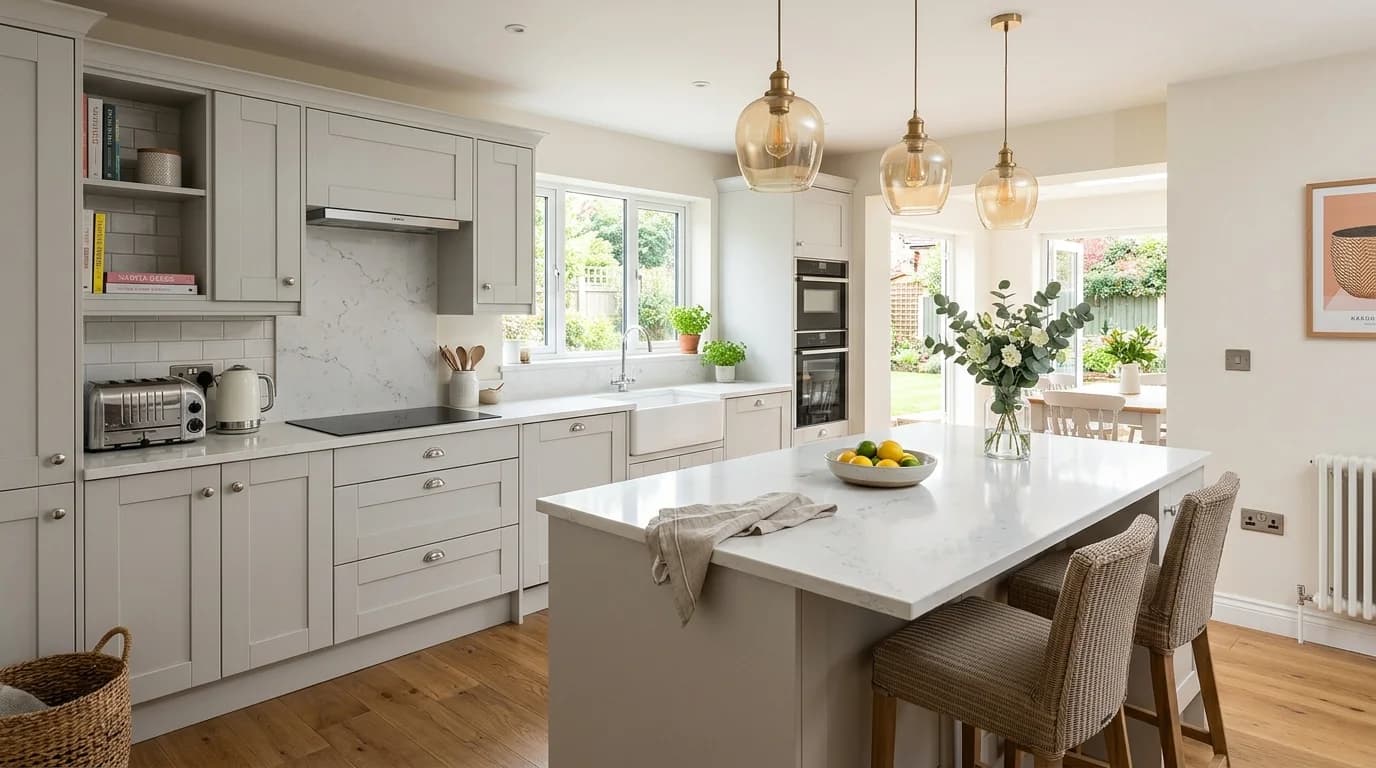
Birmingham kitchen prices by specification
Prices below are for a fully fitted kitchen in Birmingham, including supply of units, worktops, and basic appliance connections. Flooring, tiling, and structural work are quoted separately.
Budget
Flat-pack units (IKEA, B&Q), laminate worktop, freestanding appliances
£8,400
£5,950 to £9,400
Mid-range
Trade units (Howdens, Magnet), quartz or solid wood worktop, integrated appliances
£11,000
£10,500 to £14,500
Premium
Bespoke or high-end rigid units, stone worktop (granite/quartz/Dekton), high-spec integrated appliances
£16,000
£15,000 to £25,000
Few kitchen firms publish prices, so these averages come from the handful that do, checked against retailers' published prices. November 2026.
Get free kitchen quotes in Birmingham
Prices move a lot with your postcode, the access on site and the spec you choose. Get free quotes from local kitchen fitters and see what yours actually comes to, with no obligation to book.
What affects kitchen costs in Birmingham
Birmingham has a large pool of kitchen fitters across the city and the broader West Midlands area. That means plenty of choice, so you should be able to find a reliable fitter at a fair price if you take the time to get more than one quote and check reviews.
The type of property affects costs noticeably. Interwar semis and post-war terraces in areas like Selly Oak or Kings Heath often have smaller, more straightforward kitchen spaces. Larger Victorian properties in Moseley or Edgbaston can have bigger kitchens but occasionally tricky access, older pipework, or lead-painted walls that slow the job down.
Building costs in the West Midlands are a little below the UK average on official figures, and materials are broadly the same price as anywhere else in England. Buying your own units from a trade supplier and paying a separate fitter tends to work out cheaper than going through a kitchen showroom that bundles everything together.
Any gas work on a hob or cooker must be carried out by a Gas Safe registered engineer. Electrical work, including new circuits or additional sockets, must comply with Part P Building Regulations. For consumer advice on hiring tradespeople, see Trading Standards.
Birmingham vs other UK cities
How Birmingham kitchen fitting costs compare to other major cities, by specification level.
| City | Mid-range | vs National |
|---|---|---|
| London | £12,500 to £17,000 | +17% |
| Manchester | £10,500 to £15,000 | +2% |
| Birmingham(this page) | £10,500 to £14,500 | -1% |
| National average | £10,500 to £14,500 | - |
Regional prices use the BCIS location factors published by the Department for Education (December 2025), with the Valuation Office Agency's figure for Wales. There's no current official figure for Scotland, so we show the UK price there. How we work out regional prices.
How to get your Birmingham kitchen for less
Birmingham already has competitive fitting costs. A few straightforward decisions can reduce the total further.
Use a trade supplier rather than a showroom
Your fitter can buy units through Howdens, which only sells through tradespeople. The quality is solid and the pricing is competitive. Alternatively, buying flat-pack from IKEA's Birmingham store at the Retail Park or B&Q and paying a carpenter to fit them usually works out 30 to 40% cheaper than a showroom package.
Compare at least three quotes
Ask a few different fitters to quote on the same specification: the same units, the same layout and the same worktop material. That way you can see exactly what fitting costs you are being charged and spot the outliers.
Keep the sink and cooker in the same spot
Moving plumbing or gas adds cost and time to any kitchen job. If your layout works reasonably well as it is, fitting new units in the same positions tends to keep the bill down.
Replace doors rather than the whole kitchen
If the unit carcasses are structurally sound and there is no water damage, replacing just the doors, drawer fronts, and worktop is a cost-effective way to get a kitchen that looks completely different. A local carpenter can usually swap the doors out in a day or two.
Compare the final price, not the discount
Kitchen sales run almost all year, so a big discount on its own tells you little. Compare the price you'd actually pay for the same plan.
Free, with no obligation to book.
Frequently asked questions
How much does a new kitchen cost in Birmingham?
How long does a kitchen fitting take in Birmingham?
How can I save money on a kitchen in Birmingham?
Free, with no obligation to book.
Need the full UK kitchen cost guide?
The main guide covers additional costs, worktop materials, a step-by-step installation breakdown, and national price data across all UK regions.
Written by Chris Kervin, Co-Founder of Less.co.uk
Last updated: · Based on published trade rates and market data · Methodology