Guttering, Fascias & Soffits: Your Complete Guide
Gutters, fascias, and soffits do not get much attention until something goes wrong. A leaking gutter or a rotten fascia board might seem minor, but left alone they cause damp, timber damage, and costly repairs. This guide covers materials, warning signs, and what replacement should cost.
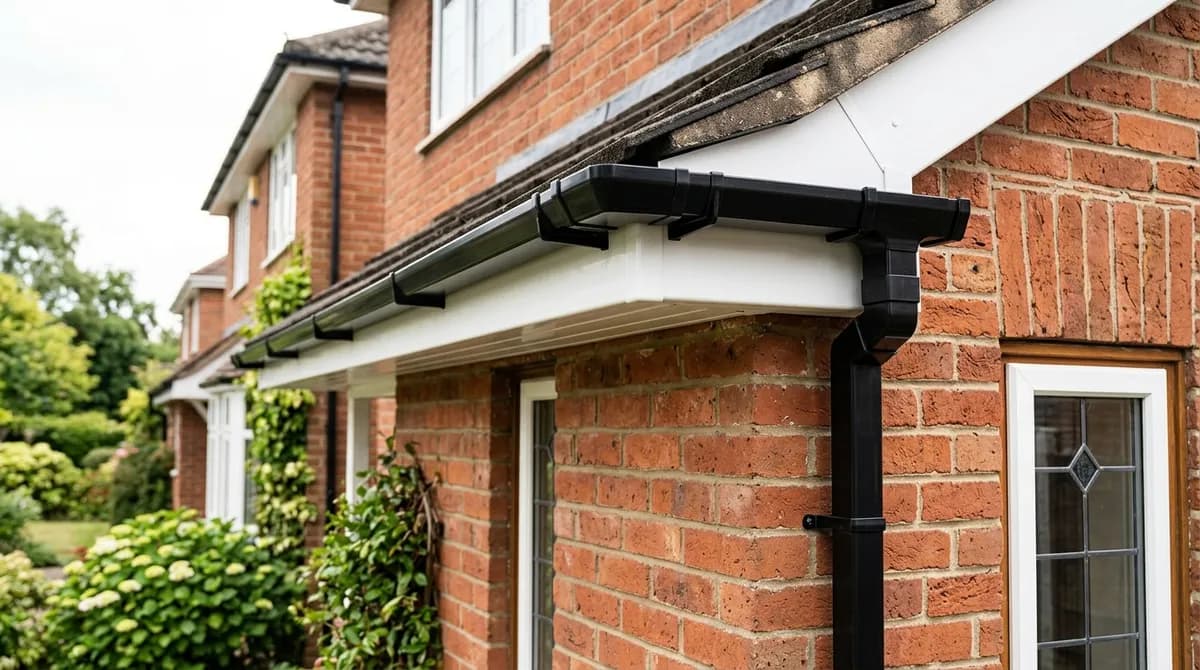
Guttering materials compared
uPVC
By far the most common choice in the UK. Lightweight, cheap, easy to fit, and available in white, black, brown, and grey. Lifespan of 15 to 25 years. The weak point is joints, they can leak as the seals age.
Aluminium
Stronger and longer-lasting than uPVC, with a lifespan of 25 to 40 years. Seamless aluminium guttering (formed on site from a continuous coil) eliminates joints and virtually removes the leak risk. Costs more upfront but saves on maintenance.
Cast iron
The traditional choice, still required on many listed and conservation area properties. Extremely durable (50+ years) but heavy, expensive, and needs periodic painting to prevent rust. Usually fitted by specialists.
Copper
A premium option that develops a distinctive green patina over time. Virtually maintenance-free and lasts a lifetime. Rarely used on standard homes due to cost, mainly seen on period properties and high-end renovations.
Signs you need replacement
Sagging or pulling away from the wall
Guttering that sags or pulls away from the fascia is no longer draining properly. Water pools in the low points and overflows, running down the wall. The cause is usually rotten fascia boards that can no longer hold the brackets, or brackets that have corroded.
Visible leaks at joints
On a rainy day, walk around the house and look up. Dripping joints are the most common gutter problem. On uPVC, the rubber seals inside the joints perish over time. Sometimes resealing fixes it, but if the guttering is old and leaking in multiple places, replacement is more sensible.
Peeling paint on fascias
Paint flaking off timber fascia boards is the early warning sign of rot. If you press a screwdriver into the board and it sinks in, the timber is rotten and needs replacing. Catching it early means you replace just the fascia. Leave it and the damage spreads to the soffit and potentially the rafter ends.
Damp patches on exterior walls
Staining or damp patches on the wall below the roofline usually point to overflowing or leaking gutters. The water runs down the brickwork and can eventually penetrate into the interior. If you have damp upstairs, check the gutters before paying for damp proofing.
Get at least three quotes
Guttering and fascia prices vary more than you might expect between roofers, and some include scaffolding while others charge it separately. Look for contractors who are members of the National Federation of Roofing Contractors (NFRC). Get at least three written quotes that each cover the same scope - materials, fascias, soffits, scaffolding, and disposal of the old guttering. Comparing like for like is the only way to tell a fair price from a padded one.
Guttering guides
Guttering cost guide
Prices per metre, whole-house estimates, and what affects the final bill in 2026.
Gutter replacement cost
uPVC, aluminium, and cast iron replacement prices plus fascias and soffits.
Roofing cost guide
New roof prices, repairs, and flat roof costs across the UK.
Rendering cost guide
External rendering prices per m² and whole-house estimates.
Common questions
How often should gutters be cleaned?
At least once a year, ideally in late autumn after the leaves have fallen. If you have overhanging trees, twice a year is better. Blocked gutters cause water to overflow and run down the walls, which leads to damp problems that are far more expensive to fix than a gutter clean.
What are fascias and soffits?
Fascias are the vertical boards that run along the lower edge of the roof, directly behind the guttering. They support the bottom row of roof tiles and hold the guttering in place. Soffits are the horizontal boards that tuck under the roof overhang, connecting the fascia to the wall.
Can you replace guttering without scaffolding?
On a single-storey property or bungalow, guttering can usually be replaced from a ladder. For two-storey or taller buildings, scaffolding or a tower is strongly recommended. Scaffolding adds £400 to £1,000 to the job but keeps the work safe and typically makes it faster too.
How do I know if my fascias need replacing?
Look for peeling paint, visible rot, swelling, or soft spots. On uPVC fascias, warping, discolouration, or the board pulling away from the wall are signs of failure. If the guttering is sagging, the fascia behind it may be rotten.
Compare real quotes for your job
Prices move a lot with your postcode, the access on site and the spec you choose. Get up to 3 free quotes from vetted local tradespeople and see what yours actually comes to, with no obligation to book.