How Much Does a Garden Office Cost in 2026?
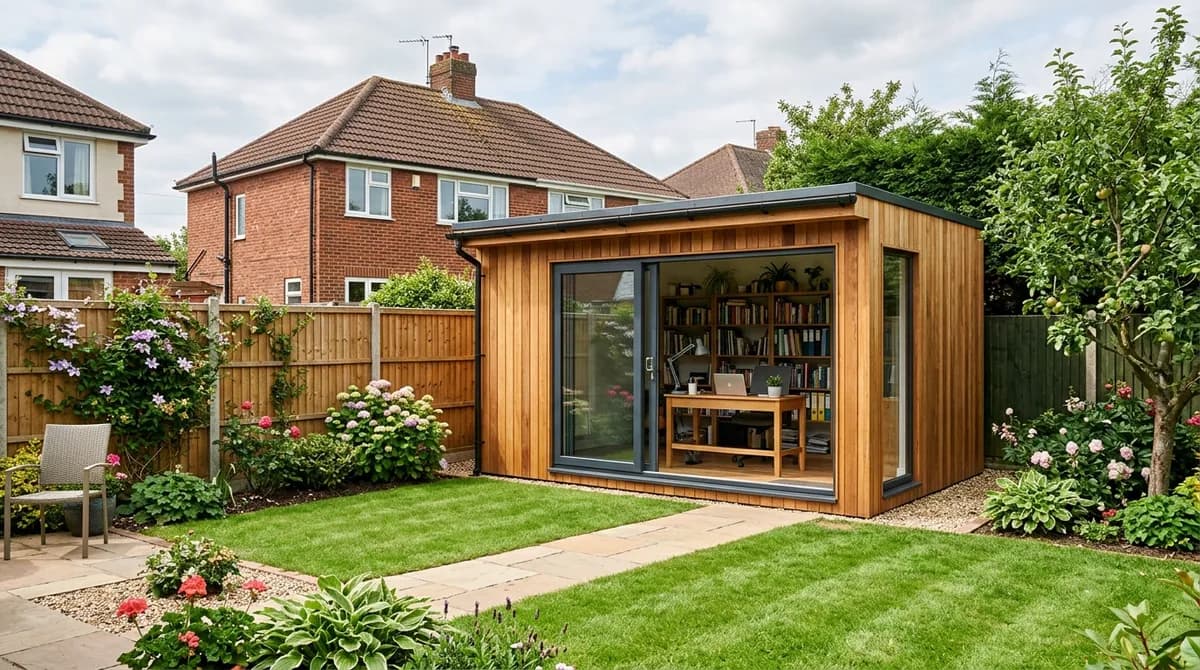
A basic flat-pack garden office costs £5,000 to £8,000. A fully insulated, wired office with heating, the kind you can actually work in year-round, costs £12,000 to £20,000 professionally installed. Bespoke architect-designed builds run £20,000 to £35,000+. The big variables are insulation quality, whether electrics are included, and how much site prep your garden needs.
£5,000+
Budget flat-pack
£14,000
Mid-range installed
£24,000+
Premium bespoke
£200 to £500
Running costs/yr
Prices updated April 2026 · Based on industry data and contractor submissions.
Most garden offices do not need planning permission under permitted development rights. All electrical work must be carried out by a Part P registered electrician, this is Building Regulations notifiable work, not a DIY job. Always check with your local authority before ordering.
Garden Office Prices at a Glance
Prices below are for the building itself. Groundworks, electrical connection from the house, and heating are typically extra, see the additional costs section further down.
Log cabin style
Looks attractive but typically has thin insulation, not ideal for year-round use without an upgrade
£5,000
£3,000 to £8,000
Budget flat-pack (self-assembly)
Basic insulation, single-glazed, DIY assembly, usable but gets cold in winter without extra heating
£6,500
£5,000 to £8,000
Mid-range modular (professionally installed)
Double-glazed, fully insulated walls and roof, electrics included, the sweet spot for most people
£14,000
£10,000 to £18,000
Premium bespoke garden office
Architect-designed, premium finishes, plumbing option, high-spec insulation and glazing
£24,000
£18,000 to £30,000+
Prices for the building only. Add £2,500 to £5,000 for groundworks, electrics, and basic heating.
What a Garden Office Needs That a Shed Doesn't
A garden shed keeps the lawnmower dry. A garden office needs to keep you warm, connected, and productive through a British winter. These are the things that actually matter, and what they add to the cost.
Insulation, the most important thing
This is where cheap garden offices fall down. Proper year-round use needs at least 50mm of rigid PIR insulation in the walls and 100mm or more in the roof and floor. Ask suppliers for U-values before buying. A building with a wall U-value of 0.28 or lower will stay warm without hammering the heating. Poor insulation means cold mornings, condensation, and high running costs, it is the one area where it is genuinely worth spending more upfront.
Electrics (lighting, sockets, ethernet), Part P work
All electrical work on a garden office, including the connection from your house consumer unit, is notifiable work under Building Regulations Part P. It must be carried out by a registered electrician who will issue an Electrical Installation Certificate. Do not be tempted to DIY this. The cable from the house is run underground in protective ducting, typically costing £500 to £1,500 depending on distance.
Heating, your options and their costs
Electric panel heaters are the simplest option (£80 to £300 to buy, cheap to install), but cost more to run than a heat pump. Electric underfloor heating (£500 to £1,500) feels great underfoot. A wall-mounted mini-split air source heat pump (£1,500 to £3,000) is the most energy-efficient option and also cools the room in summer, worth considering if you plan to use the office heavily year-round. Annual heating costs for a well-insulated 12m² office range from £200 to £500 depending on the method.
Internet connectivity, more important than most people plan for
If you are working from the garden office, connectivity is not optional. The best solution is ethernet cable run through the same underground duct as the electrical supply, ask your electrician to include a CAT6 cable at the same time, as it costs almost nothing extra. If cabling is not possible, a mesh Wi-Fi node (£50 to £120) positioned between house and garden usually gives a solid signal for video calls. A dedicated router is overkill for most people.
Ventilation and natural light
A room you spend eight hours a day in needs decent ventilation. Most garden offices have opening windows, but if yours is heavily glazed and south-facing, make sure there is adequate ventilation to avoid overheating in summer. Natural light is important for productivity and wellbeing, double-glazed floor-to-ceiling panels or a rooflight make a huge difference to how pleasant the space feels to work in.
Additional Costs to Budget For
Headline garden office prices rarely include everything. These are the costs most commonly left out of the initial quote, budget for them from the start.
| Item | Typical Cost |
|---|---|
| Groundworks and base (concrete slab or screw piles) | £1,000 to £3,000 |
| Electrical connection from house consumer unit | £500 to £1,500 |
| Panel heater (wall-mounted, 1 to 2kW) | £80 to £300 supply + £100 to £200 install |
| Underfloor heating (electric mat) | £500 to £1,500 |
| Mini-split air source heat pump | £1,500 to £3,000 |
| Ethernet run from house (via duct) | £100 to £300 |
| Mesh Wi-Fi node (e.g. TP-Link Deco) | £50 to £120 |
| Blinds or roller blinds (for screen glare) | £100 to £400 |
| Internal fit-out (desk, storage, flooring) | £300 to £2,000 |
Groundworks and electrics are the two most commonly omitted costs. Budget for them as standard, not as surprises.
Running Costs: What to Expect Year to Year
The build is a one-off cost. These are the ongoing costs of actually using the office.
Electricity for heating
£200 to £500/year for a well-insulated 12m² office using panel heaters. Less with a heat pump; more if the insulation is poor.
Internet (if using a mesh node)
Effectively free if extended from your existing broadband. A mesh Wi-Fi node costs £50 to £120 to buy, no ongoing cost beyond your home broadband subscription.
Insurance
Let your home insurer know. Most policies cover outbuildings automatically, but using the space for business may require a note on the policy or a small premium increase. Typically £0 to £50/year extra. Not disclosing it could invalidate a claim.
Maintenance
Timber cladding needs treating every 3 to 5 years (£50 to £200 in materials if you DIY). Composite cladding is virtually maintenance-free. Check the roof and any flashings annually.
Tax Deductions If You're Self-Employed
If you are self-employed and using the garden office exclusively for work, there may be some tax relief available, but the rules are specific and worth getting right.
Capital allowances on the building cost
If you are self-employed (sole trader or limited company), you may be able to claim capital allowances on part of the construction cost. The building itself is typically treated as a structure rather than plant or machinery, which limits what you can claim. Your accountant can advise on the most tax-efficient approach for your situation.
Running costs as business expenses
If you use the garden office exclusively for business, the running costs, electricity, internet, insurance, and maintenance, can generally be claimed as allowable business expenses. HMRC's guidance on expenses for the self-employed covers this in detail. Keep records of costs and usage.
Capital gains tax caveat
If you claim business use of part of your home (including a garden office), part of any future profit when selling the house could become subject to capital gains tax, because the main residence exemption only applies to the part used as a home. This is worth discussing with an accountant before you start claiming.
Note: Tax rules change and depend on your individual circumstances. Always speak to a qualified accountant rather than relying solely on guidance pages.
Popular UK Garden Office Suppliers
There are dozens of companies selling garden offices in the UK, from large national brands to local joiners who will build to any spec. These are some of the better-known names, but always get quotes from local suppliers too, as quality and value vary considerably.
Green Retreats
Large national supplier with showrooms in Buckinghamshire and Yorkshire. Mid to premium range. Known for quick installation and a range of standard sizes.
Cabin Master
Nottingham-based with a large showroom you can visit. Mid-range to premium. Consistently strong online reviews across build quality and aftercare.
Garden Rooms Direct
Competitive pricing for a range of modular garden offices. Good option if you want a solid mid-range product without bespoke lead times.
Rubicon Garden Rooms
Premium end of the market. Well-regarded for contemporary designs and high-spec insulation. Worth a look if budget allows.
Smart Garden Offices
Mid-range supplier with a straightforward range of standard sizes and customisation options. Reasonably priced for the specification.
Brand mentions are for reference only, we are not affiliated with any supplier. Always visit a showroom or completed installation before committing, and get at least three quotes.
How to Get Your Garden Office for Less
A garden office is a significant purchase, but there are real ways to keep costs down without cutting corners on the things that matter most.
Get three quotes and read them carefully
Garden office quotes vary wildly in what is actually included. One supplier might quote £15,000 all-in with groundworks, electrics, and heating. Another might show £11,000 for the shell only, with groundworks, electrical connection, and heating all charged on top. By the time you add those extras, the cheaper quote often turns out more expensive. Always ask for a full written breakdown before comparing.
Order in winter for a better price
Garden office companies are at their busiest from April through September. If you can plan ahead and order in November, December, or January, you will often get a more competitive price, shorter lead times, and sometimes a free upgrade on things like flooring or blinds. The build itself is perfectly fine in cold weather.
Don't skip the insulation specification
Cheap garden offices often use 25mm or 38mm insulation boards, adequate for occasional summer use, but rubbish for year-round working. A proper garden office needs at least 50mm in the walls and 100mm in the roof. Ask for U-values before buying. Spending an extra £500 to £1,000 on better insulation upfront will save you noticeably on heating every single year.
Run internet cabling at the same time as electrics
If you wait until after the electrics are done to think about internet, adding an ethernet cable later often means digging up the duct again or paying for a second cable run. Ask your electrician to run a CAT6 ethernet cable through the same underground duct at the same time, it adds virtually nothing to the job and gives you a far more reliable connection than relying on Wi-Fi from the house.
Consider a self-assembly kit if you're practical
If you are comfortable with a drill and a spirit level, a flat-pack garden office kit can save you £3,000 to £8,000 compared to a fully installed equivalent. You will still need a qualified electrician for the electrics, but the structural assembly is manageable with a friend and a free weekend. Check reviews and insulation specs carefully before choosing a kit, quality varies considerably.
Check your home insurance covers it
Many standard home insurance policies cover outbuildings, but there is often a limit on the contents and not all policies automatically cover a building used for business. Let your insurer know about the garden office before it goes up, it is usually just a policy add-on or a small premium increase, and it is far cheaper to sort upfront than to discover you are not covered after a break-in.
Useful Resources
Planning Portal: Outbuilding rules
Official guidance on whether your garden office needs planning permission and what the permitted development rules allow.
Building Regulations Part P for electrical safety
The official document covering Part P requirements, why garden office electrics must be done by a registered electrician.
HMRC: Claiming expenses for the self-employed
HMRC's guidance on what self-employed people can and cannot claim as business expenses, including home office running costs.
What to Expect: The Garden Office Build Process
A typical insulated garden office takes two to three weeks from groundwork to handover. Here's how the project usually runs.
- 1
Site preparation and base
The ground is levelled and a suitable base is installed, typically concrete pad, screw piles, or a ground-screw system. The base must be level and properly drained. Most garden offices do not need planning permission under permitted development rules, but check if your property is in a conservation area or the building exceeds 2.5 metres in height near a boundary.
- 2
Frame erected and structural shell built
The timber or steel frame is assembled on the base. Wall panels, roof structure, and any glazed sections are fitted. Most prefabricated garden offices reach this stage within a day or two.
- 3
Insulation and weatherproofing
Walls, floor, and roof are insulated to a standard suitable for year-round use, typically 50mm to 100mm of rigid insulation board. A breathable membrane is fitted externally and a vapour barrier internally. The roof is felted or fitted with EPDM rubber membrane.
- 4
Electrics and data cabling
A qualified electrician runs an armoured cable from the house consumer unit to the garden office. Internal wiring is fitted for lighting, sockets, a consumer unit, and data points. This work must comply with Part P of the Building Regulations.
- 5
Internal fit-out and finishing
Internal walls are lined with plywood or plasterboard and decorated. Flooring is laid, skirting fitted, and any built-in desk or storage areas are installed. External cladding receives its final coat or treatment.
- 6
Final inspection and handover
The electrician issues a BS 7671 electrical certificate. The builder does a snagging check, ensures doors and windows seal properly, and hands over any warranties. If Building Regulations applied, a completion certificate is obtained.
Frequently Asked Questions
How much does a garden office cost in the UK?
A basic flat-pack garden office costs between £5,000 and £8,000 for a simple insulated structure you assemble yourself. A mid-range modular garden office with double glazing, full insulation, and electrics included typically runs £10,000 to £18,000 professionally installed. A premium bespoke garden office designed to your specification costs £18,000 to £30,000 or more. Prices do not always include groundworks, electrical connection from the house, or heating, budget an extra £2,500 to £5,000 for those.
Does a garden office add value to a house?
A well-built, properly insulated garden office can add value, especially since remote working became mainstream. Estate agents suggest a quality garden office can add 5 to 10% to a property's value, particularly in commuter belt areas. The key is build quality, a cheap log cabin with poor insulation adds little. A well-insulated, fully wired building that is genuinely usable year-round is a genuine selling point.
Do I need planning permission for a garden office?
Most garden offices are covered by permitted development rights and do not need planning permission, provided the building is single storey with a maximum eaves height of 2.5 metres, does not cover more than 50% of your garden, and is not forward of the main elevation. Properties in conservation areas, on listed buildings, and on some new-build estates (where PD rights have been removed) are exceptions, check with your local planning authority before ordering.
Can I claim my garden office as a business expense?
If you are self-employed, you may be able to claim a proportion of the construction cost as a capital allowance, and ongoing running costs (heating, electricity, insurance) as a business expense. You cannot claim the full build cost as a straightforward revenue expense. The rules depend on how exclusively and regularly you use the space for business. HMRC's guidance on expenses for the self-employed covers this, it is worth speaking to an accountant before you commit, as the rules are specific to your circumstances.
What is the cheapest way to get a garden office?
The cheapest route is a flat-pack kit you assemble yourself, starting around £5,000 to £8,000. You will still need a Part P registered electrician for the electrics, but doing the structural work yourself saves £3,000 to £8,000. Ordering in winter (November to February) often gets you a better price and shorter lead times. A log cabin style building is visually appealing but check the insulation specification, many are not suitable for year-round use without upgrades that add to the cost.
How much does it cost to heat a garden office?
Running costs for heating a well-insulated garden office typically range from £200 to £500 per year using electric panel heaters, less if the insulation is excellent, more if you are using it all day every day. A poorly insulated building will cost significantly more. A wall-mounted panel heater (400W to 1,500W) is the simplest option at £80 to £200 to buy and install. Underfloor heating adds £500 to £1,500 to the fit-out but feels nicer underfoot. A mini-split air source heat pump is the most efficient long-term option but costs £1,500 to £3,000 to install.

Written by Chris Kervin, Co-Founder of Less.co.uk
Last updated: · Pricing based on industry data and verified contractor submissions · Methodology
Ready to get your garden office for less?
Compare free quotes from local garden office suppliers near you. Most homeowners save between £1,500 and £4,000 by comparing at least three quotes.
Compare Free QuotesComing soon, sign up to our newsletter to be the first to know.