Garden Rooms & Garden Offices: Types, Planning & How to Choose
This guide walks you through planning a garden room from start to finish - the different types to consider, the planning permission rules, the insulation standards that make a building usable all year, and how to pick a supplier you can trust. Most insulated garden offices cost between £10,000 and £30,000 fully installed; see our garden room cost guide for the full breakdown.
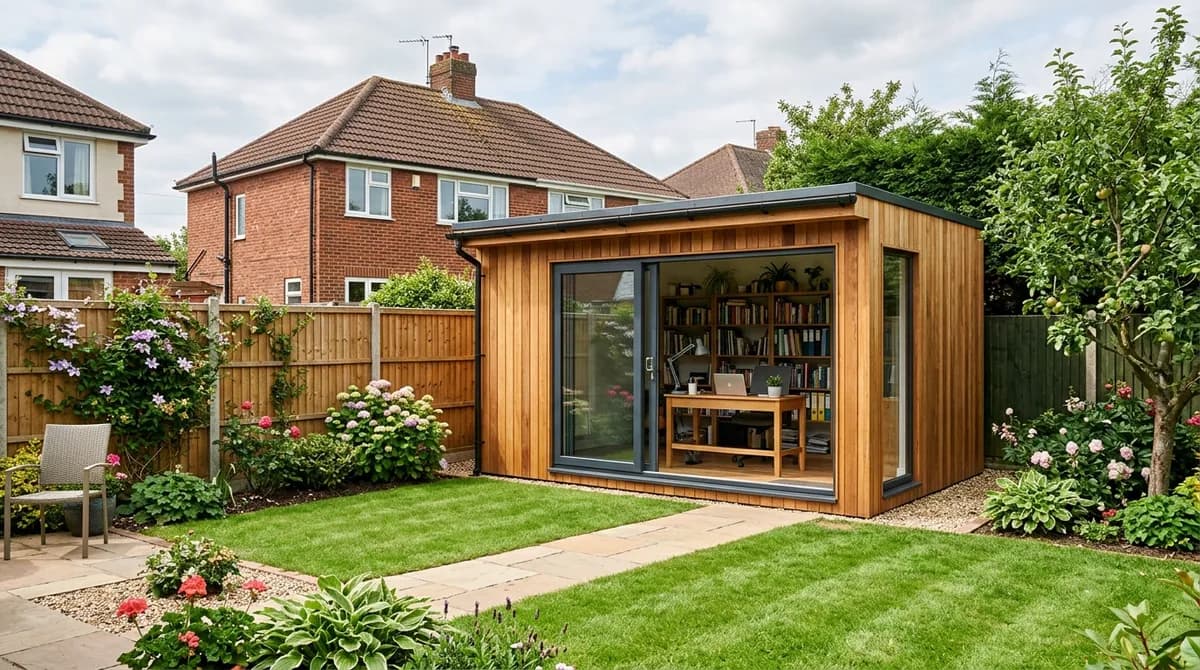
Planning permission is usually not required for garden rooms under permitted development, provided the building is single storey, under 2.5m eaves height, and does not cover more than 50% of the garden. Electrical work must comply with Part P - always use a registered electrician. Check with your local authority before ordering.
Quick answer
How much does a garden room cost?
A typical insulated garden office costs between £10,000 and £30,000 depending on size and specification. A basic flat-pack garden room starts from around £5,000. A premium bespoke garden office with full electrics, heating, and high-end finishes runs £20,000 to £45,000. The biggest cost factors are size, insulation quality, and whether you include plumbing.
View the full garden room cost guide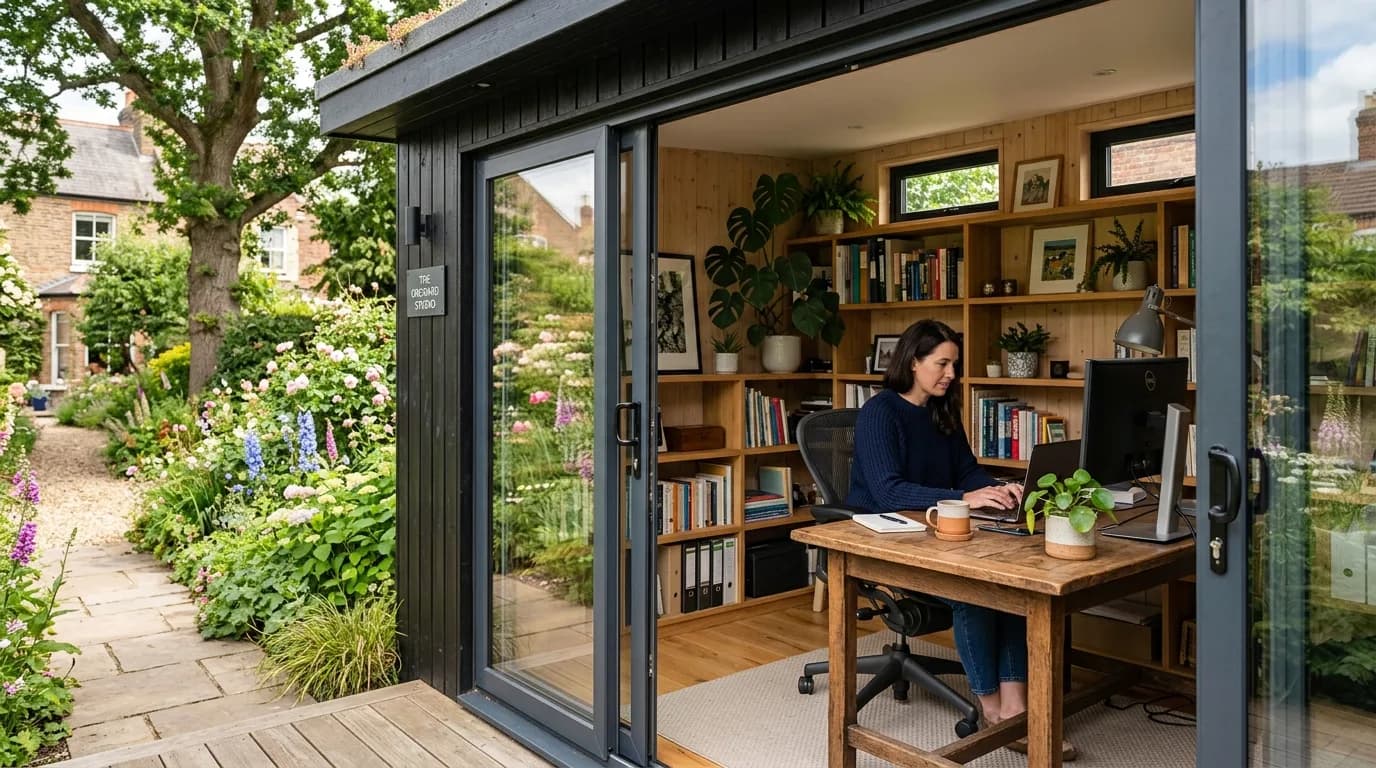
Types of garden room
The term “garden room” covers a wide range of buildings. What they all share is proper insulation, electrics, and enough comfort for year-round use - which sets them apart from a simple garden shed or summerhouse.
Home office
By far the most popular type since 2020. A garden office gives you a proper working environment away from the main house - no distractions, a commute of ten seconds, and none of the compromises of working at the kitchen table. Most are 9 to 15 square metres with good natural light, plenty of sockets, and a dedicated internet connection.
Garden gym
A reinforced floor, good ventilation, and enough ceiling height for overhead exercises are the key requirements. You do not need plumbing unless you want a shower - most people just walk back to the house afterwards. Rubber matting on top of the standard floor protects both the structure and your equipment.
Art or music studio
Studios benefit from acoustic insulation (thicker walls and specialist panels) and north-facing windows for consistent natural light. A music room in particular needs soundproofing to avoid upsetting the neighbours - standard garden room insulation helps, but serious sound isolation requires additional mass and decoupling.
Playroom or den
A separate space for children or teenagers to spread out. The main consideration is durability - hard-wearing flooring, wipeable surfaces, and child-safe electrics. Heating is important if children use it in winter. A lot of families start with a playroom and convert it to a home office once the children outgrow it.
Guest room
If you plan to use a garden room for sleeping, it must meet Building Regulations - which means it no longer qualifies as a simple outbuilding exempt from Building Regs. You will need proper fire escape routes, smoke detection, and the structure must comply with structural, insulation, and ventilation requirements. This adds cost and complexity.
Multi-purpose room
Many garden rooms serve double duty - a home office during the week and a yoga studio or entertainment space at weekends. Think about layout flexibility when specifying yours. Open-plan designs with good storage work better for multi-purpose use than rooms that are too tightly fitted out for one function.
Planning permission for garden rooms
Most garden rooms do not need planning permission because they count as outbuildings under permitted development rights. But there are rules you have to stick to.
Single storey only
No upper floors, mezzanines, or balconies. The building must be at ground level.
Maximum eaves height 2.5 metres
Measured from the highest point of the ground next to the building. The overall height must not exceed 3 metres (flat roof) or 4 metres (dual-pitched roof).
Not forward of the principal elevation
The garden room cannot be in front of the main face of the house that fronts onto a road. Rear gardens are fine. Side gardens may be restricted if they face a highway.
No more than 50% of the garden covered
Total area of all outbuildings (including sheds, garages, and summer houses) must not exceed 50% of the total area of the curtilage, excluding the original house footprint.
Within 2 metres of boundary: max 2.5m overall height
If the garden room is closer than 2 metres to any boundary, the total height must not exceed 2.5 metres. This catches a lot of people out - measure carefully.
Over 15m² and within 1m of boundary: non-combustible materials
If the floor area exceeds 15 square metres and the building is within 1 metre of a boundary, it must be constructed from substantially non-combustible materials.
You WILL need planning permission if:the property is in a conservation area, is a listed building, has had its permitted development rights removed (check your title deeds), or you want to use the building as separate living accommodation (a “granny annexe”). When in doubt, submit a Lawful Development Certificate application to your council - it costs £274 in England and gives you written confirmation.
Building Regulations and electrics
Garden rooms used as offices, gyms, or studios are generally exempt from Building Regulations because they are classed as non-habitable outbuildings. But there are important exceptions.
Electrics must comply with Part P
This is the big one. Running a new electrical supply from the house to a garden building is notifiable work under Part P of the Building Regulations. You must use a registered electrician (registered with a competent person scheme like NICEIC, NAPIT, or ELECSA) who will self-certify the installation and issue an Electrical Installation Certificate. Do not let anyone tell you a garden room does not need a proper electrical supply - an extension lead from the house is both dangerous and against regulations.
Sleeping accommodation triggers full Building Regs
If you intend to use the garden room as a bedroom or guest room, it is no longer a simple outbuilding - it becomes a habitable dwelling. This means the full range of Building Regulations applies: structural, fire safety, insulation, ventilation, drainage, and accessibility. The cost and complexity go up considerably.
Plumbing needs Building Control notification
Adding a WC, shower, or kitchenette with drainage means the plumbing element needs to comply with Building Regulations (Part H - drainage). Your plumber should notify Building Control. Connecting to the existing foul drainage from the house is the simplest route.
Over 30m² floor area: Building Regs apply
Any outbuilding with a floor area over 30 square metres requires Building Regulations approval regardless of its use. Most garden offices are well under this threshold, but if you are planning a large multi-room building, check the floor area carefully.
Insulation standards for year-round use
This is what separates a proper garden room from a glorified shed. If you want to use the space comfortably through a British winter, insulation is not optional - it is the single most important part of the specification.
Walls
50mm to 100mm of rigid insulation (PIR or phenolic board) between or behind the cladding. This gives U-values of around 0.18 to 0.30 W/m²K - comparable to a new-build house wall. Thicker is better, but 50mm is the minimum for year-round comfort.
Floor
Insulated on top of a concrete base or integrated into a raised timber floor. Floor insulation is often overlooked in cheaper garden rooms, but cold feet in January will remind you why it matters. A minimum of 75mm rigid insulation is sensible.
Roof
The roof loses the most heat per square metre. At least 100mm of rigid insulation in the roof is recommended - some premium garden rooms use 150mm. A properly insulated roof also prevents overheating in summer by blocking solar gain.
Glazing
Double glazing is the minimum. Triple glazing improves thermal performance and reduces condensation but costs 15 to 25% more. Whichever you choose, make sure the frames are thermally broken (aluminium or quality uPVC) and the units are argon-filled.
Draught sealing
Even the best insulation is wasted if cold air leaks in around doors, windows, and the junction between walls and roof. A well-built garden room should feel draught-free with the door closed. Rubber seals around doors and windows, and careful detailing at all junctions, are essential.
A quick test: if a garden room manufacturer cannot tell you the U-values of their walls, floor, and roof, walk away. Any serious supplier will have these figures readily available. Look for wall U-values below 0.30 W/m²K and roof U-values below 0.18 W/m²K for comfortable year-round use.
How to choose a garden room supplier
Visit a showroom or a completed installation
Photos on a website tell you very little about build quality. Visit the supplier's showroom if they have one, or ask to visit a completed installation near you. Look at the quality of the joinery, the finish of the cladding, and how the doors and windows feel. A good supplier will have nothing to hide.
Ask about insulation U-values
Any reputable garden room company will tell you the U-values for their walls, floor, and roof. If they cannot, or if the figures are vague, treat that as a warning. Cheap garden rooms often skimp on insulation - they look fine but are miserable to use in winter and a sauna in summer.
Check what is included in the price
Garden room quotes vary enormously in what they include. Groundworks, electrical connection from the house, internal electrics, heating, and decoration are commonly excluded. Get a written breakdown so you can compare like for like. The cheapest headline price often becomes the most expensive once you add everything else.
Ask about the base and groundworks
Every garden room needs a level base - either a concrete slab or a screw-pile foundation. Some suppliers include the base in their price, others do not. If you are on sloping ground, the base preparation can be a significant extra cost. Clarify this upfront.
Get at least three written quotes
Garden room prices vary enormously between suppliers, even for a similar spec. Get at least three detailed written quotes and make sure each one covers the same scope - base, electrics, insulation, internal finish, and VAT. Comparing like for like is the only way to spot who is genuinely good value and who has buried extras in the small print.
Garden room guides
Common questions about garden rooms
Do I need planning permission for a garden room?
Most garden rooms fall under permitted development and do not need planning permission, provided the building is single storey with a maximum eaves height of 2.5 metres, does not exceed 3 metres in height (or 4 metres with a dual-pitched roof), covers no more than 50% of the garden, is not forward of the principal elevation, and is not in a conservation area or within the curtilage of a listed building. Buildings over 15 square metres that are within 1 metre of any boundary must be constructed of substantially non-combustible materials. Always check with your local planning authority before ordering.
How long does it take to install a garden room?
A flat-pack garden room that you assemble yourself can take a long weekend to a full week. A professionally installed bespoke garden office typically takes 2 to 4 weeks from groundworks to handover, depending on the size and specification. Some modular garden rooms arrive pre-built on the back of a lorry and can be craned into place in a single day, though you still need the base prepared in advance.
Can I use a garden room as a home office all year round?
Yes, if it is properly insulated. A year-round garden office needs insulated walls, floor, and roof - typically 50mm to 100mm of rigid insulation giving U-values comparable to a new-build house. You will also need double or triple glazing, a sealed and draught-proofed structure, and some form of heating for the coldest months. Electric panel heaters or a small air-source heat pump are the most common solutions. Without proper insulation, a garden building is only comfortable from April to October.
Do garden rooms need Building Regulations approval?
Garden rooms classified as outbuildings generally do not need Building Regulations approval, as long as they are not used for sleeping accommodation and have a floor area under 30 square metres. However, any electrical work must comply with Part P - this means a qualified electrician should run the supply from your house and install the internal electrics, issuing an Electrical Installation Certificate. If you plan to add plumbing for a toilet or shower, Building Regulations will apply to that element.
Will a garden room add value to my house?
A well-built, insulated garden office can add value to a property, though it is difficult to put an exact figure on it. Estate agents generally agree that a high-quality garden room appeals to buyers, especially since the shift towards hybrid working. The key word is quality - a cheap, poorly insulated shed with a desk in it will not impress buyers. A properly insulated, electrically connected garden office with good natural light and broadband connectivity is a genuine selling point.
How do I get electricity to a garden room?
A qualified electrician runs a dedicated circuit from your consumer unit (fuse box) in the house to the garden room. The cable is usually run underground in protective ducting, buried at least 450mm deep (or 600mm under paths and driveways). The electrician will install a small consumer unit inside the garden room for the internal circuits. This work must comply with Part P of the Building Regulations - always use a registered electrician who will self-certify the work and issue an Electrical Installation Certificate.
Quote service coming soon
Get free quotes from garden room suppliers near you
Free, no obligation. Read the cost guide first so you know what a fair price looks like before anyone gives you a number.