Drainage: Your Complete Guide
Drains are out of sight and out of mind - until they block, collapse, or start causing damp. This guide covers drain surveys, common problems, repair costs, and when the water company should be fixing things for free.
Common drainage problems
Blocked drains
The most common issue. Caused by fat, grease, food waste, hair, wet wipes, and sanitary products. Usually fixed with drain jetting (£80 to £200). Persistent blockages may indicate a deeper structural problem.
Tree root ingress
Tree roots seek out moisture and grow into drain joints. They crack the pipe, block the flow, and can eventually collapse the drain. Root cutting (£150 to £400) provides temporary relief, but the roots grow back. Relining the drain gives a permanent fix.
Collapsed drains
Old clay and pitch-fibre drains deteriorate over time and can collapse, causing sinkholes in the garden or persistent blockages. Repair involves excavation and pipe replacement (£1,000 to £10,000 depending on location and access).
Misconnected drains
Foul water connected to the surface water system (or vice versa) is surprisingly common, especially after DIY plumbing. This can cause pollution, bad smells, and problems when you come to sell. A CCTV survey with dye testing identifies misconnections.
Finding a good drainage contractor
Use a specialist drainage company
General plumbers can unblock a sink, but drain repairs, relining, and CCTV surveys need specialist equipment and expertise. Look for a company that does drainage work full-time, not as a sideline.
Get three quotes based on the same survey findings
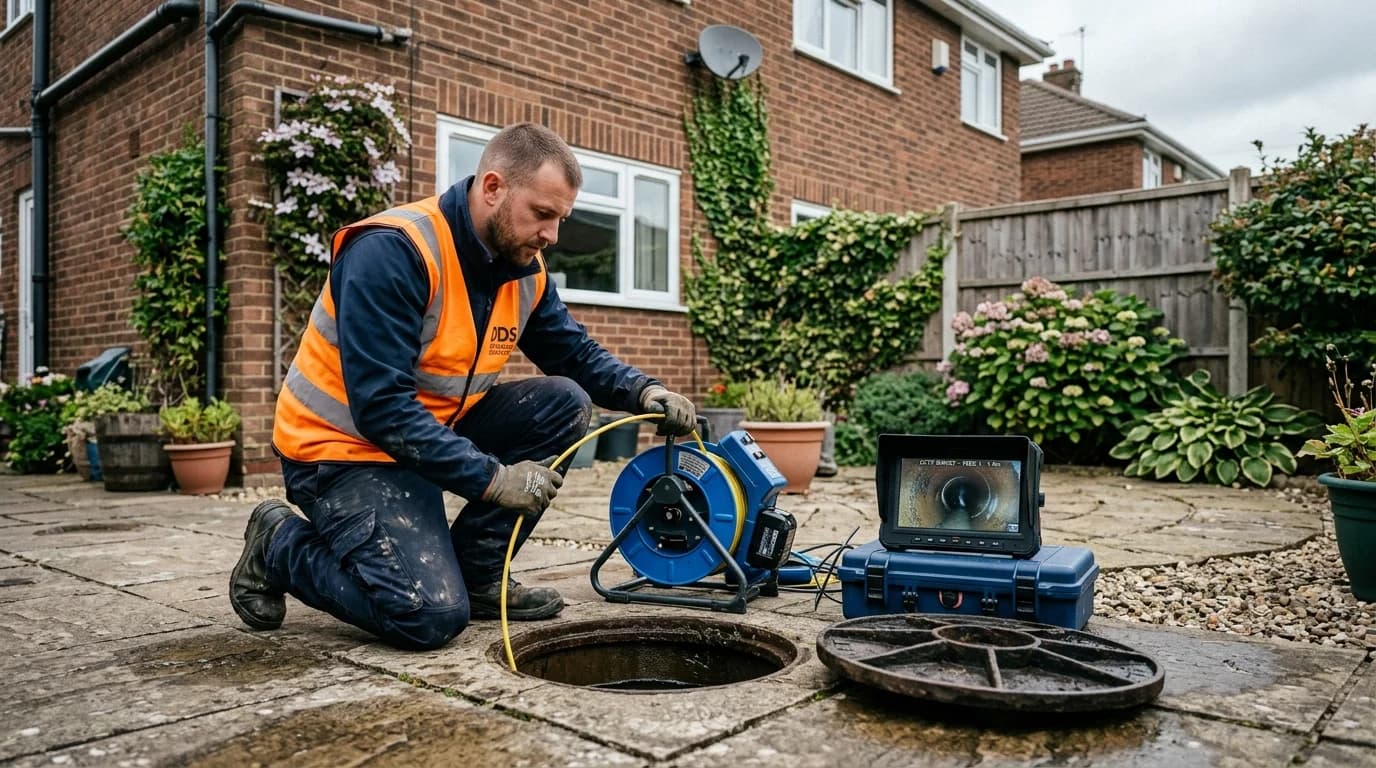
Drainage repair costs vary a lot because the scope of work is often unclear until someone puts a camera down the drain. Get a CCTV survey done first, then send the footage and report to at least three contractors for quotes. This way everyone is pricing the same problem and you can compare like with like.
Ask whether they offer no-dig repairs
Drain relining (also called no-dig repair) is cheaper and less disruptive than excavation for many problems. A good drainage contractor will explain when relining is suitable and when excavation is genuinely necessary. If someone jumps straight to digging up your garden without discussing alternatives, get a second opinion.
Check their insurance and reviews
Drainage work can uncover bigger problems or accidentally damage other services. Make sure any contractor has public liability insurance. Check Google reviews and ask for references from recent domestic jobs.
Know who is responsible for which drains
Since 2011, most shared sewers and lateral drains are the responsibility of your local water company, not the homeowner. If the problem is in a shared sewer, your water company must fix it at no cost to you. Private drains within your property boundary are your responsibility. The gov.uk guidance on private drainage and sewers explains the distinction.
Useful resources
- Private drains and sewers, Gov.uk guidance on homeowner vs water company responsibilities
- Ofwat, The water services regulator for complaints about your water company
- Building Regulations approval, Required for drainage work that connects to the public sewer
Drainage guides
Common questions
Who is responsible for drains?
You are responsible for drains within your property boundary. The water company is responsible for shared sewers and drains beyond your boundary. You can find out which water company covers your area via Water UK. If a blockage or collapse is in the shared sewer, the water company repairs it at no cost to you. If it is on your private drain, it is your responsibility.
How do I know if my drains are blocked?
Common signs include: slow-draining sinks or baths, gurgling sounds from plugholes, bad smells near drains or manholes, water backing up in toilets, and overflowing manhole covers during heavy rain. If you notice any of these, get a CCTV drain survey to find the cause.
How much does a drain survey cost?
A CCTV drain survey costs £100 to £300 for a standard domestic property. A more thorough drainage investigation with mapping and dye testing costs £300 to £600. Pre-purchase homebuyer surveys cost £150 to £350 and include a report formatted for your solicitor.
Related drainage guides
Worried about your drains?
See what a survey costs and what common repairs should set you back.
See 2026 prices