Asbestos in the Home: Your Complete Safety Guide
Millions of UK homes contain asbestos. If yours was built before 2000, there is a reasonable chance some is hiding in the ceilings, floors, or roof. The good news is that undisturbed asbestos in decent condition is usually safe to leave where it is. The problems start when you drill into it, sand it, or rip it out without knowing what you are dealing with. This guide covers where to look, when to worry, and what the law says.
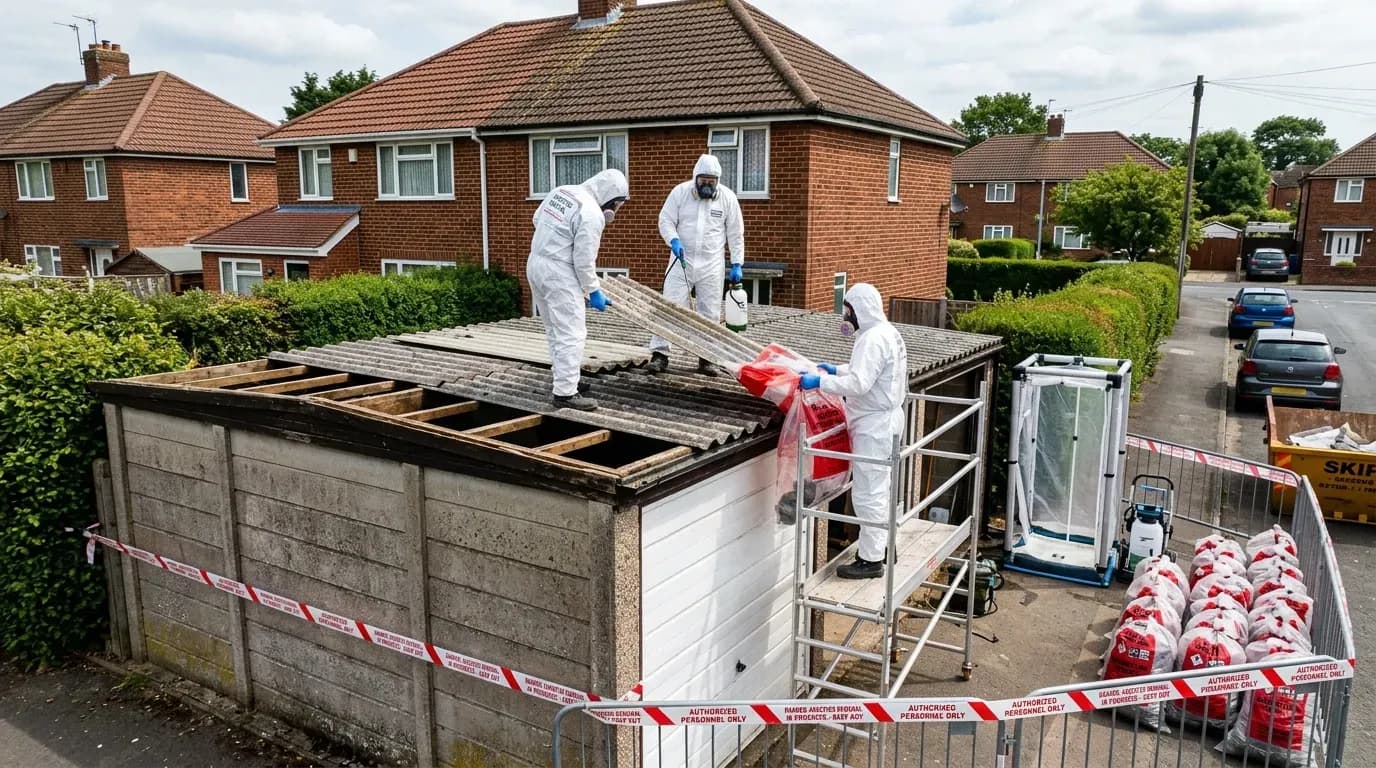
Undamaged asbestos that will not be disturbed is usually safe to leave in place. The HSE recommends managing asbestos in situ rather than removing it wherever possible. Sealing or encapsulating is often a better and cheaper option than full removal. Only take action if the material is damaged, deteriorating, or about to be disturbed by building work.
What is asbestos?
Asbestos is a naturally occurring mineral that was used extensively in construction because it is fireproof, strong, and a good insulator. It was added to thousands of building products in the UK from the 1930s until it was finally banned in 1999. The problem is that when asbestos fibres become airborne - through damage, drilling, or removal - and are breathed in, they can cause serious lung diseases decades later.
Chrysotile (white)
The most common type, found in about 95% of asbestos products used in UK buildings. Used in cement sheets, floor tiles, roofing felt, textured coatings, and pipe lagging.
Lower risk when bonded in cement or resin, higher risk in loose-fill or spray form.
Amosite (brown)
Commonly found in insulating boards, ceiling tiles, pipe and boiler insulation, and thermal insulation products.
Higher risk than chrysotile. Fibres are more needle-like and penetrate deeper into the lungs.
Crocidolite (blue)
The most dangerous type, though less common in domestic properties. Found in some spray coatings, pipe insulation, and insulating boards.
Highest risk. Very fine fibres that are easily inhaled. Always requires licensed removal.
You cannot identify the type of asbestos by looking at it. Laboratory analysis of a sample is the only reliable method. Never assume a material is safe based on its colour or appearance.
Where asbestos is found in UK homes
Any property built before 2000 may contain asbestos. It is most common in homes built between the 1950s and 1980s, when asbestos was used in everything from ceilings to water tanks. Here are the places it turns up most often.
Artex textured ceilings
1960s-1990sSwirled and stippled patterns applied from the 1960s to the mid-1990s. Not all Artex contains asbestos, but the only way to know for certain is to have it tested.
Vinyl floor tiles (9× 9 inch)
1950s-1980sThe classic 9-inch square vinyl tile is strongly associated with asbestos. The tiles themselves and the adhesive beneath them can both contain it.
Garage and shed roofs
1950s-1990sCorrugated cement sheets used on garages, outbuildings, and lean-tos. The cement matrix binds the asbestos tightly, which means these sheets are relatively low risk when undamaged.
Pipe lagging and insulation
1940s-1980sLoose, fibrous insulation wrapped around hot water pipes and boilers. This is one of the highest-risk forms of asbestos because the material crumbles easily, releasing fibres.
Boiler flues and fire surrounds
1950s-1980sAsbestos cement or insulating board was commonly used in flue pipes and around gas fires. Older back boilers are a particular hotspot.
Soffits, fascias, and guttering
1950s-1980sAsbestos cement boards were used as soffits under roof overhangs and as fascia boards. Low risk when intact, but drilling or sawing them releases fibres.
Insulating boards (AIB)
1950s-1980sUsed behind fuse boxes, in airing cupboards, around boilers, and as fire-resistant panels. These boards are higher risk than cement products, and removing them is usually licensed work that must be carried out by an HSE-licensed contractor.
Water tanks and cisterns
1950s-1970sAsbestos cement was used for cold water storage tanks in lofts. The tanks are usually safe when intact but must be handled carefully when removed.
Roofing felt
1950s-1980sSome bituminous roofing felt contains asbestos. Often found under roof tiles or on flat roofs. Typically only a problem when stripping a roof.
Textured coatings on walls
1960s-1990sSimilar to Artex on ceilings, some textured wall coatings contain asbestos. Sanding or scraping these coatings is the main risk.
When to leave it alone vs when to act
Usually safe to leave in place
- Material is in good condition with no visible damage
- It will not be drilled, cut, sanded, or disturbed
- It is in an area that does not get regular wear and tear
- Cement-bonded products like roof sheets and soffits (low fibre release)
- You are not planning any renovation work in that area
- A surveyor has assessed it and recommended managing in place
Removal or action needed
- Material is damaged, crumbling, or deteriorating
- You are planning renovation work that will disturb it
- It is friable (crumbles easily when touched)
- Pipe lagging or spray coatings are exposed and damaged
- A duty holder risk assessment requires removal
- The material is in a high-traffic area where it may get knocked or damaged
The health risks
Breathing in asbestos fibres can cause serious diseases - but these develop over years of repeated exposure, not from a single brief contact. Understanding the risks helps you take sensible precautions without unnecessary alarm.
Mesothelioma
A cancer of the lining of the lungs or abdomen. Almost exclusively caused by asbestos exposure. Latency period of 15 to 60 years. Around 2,600 people are diagnosed in the UK each year.
Asbestosis
Scarring of the lung tissue caused by heavy, prolonged exposure. Causes breathlessness and reduced lung function. Develops over many years of occupational exposure.
Lung cancer
Asbestos exposure increases the risk of lung cancer, particularly in combination with smoking. The risk is dose-related - higher and longer exposure means higher risk.
A single brief exposure is extremely low risk
If you have accidentally drilled into something that turned out to contain asbestos, or disturbed a small amount during DIY, your risk is very low. These diseases are associated with heavy, repeated, or prolonged occupational exposure - not a one-off incident at home. Take sensible precautions (wet the area, ventilate, get it tested), but there is no need to panic.
Legal requirements
Asbestos is regulated under the Control of Asbestos Regulations 2012. Here is what the law requires.
Duty to manage (non-domestic)
Owners and occupiers of non-domestic buildings (including landlords of rented properties and shared areas of flats) have a legal duty to identify and manage asbestos. This includes maintaining an asbestos register and carrying out regular inspections.
Licensed work
Removing or working with sprayed coatings, lagging insulation, and asbestos insulating board requires an HSE-licensed contractor. The contractor must notify the HSE 14 days before work begins. Breaking this rule is a criminal offence.
Non-licensed and notifiable work
Some work with asbestos is non-licensed but still notifiable to the enforcing authority - for example, removing asbestos insulating board in short-duration tasks. Other low-risk work (like removing cement roof sheets) is non-licensed and does not need notification.
Waste disposal
Asbestos waste is classified as hazardous waste and must be disposed of at a licensed facility. It must be double-bagged in heavy-duty polythene, sealed, and clearly labelled. Using a normal skip or putting it in household waste is illegal.
DIY rules: what you can and cannot do yourself
You CAN do this yourself
- Remove cement garage or shed roof sheets (keep them whole, do not break them)
- Lift vinyl floor tiles carefully (wet them first, do not sand or scrape)
- Remove small amounts of asbestos cement products (soffits, flue pipes)
- Seal or encapsulate asbestos in good condition with a proprietary coating
- Send samples to a laboratory for testing (kits cost £30 to £50)
You MUST use a licensed contractor
- Removing sprayed asbestos coatings (often found in commercial buildings)
- Removing asbestos lagging from pipes, boilers, or tanks
- Removing asbestos insulating board (AIB) in most circumstances
- Any work that will generate significant fibre release
- Large-scale asbestos removal projects
If in doubt, do not touch it. Getting a professional survey is always the safest option. A management survey for a typical house costs £150 to £400 and tells you exactly what you are dealing with. The cost of a survey is nothing compared to the risk of disturbing something you should not have touched.
How to dispose of asbestos waste
- 1
Double-bag the waste
Place asbestos waste in heavy-duty polythene bags (at least 0.4mm thick). Put each bag inside a second bag. Seal both bags tightly with tape. Do not overfill - bags must be manageable to carry without tearing.
- 2
Label clearly
Mark each bag with an asbestos warning label. Pre-printed labels are available from builders' merchants, or you can write "DANGER - ASBESTOS" clearly on the bag.
- 3
Contact your local council
Many council household waste recycling centres accept asbestos with advance notice. Ring ahead to check - they will tell you when to bring it and where to put it. Some councils charge a small fee.
- 4
Or use a licensed waste carrier
If you have a larger amount or your council does not accept it, use a licensed waste carrier. You can check the Environment Agency's public register to find one. They will collect, transport, and dispose of it at a licensed landfill.
- 5
Keep records
Retain your waste consignment note for at least 3 years. This proves you disposed of the waste legally. If you used a council tip, keep any receipt or reference number they gave you.
Official resources and further reading
HSE Asbestos Guidance
The Health and Safety Executive's comprehensive guide to asbestos for homeowners and duty holders.
HSE Duty to Manage Asbestos
Legal duties for non-domestic property owners, landlords, and anyone responsible for building maintenance.
Licensed Asbestos Contractors
HSE register of licensed asbestos removal contractors. Always check your contractor is on this list.
Mesothelioma UK
Support and information for anyone affected by mesothelioma or other asbestos-related diseases.
Asbestos cost guides
Asbestos survey costs
Management and refurbishment survey prices, DIY testing kits, and what to expect from a surveyor.
Asbestos removal costs
How much removal costs for garages, Artex ceilings, floor tiles, pipe lagging, and full strip-outs.
Asbestos survey guide
When you need a survey, types of survey, and where asbestos is commonly found in UK homes.
Roofing costs
Roof replacement costs - relevant if your garage or outbuilding has asbestos cement sheets.
Plastering costs
Plastering and re-skimming costs - relevant after Artex removal or asbestos encapsulation.
Related asbestos guides
Get at least three quotes
Whether you need a survey, removal, or encapsulation, prices vary significantly between asbestos contractors. The cost depends on the type of asbestos, the quantity, the access, and whether licensed removal is needed. Get at least three written quotes from HSE-licensed or UKAS-accredited specialists so you can compare the scope of work, disposal costs, and air monitoring like for like. Never go with the cheapest quote if the company cannot prove they are properly licensed.
Common questions
Is asbestos in my home dangerous?
Where is asbestos most commonly found in UK homes?
Can I remove asbestos myself?
How do I dispose of asbestos waste?
Do I need a survey before renovating an older home?
I accidentally drilled into something that might contain asbestos - what should I do?
Need an asbestos survey or removal quote?
Find out what it costs before you commit to any work.
Compare real quotes for your job
Prices move a lot with your postcode, the access on site and the spec you choose. Get up to 3 free quotes from vetted local tradespeople and see what yours actually comes to, with no obligation to book.