Asbestos Surveys: Your Complete Guide
If your home was built before 2000, there is a real chance it contains asbestos somewhere. Most of the time it is harmless - until you start drilling, sanding, or knocking down walls. A professional survey tells you exactly what is there, where it is, and what needs doing about it. The HSE asbestos survey guidance explains the different survey types and when each is required.
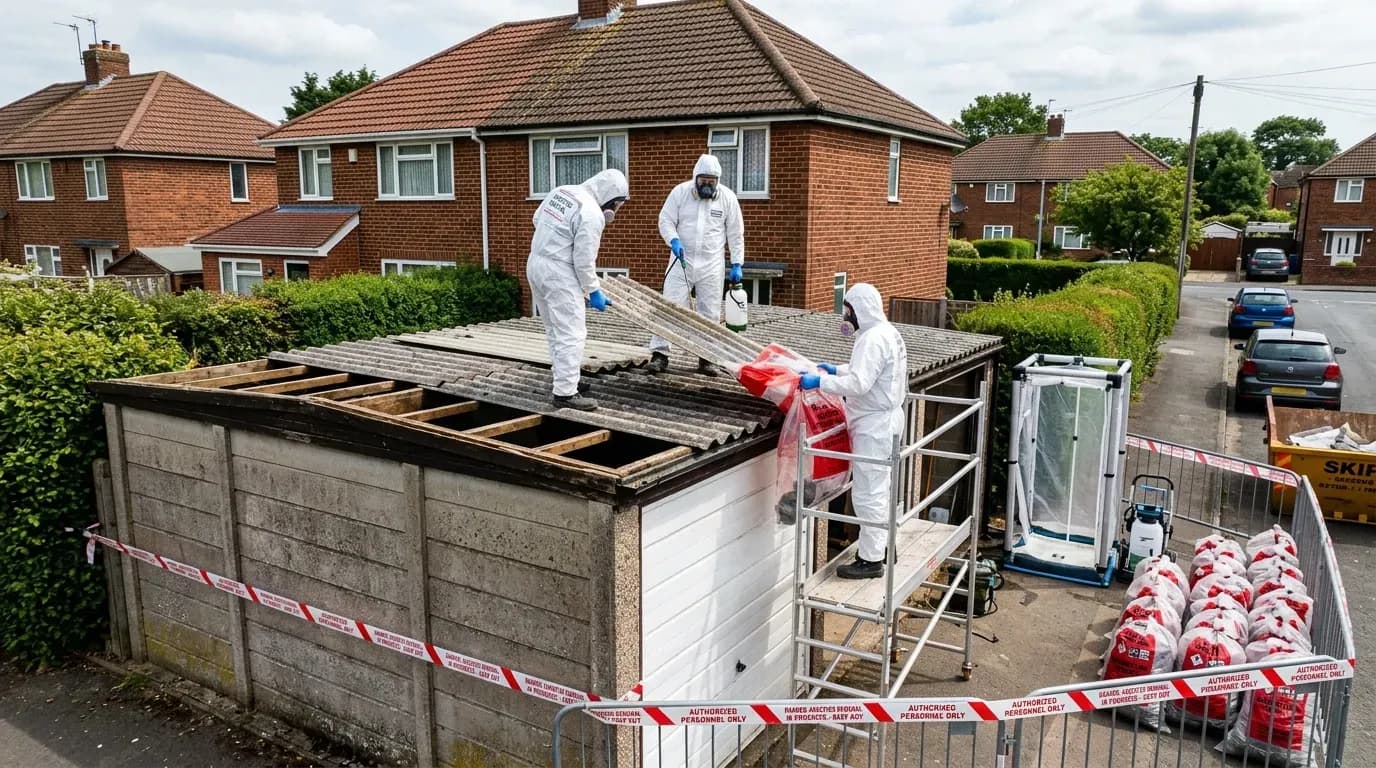
Where asbestos is commonly found
Textured ceilings (Artex)
One of the most common locations. Artex and similar textured coatings applied before 2000 can contain chrysotile (white) asbestos. Safe if in good condition, but dangerous if sanded, scraped, or drilled.
Floor tiles and adhesive
Vinyl floor tiles from the 1960s-1980s frequently contain asbestos, as does the black bitumen adhesive used to stick them down. If you are replacing an old kitchen or bathroom floor, get it tested first.
Pipe insulation and lagging
The insulation around heating pipes and boiler flues in older properties often contains asbestos. This is one of the more dangerous forms because it can become loose and friable over time.
Roof and wall sheets
Corrugated cement sheets on garages, outbuildings, and extensions commonly contain asbestos. These are usually cement-bonded and lower risk while intact, but must not be broken, drilled, or sanded.
Asbestos survey guides
Asbestos survey cost guide
Survey prices, removal costs, and what to budget for in 2026.
Asbestos: complete guide
Full guide to asbestos in UK homes - where it is found, when to remove it, and legal requirements.
Loft conversion cost guide
Loft conversion prices - often triggers the need for an asbestos survey.
Extension cost guide
Extension prices including demolition and refurbishment survey costs.
Get at least three quotes
Asbestos survey prices vary between companies depending on the property size, the type of survey, and the number of samples taken. Get at least three written quotes from UKAS-accredited surveyors so you can compare the scope, the number of samples included, and the turnaround time like for like. Make sure each quote confirms the surveyor carries professional indemnity insurance and that laboratory analysis is included in the price rather than charged as an extra.
Common questions
When do I need an asbestos survey?
Before any refurbishment or demolition work on a property built before 2000. Asbestos was used in thousands of building products until it was banned in 1999. Common locations include textured ceilings, floor tiles, pipe lagging, roof sheets, soffits, and fuse boxes.
How long does an asbestos survey take?
A management survey of a standard 3-bed house takes 1 to 2 hours on site. A refurbishment survey takes longer - 2 to 4 hours - because it involves more intrusive inspection. Lab results come back in 1 to 3 working days, and the full report is typically delivered within a week.
Is asbestos dangerous if left undisturbed?
Asbestos in good condition that is not being disturbed poses very low risk. The danger comes when asbestos-containing materials are damaged, drilled, cut, or otherwise disturbed - this releases microscopic fibres into the air. Breathing in these fibres causes serious diseases. That is why a survey is essential before any building work.
Who can remove asbestos?
Licensed asbestos removal contractors only. They are regulated by the Health and Safety Executive (HSE) and must follow strict procedures including containment, air monitoring, and proper disposal. You can check a contractor's licence on the HSE asbestos page. Never attempt to remove asbestos yourself.