Artificial Grass UK: Your Complete Guide
No mowing, no mud, no brown patches in summer. Artificial grass keeps your garden looking sharp all year round. This guide covers how to lay artificial grass, artificial grass installation costs, which underlay to use, and whether it is the right choice for your garden. We also cover cleaning, maintenance, and where to buy cheap artificial grass that still looks the part.
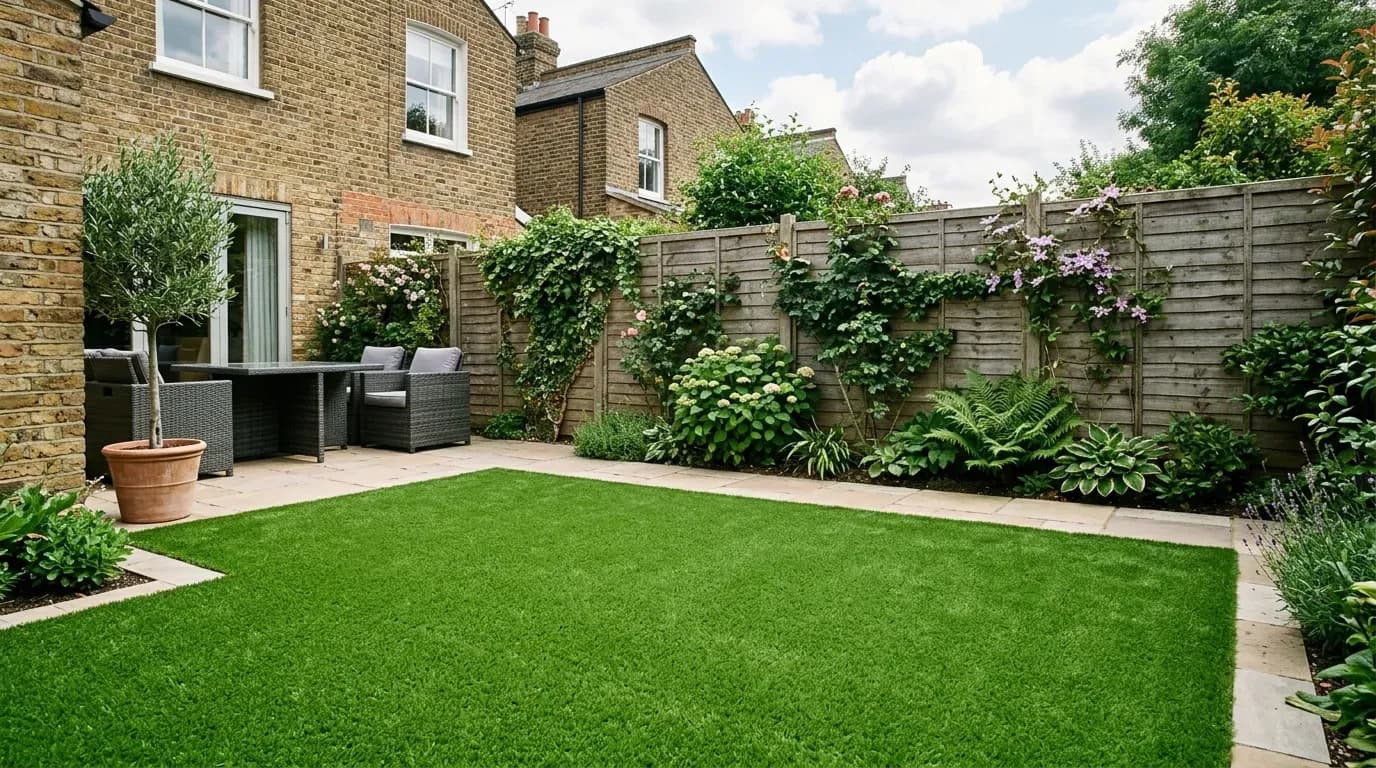
Types of artificial grass UK homeowners choose
Budget grass (under £15/m²)
Shorter pile height (20 to 25mm), lower density, and basic UV protection. Fine for low-traffic areas or covering small sections. Tends to flatten after a few years and can look plasticky up close. Suitable if you are on a tight budget or want to trial it before committing.
Mid-range grass (£15 to £25/m²)
The sweet spot for most gardens. Pile height of 30 to 37mm, good density, and decent UV resistance. Looks realistic from a normal distance and handles regular foot traffic from children and pets. Most popular choice for UK residential gardens.
Premium grass (£25 to £30+/m²)
Highest pile density, multi-tonal colour blending, and built-in thatch layer for a natural look. Feels soft underfoot and bounces back well. UV stabilised for 10 to 15 years. Worth the extra if you want it to look convincingly real.
Pet-friendly grass
Designed with shorter pile, antimicrobial backing, and larger drainage holes. Easier to clean and less likely to hold odours. Some have a built-in infill layer that neutralises pet smells. Usually mid-range pricing with specialist features.
How to lay artificial grass
Laying artificial grass involves removing the existing turf and topsoil (75 to 100mm deep), laying a compacted base of MOT Type 1 aggregate, adding a layer of sharp sand or granite dust, then rolling out the artificial grass underlay before fitting the grass itself. If your front garden is being paved over as part of the project, check the gov.uk guidance on permeable surfaces to make sure you comply with planning rules. The edges are secured with galvanised nails or adhesive, and joins between rolls are taped and glued underneath. A proper base is the most important part of any artificial grass installation. Skip it and the surface will be uneven, drain poorly, and develop weeds within a year.
Artificial grass underlay serves two purposes: it provides a cushioned feel underfoot and it improves drainage. A good underlay (10 to 20mm foam or rubber) makes cheaper grass feel more premium. For pet areas, choose a permeable underlay that lets urine drain through rather than pooling on top.
For ongoing care, use an artificial grass brush (a stiff broom or power brush) every few weeks to keep the pile upright and remove leaves. An artificial grass cleaner, either a specialist product or a mild detergent solution, handles pet odours and stubborn stains. Avoid bleach, which can damage the fibres and fade the colour.
Artificial grass guides
Artificial grass cost guide
Full pricing per m², artificial grass installation cost, and how to save money on your project.
How to lay artificial grass
Step-by-step DIY guide. Save £30 to £50/m² on labour by doing the base and laying yourself.
Artificial grass for dogs
Pet-friendly options, drainage tips, cleaning advice, and how to stop urine smells.
Fencing cost guide
Garden fencing costs, often done at the same time as laying artificial grass.
Landscaping cost guide
Full garden makeover costs including cheap artificial grass options.
Common questions
How long does artificial grass last?
Good-quality artificial grass lasts 8 to 15 years depending on the pile density, UV resistance, and how much foot traffic it gets. Budget grass (under £15/m²) tends to flatten and fade faster - often within 5 years. Mid-range and premium products (£20 to £30/m²) hold their shape and colour for a decade or more. Proper base preparation also affects how well it wears.
Is artificial grass worth it?
If you spend significant time and money maintaining a real lawn - mowing, feeding, treating moss, reseeding bare patches - artificial grass can be worth it. You save on lawnmower fuel, weed killer, and water. It looks tidy all year round and handles heavy foot traffic from children and pets without turning to mud. However, it does get hot in direct sun, it is not as eco-friendly as real grass, and it still needs occasional brushing and rinsing.
Does artificial grass need drainage?
Yes. Artificial grass has small drainage holes in the backing, but the base underneath must be permeable to let rainwater through. The standard approach is to remove 75 to 100mm of topsoil and replace it with a compacted layer of MOT Type 1 aggregate topped with sharp sand or granite dust. This base drains well and prevents the grass from becoming waterlogged or developing puddles.
Is artificial grass safe for dogs?
Yes, and many people install it specifically because dogs churn up real lawns. Pet-friendly artificial grass has antimicrobial backing and good drainage so urine passes through without pooling. You do need to pick up solid waste and hose down the area regularly to prevent smells. Some suppliers offer grass with shorter pile heights and open weave backing designed for pet areas.
Getting the best deal on artificial grass
Get at least three written quotes
Artificial grass installation prices vary considerably between landscapers. The same garden can be quoted at wildly different amounts depending on the grass quality, base preparation, and labour rates. Always get at least three written quotes and make sure each one specifies the grass brand and pile height, the base depth and materials, and whether edging is included. Comparing like for like is the only way to tell a fair price from a padded one.
Thinking about artificial grass?
Find out what it costs, how it is installed, and whether it suits your garden.
See 2026 prices