How to Lay Artificial Grass: Step-by-Step
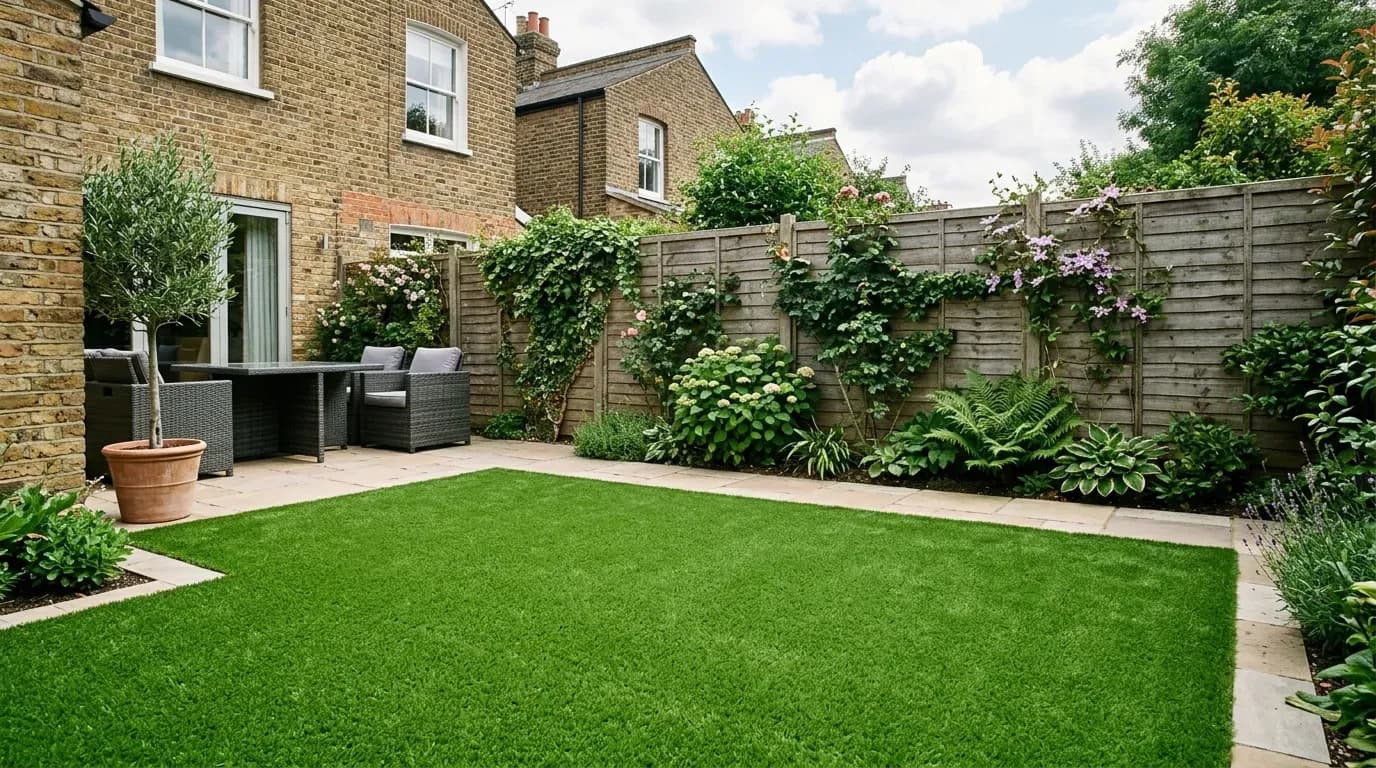
Doing it yourself saves £30 to £50 per m² on labour. For a 30m² garden, that's a saving of up to £1,500. The base preparation is where most DIY jobs go wrong, get that right and the rest follows.
£30 to £50/m²
Labour saving
2 to 3 days
30m² takes
75 to 100mm
Dig depth
8 to 15 yrs
Lasts
Guide updated April 2026 · Based on contractor knowledge and installation data.
The short version
DIY laying saves £30 to £50 per m² on labour. A 30m² garden takes a competent DIYer two to three days, one for the groundwork, one for the base layers, one for the grass itself. The base preparation is the part most people underestimate. The grass laying is actually fairly straightforward once the ground is solid, level, and draining properly.
The two things that catch people out: not compacting the aggregate base enough (hire a plate compactor, don't try to tamp it by hand), and cutting from the wrong side (always cut from the back). Get those two right and you'll end up with a lawn that looks just as good as a professional job.
What you'll need
Here's everything required for a standard garden lawn. Costs are approximate, actual prices vary by supplier and region.
| Item | What it's for | Approx. cost |
|---|---|---|
| Spade and fork | Stripping turf and digging to depth | Own or borrow |
| Wheelbarrow | Moving spoil and aggregate | Own or borrow |
| Skip hire | Disposing of spoil (roughly 2 to 3 tonnes for 30m²) | £200 to £250 |
| Plate compactor hire | Compacting the aggregate base properly | £30 to £50/day |
| Weed membrane | Preventing weed growth through the base | £20 to £40 |
| MOT Type 1 aggregate | 50 to 75mm compacted base layer | £35 to £50/tonne |
| Sharp sand or granite dust | 15 to 25mm levelling layer | £30 to £45/tonne |
| Stanley knife and spare blades | Cutting the grass (you will use a lot of blades) | £10 to £15 |
| Joining tape and adhesive | Bonding strips together invisibly | £25 to £40 |
| Galvanised nails (50mm) | Securing edges every 150mm | £5 to £10 |
| Kiln-dried sand | Infill to help blades stand upright | £5 to £8/bag |
| Stiff broom or power brush | Brushing in the sand infill | £10 to £15 (hire ~£20) |
The grass itself is not included above, that depends on quality and area. Budget £10 to £30 per m² for supply only. See the artificial grass cost guide for a full breakdown.
Step-by-step guide
Ten steps from bare earth to finished lawn. Read through the whole guide before you start, the order matters.
- 01
Measure up and plan your layout
Measure the area carefully and sketch it out on paper. Work out how many rolls you need, adding 5% for waste and cuts. Think about where joins will fall, ideally not in high-traffic areas or where they'll catch the eye. Order your grass and materials before you start digging, so everything arrives before you need it.
- 02
Strip the existing surface
This is the heavy bit. Dig out the existing turf, roots, and topsoil to a depth of 75 to 100mm. You need to remove all organic material, anything that will decompose will cause the surface to sink unevenly. For a 30m² garden, you'll shift roughly 2 to 3 tonnes of spoil, so book a skip in advance. If it's a front garden, check whether you need planning permission for an impermeable surface over 5m².
- 03
Lay the weed membrane
Roll out a weed-suppressing membrane over the whole excavated area. Overlap each strip by at least 100mm and pin the edges. Some people skip this step, don't. Weeds pushing through from below will eventually cause lumps and ruin the surface. It's a cheap fix that makes a long-term difference.
- 04
Spread and compact MOT Type 1 aggregate
Spread 50 to 75mm of MOT Type 1 (crushed stone) over the membrane and rake it roughly level. Then run the plate compactor over it, multiple passes in different directions. This is the step most DIYers underdo. If the base isn't properly compacted, you'll get soft spots and the surface will move over time. Hire the plate compactor; it's worth the £30 to £50 per day without question.
- 05
Add the levelling layer and compact again
Spread 15 to 25mm of sharp sand or granite dust over the compacted aggregate. Screed it level using a long straight edge, a scaffold board works well. Compact again. Check for low spots and fill them in. This layer gives you the smooth, even surface that makes the finished lawn look professional. Take your time here. Any lumps or dips will show through the grass.
- 06
Roll out the grass and let it relax
Unroll the grass over the prepared base and leave it in the sun for at least two hours. Artificial grass has a memory from being rolled, it needs time to flatten out before you cut it. If you cut and fix it while it's still curling, you'll end up with edges that lift. On a cold or overcast day, give it longer, or bring it indoors first.
- 07
Cut to shape, always from the back
Once the grass is lying flat, cut it to shape using a sharp Stanley knife. Always cut from the back, the backing is much easier to cut cleanly than trying to cut through the pile from the front, which gives you a ragged, visible edge. Keep the blade sharp; change it every few metres of cutting or the backing starts to tear rather than cut. Leave a small overhang (10 to 15mm) at edges you'll be pinning.
- 08
Join strips using tape and adhesive
If your garden needs more than one strip, joins need doing properly. Both strips must have the pile running in the same direction, hold each piece up to the light to check before cutting. Lay the joining tape centrally under the join, apply the adhesive to the tape, press both edges down firmly, and leave it to cure before walking on it. Never overlap the edges of two strips, the join will be visible and the surface will be uneven.
- 09
Secure the edges
Fix the perimeter with 50mm galvanised nails or U-pins every 150mm. Drive them through the backing at an angle into the edge of the base. If you're fixing against a wall, fence, or path edge, you can use a bead of adhesive or a timber baton as an alternative. The edges are where DIY jobs often fall apart, take your time and make sure they're flat and tight all the way round.
- 10
Brush in kiln-dried sand infill
The final step is optional but recommended. Brush kiln-dried silica sand into the pile using a stiff broom or power brush, working against the grain so the blades stand upright. You'll need roughly 5 to 6kg per m². The sand adds weight, keeps the blades erect, and gives the lawn a more natural feel underfoot. Don't use sharp sand or building sand, they clump and wash out.
Common DIY mistakes
These are the things that separate a lawn that looks great five years later from one that looks a mess within 18 months.
Skimping on base compaction
The single biggest mistake. If the aggregate isn't properly compacted, the surface will develop soft spots and uneven areas within a year. Hire the plate compactor and do multiple passes.
Using the wrong aggregate
Standard topsoil or building rubble aren't suitable. You need MOT Type 1 crushed stone, it compacts well and drains freely. Builder's sand alone isn't stable enough for the base layer.
Cutting from the front
Cutting through the pile from the top gives a ragged, uneven edge that shows clearly on the finished lawn. Always cut from the back, through the backing material, with a fresh blade.
Mismatched pile direction on joins
If two strips are laid with the pile facing in different directions, the join will look like a visible seam even with tape and adhesive. Hold each strip up to the light before you cut, the pile direction is obvious.
Not allowing for drainage
Artificial grass drainage depends on the base being free-draining. If you're laying over a concrete or paved surface, drill drainage holes first or use a specialist drainage mat. Without drainage, you'll get puddles on the surface.
Fixing edges too loosely
Perimeter edges that aren't pinned tightly enough will lift over time, especially at corners. Nail every 150mm and pay particular attention to corners and concave curves.
When it's worth hiring a professional
DIY works well for straightforward rectangular gardens. But there are situations where paying for a professional makes sense, both for quality and to avoid a costly mistake.
Complex shapes
Lots of curves, angles, planting beds, or awkward corners mean lots of cuts. Each cut is an opportunity for a visible mistake.
Slopes and banks
Sloped ground needs proper drainage planning. If water pools at the base, you'll end up with a boggy mess under the grass.
Large areas over 50m²
Multiple rolls mean multiple joins. Getting joins invisible across a large area takes experience and the right adhesive technique.
Over concrete or decking
Laying over an existing hard surface needs specialist drainage matting. The base preparation is different and more involved.
DIY vs professional: what you actually save
These figures are for a 30m² garden with mid-range grass. DIY costs assume you hire the plate compactor and skip, but do all the labour yourself.
| Cost element | DIY | Professional |
|---|---|---|
| Grass supply (mid-range, 30m²) | £500 to £750 | £500 to £750 |
| Skip hire | £200 to £250 | Included |
| Aggregate and sand | £150 to £200 | Included |
| Plate compactor hire | £50 to £80 | Included |
| Joining tape, adhesive, fixings | £40 to £60 | Included |
| Labour | Your time | £900 to £1,500 |
| Total (30m² garden) | ~£1,000 to £1,350 | ~£1,800 to £3,000 |
Saving: roughly £700 to £1,600 on a 30m² garden, plus your time (budget two full days of physical work for the base, one day for the grass).
How to keep the cost down
Do the base yourself, hire out the laying
The base preparation is the bulk of the labour cost. If you do the digging and aggregate work yourself and then pay a landscaper just to cut and lay the grass, you can save £20 to £30 per m² while still getting a professional finish on the visible part.
Buy from an online specialist, not a garden centre
Garden centres mark artificial grass up heavily. Online specialists like Grass Direct, Artificial Grass Direct, and Great Grass sell at trade-closer prices and cut rolls to order. You can get free samples before committing. Buying online typically saves 20 to 30% on the grass itself.
Get at least three quotes if you're hiring out
Landscapers vary quite a bit on price for artificial grass jobs. Get a minimum of three written quotes, prices for the same job can differ by 30% or more. Make sure each quote includes the same scope: strip out, base preparation, supply and lay. Compare like for like, not just the bottom line.
Look for end-of-roll offcuts
Suppliers regularly have leftover rolls at 30 to 50% off. These are full-quality grass, just odd sizes. For a small front garden or a secondary area, you might find exactly what you need. Ask suppliers directly, or check their clearance pages online.
Buy the grass on a credit card
If you are ordering grass online for more than £100, pay on a credit card rather than a debit card or bank transfer. Section 75 of the Consumer Credit Act makes the card company jointly liable if the supplier fails to deliver or the grass arrives faulty, which is worth having when you are spending £500 to £750 on a roll you have not seen in person. It costs nothing extra.
Frequently asked questions
Can I lay artificial grass myself?
Yes, and for most gardens it's well within reach for a competent DIYer. The hard part is the base preparation, digging out 75 to 100mm of topsoil, laying and compacting MOT Type 1 aggregate, then adding a levelling layer of sharp sand. Get that right and the grass itself is relatively straightforward to cut and fit. For a 30m² garden, budget a long weekend: one day for the base, one day for laying the grass.
How deep do you need to dig for artificial grass?
You need to dig out 75 to 100mm in total. That breaks down as follows: 50 to 75mm of MOT Type 1 aggregate base, then 15 to 25mm of sharp sand or granite dust as a levelling layer. If you're replacing an existing lawn, the first 75 to 100mm is usually topsoil and turf roots, both need to come out completely. Leaving organic material in the ground causes the surface to sink and become uneven over time.
Do you need planning permission to lay artificial grass?
For back gardens, no. For front gardens, it depends. If your artificial grass is impermeable (which most is) and covers more than 5m² at the front of the property, you technically need either planning permission or a permeable option. In practice, enforcement is rare, but you should be aware of it. Check with your local council if you're unsure. The relevant rules fall under Permitted Development rights for householders.
Which direction should artificial grass face?
The pile should face towards the main viewing point, usually the house. When you stand at your back door and look at the lawn, the blades should be leaning towards you. This gives the most natural look. If you're joining two strips, both sections must have the pile facing the same direction or the join will look obvious, even with joining tape and adhesive.
How long does artificial grass take to lay?
For a typical 30m² garden, expect two to three days from start to finish. Day one covers stripping out the old surface, digging to depth, and laying the weed membrane. Day two covers the aggregate base and levelling sand (you'll need the plate compactor for this). Day three is the grass itself, rolling out, cutting, joining, securing edges, and brushing in the sand infill. Larger or more complex gardens take longer, especially if the shape requires lots of cuts.
What sand do you use for artificial grass infill?
Use kiln-dried sand, sometimes called silica sand or play sand. It's fine, dry, and free of clay. You brush it into the pile with a stiff broom or a power brush. The sand adds weight to the grass, helps the blades stand upright, and makes it feel more natural underfoot. You'll typically need about 5 to 6kg per m². Don't use sharp sand or building sand for infill, they can clump and wash out.
Useful resources

Written by Chris Kervin, Less.co.uk Home Improvement Costs Specialist
Last updated: April 2026 · Guide based on contractor knowledge and installation data · Methodology
Prefer to leave it to the professionals?
No shame in that, especially for larger or more complex gardens. See what professional artificial grass installation costs in your area.
See Artificial Grass Installation CostsFull cost breakdown · Regional prices · How to save money