Artificial Grass for Dogs: Is It Worth It?
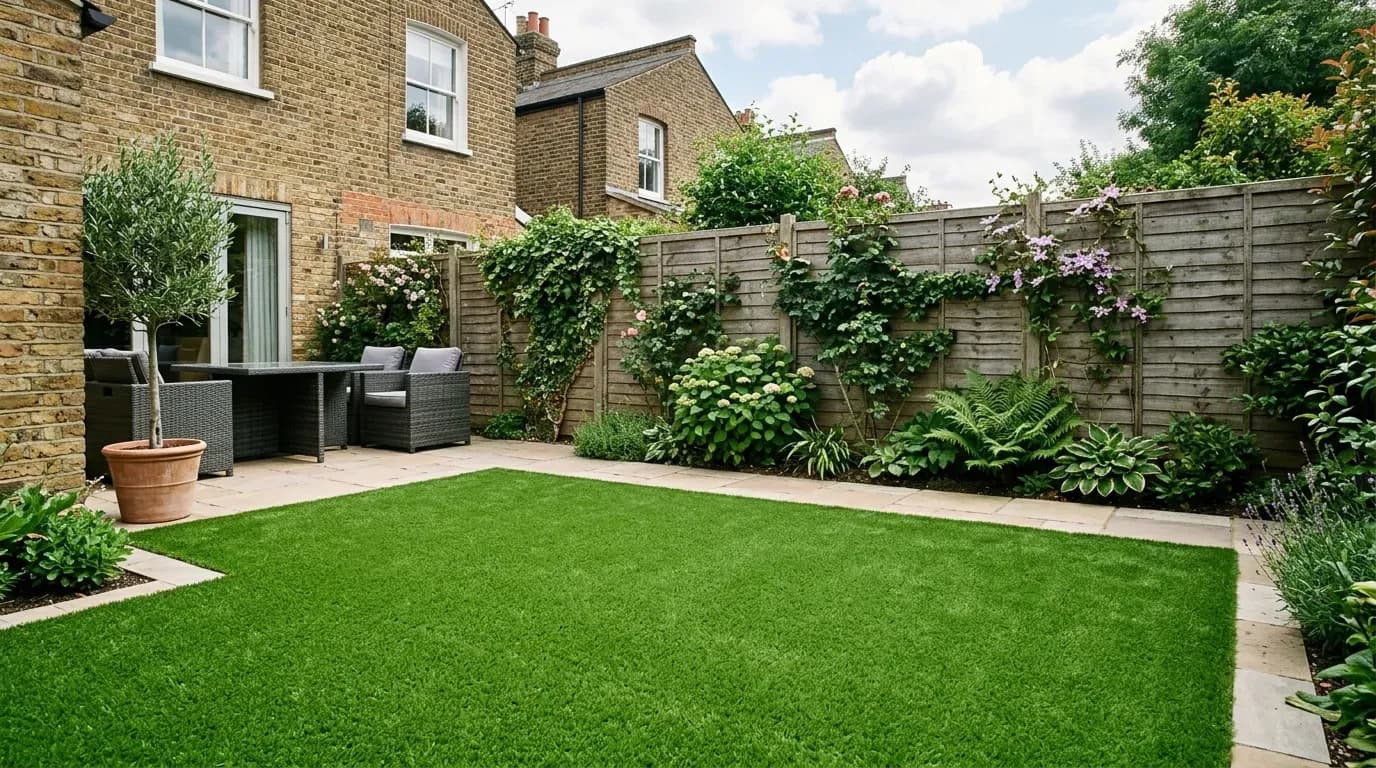
Short answer: yes, for most dog owners it's one of the best things you can do to your garden. Pet-friendly artificial grass starts from around £15/m² supply-only, or £70 to £110/m² fully installed. It lasts 8 to 12 years with dogs using it regularly, and it solves the mud, the brown patches, and the digging in one go. Here's everything you need to know before buying.
£15/m²
Supply from
£70/m²
Installed from
25 to 35mm
Ideal pile height
8 to 12 yrs
Lasts with dogs
Prices updated April 2026 · Based on industry data and contractor submissions.
Quick answer
Yes, artificial grass works well for dogs, and dog owners are probably its best use case. Real grass in a dog garden gets destroyed within a year or two. Artificial grass handles dog traffic, drainage, and daily hose-downs without degrading. Choose a product with a drainage rate of at least 60 litres per m² per hour, a pile height of 25 to 35mm, and have it laid on a proper permeable base. That's 90% of what makes a dog-friendly install work. Budget options start around £15/m² supply-only; a fully installed 30m² garden with a quality pet product costs roughly £2,100 to £3,300.
Pet-friendly artificial grass prices
The grass itself is only part of the cost. Base preparation, digging out the old lawn, laying aggregate, and adding a sand levelling layer, is what makes or breaks a dog-friendly install. Don't skip it or try to cut corners here.
Short pile, pet-friendly (supply only)
20 to 25mm, good drainage holes, basic density, suits small dogs or low-use areas
£17/m²
£12 to £20/m²
Medium pile, pet-friendly (supply only)
28 to 35mm, high drainage rate, most popular choice for dog owners
£25/m²
£18 to £30/m²
Premium antimicrobial (supply only)
30 to 40mm, antimicrobial treatment built in, UV-stabilised, high density
£38/m²
£30 to £45/m²
Base preparation
Excavation, MOT Type 1 aggregate, sharp sand, permeable base essential for dogs
£25/m²
£20 to £30/m²
Professional laying
Cutting, joining, edge securing, kiln-dried sand infill
£20/m²
£15 to £25/m²
| Garden size | Grass supply | Installation | Total |
|---|---|---|---|
| Small garden (15m²) | £225 to £600 | £525 to £825 | £750 to £1,425 |
| Average garden (30m²) | £450 to £1,200 | £1,050 to £1,650 | £2,100 to £3,300 |
| Large garden (50m²) | £750 to £2,000 | £1,750 to £2,750 | £3,200 to £5,500 |
| Front garden (10m²) | £150 to £400 | £350 to £550 | £500 to £950 |
Prices based on mid-range pet-friendly grass with full base preparation. Regional variation applies, see our full cost guide for regional prices.
Why dog owners choose artificial grass
If you have a real lawn and a dog, you already know what the problem is. Here's what artificial grass actually solves.
No more muddy paws
This is the big one. Real grass in a wet British autumn turns into a mud bath within weeks if a dog uses it regularly. Artificial grass stays clean and dry, your dog comes back in with clean paws, not a trail of mud across the kitchen floor.
No more brown patches
Dog urine kills real grass. The nitrogen concentration is too high, and you end up with dead yellow-brown patches that spread over time. Artificial grass doesn't care, urine drains straight through and the surface stays green all year round.
No digging holes
Most dogs lose interest in digging once they realise artificial grass doesn't yield. A properly secured edge means there's nothing to get purchase on. It's not foolproof for very determined diggers, but it dramatically reduces the problem for most dogs.
Easy to clean
Pick up solids, hose down urine areas. That's genuinely most of the maintenance. Real grass in a dog garden requires regular reseeding, lawn treatments, and still looks terrible. Artificial grass stays looking decent with minimal effort.
How to choose pet-friendly artificial grass
Not all artificial grass is equal for dogs. Here's what to look for, and what to ignore.
Drainage rate, the single most important spec
Look for a drainage rate of at least 60 litres per m² per hour. Some cheaper products drain at 10 to 20 litres, which isn't nearly enough for a dog garden. The drainage spec is usually listed on the product page; if it isn't, ask. The grass drains into the sub-base below, so you also need a permeable sub-base, MOT Type 1 aggregate laid without a solid weed membrane underneath (use a permeable geotextile fabric instead).
Pile height: 25 to 35mm is right for most dogs
Shorter than 25mm feels harsh underfoot, fine for humans but uncomfortable on dog paws over time. Longer than 35mm starts to trap hair, mess, and debris between the blades, which makes cleaning harder. A 30mm pile is the most common choice for dog owners and it also looks the most like real grass.
Pile density matters more than pile height
A dense, tightly packed pile holds its shape better under foot traffic and recovers more quickly after use. Look for a stitch rate of at least 14,000 stitches per m². Cheap grass with a lower stitch rate will flatten under a dog running around, especially in the spots where they spend most time.
Antimicrobial treatment, helpful but not essential
Some products have antimicrobial treatment built into the fibres or backing to reduce bacterial growth. It does help a little with odour management. But it's not a substitute for good drainage and regular cleaning. If budget is a constraint, prioritise drainage rate and density over antimicrobial treatment.
Avoid very long-pile grass
Long pile grass (40mm+) looks lush but is a nuisance with dogs. Dog hair weaves into the long blades and is difficult to brush out. Debris and mess hide further down, making it harder to spot and clean. It also takes longer to dry. Stick to medium pile for a dog garden.
Cleaning and maintenance with dogs
Artificial grass is genuinely low maintenance, but "low maintenance" doesn't mean none. Here's a realistic routine.
Solid waste
Pick it up straight away, same as you would on a real lawn. Then rinse the area with a hose. Don't leave it sitting, it will start to smell if it gets into the pile base, and the fibres are easier to clean while fresh.
Urine areas
Hose down with water. Urine drains through the grass and sub-base below, this is why drainage is so important. On a hot day, rinse more frequently as the heat accelerates smell. Most dog owners do a quick hose-down of the whole lawn every couple of days in summer.
Enzyme cleaner
Apply a diluted enzyme cleaner (products like Simple Solution, Bio-Fresh, or Urine Off work well) across the whole lawn. Leave it for 10 to 15 minutes then rinse off. The enzymes break down the bacteria that cause persistent odour, regular cleaning prevents any build-up before it becomes a problem.
Brush the pile
Use a stiff-bristled broom or lawn brush to work across the whole surface, lifting the pile and removing any embedded dog hair or debris. This also keeps the kiln-dried sand infill evenly distributed, which helps the grass blades stand upright. Brushing against the grain of the pile (working backwards) gives the best results.
Harsh chemicals and bleach
Don't use bleach or disinfectants containing quaternary ammonium compounds, these degrade the grass fibres and can be harmful to dogs. Stick to enzyme-based cleaners and plain water. Steam cleaners are fine for a deep clean occasionally, but avoid directing very high-pressure jet washing at the grass edges as this can loosen the securing.
Common concerns
A few questions that come up a lot from dog owners considering artificial grass.
Will it smell?
Not if it's properly installed and maintained. The smell issue that some people report is almost always a drainage problem, the urine isn't draining through properly and is sitting in the base layer. Get the drainage spec right (60+ litres per m² per hour, permeable sub-base), hose it down regularly, and use enzyme cleaner monthly. Do that and it won't smell any worse than cleaning up after your dog on any other surface.
Is it safe for puppies?
Yes. Standard UK-sold artificial grass is non-toxic and pet-safe. Check the product spec confirms it, reputable suppliers include this. The main precaution with puppies is keeping them off the grass for 24 hours after installation while the adhesive cures, and making sure there are no loose edges they can chew (a base prep and securing issue, not the grass itself).
Does it get too hot?
It can on a very hot sunny day, surface temperatures of 50°C+ are possible in July and August. A quick hose-down cools it rapidly. If your dog spends a lot of time outside in summer, adding some shade with a sail shade or pergola over part of the garden makes sense anyway. The heat issue is real but manageable and most dog owners find it a non-issue in the UK's actual climate.
Will my dog try to dig it up?
Some will try, especially terriers and other digging breeds. Proper edge securing makes it very hard to get purchase. Most dogs give up quickly once they realise the grass doesn't come up. If your dog targets a specific corner, a heavy planter or raised bed in that spot usually redirects them.
What about fleas and parasites?
Artificial grass is a less hospitable environment for fleas than real grass, there's no soil for larvae to develop in. It doesn't eliminate flea risk (your dog brings them in from walks, not necessarily from your garden), but it's no worse than a real lawn and arguably slightly better. Keep up with regular flea treatment regardless.
How to get your dog-friendly lawn for less
Get at least three quotes
Prices vary considerably between landscapers, as much as 30% for the same job. Always get at least three quotes before committing. Ask each installer what drainage specification they are using: proper MOT Type 1 aggregate base is non-negotiable for a dog lawn and some cheaper contractors cut corners on this. Look for a TrustMark-registered installer where possible.
Buy the grass yourself, hire labour separately
Buying the grass directly from an online specialist, Artificial Grass Direct, Great Grass, Grass Direct, and hiring a landscaper just for the base prep and laying can save 20 to 30% versus a full supply-and-fit package. You take on the sourcing risk, but for a motivated homeowner it's straightforward.
You don't need the premium antimicrobial product
Antimicrobial grass helps a little, but it's not the thing that stops smells, good drainage is. Save the extra £10 to £15/m² on antimicrobial treatment and spend it on a better base spec instead. A well-draining base with regular hosing will outperform an expensive antimicrobial product on a cheap compacted base every time.
Do the base prep yourself if you're able
The base preparation, digging out the old turf, laying and compacting MOT Type 1 aggregate, is the most labour-intensive part of the job. Doing it yourself and hiring a landscaper just for the grass-laying stage can cut costs substantially. Hire a plate compactor for the day (around £30 to £50) to make sure the base is properly packed down.
Pay the deposit by credit card
A fully installed dog lawn runs to £2,100 to £3,300 for an average garden, so put at least the deposit on a credit card rather than paying cash. As long as the total is over £100 and up to £30,000, Section 75 of the Consumer Credit Act makes the card provider equally liable if the installer folds or the drainage does not perform as promised. There is no extra cost, and it beats handing over a big cash deposit up front.
Frequently asked questions
Does artificial grass smell with dogs?
It can, if you don't maintain it. Dog urine soaks through the grass and into the base below, if that base doesn't drain freely, the smell builds up. The fix is making sure your base has proper drainage (MOT Type 1 aggregate with no weed membrane under it, or a permeable sub-base), hosing down urine spots regularly, and using an enzyme-based cleaner once a month. Antimicrobial grass products help too, but they're not a substitute for rinsing things down. Most dog owners find artificial grass far easier to manage than a real lawn that's been used as a toilet for years.
Is artificial grass safe for dogs and puppies?
Yes, good-quality artificial grass is safe for dogs of all ages, including puppies. The main thing to check is that the product doesn't contain zinc or lead-based pigments, reputable UK suppliers will confirm their products are non-toxic and pet-safe. Keep puppies off newly laid grass until the adhesive and jointing tape have fully cured (usually 24 hours). Avoid letting puppies chew loose edges, which is mainly a base preparation issue rather than the grass itself.
What pile height is best for dogs?
25mm to 35mm is the sweet spot for most dog owners. Shorter piles (under 20mm) are too hard and scratchy on paws. Longer piles (over 40mm) trap hair, mess, and debris, which makes cleaning harder. A medium pile of around 30mm looks realistic, drains well, and is comfortable underfoot. If you have a large or heavy dog that spends a lot of time in the garden, choose a higher-density product, the pile will hold up better over time.
Does artificial grass get too hot for dogs in summer?
This is a real concern. Artificial grass can reach 50 to 70°C on a very hot day in direct sunlight. Dog paws are sensitive to heat, and they can't regulate temperature through sweating the way humans do. On hot days, hose the grass down before letting your dog out, the surface cools very quickly. Some premium products include heat-diffusing technology (often called 'cool grass' or 'heat reduction' backing) which can lower surface temperature by around 10 to 15°C. You can also install shading (a pergola, shade sail, or parasol) over part of the garden to give your dog somewhere cooler to lie.
Will my dog try to dig up artificial grass?
Some dogs will try, particularly breeds like terriers that have strong digging instincts. Proper edge securing (galvanised nails or backer board around the perimeter) makes it very hard for dogs to get purchase and start digging. If your dog consistently targets the same spot, placing a heavy planter or raised bed there usually redirects them. In our experience, most dogs stop trying after the first few weeks once they realise the grass doesn't come up easily.
How do I clean artificial grass after my dog uses it?
For solid waste, pick it up straight away as you normally would, then rinse the area with a hose. For urine, give the area a good hose down, the drainage holes will carry it through to the sub-base below. Once a month, apply a diluted enzyme cleaner (products like Simple Solution or Bio-Fresh are popular with dog owners) across the whole lawn and leave it for 10 to 15 minutes before rinsing. This breaks down the bacteria that cause odour. Quarterly, go over the whole surface with a stiff-bristled brush or lawn brush to lift the pile and remove any embedded hair or debris.
Useful resources

Reviewed by Chris Kervin, Less.co.uk Home Improvement Costs Specialist
Last updated: April 2026 · Pricing based on industry data and verified contractor submissions · Methodology
Ready to sort your garden out?
No more muddy paws, no more brown patches, no more digging holes. Find out what a pet-friendly artificial lawn costs for your garden.
Compare Free QuotesFree, no obligation · Local landscapers · Compare up to 3 quotes