Patios - Types, Costs & Guides for UK Homeowners
A new patio typically costs between £1,500 and £8,000, depending on size and material. It is one of the best-value garden improvements you can make, adding usable outdoor living space and genuine kerb appeal. Most rear garden patios fall under permitted development, but check the Planning Portal guidance on patios if you are near a boundary or in a conservation area. Getting the groundwork right is everything with a patio, so it pays to understand what goes into a proper job.
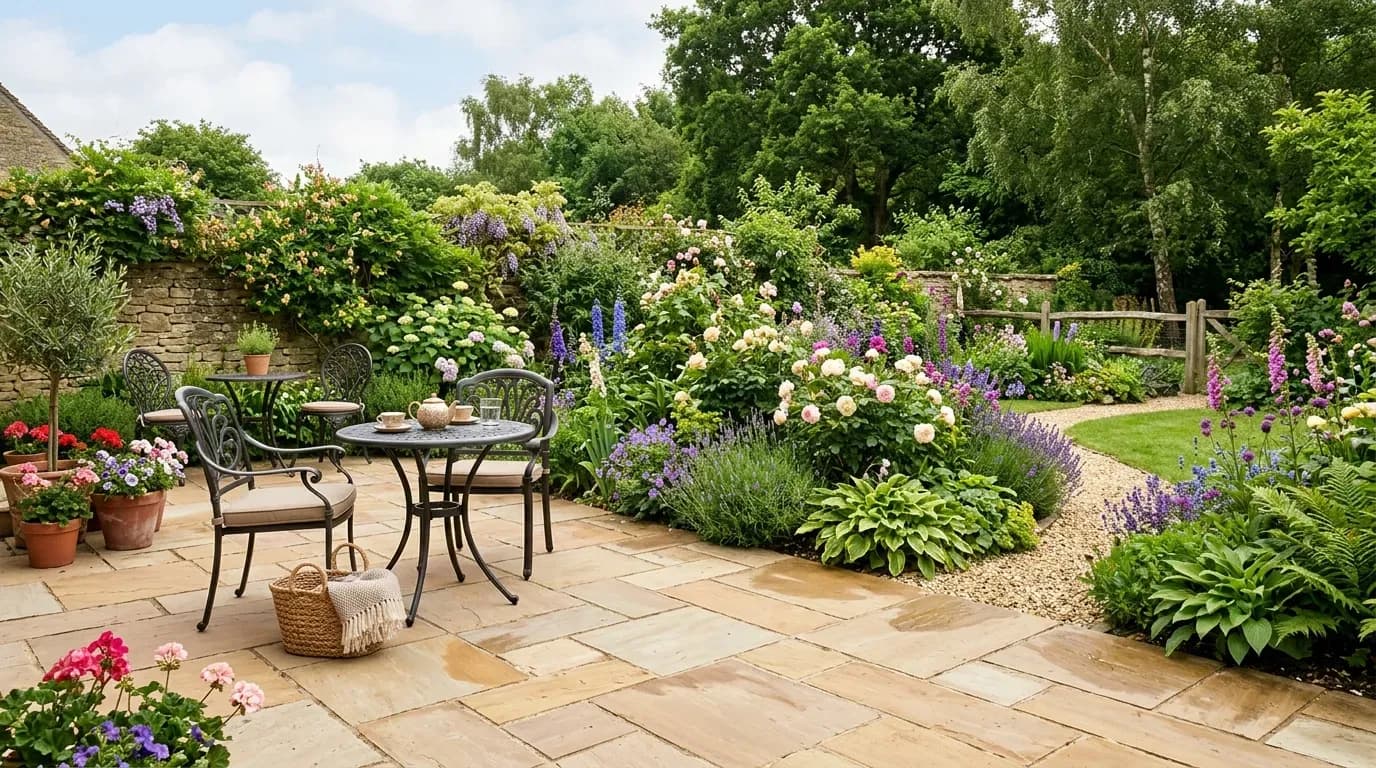
Quick answer
How much does a new patio cost?
Concrete slabs cost £50 to £80 per m² installed. Indian sandstone runs £80 to £130 per m². Porcelain paving costs £100 to £180 per m². For a typical 20 to 25m² patio, expect to pay £1,500 to £4,500 depending on the material.
View the full patio cost guideTypes of patio material
The material you choose affects the cost, appearance, durability, and maintenance of your patio. Here are the main options available in the UK.
Indian sandstone
The most popular natural stone choice in the UK. Warm, earthy tones that look great in most garden settings. Costs £80 to £130 per m² installed. Naturally porous, so it benefits from sealing to prevent staining and algae growth. Comes in a variety of colours including buff, grey, autumn brown, and Kandla grey. Thickness can be inconsistent, which means it takes more skill to lay evenly.
Porcelain paving
A modern, low-maintenance option that is growing in popularity. Non-porous, frost-proof, and stain-resistant. Costs £100 to £180 per m² installed. Needs a specific adhesive rather than standard mortar, which adds to the laying cost. Comes in a huge range of colours and finishes, including realistic stone and wood effects. Excellent long-term value because it barely ages.
Concrete slabs
The budget option. Plain concrete slabs cost £50 to £80 per m² installed. They come in various sizes and textures, including riven finishes that mimic natural stone. Perfectly functional and widely available at B&Q, Wickes, and every builders merchant. They can look a bit flat compared to natural stone but are fine for a utility patio or area where appearance is less critical.
Block paving
Small, interlocking bricks laid in patterns like herringbone, basket weave, or stretcher bond. Costs £80 to £170 per m² installed depending on the block type. Very durable and easy to repair because individual blocks can be lifted and replaced. The main downside is weed growth between joints, which needs regular attention. Popular for both patios and driveways.
Natural stone (limestone, slate, granite)
Premium patio materials with unique colour and texture. Limestone offers a clean, contemporary look. Slate gives a dramatic dark finish. Granite setts are traditional and extremely hardwearing. Costs £110 to £250 per m² installed. These materials are heavy, hard to cut, and need an experienced installer. Best for homeowners who want something distinctive and are willing to pay for it.
Typical patio sizes
There is no standard patio size. It depends on your garden, what you want to use it for, and your budget. Here are the most common sizes.
Small patio (10 to 15m²)
Enough for a bistro set or a couple of chairs. Works well as a step-out area from the back door. Costs £500 to £2,700 depending on material. A good option if you mainly want somewhere to sit with a cup of tea rather than a full outdoor dining space.
Medium patio (20 to 25m²)
The most popular size. Fits a table and chairs for four to six people with room to move around. Costs £1,500 to £4,500. This is the sweet spot for most UK gardens and gives you a proper outdoor living area for the summer months.
Large patio (30 to 40m²+)
Space for separate dining and lounging areas, or a barbecue zone. Can include steps, raised beds, or a fire pit area. Costs £3,000 to £8,000+. Larger patios benefit from mixing materials or adding a border in a contrasting colour to break up the space.
Drainage and sub-base
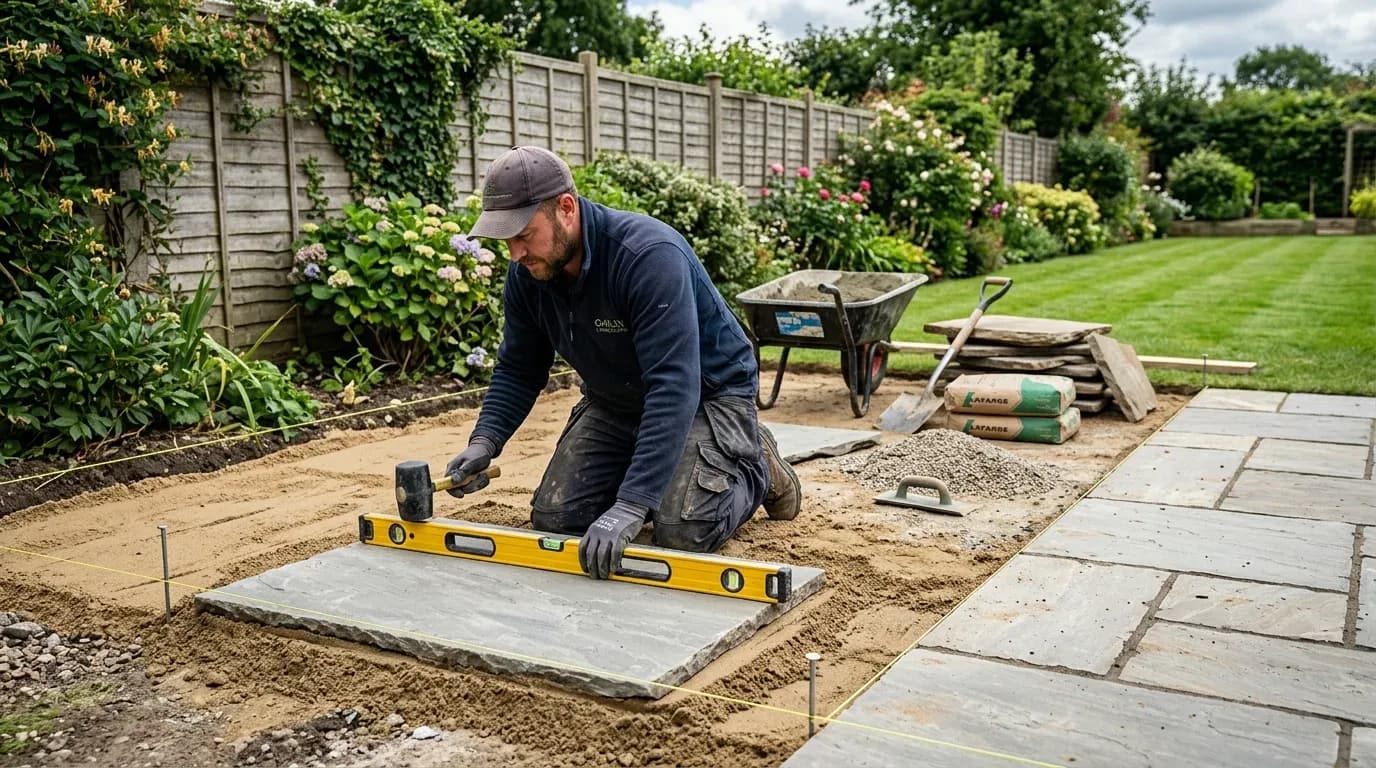
The two things that make or break a patio are the sub-base and the drainage. Both happen before a single slab goes down, and both are invisible once the patio is finished. This is where cheap contractors cut corners.
Sub-base
Every patio needs a compacted sub-base of at least 100mm of MOT Type 1 hardcore, sitting on firm, compacted ground. The sub-base is what stops your patio sinking, rocking, or cracking. Without it, even the most expensive slabs will move within a couple of winters. On clay soil or soft ground, a thicker sub-base (150mm) is advisable.
Drainage fall
The patio surface must slope away from the house at a minimum gradient of 1 in 60 (roughly 15mm per metre). This prevents water pooling against the house walls. The patio surface must also finish at least 150mm below the damp-proof course (DPC). Building above the DPC is a common mistake that causes damp problems inside the house.
Surface water drainage
If you are paving more than 5m² of front garden, the paving must be permeable or the water must drain to a lawn or border, not onto the road. For rear patios, a slight fall to a lawn or border is usually sufficient. On larger patios or heavy clay soil, a linear channel drain along the house wall is a sensible addition.
Important: Never let the finished patio level sit above the damp-proof course of your house. This is the single most common patio mistake, and it causes rising damp that can cost thousands to fix. If the ground level near the house is high, excavate deeper or use a drainage channel.
Laying patterns
The laying pattern affects both the look and the cost of your patio. Simpler patterns are cheaper because they produce less cutting waste and are faster to lay.
Random (mixed sizes)
Uses a mix of different slab sizes laid in a random pattern. This is the most popular layout for natural stone patios because it looks informal and natural. Requires some planning to avoid repeating patterns and to minimise cutting. Most stone patio packs are sold as mixed-size kits designed for this pattern.
Stretcher bond (brick pattern)
Slabs or blocks laid in rows with each row offset by half. Simple, clean, and modern-looking. Works well with rectangular slabs and block paving. Easy to lay, which keeps costs down.
Herringbone
Blocks laid at 45-degree or 90-degree angles to create a zigzag pattern. Very strong and resistant to movement, which is why it is the standard for driveways. Looks smart on a patio too, especially in a contrasting border. Requires more cutting at the edges.
Stack bond (grid)
Slabs laid in a simple grid with joints lined up. Works best with uniform, square slabs. Clean and contemporary. The simplest and cheapest pattern to lay because there is minimal cutting.
Get at least three quotes
Patio prices vary widely between landscapers, and what is included in the quote can differ just as much. Get at least three written quotes that each cover the same scope - materials, sub-base, drainage, edging, and clearing up. Some contractors include skip hire and others do not, so check. Comparing like for like is the only way to tell a competitive price from an incomplete one.
Patio guides
Common questions about patios
What is the best patio material for UK weather?
Porcelain paving is the most weather-resistant option. It is non-porous, frost-proof, and does not absorb water, so it will not crack in freezing temperatures. Indian sandstone is also a solid choice but needs sealing to prevent water absorption and staining. Concrete slabs handle UK weather well but can look tired after a few years without cleaning. Block paving is durable and handles frost well, though weeds can grow between the joints if not properly maintained.
How thick should a patio sub-base be?
A patio sub-base should be at least 100mm of compacted MOT Type 1 hardcore. For heavy-use areas or clay soils, 150mm is better. The sub-base sits on top of excavated, compacted ground and provides the stable foundation that stops your patio sinking and cracking. Skipping the sub-base or making it too thin is the most common reason patios fail within a few years.
Do I need planning permission for a patio?
Most rear garden patios do not need planning permission under permitted development rights. The main exception is if you are paving more than 5 square metres of your front garden, in which case you must use permeable paving or direct rainwater to a lawn or border. Patios in conservation areas or on listed buildings may need permission. If the patio significantly raises the ground level, check with your local council.
How long does a patio take to lay?
A small patio (15m²) takes 2 to 3 days including excavation and sub-base preparation. A medium patio (25m²) takes 3 to 4 days. A large patio (40m² or more) takes 4 to 6 days. These timescales assume dry weather and reasonable ground conditions. Rain delays are common with patio work because mortar cannot be laid in wet conditions.
Is Indian sandstone worth it?
For most homeowners, yes. Indian sandstone offers a natural, attractive look at a mid-range price point (£80 to £130 per m² installed). It comes in a range of warm colours and weathers nicely over time. The main downside is that it is porous, so it needs sealing to prevent staining. It can also be inconsistent in thickness, which means more skill is needed to lay it level. Avoid the cheapest sandstone imports as the quality can be poor.
What is the cheapest way to pave a patio?
Concrete paving slabs are the cheapest option at £50 to £80 per m² fully installed. For a 20m² patio, that works out at roughly £1,000 to £1,600. Riven concrete slabs (textured to look like natural stone) cost slightly more at £55 to £90 per m² but look noticeably better. If you are handy, laying slabs yourself saves around 40% on the total cost, though the sub-base work is physically demanding.
Quote service coming soon
Get free quotes from patio installers near you
Free, no obligation. Read the cost guide first so you know what a fair price looks like before anyone gives you a number.