How Much Do Fence Panels Cost in 2026?
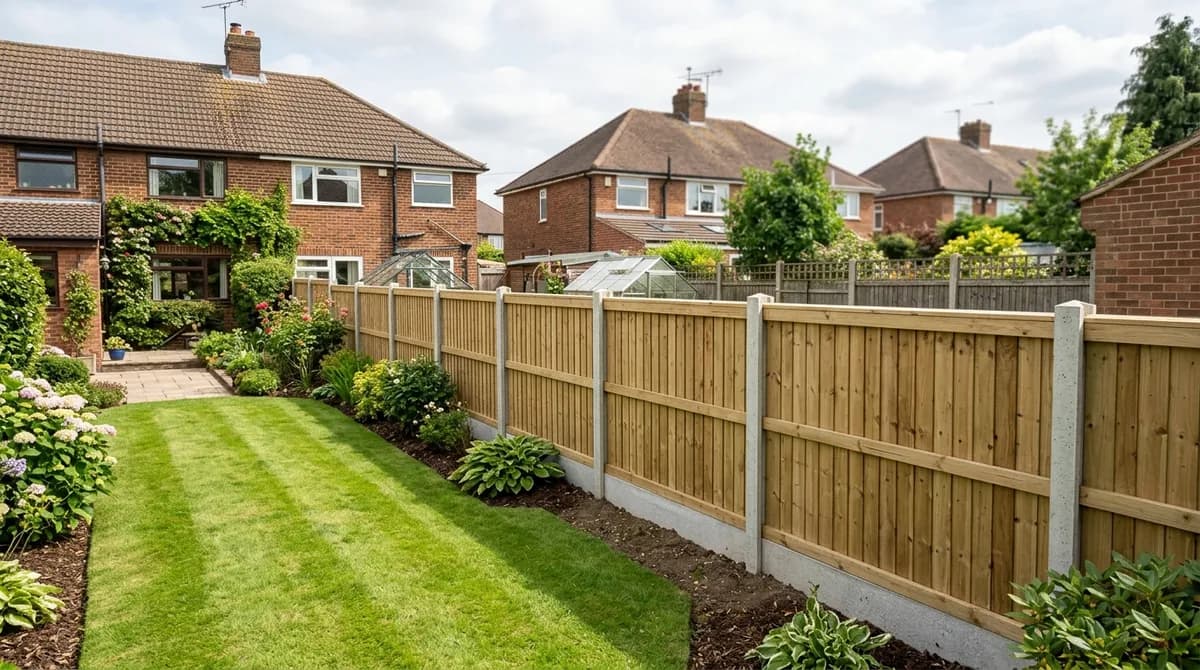
A standard lap fence panel costs £15 to £25 to buy. Closeboard panels cost £25 to £45 each. Fitting a panel adds roughly £30 to £50 in labour, so expect to pay £45 to £95 per panel fully fitted, depending on the type.
£15
Lap panels from
£25
Closeboard from
£12
Posts from
£30 to £50
Fitting per panel
Prices updated April 2026 · Based on industry data and contractor submissions.
Fence Panel Prices by Type
Prices below are for standard 6×6ft (1.83×1.83m) panels unless otherwise noted. Supply prices are what you pay at a builders merchant or DIY store. Fitted prices include supply of the panel plus labour to fix it between existing posts.
| Panel Type | Supply Only | Fitted |
|---|---|---|
Overlap lap panel (6×6ft) | £15 to £25 | £45 to £75 |
Closeboard panel (6×6ft) | £25 to £45 | £55 to £95 |
Hit-and-miss panel (6×6ft) | £30 to £50 | £60 to £100 |
Picket fencing (per metre run) | £20 to £40 | £50 to £80 |
Tongue and groove panel (6×6ft) | £35 to £55 | £65 to £105 |
Composite fencing panel (6×6ft) | £80 to £150 | £110 to £200 |
Fitted prices assume posts are already in place. If posts need to be replaced or set in concrete, add £18 to £50 per post for materials and £20 to £40 per post for labour.
Posts and Accessories
The panel is only part of the cost. Posts, gravel boards, and fixing hardware all add up. Here is what to budget for the most common components.
| Item | Typical Cost |
|---|---|
| Concrete post (slotted, 2.4m) | £18 to £30 |
| Timber post (100mm × 100mm, 2.4m) | £12 to £20 |
| Gravel board (1.83m) | £5 to £10 |
| Postcrete post mix (per bag) | £5 |
| Post cap (per post) | £1 to £3 |
| Fence panel clip / bracket (pair) | £2 to £4 |
Fence Cost per Metre Run
Prices below are for a complete fence installation, panels, posts, gravel boards, concrete, and labour. They assume level ground and reasonable access.
| Fence Length | Lap Panels | Closeboard |
|---|---|---|
| 10 metres (~6 panels) | £500 to £800 | £700 to £1,100 |
| 20 metres (~11 panels) | £900 to £1,400 | £1,300 to £2,000 |
| 30 metres (~17 panels) | £1,300 to £2,000 | £1,900 to £2,900 |
| Full garden (40m perimeter) | £1,700 to £2,600 | £2,500 to £3,800 |
Prices include removal of old fence, new posts, gravel boards, panels, postcrete, and all installation labour.
Closeboard vs Lap Panels: Which Is Worth It?
These two are the most popular panel types in the UK by some distance. Here is the honest comparison.
Durability
Closeboard fencing uses individual featherboard planks nailed to horizontal arris rails. Because each board overlaps the next, the structure is rigid but not rigid in the way that catches the wind, the boards flex slightly, which actually makes the fence more resilient in storms. Lap panels are a single pressed sheet; when the wind hits, the whole panel takes the load, which leads to cracked and broken panels much faster. Closeboard wins on durability, easily.
Cost
Lap panels cost roughly £15 to £25 each; closeboard panels cost £25 to £45 for the same 6×6ft size. The labour to fit them is similar. Over a 10-year period, though, lap panels are likely to need replacing once or twice while closeboard panels will still be going strong. Factor in replacement costs and closeboard works out cheaper over the life of the fence.
Repairability
If one closeboard plank splits or rots, you can pull it off and nail on a new one in 10 minutes for under £5. With a lap panel, the whole panel has to come out and be replaced at £15 to £45 a time. This is one of the biggest practical advantages of closeboard over lap fencing.
Appearance
Both are available pressure-treated (green-brown tint) or untreated. Closeboard tends to look smarter because the overlapping boards give a uniform, consistent finish. Lap panels can look patchy over time as they warp and fade unevenly. For a front garden or anywhere the fence is on show, closeboard is the better-looking choice.
Who Pays for the Fence? Boundary Responsibilities Explained
Disagreements about fencing are one of the most common causes of neighbour disputes in the UK. Here is what the law actually says, and what it does not.
Check the T-marks on your title deeds
The surest way to find out who owns which boundary is to look at your property's title deeds. You can download them from HM Land Registry for £7. A T-mark on your side of the boundary line means that fence is your responsibility. An H-mark (T on both sides) means the boundary is shared.
No T-mark? No legal obligation
If there is no T-mark, neither you nor your neighbour is legally required to erect or maintain a fence. There is no rule in England and Wales that says you must have a fence, or that one particular side of the garden is always your responsibility. The "left-hand fence is yours" idea is a widely repeated myth, it has no basis in law.
You are not legally required to erect a fence at all
Even if the title deeds show the boundary is yours, you are generally not legally obliged to put up a fence unless there is a specific covenant in your deeds requiring it. The exception is if your property borders a highway, railway, or has livestock, in these cases there may be a legal duty to fence.
Height rules and planning permission
Garden fences up to 2 metres (6ft 6in) high do not normally need planning permission. If your fence borders a public highway, footpath, or bridleway, the maximum without permission drops to 1 metre. Listed buildings and conservation areas may have different rules, check with your local council if in doubt.
Talk to your neighbour first
Even where the fence is legally your responsibility, telling your neighbour before you replace it is good practice. They may want to split the cost, have a preference on the style, or simply need to know when the work is happening. A quick conversation avoids most disputes before they start.
How Long Do Fence Panels Last?
The lifespan of a fence panel depends on the type, the quality of fitting, and how well it is maintained. Here is what to expect from each type.
| Panel Type | Expected Lifespan |
|---|---|
| Lap overlap panel | 5 to 10 years |
| Closeboard panel | 15 to 20 years |
| Hit-and-miss panel | 12 to 18 years |
| Tongue and groove panel | 12 to 18 years |
| Composite panel | 25+ years |
| Timber post | 10 to 15 years |
| Concrete post | 25+ years |
Quick tip: The most common reason fence panels fail early is that they sit too close to the ground and absorb moisture from the soil. A simple gravel board at the base of each panel (cost: £5 to £10 each) keeps the panel off the ground and can add years to its lifespan.
How to Get Your Fence Panels for Less
Fence panels are a competitive market and there is genuine money to be saved by shopping around and timing your purchase right.
Get at least three quotes
Fencing prices vary more than almost any other trade, the same job can cost twice as much depending on who you call. Get at least three quotes from specialist fencing contractors rather than general handymen, who often charge more. Make sure each quote covers the same specification: panel type, post type, gravel boards, and whether old fence removal is included.
Use concrete posts, they last far longer
Concrete posts cost a few pounds more per post than timber but last 25 years or more. Timber posts rot at ground level after 10 to 15 years, and replacing them means digging out the old concrete base and starting again. Over the life of the fence, concrete posts are cheaper. Slotted concrete posts also make it easy to slide in new panels without any drilling.
Buy panels in bulk for a discount
Builders merchants and fencing suppliers often give a discount when you buy eight or more panels at once. It is worth ringing two or three merchants and asking for a trade price on the full quantity, you can often save 10 to 15% compared to buying panels one at a time. If you have a neighbour doing similar work, combining orders can unlock an even bigger discount.
Replace panels only if the posts are sound
If your fence posts are still solid and upright, there is no need for a full replacement. You can buy new panels and drop them straight into slotted concrete posts, or screw them to timber posts, in a morning. Replacing panels only costs £15 to £55 per panel in materials plus £30 to £50 labour, a fraction of the cost of a full new fence with posts and concrete.
Useful Resources
What to Expect: The Fence Panel Installation Process
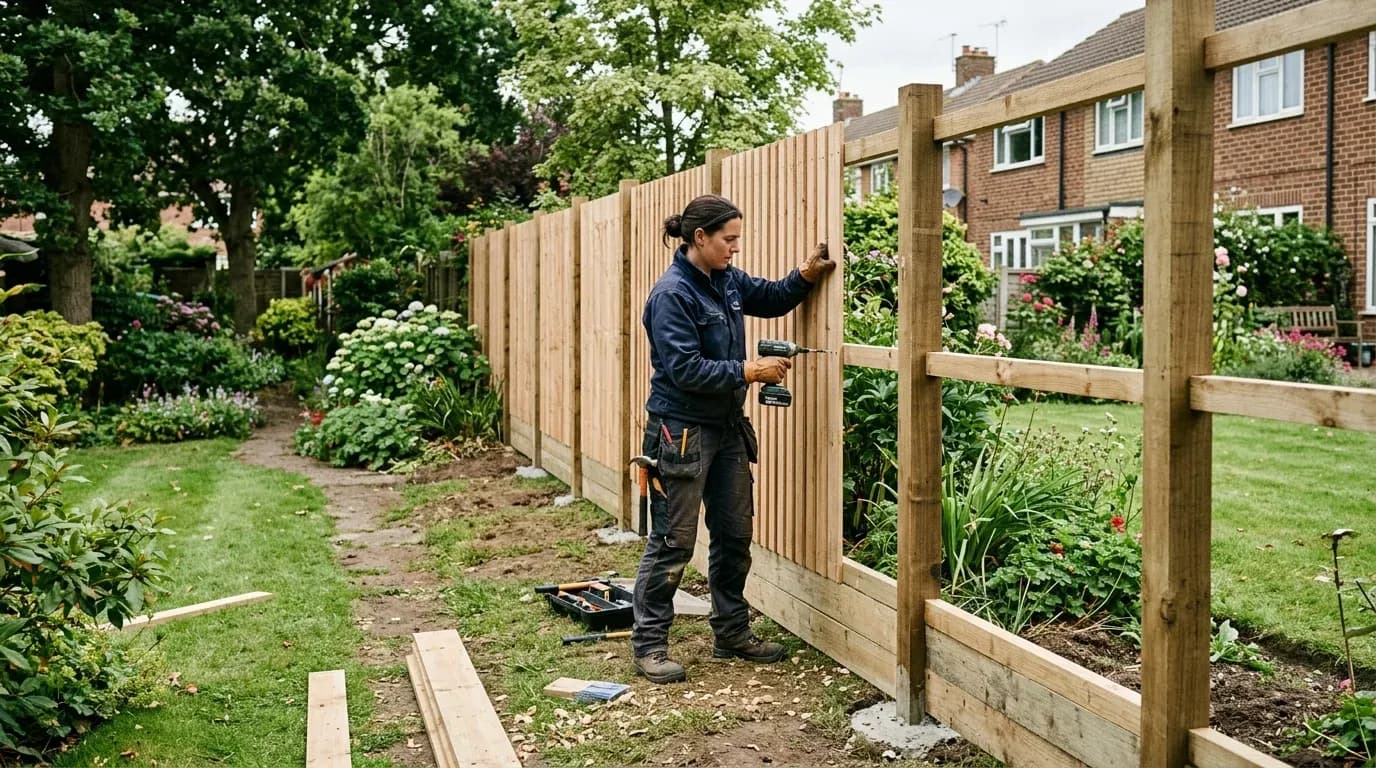
A fencer can typically install 10 to 15 metres of fencing in a day. Here's how the job is done from start to finish.
- 1
Mark out the fence line
The fence run is measured and string lines are set to mark the exact positions of each post. Post centres are typically 1.83 metres apart (6 feet) to match standard panel widths.
- 2
Dig the post holes
Holes are dug to a depth of around 600mm (2 feet) using a post-hole digger or auger. For concrete posts, the holes need to be slightly wider to allow for backfilling.
- 3
Set the fence posts
Timber or concrete posts are dropped into the holes and set plumb using a spirit level. Each post is secured with postcrete (fast-setting concrete) or a standard concrete mix and left to set.
- 4
Fit gravel boards
Concrete or timber gravel boards are slotted or screwed between the posts at ground level. These lift the fence panels off the soil, preventing rot and extending the life of the fence.
- 5
Hang the fence panels
Panels are lifted into position and secured to the posts using panel clips, U-brackets, or screws. Each panel is checked for level before fixing. For slotted concrete posts, panels simply slide into the grooves.
- 6
Fit post caps and treat the timber
Post caps are nailed or glued on to prevent rainwater sitting on the post tops. If using timber posts and panels, a coat of fence treatment or preservative is applied to protect against weathering.
Frequently Asked Questions
How much does a fence panel cost in the UK?
A standard 6×6ft lap overlap panel costs £15 to £25 to buy. Closeboard panels of the same size cost £25 to £45. Hit-and-miss panels cost £30 to £50, tongue and groove panels £35 to £55, and composite panels £80 to £150. These are supply-only prices; add £30 to £50 per panel for fitting labour.
How much does fence panel fitting cost per panel?
A fencing contractor typically charges £30 to £50 to fit each panel, on top of the cost of the panel itself. This includes setting it between existing posts. If posts need replacing or setting in new concrete, the cost per panel rises to around £55 to £105 depending on the panel type.
What is the cheapest type of fence panel?
Overlap lap panels are the cheapest option at £15 to £25 per panel (6×6ft). They are widely available at B&Q, Wickes, and builders merchants. The downside is they are less durable than closeboard panels, expect 5 to 10 years rather than 15 to 20. For a garden that needs a quick, budget-friendly fix, lap panels do the job. For a long-term investment, closeboard or composite is better value over time.
How much does it cost to fence 10 metres of garden?
A 10-metre fence run using standard lap panels typically costs £500 to £800 fully installed, including posts, gravel boards, panels, concrete, and labour. Using closeboard panels the same run costs £700 to £1,100. Composite fencing for 10 metres runs £900 to £1,500. These prices assume level ground and straightforward access.
How long do fence panels last?
Lap overlap panels last around 5 to 10 years before they need replacing, especially if they get knocked by wind or sit close to the ground. Closeboard panels last 15 to 20 years because the individual boards can be replaced one at a time without dismantling the whole fence. Composite panels last 25 years or more and need almost no maintenance. Concrete posts outlast timber posts significantly, concrete can last 25+ years while timber posts often rot at ground level after 10 to 15 years.
Is closeboard or lap panel fencing better?
Closeboard fencing is stronger, lasts longer, and handles wind better because the individual boards flex rather than catching the wind like a rigid panel. Individual boards can also be replaced cheaply when one splits. Lap panels are cheaper upfront and faster to fit, making them good for temporary fencing or tight budgets. For a permanent garden boundary, closeboard is nearly always the better long-term choice.
Related cost guides

Written by Chris Kervin, founder of Less.co.uk
Last updated: · Pricing based on industry data and verified contractor submissions · Methodology
Quote service coming soon
Get free quotes from local fencing contractors
Tell us what fencing you need and we will connect you with rated fencing contractors in your area. Free, no obligation.
Compare Free Quotes